Justice | Mercy | Faith

Justice | Mercy | Faith

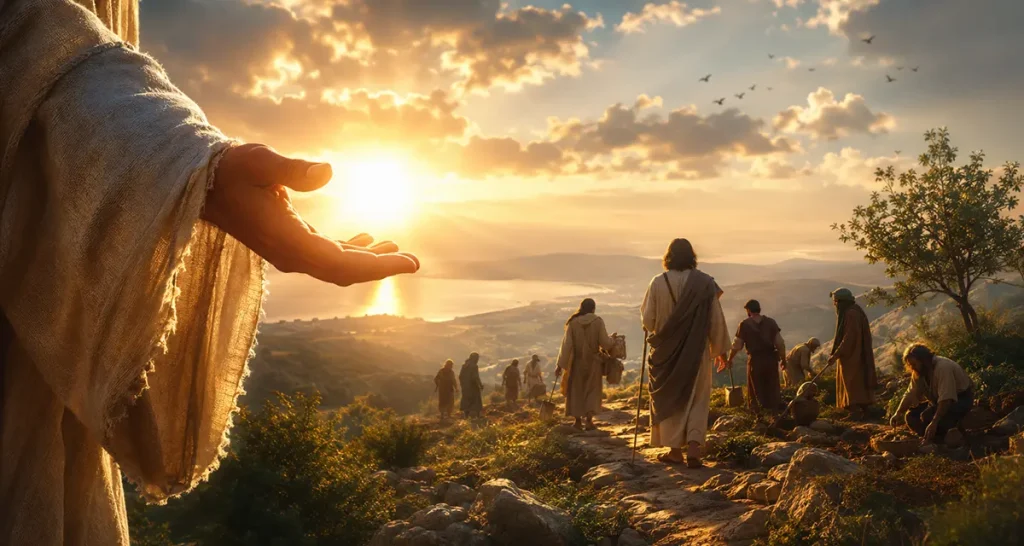
Participation With God: Why the Almighty Invites Us Into His Work and Joy

Difficulty Level: Intermediate-Advanced

Jump to Answers

  1. You said in one of our discussions, “Israel cannot produce the deliverance, but Israel must participate in the deliverance God produces.” There is no burden upon God in accomplishing everything entirely by Himself; nothing is difficult for Him. Yet He expects human participation in those things He has determined that we should accomplish. God does not need our help, and still He chooses to share the path with us. Why is that?
  2. God delights in our participation, yet there is something in fallen humanity that would gladly be placed directly into paradise without any effort or responsibility. At the same time, we are proud enough to want our fingers in everythingβ€”especially in matters that belong exclusively to God. We want God to do what He has given us to do, while wanting to do what belongs uniquely to God. Double-minded much? πŸ€”
  3. You said, “Jesus could have announced the kingdom without twelve disciples stumbling around behind Him. Yet He calls them.” It certainly would have been easier and more efficient if Jesus had not surrounded Himself with stumbling disciples. God does not think as man thinksβ€”or, more accurately, man does not think as God thinks.
  4. You said, “The child has gained something infinitely more important: participation in the father’s life and work.” Yet God gains nothing essential to Himself through our participation. Even our companionship is not necessary to Him.
  5. You said, “And then He allows our participation genuinely to matter.” That is perhaps the astonishing aspect of this whole dynamic. If “of Him and through Him and to Him are all things”, why does God dignify and honor human participation when, ultimately, the whole enterprise is entirely dependent upon Him?
  6. You said, “We are invited into the joy that is already His.” Do we really understand what Jesus is inviting us intoβ€”the holy, pure, full, bright, eternal, immeasurable joy of YHWH? Wouldn’t such joy overwhelm us completely; wouldn’t we explode? Can finite human beings actually experience it?
  7. Some people have suffered a heart attack during moments of intense joy even in this fallen world. Imagine, then, 100% of pure and divine joy Jesus promises, experienced to the full capacity of our being. πŸ€―πŸ™Œβ€οΈ

Participation With God: Why the Almighty Invites Us Into His Work and Joy

Discipleship & Growth | God & His Attributes | Jesus Christ (Christology) | Salvation (Soteriology) | Sin & Human Nature

Why does God involve us in what He is doing when He could accomplish everything perfectly without us?

Nothing is difficult for God. He does not need our strength, intelligence, companionship, service, or assistance. “For of Him and through Him and to Him are all things” (Romans 11:36). Yet throughout Scripture, God continually brings human beings into His purposes. Adam is given a garden to cultivate. Israel must walk the road of a deliverance only God can accomplish. The disciples are called to follow Jesus, learn from Him, stumble, grow, and eventually carry the gospel into the world. Paul plants, Apollos waters, yet God gives the increase (1 Corinthians 3:6–7).

Why?

This Q&A explores the astonishing biblical dynamic of participation with God: not because God lacks something that we supply, but because in His goodness He chooses to give His creatures a genuine place within what He is doing.

That raises some fascinating questions. Why does God dignify human participation when everything ultimately comes from Him? Why does He patiently work through weak and stumbling people when doing everything Himself would seem far more efficient? Why does fallen humanity strangely resist the responsibilities God gives us while simultaneously reaching for things that belong to God alone?

And eventually the question becomes even more wonderful.

Jesus does not merely invite us to participate in His work. He invites us into His joy: “that My joy may remain in you, and that your joy may be full” (John 15:11).

If the holy, pure, inexhaustible joy of God is already His, what could it possibly mean for finite human beings to enter into it?

The journey from human participation to divine joy reveals something beautiful about grace: God needs nothing from us, yet He chooses to bring us with Him. He gives us what we need, enables what He commands, dignifies our participation, forms us along the way, and finally invites us into a joy that was His before we ever existed.

You said in one of our discussions, “Israel cannot produce the deliverance, but Israel must participate in the deliverance God produces.” There is no burden upon God in accomplishing everything entirely by Himself; nothing is difficult for Him. Yet He expects human participation in those things He has determined that we should accomplish. God does not need our help, and still He chooses to share the path with us. Why is that?

Yes. And I think you are touching something much larger than Israel’s deliverance. It reaches into why God created human beings at all.

God could accomplish His purposes without us. The astonishing thing is that He ordinarily chooses not merely to accomplish His purposes for us, but to bring us into what He is doing.

God does not need assistance. He desires fellowship.

God says of Israel:

“I, even I, am the LORD,
And besides Me there is no savior.”
β€” Isaiah 43:11

And then almost immediately:

“You are My witnesses,” says the LORD,
“That I am God.”
β€” Isaiah 43:12

Notice the order.

He saves. They witness.

They do not become co-saviors. Yet neither are they treated as luggage being transported from Babylon to Jerusalem. God restores them to their place as His people and draws them into His purpose.

That distinction is beautiful:

God’s participation with us does not arise from deficiency in Him, but from generosity in Him.

🀝 God wants persons, not merely outcomes

If God’s only concern were accomplishing objectives, human participation would be remarkably inefficient.

He could evangelize without preachers.
He could feed people without farmers.
He could teach believers without teachers.
He could care for children without parents.
He could comfort suffering Christians without other Christians.
He could spread the gospel without the Church.

Yet Scripture repeatedly gives human beings something to do.

Paul captures the mystery wonderfully:

“For we are God’s fellow workers.”
β€” 1 Corinthians 3:9

And yet only a few verses earlier he carefully removes any suggestion that God needs those workers:

“So then neither he who plants is anything, nor he who waters, but God who gives the increase.”
β€” 1 Corinthians 3:7

Paul plants.

Apollos waters.

God gives life.

There are things Paul genuinely does, and God expects him to do them. But underneath Paul’s activity lies something Paul cannot produce at all.

That sounds very much like what we saw in Isaiah.

Israel walks out of Babylon.

God delivers Israel from Babylon.

Those are not contradictory statements.

🌱 Participation seems to belong to what God made us to be

This goes all the way back to creation.

God did not need Adam to cultivate Eden. The One who spoke vegetation into existence certainly wasn’t struggling with the landscaping.

And nevertheless:

“Then the LORD God took the man and put him in the garden of Eden to tend and keep it.”
β€” Genesis 2:15

That is enormously significant.

Human participation existed before sin.

Therefore, our participation cannot fundamentally be God’s solution to some limitation in Himself. It belongs to His original design for humanity.

God creates a world that He could govern entirely by direct action, and then says, in effect:

Come govern it with Me.

“Be fruitful and multiply; fill the earth and subdue it; have dominion…”
β€” Genesis 1:28

Not because God has relinquished His sovereignty, but because His sovereignty is generous enough to give creatures genuine agency beneath it.

A king who must do everything himself because nobody else can be trusted is not displaying the same kind of greatness as a king whose rule is so secure that he can entrust real responsibility to others.

God’s sovereignty does not eliminate creaturely action.

It establishes the space in which creaturely action becomes meaningful.

❀️ And this reveals something relational about God

Your wording, “He shares the path with us,” gets very close to the heart of it.

God could simply give commands from a distance.

Instead, Scripture increasingly reveals a God who says:

“I will walk among you and be your God, and you shall be My people.”
β€” Leviticus 26:12

Then comes the staggering fulfillment:

“And the Word became flesh and dwelt among us…”
β€” John 1:14

God does not merely tell humanity which road to walk.

He enters the road.

Jesus could have announced the kingdom without twelve disciples stumbling around behind Him. Yet He calls them:

“Follow Me, and I will make you fishers of men.”
β€” Matthew 4:19

Notice again who carries the decisive action.

You follow.
I will make you.

Their participation is real, but even their becoming capable participants is ultimately Christ’s work.

That pattern reaches its fullest expression after the resurrection. Jesus possesses all authority:

“All authority has been given to Me in heaven and on earth.”
β€” Matthew 28:18

Therefore, what might we expect next?

“I will do everything Myself.”

Instead:

“Go therefore and make disciples of all the nations…”
β€” Matthew 28:19

And then:

“I am with you always, even to the end of the age.”
β€” Matthew 28:20

That is almost the whole theology of participation compressed into three verses.

All authority is His.
The commission is ours.
The accomplishment happens with Him.

πŸ•ŠοΈ Even grace does not make us spectators

This helps us avoid a misunderstanding of grace.

Grace does not mean, “God acts, therefore I do nothing.”

Grace means something closer to:

God acts so decisively that my action becomes possible.

Paul expresses this almost paradoxically:

“I labored more abundantly than they all, yet not I, but the grace of God which was with me.”
β€” 1 Corinthians 15:10

Paul does not say, “Grace worked, therefore I didn’t labor.”

He says:

I labored tremendouslyβ€”and the deepest explanation of my labor was grace.

Philippians says the same thing:

“Work out your own salvation with fear and trembling; for it is God who works in you both to will and to do for His good pleasure.”
β€” Philippians 2:12–13

Our working and God’s working are not competitors.

We work because God works in us.

That is radically different from imagining salvation as God doing 80 percent and asking us to contribute the remaining 20 percent.

It is not division of labor between two parties who need each other to complete the project.

It is dependent participation.

πŸ‘¨β€πŸ‘§ Perhaps something like a father and child

There is a very human analogy that may help.

A small child “helps” her father make something.

The father could finish it faster without her.

He doesn’t need her strength.
He doesn’t need her expertise.
He doesn’t need her resources.

Yet he gives her something real to do.

“Hold this.”

“Bring me that.”

“Put this here.”

And eventually they can truthfully say:

“We made it.”

The father has not gained efficiency.

The child has gained something infinitely more important: participation in the father’s life and work.

Of course, every analogy breaks down with God. Our actions have genuine consequences and responsibilities in ways that child’s play may not. But something of the relational principle remains.

God’s invitation to participate is not evidence of His need.

It is evidence of His generosity.

✨ And perhaps this explains why God doesn’t simply carry us through life

This brings us back to the thought that has been recurring throughout our discussions about dependence.

We might imagine the ideal grace of God as:

God does everything, while I experience no difficulty, responsibility, waiting, obedience, decision, perseverance, or struggle.

But apparently God desires something richer.

He wants children who walk with Him.

Abraham must go.

Moses must confront Pharaoh.

Israel must cross the sea.

Joshua must enter Canaan.

David must face Goliath.

The prophets must speak.

The disciples must follow.

Paul must preach.

The Church must witness.

And yet, underneath every one of those stories is the same reality:

“Not by might nor by power, but by My Spirit.”
β€” Zechariah 4:6

God could reach the destination without us.

But apparently the destination is not His only purpose.

Part of His purpose is what happens to us while walking there with Him.

We learn His faithfulness because there is something for which we must trust Him. We learn obedience because there is something He asks us to do. We learn dependence because our assignment exceeds our resources. We learn His power because our weakness encounters His sufficiency. We learn communion because we discover that He is not merely waiting at the destination.

He is with us on the road.

And this may be one of the deepest answers to your question.

God does not share His work with us because the Almighty needs help.

He shares His work with us because He has chosen to make creatures who can know Him, trust Him, love Him, obey Him, work with Him, and finally share in His joy.

Jesus says something extraordinary to the faithful servant:

“Well done, good and faithful servant… Enter into the joy of your lord.”
β€” Matthew 25:21

Not merely:

“The work is finished.”

But:

“Come into My joy.”

So perhaps God’s goal has never merely been to get His children safely from point A to point B.

It is to bring them with Him.

And suddenly the statement we began with becomes much richer:

Israel cannot produce the deliverance, but Israel must participate in the deliverance God produces.

God supplies what Israel cannot supply.

And then, astonishingly, He gives Israel something to doβ€”not because His strength ends where theirs begins, but because His grace makes room inside His accomplishment for their obedience, faith, witness, praise, and fellowship with Him.

That pattern ultimately flowers in Christ:

“Abide in Me, and I in you… for without Me you can do nothing.”
β€” John 15:4–5

“Without Me you can do nothing” establishes absolute dependence.

“Abide in Me” establishes genuine participation.

And Christianity lives in that extraordinary space between the two:

Nothing without Him.
And yet, with Him, we are invited into everything He has appointed for us.

God delights in our participation, yet there is something in fallen humanity that would gladly be placed directly into paradise without any effort or responsibility. At the same time, we are proud enough to want our fingers in everythingβ€”especially in matters that belong exclusively to God. We want God to do what He has given us to do, while wanting to do what belongs uniquely to God. Double-minded much? πŸ€”

Very much so. πŸ€” And there is a fascinating irony in fallen humanity: we often want God to do what He has given us to do, while wanting to do what belongs uniquely to God.

That inversion runs surprisingly deep through Scripture.

We want God to remove the road so we don’t have to walk it, but we also want control over where the road goes.

πŸ”„ The strange reversal

Think of the two impulses you identified.

On one side:

“Just put me in paradise.”

No waiting. No perseverance. No painful growth. No obedience that costs something. No learning dependence. Give me the finished product.

But on the other side:

“Let me determine good and evil.”

And there we are already back in Eden.

“You will be like God, knowing good and evil.”
β€” Genesis 3:5

The temptation was not merely about eating forbidden fruit. Humanity reached into a domain God had reserved to Himself. Instead of receiving good and evil from God’s judgment, man grasped at moral autonomy.

God had actually given Adam enormous responsibility:

“Then the LORD God took the man and put him in the garden of Eden to tend and keep it.”
β€” Genesis 2:15

Adam had plenty to do!

Cultivate. Keep. Name. Rule. Multiply. Fill the earth. Exercise dominion under God (Genesis 1:26–28; 2:19–20).

Yet the forbidden tree represented a boundary:

Here you trust Me.

And astonishingly, that is where humanity wanted its fingers.

We might summarize the Fall almost humorously:

God: “Rule the earth with Me.”

Man: “I’d rather define reality.”

That tendency has never entirely left us.

🧭 We resist dependence while craving ease

This is where the apparent contradiction begins to make sense.

The fallen heart does not necessarily hate effort.

It hates dependent effort.

That is different.

We may work incredibly hard if the work allows us to feel sovereign, competent, independent, admirable, or indispensable.

But God says:

“Without Me you can do nothing.”
β€” John 15:5

And suddenly the problem isn’t labor.

The problem is dependence.

Conversely, when God assigns something difficult that requires patience, obedience, trust, endurance, and waiting upon Him, we may wish He would simply bypass the process.

So we can simultaneously say:

“God, do this for me!”

when He calls us to obedience,

and:

“God, let me handle this!”

when He calls us to trust.

That really is a kind of double-mindedness.

πŸ—οΈ Babel is almost the perfect picture

After the Flood, God had commanded humanity to:

“Be fruitful and multiply, and fill the earth.”
β€” Genesis 9:1

Humanity responds at Babel:

“Come, let us build ourselves a city, and a tower whose top is in the heavens; let us make a name for ourselves, lest we be scattered abroad over the face of the whole earth.”
β€” Genesis 11:4

Notice that these people are not lazy.

They are enormously industrious.

They organize. Engineer. Manufacture bricks. Build a city. Construct a tower.

Their problem is not unwillingness to work.

Their work is directed toward autonomy from God’s purpose.

“Let us make a name for ourselves.”

So Scripture does not divide humanity simply into hardworking good people and lazy bad people.

Human beings may exert tremendous effort precisely in order not to depend upon God.

That is much more subtle.

πŸ•ŠοΈ And salvation exposes both tendencies

This becomes especially sharp in the gospel.

There are things God says we absolutely cannot accomplish.

We cannot regenerate ourselves (John 3:3–8).

We cannot justify ourselves before Him (Romans 3:20–24).

We cannot produce spiritual life out of spiritual death (Ephesians 2:1–5).

We cannot atone for our sins.

We cannot conquer death.

We cannot raise ourselves from the dead.

Those things belong to God.

And what does religious man repeatedly attempt?

Exactly those things.

We construct systems of merit, performance, self-righteousness, comparison, achievementβ€”anything that allows us to contribute something to the foundation of our acceptance before God.

Paul’s answer is devastating:

“Where is boasting then? It is excluded.”
β€” Romans 3:27

There is the offense.

Grace doesn’t merely tell us that salvation is free.

Grace tells us we could never have produced it.

But then the same gospel that tells us not to work for justification tells justified people:

“Work out your own salvation with fear and trembling.”
β€” Philippians 2:12

And now fallen man can swing toward the opposite mistake:

“Waitβ€”I thought grace meant God does everything!”

Paul immediately answers:

“For it is God who works in you both to will and to do for His good pleasure.”
β€” Philippians 2:13

There it is again.

Do not work where only God can work.

But:

Do work where God has appointed you to participate in His work.

And even there, recognize that His grace is underneath your working.

βš–οΈ We keep wanting to rearrange the roles

Perhaps that is the underlying disorder.

We don’t merely want participation.

We want participation on our terms.

When God says,

“Trust Me,”

we want control.

When God says,

“Obey Me,”

we want Him to make the difficulty disappear.

When God says,

“Wait,”

we want to manufacture the outcome.

When God says,

“Go,”

we want certainty first.

When God says,

“This is My work,”

we want some credit.

When God says,

“This is your responsibility,”

we suddenly become very interested in sovereignty. πŸ˜„

And Scripture refuses both distortions.

🌿 Jesus is the beautiful opposite

This makes the humanity of Jesus particularly striking.

Jesus never grasped at what belonged to the Father, and He never refused what the Father gave Him to do.

“I can of Myself do nothing.”
β€” John 5:30

That sounds almost shocking coming from the Son of God.

And yet Jesus also says:

“I must work the works of Him who sent Me.”
β€” John 9:4

Put those together:

“I can of Myself do nothing.”

and

“I must work.”

Absolute dependence.

Complete obedience.

No passivity.

No autonomy.

That is perfect humanity.

And Philippians deliberately contrasts Christ with the grasping impulse that has characterized fallen humanity:

“Who, being in the form of God, did not consider it robbery to be equal with God, but made Himself of no reputation, taking the form of a bondservant…”
β€” Philippians 2:6–7

Adam, though a creature, grasped upward.

Christ, though Lord, stooped downward.

Adam wanted God’s prerogative.

Christ delighted to do the Father’s will (John 4:34; 6:38).

πŸŒ… Even paradise itself confirms this

And here is something I find especially interesting about your observation that man would like to be placed directly into paradise with nothing required of him.

The biblical paradise was never a place of inactivity.

Adam was given work before the Fall (Genesis 2:15).

And the final paradise is not inactivity either:

“His servants shall serve Him.”
β€” Revelation 22:3

Yet the curse is gone:

“And there shall be no more curse.”
β€” Revelation 22:3

That distinction is wonderful.

God’s answer to fallen humanity is not eventually to abolish meaningful human activity.

He abolishes the curse that corrupts it.

Revelation doesn’t end with redeemed humanity floating eternally in effortless passivity. God’s servants serve Him, behold His face, bear His name, and:

“They shall reign forever and ever.”
β€” Revelation 22:5

Genesis returns, glorified.

Human beings are once again participating in God’s kingdom under God.

So perhaps what we really long for is not no effort. At the deepest level, we were created for meaningful activity without alienation from God.

Sin has made work painful, frustrating, anxious, competitive, self-exalting, exhausting, and sometimes apparently futile (Genesis 3:17–19; Ecclesiastes 2:17–23).

No wonder we fantasize about doing nothing!

But redemption doesn’t ultimately turn us into spectators.

It restores the joy of participation without rebellion, labor without curse, responsibility without anxiety, authority without pride, and dependence without shame.

And that circles beautifully back to what you noticed.

The fallen heart says:

“Let me be God where I should trust Him, and let God carry me where I should walk with Him.”

Grace gradually reverses that disorder.

It teaches us to say:

“Lord, what belongs to You, I entrust entirely to You. What You have given me to do, I will do with You and by the strength You supply.”

That is neither passivity nor independence.

It is something much better:

participation in dependence.

And perhaps that is one reason Scripture describes maturity not as needing God less, but as learning more completely how to walk with God (Galatians 5:25; Colossians 2:6–7).

You said, “Jesus could have announced the kingdom without twelve disciples stumbling around behind Him. Yet He calls them.” It certainly would have been easier and more efficient if Jesus had not surrounded Himself with stumbling disciples. God does not think as man thinksβ€”or, more accurately, man does not think as God thinks.

Exactly. And the disciples are almost a deliberate demonstration that efficiency is not the highest value in God’s economy.

From a purely human management perspective, Jesus made some puzzling choices. πŸ˜„ He chose men who misunderstood His parables, argued about status, tried to prevent children from reaching Him, wanted to call fire from heaven, fell asleep when He asked them to watch, fled when He was arrested, andβ€”in Peter’s caseβ€”openly contradicted Him and later denied knowing Him (Matthew 16:22–23; 18:1; 19:13; Luke 9:54; Matthew 26:40, 56, 69–75).

And Jesus knew all of this before He chose them.

“He called His disciples to Himself; and from them He chose twelve whom He also named apostles.”
β€” Luke 6:13

So their weakness was not an unforeseen complication in Jesus’ otherwise excellent ministry strategy.

It was somehow incorporated into His purpose.

🌱 Jesus was producing people, not merely results

If Jesus’ only objective had been to disseminate information about the kingdom as rapidly and accurately as possible, there were surely more efficient methods.

He could preach without interruption.

He could avoid explaining the same things repeatedly.

He could prevent theological misunderstandings before they occurred.

He could perform miracles without disciples mishandling situations around Him.

But Jesus was doing something beyond announcing the kingdom.

He was forming people who would eventually participate in it.

That requires something very different from merely transmitting information.

“Then He appointed twelve, that they might be with Him and that He might send them out to preach.”
β€” Mark 3:14

I love the order there.

Before:

“that He might send them…”

comes:

“that they might be with Him.”

The kingdom would eventually be proclaimed through them, but first the kingdom had to work deeply in them.

And that takes time.

🐌 God seems remarkably unhurried about certain things

This is one of the places where God’s ways can bewilder us.

Jesus had roughly three years of public ministry.

We might think:

“Lord, time is limited. Perhaps don’t spend so much of it explaining things privately to twelve people who still don’t understand.” πŸ˜„

Yet Jesus repeatedly withdraws with them.

“And when they were alone, He explained all things to His disciples.”
β€” Mark 4:34

That seems inefficient if maximum immediate reach is the goal.

But suppose the goal includes relationship, formation, participation, and eventually multiplication.

Then suddenly it looks entirely different.

Jesus wasn’t merely preparing sermons.

He was preparing men.

And people cannot normally be formed with the efficiency of machines.

πŸ€” This challenges our definition of “waste”

We often evaluate circumstances by asking:

“Could this have been accomplished faster?”

God may be asking something closer to:

“What am I accomplishing in these people while accomplishing this?”

Those are radically different measurements.

Take Israel in the wilderness.

God could have transported Israel from Egypt to Canaan instantly.

He didn’t.

And Scripture actually tells us something about why:

“And you shall remember that the LORD your God led you all the way these forty years in the wilderness, to humble you and test you, to know what was in your heart, whether you would keep His commandments or not.”

β€” Deuteronomy 8:2

The wilderness was not merely space between Egypt and Canaan.

It was part of God’s work.

If the only objective were getting Israel geographically from slavery to the promised land, much of the wilderness experience looks terribly inefficient. But God was not merely moving a population.

He was forming a people.

That distinction changes everything.

The destination mattered enormously, but what Israel would become in relationship with God mattered too.

They had to learn dependence. They had to discover what was in their own hearts. They had to experience God’s faithfulness. They had to learn that bread ultimately comes from Him, that victory comes from Him, that guidance comes from Him, that His presence distinguishes them from every other nation.

And those things cannot simply be reduced to information.

God could tell Israel, “You depend upon Me.”

But there is a difference between knowing that proposition and waking up in a wilderness where yesterday’s manna cannot sustain you today.

There is a difference between being told, “I am faithful,” and discovering His faithfulness over years of circumstances in which you repeatedly have nowhere else to turn.

That brings us back to the disciples.

🌱 The stumbling itself became part of their formation

Peter’s failures were not good things in themselves. Sin does not become good simply because God uses it.

But Christ was capable of incorporating even Peter’s failures into Peter’s formation.

Peter confidently declares:

“Even if all are made to stumble because of You, I will never be made to stumble.”

β€” Matthew 26:33

That is Peter before the courtyard.

Later comes a very different Peter.

By John 21, Jesus asks him three times:

“Do you love Me?”

β€” John 21:15–17

And then entrusts His sheep to him.

That is extraordinary.

If we were designing an efficient leadership-development program, Peter’s denial would look like catastrophic failure.

Jesus does not approve the denial.

But neither does He discard Peter.

Instead, Peter emerges knowing something about himself that perhaps no lecture could have taught him so deeply:

Peter cannot sustain Peter.

And that lesson becomes enormously important for someone who will eventually stand before crowds, perform miracles, lead others, suffer persecution, and become prominent in the early Church.

The man who once said, essentially,

“Even if everybody else fails, I won’t,”

needed to discover the danger of confidence in himself.

Jesus had already warned him:

“Simon, Simon! Indeed, Satan has asked for you, that he may sift you as wheat. But I have prayed for you…”

β€” Luke 22:31–32

And then comes something remarkable:

“And when you have returned to Me, strengthen your brethren.”

β€” Luke 22:32

Jesus sees beyond Peter’s collapse to the usefulness of a restored Peter.

Even the failure becomes something through which Peter will eventually be equipped to strengthen others.

🐌 So perhaps God’s apparent “inefficiency” is partly the patience of love

Machines are optimized.

People are formed.

We increasingly live in a world obsessed with reducing friction: faster communication, faster transportation, faster computation, faster production, faster answers.

And there is nothing inherently wrong with efficiency.

But we can unconsciously project that value onto God.

Then we look at our own lives and wonder:

Why is this taking so long?

Why doesn’t God simply remove this weakness?

Why must I learn this again?

Why doesn’t He immediately resolve this situation?

Why does sanctification take decades?

Why doesn’t God simply download mature Christian character into us at conversion?

And perhaps part of the answer is that God isn’t merely interested in obtaining a result from us.

He is interested in us.

That is a radically different objective.

🌳 God grows things

Scripture repeatedly uses organic imagery for spiritual life.

Seed.

Vine.

Branches.

Fruit.

Trees.

Harvest.

Growth.

Jesus says:

“First the blade, then the head, after that the full grain in the head.”

β€” Mark 4:28

There is sequence.

There is development.

There is time.

God certainly can act instantaneously. Scripture is filled with sudden acts of God.

But when He forms people, He very often works through processes.

And that means what looks like an irritating delay from our perspective may be the very environment in which something God values is developing.

🀲 And participation itself requires patience

This connects directly with where our discussion began.

If God simply did everything instead of us, everything could be astonishingly efficient.

But if He chooses to do things with us, He has willingly incorporated creaturely limitation into the process.

Think about Jesus sending the disciples to feed the five thousand.

They immediately see the impossibility.

Jesus could simply have caused everyone in the crowd to become full.

Instead:

“You give them something to eat.”

β€” Mark 6:37

Then they bring what little food is available.

Jesus blesses it.

Jesus multiplies it.

The disciples distribute it.

And afterward:

the disciples collect the leftovers.

Jesus has placed human hands throughout the miracle.

Not because divine power needed twelve deliverymen.

He could have bypassed them entirely.

But they are being taught something by participating that merely watching would not have taught in quite the same way.

They discover:

What I have is insufficient.

Then:

What Christ has is sufficient.

And finally:

His sufficiency can pass through my insufficient hands to others.

That is practically the entire Christian ministry in miniature.

❀️ God could do it faster without usβ€”and still chooses us

That becomes almost breathtaking when you think about it.

God knows exactly how slow we are.

He knows how easily we misunderstand.

He knows how often we must relearn.

He knows our limitations before He calls us.

Jesus was never surprised by Peter.

Never surprised by Thomas.

Never surprised by Philip asking another question.

Never surprised by James and John getting things wrong.

And still:

“As the Father has sent Me, I also send you.”

β€” John 20:21

That is astonishing trustβ€”not trust based upon autonomous human competence, but confidence in what God Himself can accomplish through dependent human beings.

Paul later describes the principle beautifully:

“But we have this treasure in earthen vessels, that the excellence of the power may be of God and not of us.”

β€” 2 Corinthians 4:7

Perhaps the cracks in the vessel are not an obstacle to God’s purpose in quite the way we imagine.

They make unmistakably clear where the treasure came from.

✨ God’s question may therefore be larger than ours

We ask:

“How quickly can we get there?”

God may be accomplishing something much larger:

“What will you know of Me when we arrive?”

“What will you have learned about yourself?”

“What kind of person will you have become?”

“What will you have learned about dependence?”

“Will you merely possess the gift, or will you know the Giver?”

And suddenly the wilderness, the stumbling disciples, Peter’s long formation, Israel’s repeated lessons, and even our own painfully gradual sanctification begin to fit into the same pattern.

The shortest distance between two points may be a straight line.

But God’s purpose is not merely to move us between two points.

He is bringing many sons to glory (Hebrews 2:10), conforming us to the image of His Son (Romans 8:29), and bringing us into fellowship with Himself (1 Corinthians 1:9).

So yes, Jesus could have accomplished His ministry without twelve stumbling men trailing behind Him.

It would probably have looked cleaner.

Faster.

Less frustrating.

More “efficient.”

But then we would lose something that the Gospel reveals about God:

He is powerful enough to accomplish His purpose without us, yet gracious enough to accomplish His purpose while bringing us along.

And perhaps one of the wonders of redemption is that someday, when God’s work in us is complete, we will discover that He was never merely trying to get us somewhere.

He was teaching us to walk with Him on the way there.

You said, “The child has gained something infinitely more important: participation in the father’s life and work.” Yet God gains nothing essential to Himself through our participation. Even our companionship is not necessary to Him.

Yes. That qualification is essential. The father-and-child analogy breaks precisely there. A human father can genuinely receive something he lacked: companionship, affection, assistance, emotional fulfillment. God cannot.

God does not invite us into His life because there is some loneliness in Him that creation solves.

“Nor is He worshiped with men’s hands, as though He needed anything, since He gives to all life, breath, and all things.”
β€” Acts 17:25

That “as though He needed anything” is remarkably comprehensive.

πŸ”₯ God does not create out of need

Before there were angels, human beings, worlds, worshipers, servants, or companions, God was God in the fullness of His being.

Jesus speaks of something that existed before creation:

“For You loved Me before the foundation of the world.”
β€” John 17:24

That takes us somewhere profound.

The Father was not waiting for creatures so that He could finally have someone to love. The Son was not waiting for us so that He could finally be loved. The Spirit was not filling some relational vacancy within God.

God’s life is not completed by creation.

So when God creates Adam and says, in effect, “Walk with Me, work under Me, exercise dominion,” God has not acquired something necessary to His happiness or perfection.

Adam has.

That changes the direction of the whole idea.

🎁 Participation is gift before it is service

This makes God’s invitation to participate even more extraordinary.

When Paul says,

“For we are God’s fellow workers.”
β€” 1 Corinthians 3:9

we should never imagine two parties bringing necessary resources to a common enterprise.

God brings everything from which everything else derives.

“For of Him and through Him and to Him are all things.”
β€” Romans 11:36

We bring what we first received from Him.

Life? From Him.

Breath? From Him.

Ability? From Him.

Opportunity? From Him.

Spiritual gifts? From Him.

Strength? From Him.

Even the willingness to obey? Ultimately His gracious work within us (Philippians 2:13).

So there is something almost wonderfully disproportionate about God’s saying, “Come work with Me.”

He gives us existence.

He gives us ability.

He gives us the assignment.

He sustains us while doing it.

He produces what we could never produce.

And then He allows our participation genuinely to matter.

Paul understood the apparent paradox:

“By the grace of God I am what I am, and His grace toward me was not in vain; but I labored more abundantly than they all, yet not I, but the grace of God which was with me.”
β€” 1 Corinthians 15:10

Paul really labored.

But Paul knew that even his labor existed inside God’s grace.

❀️ Then why does Scripture say God “delights” in us?

Here we need another careful distinction.

Saying that God does not need us does not mean that God does not genuinely love, desire, or delight in us.

Scripture can say:

“The LORD takes pleasure in those who fear Him,
In those who hope in His mercy.”
β€” Psalm 147:11

And:

“As the bridegroom rejoices over the bride,
So shall your God rejoice over you.”
β€” Isaiah 62:5

That delight is real.

But it is not the delight of deficiency being supplied.

That distinction matters enormously.

There is a difference between:

“I delight in you because without you something essential is missing from me.”

and:

“I delight in you because I freely love you.”

God’s love belongs to the second category.

In fact, God’s lack of need makes grace more astonishing, not less.

He doesn’t love us because He has to obtain something from us.

“In this is love, not that we loved God, but that He loved us…”
β€” 1 John 4:10

There was no transaction forcing God’s hand.

🌊 God’s fullness flows outward; our emptiness receives

Perhaps this gives us a better image than the father needing the child’s companionship.

Creation does not fill a hole in God.

It proceeds from His fullness.

John says of Christ:

“And of His fullness we have all received, and grace for grace.”
β€” John 1:16

That word fullness fits beautifully here.

We don’t complete Christ.

We receive from Christ.

God’s invitation into His work is therefore not:

“I need you to help Me accomplish this.”

It is:

“I am giving you the privilege of sharing in what I am doing.”

That is a radically different relationship.

🌿 And even our companionship benefits us

This sharpens the point you made earlier about God “sharing the path with us.”

We might instinctively imagine:

God wants companionship, so He brings us along.

But strictly speaking, even that can make the relationship too symmetrical.

We need His companionship.

He does not need ours.

Moses says:

“If Your Presence does not go with us, do not bring us up from here.”
β€” Exodus 33:15

Israel desperately needs God to walk with Israel.

God is not desperately needing Israel to walk with Him.

Yet He chooses:

“My Presence will go with you, and I will give you rest.”
β€” Exodus 33:14

That is grace.

The astonishing thing isn’t that God gets to have us with Him.

The astonishing thing is that we get to have God with us.

And yetβ€”and this is where it becomes wonderfully personalβ€”He doesn’t treat us as though we were insignificant simply because He doesn’t need us.

He calls Abraham His friend (Isaiah 41:8; James 2:23).

He speaks with Moses “as a man speaks to his friend” (Exodus 33:11).

Jesus tells His disciples:

“No longer do I call you servants… but I have called you friends.”
β€” John 15:15

And perhaps most astonishingly, Jesus prays:

“Father, I desire that they also whom You gave Me may be with Me where I am…”
β€” John 17:24

There is desire without deficiency.

That is an important category when thinking about God.

God can genuinely will our presence without needing our presence to complete Himself.

He can genuinely delight in us without depending upon us for happiness.

He can genuinely receive our worship without being enriched by it.

He can genuinely use our service without being assisted in the creaturely sense of overcoming some insufficiency.

He can genuinely love us without requiring us in order to be Love.

✨ Which makes our participation almost entirely grace

So I would refine my earlier sentence.

Instead of merely saying:

“The child has gained something infinitely more important: participation in the father’s life and work,”

I would push it further:

The child gains participation in the Father’s life and work, while the Father suffers no deficiency without the child’s participation.

And that makes the invitation staggering.

God doesn’t bring us along because He needs another pair of hands.

He brings us along because He wants to give His children a share in what He is doing.

And this may explain something about Jesus and those stumbling disciples we were just discussing.

Jesus did not need Peter.

Peter desperately needed Jesus.

Jesus did not need John’s competence.

John needed Jesus’ life.

Jesus did not need twelve men to make His kingdom possible.

The twelve needed to be brought into the kingdom Jesus was making possible.

So when Jesus says,

“Follow Me, and I will make you fishers of men.”
β€” Matthew 4:19

the invitation itself is already grace.

And perhaps that brings our entire discussion into one remarkable asymmetry:

God does not need our participation, yet He dignifies it.
God does not need our companionship, yet He desires our presence.
God does not need our service, yet He gives us work in His kingdom.
God does not need our love, yet He commands and welcomes it.
God does not need us to complete His joy, yet He invites us into His joy.

“Enter into the joy of your lord.”
β€” Matthew 25:21

Notice whose joy it was first.

His.

We do not manufacture the joy and bring it to God.

We are invited into the joy that is already His.

That, I think, is the safer and even more beautiful way of understanding participation: not God enriching Himself through us, but the infinitely full God graciously sharing His goodness with creatures who have nothing they did not first receive from Him (1 Corinthians 4:7).

You said, “And then He allows our participation genuinely to matter.” That is perhaps the astonishing aspect of this whole dynamic. If “of Him and through Him and to Him are all things”, why does God dignify and honor human participation when, ultimately, the whole enterprise is entirely dependent upon Him?

Yes. This is where the thought becomes almost startling. If we take Romans 11:36 seriously, then human participation is not merely small compared with God’s contribution. Its very existence is derived from God.

“For of Him and through Him and to Him are all things, to whom be glory forever.”
β€” Romans 11:36

Of Him: He is the source.

Through Him: He is the sustaining power.

To Him: He is the goal.

Where, then, could we possibly insert ourselves and say, “And this part is mine”?

We cannot.

And yet God turns around and says things like:

“Well done, good and faithful servant.”
β€” Matthew 25:21

That is astonishing.

God praises the servant for faithfully using what God gave the servant in the first place.

πŸ‘‘ God dignifies participation because He chooses to

I think we have to begin there.

There is nothing outside God compelling Him to honor creaturely participation.

He could quite truthfully say:

“You received your existence from Me. Your abilities came from Me. Your opportunities came from Me. I sustained your breath while you worked. My providence arranged circumstances around you. My Spirit empowered what was spiritually fruitful. Therefore, I alone will be acknowledged.”

And the creature could raise no objection.

Yet God’s glory apparently does not require Him to minimize His creatures.

Quite the opposite.

His greatness is such that He can elevate creatures without threatening His supremacy.

That is very different from us.

We often guard credit because credit feels scarce. If another person receives more recognition, perhaps I receive less.

But God has no such insecurity.

He can crown His creatures while remaining the source of everything for which they are crowned.

🎁 Augustine captured the paradox beautifully

There is an ancient Christian way of expressing this idea, often associated with Augustine:

When God crowns our merits, He crowns His own gifts.

That is very close to what Scripture presents.

Paul asks:

“And what do you have that you did not receive?”
β€” 1 Corinthians 4:7

That question dismantles boasting.

But notice what God does not conclude from it:

“Since everything was received, nothing you do matters.”

Instead, Paul can also say:

“Each one will receive his own reward according to his own labor.”
β€” 1 Corinthians 3:8

Put those together.

What do you possess that you didn’t receive?

And:

Each will receive according to his labor.

That tension is exactly what you’re noticing.

God’s grace does not erase the creature.

It establishes the creature and then takes the creature’s response seriously.

🌱 Perhaps because God’s purpose was never to be the only actor

This may reach back to creation itself.

God’s purpose was never simply to demonstrate:

“Look what I can do without creatures.”

Of course He can.

Creation itself proves that.

Rather, He willed a creation populated by genuine creatures with genuine capacities, responsibilities, relationships, decisions, and actions.

A tree really produces fruit.

A mother really bears a child.

A farmer really cultivates the ground.

A musician really composes.

A believer really loves another believer.

Paul really preaches.

Peter really strengthens his brethren.

Yet beneath all of them stands God:

“In Him we live and move and have our being.”
β€” Acts 17:28

God’s causality does not make creaturely causality unreal.

That is important.

If I say, “God did it,” Scripture does not necessarily require me to say, “Therefore the human being didn’t.”

Often Scripture says both.

Joseph tells his brothers:

“You meant evil against me; but God meant it for good.”
β€” Genesis 50:20

One event.

Human intention genuinely operating.

Divine intention sovereignly operating.

The human action is real without becoming independent of God.

🀲 God does not merely use instruments; He relates to persons

And I think this gets even closer to the heart of your question.

If God merely wanted mechanisms, He could use mechanisms.

But He created persons.

And persons can know.

Love.

Trust.

Choose.

Obey.

Respond.

Create.

Serve.

Give.

Receive.

Rejoice.

God could make bread appear in someone’s house.

Instead, sometimes He gives one believer resources and says:

“Distribute to the needs of the saints.”
β€” Romans 12:13

Then something exists that would not exist in precisely the same relational form if bread simply materialized.

There is now love between persons.

One receives.

Another gives.

One learns generosity.

Another experiences care.

Both give thanks to God.

Paul describes exactly this dynamic when discussing Christian generosity:

“For the administration of this service not only supplies the needs of the saints, but also is abounding through many thanksgivings to God.”
β€” 2 Corinthians 9:12

Look at what God has created through participation.

The need gets suppliedβ€”but more happens than the need being supplied.

Relationships are formed.

Love is expressed.

Faith grows.

Generosity develops.

Thanksgiving rises.

God is glorified.

The giver experiences joy.

The receiver experiences grace through another human being.

So efficiency would ask:

“How quickly can God get bread to the hungry person?”

Love asks something much richer:

“What relationships can God create while getting the bread there?”

Now we’re getting somewhere.

❀️ God shares not His necessity, but His joy

This connects beautifully with what we just said about Matthew 25:

“Enter into the joy of your lord.”
β€” Matthew 25:21

God doesn’t need our participation.

But He can give us the astonishing privilege of experiencing something analogous to His delight in goodness.

Suppose God enables you to comfort someone who is suffering.

God could comfort that person without you.

But instead He places you there.

You listen.

You speak.

You perhaps weep with them.

You help them.

And something happens in you, too.

You begin to experience something of God’s own concern for that person.

You are not merely executing divine instructions.

You are being drawn into God’s love for another creature.

That is much greater than efficiency.

God is not merely accomplishing a task through you.

He is sharing something of His heart with you.

πŸ‘‘ And then He does something almost outrageous: He honors the participant

Jesus says:

“If anyone serves Me, him My Father will honor.”
β€” John 12:26

Read that slowly in light of Romans 11:36.

The Father will honor the servant.

The servant whose existence came from God.

Whose abilities came from God.

Whose salvation came from God.

Whose spiritual life came from God.

Whose opportunity to serve came through providence.

Whose fruitfulness depended upon Christ.

Whose strength was supplied by God.

And God says:

“I will honor him.”

That tells us something magnificent about God’s character.

God does not glorify Himself by humiliating everything beneath Him.

His glory includes His extraordinary generosity toward creatures.

This is why Psalm 8 is so breathtaking.

David looks at the universe and asks:

“What is man that You are mindful of him,
And the son of man that You visit him?”
β€” Psalm 8:4

Exactly our question.

Why bother?

And then:

“For You have made him a little lower than the angels,
And You have crowned him with glory and honor.”
β€” Psalm 8:5

Crowned him.

God takes dust and gives it dignity.

Not because dust deserves a crown.

Because God is the kind of God who crowns dust.

And Hebrews ultimately brings Psalm 8 to Jesus, the true Man in whom humanity’s vocation reaches its fulfillment (Hebrews 2:5–9).

✨ And Christ takes this to an almost unimaginable height

Jesus says to the Father:

“And the glory which You gave Me I have given them…”
β€” John 17:22

That should stop us.

We are so accustomed to thinking correctly that all glory belongs to God that we may overlook the equally biblical truth that God delights to share bestowed glory with His creatures.

Not His incommunicable deity.

Not His self-existent being.

Not equality with God.

But bestowed glory.

Bestowed honor.

Bestowed authority.

Bestowed participation.

Paul even says:

“If we endure,
We shall also reign with Him.”
β€” 2 Timothy 2:12

And Revelation culminates with God’s servants reigning:

“And they shall reign forever and ever.”
β€” Revelation 22:5

Again we should ask:

Why?

Does Christ need help reigning?

Of course not.

The King of kings does not arrive in the new creation and suddenly discover an administrative staffing shortage. πŸ˜„

This is grace elevating creatures into participation.

🌌 So Romans 11:36 actually makes it more beautiful

At first we might think:

“Of Him and through Him and to Him are all things.”

Therefore:

human participation becomes insignificant.

But perhaps the conclusion is almost the opposite.

Because everything is from Him, through Him, and to Him, He is free to make our participation genuinely meaningful without surrendering one particle of His glory.

Our significance does not compete with His significance.

It comes from His significance.

Our fruitfulness does not compete with His power.

It comes through His power.

Our honor does not diminish His glory.

Our honor displays His generosity.

Our participation doesn’t mean God accomplished 95 percent and generously credits us with 5 percent.

It means the whole reality is enveloped by Godβ€”of Him, through Him, to Himβ€”and inside that divine generosity, He creates genuine human agency and then says:

“What you did mattered.”

Perhaps that is one of the most astonishing aspects of grace.

God doesn’t merely save creatures from insignificance.

He gives them a real place in His purposes.

And then, when His own grace has borne fruit through them, instead of saying only,

“Look what I did,”

He can say to the creature:

“Well done.”

And the redeemed creature, knowing where everything came from, can turn around and cast the crown before Him:

“You are worthy, O Lord,
To receive glory and honor and power;
For You created all things,
And by Your will they exist and were created.”
β€” Revelation 4:11

That is the beautiful circle:

Everything comes from God.
God gives it to us.
We genuinely act with what He gives.
God graciously honors the action.
And we return the honor to Him in worship.

Nothing is stolen from God’s glory.

And the creature is not erased.

That may be precisely what perfect participation looks like.

You said, “We are invited into the joy that is already His.” Do we really understand what Jesus is inviting us intoβ€”the holy, pure, full, bright, eternal, immeasurable joy of YHWH? Wouldn’t such joy overwhelm us completely; wouldn’t we explode? Can finite human beings actually experience it?

I suspect we understand it only faintly. And your word “explode” is actually getting at something Scripture itself seems to recognize: the joy and glory of God must be communicated to creatures according to what creatures can bear.

Jesus’ invitation is astonishing precisely because He does not merely promise that we will be happy. He speaks of bringing us into His own joy.

“These things I have spoken to you, that My joy may remain in you, and that your joy may be full.”
β€” John 15:11

And later:

“But now I come to You, and these things I speak in the world, that they may have My joy fulfilled in themselves.”
β€” John 17:13

Notice the language.

Not merely joy from Jesus.

“My joy” in them.

That takes us much further.

β˜€οΈ What is “the joy of the Lord”?

We should be careful not to imagine God’s joy merely as an infinitely intense version of human emotional exhilaration.

God’s joy belongs to the perfection of God’s own life.

There is no shadow within Him (James 1:17).

No guilt.

No insecurity.

No frustrated longing caused by deficiency.

No fear of loss.

No uncertainty about tomorrow.

No rivalry.

No impurity.

No death threatening His life.

No possibility that His purposes will finally collapse.

God perfectly knows Himself and His works. The Father loves the Son; the Son loves the Father (John 3:35; 5:20; 14:31; 17:24). Everything in God is perfectly holy, perfectly true, perfectly good.

So when we speak of the joy of YHWH, we are speaking about something our present emotional vocabulary can barely contain.

The psalmist says:

“In Your presence is fullness of joy;
At Your right hand are pleasures forevermore.”
β€” Psalm 16:11

Not merely much joy.

Fullness.

And not fullness that eventually exhausts itself.

Forevermore.

πŸ’₯ So… wouldn’t we explode?

In our present condition, the imagery isn’t entirely misplaced.

Scripture repeatedly portrays direct encounters with divine glory as overwhelming.

Isaiah cries:

“Woe is me, for I am undone!”
β€” Isaiah 6:5

When John sees the glorified Christ:

“I fell at His feet as dead.”
β€” Revelation 1:17

And Paul speaks of God:

“who alone has immortality, dwelling in unapproachable light…”
β€” 1 Timothy 6:16

There is an enormous Creator-creature distinction here that will never disappear, even in glory.

We will never become God.

We will never possess God’s infinite capacity.

An infinite reality cannot be exhaustively contained within a finite creature.

So if by “experience God’s joy” we mean:

Can a finite human consciousness contain the infinite divine life in the same manner that God possesses it?

No.

That would require us to become God.

But if we mean:

Can God truly communicate His joy to finite creatures so that we genuinely participate in it according to our creaturely capacity?

Jesus seems to say emphatically:

Yes.

And that is breathtaking.

🌊 We don’t contain the ocean; we are brought into it

Perhaps that distinction helps.

A cup cannot contain the ocean.

But the cup can be filled completely.

There is a difference between infinite quantity and complete fullness according to capacity.

That seems close to biblical language:

“That you may be filled with all the fullness of God.”
β€” Ephesians 3:19

Paul obviously doesn’t mean Christians become infinitely large containers capable of containing deity.

Rather, God’s fullness fills the creature according to God’s gracious purpose.

And notice the astonishing context. Paul has just prayed that believers might:

“know the love of Christ which passes knowledge.”
β€” Ephesians 3:19

There is another beautiful paradox.

Know what surpasses knowledge.

How?

Really, but not exhaustively.

We can genuinely know the love of Christ without ever reaching its boundary.

Likewise, perhaps we can genuinely experience the joy of God without ever exhausting its depths.

🌱 And this may be one reason resurrection matters so much

God’s final purpose is not to pour the fullness of eternal glory into our present fallen bodies and simply hope the circuitry holds. πŸ˜„

He intends to transform us.

“For this corruptible must put on incorruption, and this mortal must put on immortality.”
β€” 1 Corinthians 15:53

And:

“Who will transform our lowly body that it may be conformed to His glorious body…”
β€” Philippians 3:21

This connects resurrection to our discussion in a beautiful way.

We need not only a different environment to experience eternal life.

We need to become creatures fitted for that environment.

The problem with putting fallen humanity directly into the unveiled glory of God isn’t simply that heaven is too bright.

We are presently unfit for it.

Redemption therefore does something to us.

Forgiveness.

Justification.

Sanctification.

Resurrection.

Glorification.

God prepares the creature for communion with Himself.

πŸ‘οΈ And Scripture promises something almost frighteningly intimate

John says:

“We know that when He is revealed, we shall be like Him, for we shall see Him as He is.”
β€” 1 John 3:2

And Jesus says:

“Blessed are the pure in heart,
For they shall see God.”
β€” Matthew 5:8

Revelation finally says:

“They shall see His face.”
β€” Revelation 22:4

Think about the trajectory of Scripture.

In Exodus:

“You cannot see My face; for no man shall see Me, and live.”
β€” Exodus 33:20

At the end of Revelation:

“They shall see His face.”
β€” Revelation 22:4

Something enormous has happened between those two statements.

Not because God became less glorious.

The redeemed have been made fit for His presence.

That is salvation carried to its completion.

❀️ And Jesus Himself is the key

We should not imagine that someday God simply turns the intensity knob on divine glory down low enough that creatures can approach.

God gives Himself to us in the Son.

Jesus prays:

“Father, I desire that they also whom You gave Me may be with Me where I am, that they may behold My glory which You have given Me…”
β€” John 17:24

There is the invitation again.

Be with Me.

See My glory.

And earlier:

“That My joy may remain in you.”
β€” John 15:11

Glory and joy converge in Christ.

The One through whom we come to the Father is also the One in whom God’s life has become accessible to us without ceasing to be divine.

This connects strongly with what we discussed before about John’s words:

“We beheld His glory…”
β€” John 1:14

In Jesus, the unimaginable God truly makes Himself known.

✨ Perhaps our capacity itself will continue to astonish us

There is another thought worth considering carefully.

We should not imagine glorification merely as God giving us a very large fixed “joy tank,” filling it once, and leaving it there forever.

Scripture doesn’t fully map the psychology of eternal experience for us, so we shouldn’t speculate too confidently. But what it does show is inexhaustible divine goodness confronting finite redeemed creatures.

And that means eternity cannot possibly become boring because God cannot be exhausted.

You could never arrive at the end of God and say:

“I understand Him now. What else is there?”

Paul cries:

“Oh, the depth of the riches both of the wisdom and knowledge of God!”
β€” Romans 11:33

Depth without bottom.

Beauty without corruption.

Goodness without mixture.

Life without death.

Holiness without stain.

Love without selfishness.

Joy without sorrow.

And unlike our present experiences, there will be no sinful heart twisting those gifts, no death threatening to take them away, no exhaustion making us incapable of enjoying them.

πŸŒ… Maybe “enter into the joy” is more literal than we realize

That brings us back to Jesus’ remarkable words:

“Enter into the joy of your lord.”
β€” Matthew 25:21

Earlier we emphasized that the joy already belongs to Him.

Now notice the verb:

Enter.

It almost makes joy sound like a country.

A realm.

A reality larger than the servant.

The servant doesn’t manufacture it.

He doesn’t carry it in.

He enters something already there.

And suddenly Psalm 16:11 sounds even richer:

“In Your presence is fullness of joy.”

Ultimately, paradise is not wonderful because every external circumstance has finally been optimized.

Paradise is paradise because God is there, unveiled to redeemed creatures according to the capacity He has prepared them to possess.

This returns beautifully to something we discussed earlier: eternal life is not fundamentally endless existence in wonderful circumstances.

Jesus says:

“And this is eternal life, that they may know You, the only true God, and Jesus Christ whom You have sent.”
β€” John 17:3

The streets of gold are not the center.

The absence of pain is not the center.

Immortality itself is not the center.

God is.

And perhaps this is why our present imagination fails so badly when we try to conceive eternal joy. We instinctively multiply earthly pleasures: better scenery, better music, better food, endless vacation, perfect circumstances.

But God is preparing us for something qualitatively greater:

Himself.

So, would we “explode”?

In our present condition, unveiled divine glory is indeed beyond what we can bear.

But God’s answer is not to give us less of Himself.

His answer is redemption.

He forgives us, cleanses us, unites us to Christ, gives us His Spirit, conforms us to His Son, raises our bodies incorruptible, and glorifies us so that creatures who once hid from Him among the trees can finally stand before Him and see His face.

And then something that sounds impossible now becomes reality:

finite, without becoming infinite;
creature, without becoming Creator;
dependent, without deficiency or misery;
filled, without exhausting the Fountain;
seeing, without comprehending exhaustively;
rejoicing, without reaching the end of Joy.

Perhaps we will not explode.

Perhaps resurrection and glorification are, among many other things, God’s way of making us capable of surviving happiness beyond anything we presently know how to experience.

And even then, throughout eternity, the joy will still be His first.

We will simply have been given the astonishing grace of entering it.

Some people have suffered a heart attack during moments of intense joy even in this fallen world. Imagine, then, 100% of pure and divine joy Jesus promises, experienced to the full capacity of our being. πŸ€―πŸ™Œβ€οΈ

Yes! πŸ€―πŸ™Œβ€οΈ And that phrase you added is the crucial safeguard: “to the full capacity of our being.”

Because if Jesus promises full joy, He is not promising that we will become infinite enough to contain God’s infinite blessedness. He is promising something perhaps even more personally astonishing:

every capacity God has created in us for joy will finally be filled without sin, fear, corruption, or death interfering with it.

“That My joy may remain in you, and that your joy may be full.”
β€” John 15:11

Full.

Not 70%.

Not joy mixed with the suspicion that something terrible is coming.

Not joy accompanied by the knowledge that the moment must end.

Not joy shadowed by mortality.

Full.

❀️ Right now, even joy can overwhelm the body

Our present bodies have limits. Intense emotion can produce dramatic physiological effects, and in rare cases severe emotional stressβ€”including intensely positive eventsβ€”has been associated with cardiac complications.

That itself makes the resurrection body fascinating to contemplate.

At present we can sometimes experience more emotion than our physiology comfortably handles.

We cry because we are happy.

We tremble.

We become speechless.

Our heart races.

We say things like, “I can’t take this!”

And these are reactions to created joys.

A reunion.

A wedding.

The birth of a child.

Unexpected good news.

Seeing someone we love after years apart.

Now place beside those little streams:

“In Your presence is fullness of joy;
At Your right hand are pleasures forevermore.”
β€” Psalm 16:11

🀯

πŸŒ… The resurrection body will be capable of bearing what God intends to give

This makes Paul’s language about resurrection even more wonderful:

“It is sown in weakness, it is raised in power.”
β€” 1 Corinthians 15:43

We usually think about that “power” in terms of freedom from sickness, aging, injury, and deathβ€”and rightly so.

But perhaps we should think positively as well.

The glorified human being will not merely be capable of not dying.

He will be capable of living in a way we have never experienced.

Jesus says:

“I have come that they may have life, and that they may have it more abundantly.”
β€” John 10:10

Our present nervous system, emotions, mind, and body belong to a mortal existence groaning beneath corruption (Romans 8:22–23).

But resurrection means God fits the whole person for the world to come.

Imagine being able to experience tremendous joy without exhaustion.

Beauty without overstimulation.

Wonder without fear.

Love without insecurity.

Excitement without anxiety.

Peace without numbness.

Pleasure without addiction.

Desire without frustration.

Satisfaction without boredom.

And worship without distraction.

We hardly know what any of those things are in their purity.

β˜€οΈ And then there is the Source of the joy

This is where it becomes almost impossible to imagine.

The greatest joy of the new creation will not ultimately be something God creates for us.

It will be God Himself.

Asaph understood something of this:

“Whom have I in heaven but You?
And there is none upon earth that I desire besides You.”
β€” Psalm 73:25

And Jesus doesn’t merely say that He will give us enjoyable circumstances.

He says:

“I will come again and receive you to Myself; that where I am, there you may be also.”
β€” John 14:3

To Myself.

There is the destination again.

Not merely:

“I will take you somewhere wonderful.”

But:

“I will receive you to Myself.”

That connects directly with everything we have been discussing about eternal life being fundamentally relational.

πŸ‘οΈ And imagine the first sight

This is the thought that really gets me in what you’re saying.

John writes:

“We shall see Him as He is.”
β€” 1 John 3:2

And Revelation:

“They shall see His face.”
β€” Revelation 22:4

We know Jesus now by faith.

We love Someone we have never physically seen in His glorified state:

“Whom having not seen you love.”
β€” 1 Peter 1:8

And Peter immediately says something remarkably appropriate to our discussion:

“Though now you do not see Him, yet believing, you rejoice with joy inexpressible and full of glory.”
β€” 1 Peter 1:8

And that’s now.

“Inexpressible.”

“Full of glory.”

While still walking by faith.

While still mortal.

While still seeing through a glass dimly (1 Corinthians 13:12).

So what happens when faith becomes sight?

❀️

The One whose voice we followed without seeing His face.

The One who carried us through circumstances we couldn’t understand.

The One whose promises we sometimes struggled to believe.

The One who forgave us again and again.

The One who interceded for us.

The One whose Spirit lived within us.

The One into whose image we were slowly being transformed.

There.

Not an idea.

Not a doctrine merely understood.

Not a presence apprehended by faith.

Christ Himself.

No wonder Scripture’s final hope is so intensely personal:

“And thus we shall always be with the Lord.”
β€” 1 Thessalonians 4:17

πŸ™Œ And this joy will not destroy us

This is perhaps one of the loveliest implications of glorification.

Today we might metaphorically say:

“Lord, I couldn’t survive that much joy.”

And God’s final answer is almost:

“Then I will make you able to.”

Not by making the joy smaller.

By completing you.

“He who has begun a good work in you will complete it…”
β€” Philippians 1:6

There will be no cardiovascular system collapsing beneath joy.

No nervous system overwhelmed into dysfunction.

No mind cracking under the weight of glory.

No sin twisting pleasure into idolatry.

No fear whispering, “This won’t last.”

And that last one may be particularly profound.

Every great earthly happiness carries somewhere within it the possibility of loss.

This person can die.

This moment will end.

This body will age.

This place will change.

This experience cannot be held.

Even while laughing, mortality casts its little shadow.

But imagine joy accompanied by the absolute knowledge:

This cannot be taken from me.

Jesus says:

“And your joy no one will take from you.”
β€” John 16:22

That changes the very quality of joy.

✨ Full creatures before an inexhaustible God

And here I think we arrive at the beautiful paradox you are describing.

We will never possess 100% of God’s infinite joy in the sense that God possesses it, because we will always remain finite creatures.

But we can possess 100% fullness according to the capacity God gives us.

Think again of the cup.

The ocean is immeasurably greater than the cup.

Yet the cup can honestly be:

completely full.

And if God enlarges the cup, He can fill that too.

We don’t need to become the Ocean to be completely filled from it.

So when Jesus says,

“Enter into the joy of your lord.”
β€” Matthew 25:21

perhaps our response really should contain a little 🀯.

Because He isn’t inviting us merely to feel better than we do now.

He is bringing redeemed humanity into a condition in which the holy joy of God can fill the creature without destroying the creature.

No impurity in the joy.
No guilt beneath it.
No fear beside it.
No sorrow behind it.
No death ahead of it.
No boredom after it.
No bottom to the God from whom it flows.

And somehow we will remain completely ourselvesβ€”not dissolved into God, not ceasing to be creatures, but finally becoming what redeemed human beings were intended to be.

Perhaps then we will understand why David could say:

“My cup runs over.”
β€” Psalm 23:5

Today we get little foretastes and sometimes think, “Lord, this is almost too much.”

One day He will give us bodies that cannot die, hearts completely purified, minds made whole, and souls perfectly fitted for communion with Him.

And then:

“Enter into the joy of your Lord.”

What an invitation. πŸ€―πŸ™Œβ€οΈ