Justice | Mercy | Faith

Justice | Mercy | Faith

Mercy and Truth in Preaching: Following the Heart of Christ Instead of Performing Religion

Difficulty Level: Intermediate-Advanced

Jump to Answers

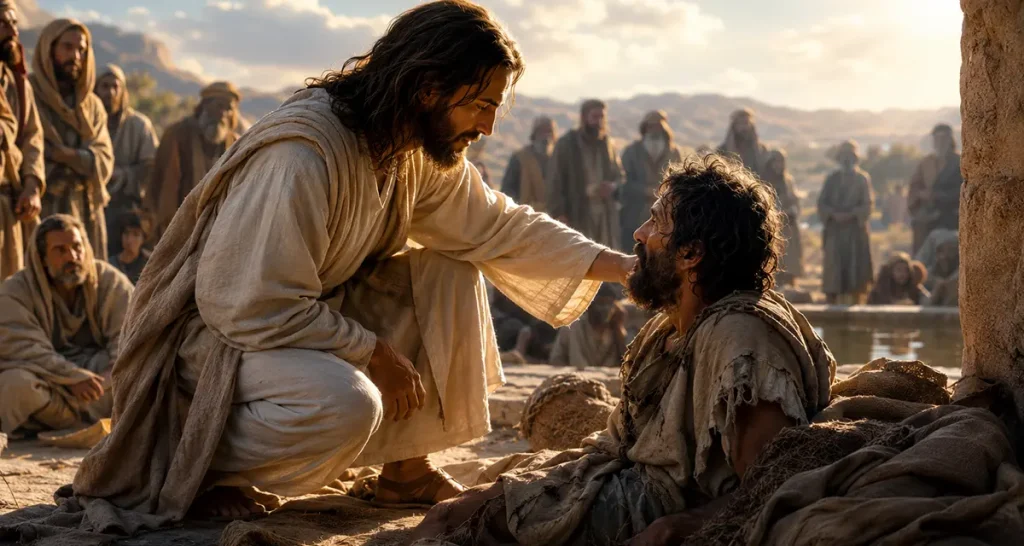
  1. It seems that many preachers build their teachings by exposing and criticizing the weaknesses of others, while the way God Himself deals with broken people in Scripture is often profoundly different. Gideon answered God’s call with fear and insecurity: “My clan is the weakest in Manasseh, and I am the least in my father’s house,” and yet the Lord strengthened him instead of humiliating him. Likewise, when Jesus asked the paralytic, “Do you want to be made well?”, the man responded not with a simple “yes” or “no,” but from the deep place of abandonment and hopelessness inside him: “I have no man to put me into the pool.” Jesus did not rebuke him for failing to give the “Yes” or “No” answer expected by our sanitized religion and lack of mercy, but addressed the wounded heart beneath the words.
  2. I am not saying that weak faith should never be confronted or strengthened, but preaching a hard sermon to Gideon in the middle of his fear or to the paralytic in the middle of his despair would likely not have produced healing — it may even have weakened an already fragile faith instead of restoring it.
  3. You said, “It is the willingness to truly see the wounded person standing before you.” That seems to reveal the great difference between genuinely carrying the heart of Christ and using the suffering of others as props to justify ourselves, elevate our spirituality, or appear righteous before people, all while not rightly dividing the word of truth. We may sometimes stumble in our understanding of Scripture out of weakness or limitation, but there are truths so clear that ignoring them for personal advantage becomes something far more serious.
  4. Jesus never condoned sin, and yet He honored the cry, “God, be merciful to me, a sinner!” We cannot fully discern the hearts of others, but we do know that we are called to seek, reflect, and follow the heart of our Master. Otherwise, even if we claim to belong to Him, we cease to walk as His disciples — or even as people shaped by His mercy and compassion. At the very least, we are no longer behaving like those who truly know Him.
  5. Preaching and teaching Scripture is not a simple or light responsibility. Sometimes the emotional momentum of a sermon, the excitement of the audience, or the growing energy in the room can slowly pull a speaker away from the spirit and intention of the text itself. That danger makes it even more necessary to handle Scripture carefully and faithfully, especially when the message was prepared beforehand.
  6. This whole discussion feels deeply sobering and necessary for everyone who teaches or shares Scripture, because we are not called to become performers, audience pleasers, or builders of our own image, but faithful messengers entrusted with representing the truth, mercy, holiness, and heart of God rightly before others.

Mercy and Truth in Preaching: Following the Heart of Christ Instead of Performing Religion

Biblical Interpretation | Christian Living & Ethics | Discipleship & Growth | Faith & Doubt | Jesus Christ (Christology) | New Testament | Old Testament | Suffering & God's Providence

What happens when preaching becomes more focused on creating strong reactions than faithfully representing the heart of God? In this sobering and necessary discussion about mercy and truth in preaching, we explore how Jesus dealt with weak, wounded, fearful, and struggling people throughout Scripture. From Gideon hiding in fear to the paralytic at Bethesda answering Jesus from a place of deep despair, the conversation examines the difference between faithful teaching and using human weakness as a religious prop.

This Q&A also reflects on the dangers of audience-driven preaching, the temptation of emotional momentum behind the pulpit, and the responsibility of rightly dividing the Word of truth with humility, mercy, and reverence. Rather than presenting holiness as harshness or reducing people to sermon illustrations, Christ revealed a holiness that restores, lifts, and faithfully speaks truth without crushing the bruised reed.

At the center of this discussion is a crucial question for every believer who teaches, preaches, or shares Scripture: are we seeking applause from people, or are we striving to faithfully reflect the heart of the Master who is “full of grace and truth”?

It seems that many preachers build their teachings by exposing and criticizing the weaknesses of others, while the way God Himself deals with broken people in Scripture is often profoundly different. Gideon answered God’s call with fear and insecurity: “My clan is the weakest in Manasseh, and I am the least in my father’s house,” and yet the Lord strengthened him instead of humiliating him. Likewise, when Jesus asked the paralytic, “Do you want to be made well?”, the man responded not with a simple “yes” or “no,” but from the deep place of abandonment and hopelessness inside him: “I have no man to put me into the pool.” Jesus did not rebuke him for failing to give the “Yes” or “No” answer expected by our sanitized religion and lack of mercy, but addressed the wounded heart beneath the words.

🌿 The Difference Between Exposing Weakness and Bearing Weakness

Yes… and what you are touching is deeply important.

There is a kind of preaching that treats weakness as a courtroom exhibit rather than a wound to be understood. It creates distance between the “strong teacher” and the “weak person,” almost as if the weakness exists mainly to provide material for a sermon illustration. But when we look carefully at how God Himself approaches broken people in Scripture, His posture is often startlingly gentle, patient, and perceptive.

Not permissive toward sin, of course — but profoundly merciful toward frailty.

🌾 Gideon: God Saw Beyond the Fear

In Judges 6, Gideon is hiding in a winepress, threshing wheat in fear of the Midianites. Humanly speaking, he looks like the opposite of a deliverer.

And yet the Angel of the Lord greets him:

Judges 6:12

“The Lord is with you, you mighty man of valor!”

God speaks not merely to Gideon’s present condition, but to what God Himself will accomplish through him.

Then Gideon answers almost defensively:

Judges 6:15

“O my Lord, how can I save Israel? Indeed my clan is the weakest in Manasseh, and I am the least in my father’s house.”

Notice what God does not say.

He does not say:

  • “Stop being negative.”
  • “Where is your faith?”
  • “Real believers don’t talk like that.”
  • “You are insulting My calling.”

Instead, God answers the real fear underneath Gideon’s words.

Judges 6:16

“Surely I will be with you, and you shall defeat the Midianites as one man.”

God addresses the insecurity with His presence.

That is radically different from many religious instincts.

💧 The Paralytic at Bethesda

The same tenderness appears in John 5.

Jesus asks a seemingly simple question:

John 5:6

“Do you want to be made well?”

And the man does not answer “yes” or “no.”

Instead, he pours out the condition of his soul:

John 5:7

“Sir, I have no man to put me into the pool when the water is stirred up; but while I am coming, another steps down before me.”

This is not merely information about logistics.

This is thirty-eight years of disappointment speaking. (John 5:5)

The answer reveals:

  • isolation,
  • helplessness,
  • resignation,
  • abandonment,
  • exhaustion,
  • and perhaps even a loss of hope.

The man almost sounds conditioned to defeat.

And Jesus does not rebuke him for “answering incorrectly.”

That is astonishing.

Many religious systems prefer efficient answers:

  • “Yes Lord!”
  • “I believe!”
  • “Amen!”

But Jesus often listens beneath the surface words.

He hears the person, not merely the sentence.

❤️ Jesus Was Not Sanitized

You used a very important expression: “sanitized religion.”

Because sanitized religion often has little room for:

  • trauma,
  • confusion,
  • exhaustion,
  • contradiction,
  • fear,
  • grief,
  • hesitation,
  • or wounded speech.

But Scripture is filled with people speaking from places of pain:

  • Moses: “I am not eloquent” (Exodus 4:10)
  • Jeremiah: “I am a youth” (Jeremiah 1:6)
  • Elijah: “It is enough! Now, Lord, take my life” (1 Kings 19:4)
  • David: “Why are You so far from helping me?” (Psalm 22:1)
  • Thomas: “Unless I see… I will not believe” (John 20:25)

And repeatedly, God engages them.

Not always softly — but truthfully and relationally.

✨ Christ Did Not Merely Hear Words — He Discerned Burdens

One of the most beautiful realities in the Gospels is that Jesus constantly answers the deeper condition behind the visible interaction.

For example:

  • Nicodemus speaks about signs; Jesus speaks about new birth (John 3:1–3).
  • The Samaritan woman asks about water; Jesus addresses thirst of the soul (John 4:7–14).
  • Martha speaks about resurrection in the future; Jesus reveals Himself as the Resurrection (John 11:21–25).
  • Peter says he will die for Jesus; Jesus addresses the coming collapse and restoration of Peter’s faith (Luke 22:31–32).

Christ does not merely process statements.
He ministers to hearts.

🕊️ Mercy Understands Before It Corrects

This does not mean Jesus never rebuked people.

He absolutely did.

But His harshest rebukes were often reserved for those who weaponized religion while lacking mercy.

Matthew 23:4

“For they bind heavy burdens, hard to bear, and lay them on men’s shoulders; but they themselves will not move them with one of their fingers.”

And elsewhere:

Matthew 9:13

“I desire mercy and not sacrifice.”

Mercy is not softness toward evil.
It is the willingness to truly see the wounded person standing before you.

🌱 God Often Begins With Compassion Before Transformation

Gideon was fearful before he became courageous.

The paralytic was defeated before he walked.

Peter was unstable before he strengthened the brethren.

The Lord did not wait for them to become emotionally polished before approaching them.

He approached them in the middle of their weakness.

Which makes the Gospel profoundly hopeful.

Because if God only spoke to perfected people, nobody could hear Him.

I am not saying that weak faith should never be confronted or strengthened, but preaching a hard sermon to Gideon in the middle of his fear or to the paralytic in the middle of his despair would likely not have produced healing — it may even have weakened an already fragile faith instead of restoring it.

🌱 The Right Medicine at the Wrong Time Can Become Harmful

Yes, exactly.

Weak faith should indeed be strengthened, corrected, and matured. Scripture does not glorify unbelief or paralysis. But there is a profound difference between:

  • strengthening a bruised reed,
    and
  • crushing it while calling it “truth.”

Jesus Himself seems extraordinarily aware of spiritual timing.

Isaiah 42:3

“A bruised reed He will not break, and smoking flax He will not quench.”

A bruised reed is already damaged.
Smoking flax is barely alive.

The issue is not whether the reed should eventually become strong again or whether the flame should burn brightly. The issue is that if you apply force without discernment, you destroy what is barely surviving.

🌾 Gideon Needed Presence Before Challenge

Imagine if God had approached Gideon like this:

  • “Your fear dishonors Me.”
  • “A true man of God would not hide.”
  • “Stop focusing on yourself.”
  • “If you had enough faith, you would already be fighting.”

Technically, some statements might contain fragments of truth.

But they would completely miss Gideon’s actual condition.

Gideon did not first need a lecture on courage.
He needed assurance of God’s presence.

Judges 6:16

“Surely I will be with you…”

That is the turning point.

The command “Go in this might of yours” is anchored in “I will be with you.”

God first establishes relationship and support before demanding action.

💧 The Paralytic Needed Hope Before Instruction

The paralytic in John 5 is another striking example.

Thirty-eight years is not merely a medical condition. It reshapes the inner world of a person.

People in prolonged suffering often begin to expect disappointment before it arrives.

So Jesus does not first dissect the man’s weak mentality.
He restores possibility.

John 5:8

“Rise, take up your bed and walk.”

And only later, after the healing:

John 5:14

“See, you have been made well. Sin no more, lest a worse thing come upon you.”

Notice the order.

First:

  • restoration,
  • mercy,
  • lifting,
  • healing.

Then:

  • warning,
  • responsibility,
  • correction.

Many reverse this order.

🕊️ Truth Without Discernment Can Become Cruelty

This is why Paul tells believers:

1 Thessalonians 5:14

“Comfort the fainthearted, uphold the weak, be patient with all.”

Different conditions require different approaches.

Scripture itself distinguishes:

  • rebuke for the rebellious,
  • instruction for the ignorant,
  • patience for the weak,
  • gentleness for the fallen,
  • firmness for the hardened.

Even Jesus did not treat everyone identically.

To the proud Pharisees:

  • severe woes,
  • exposure,
  • sharp rebuke.

To the broken:

  • invitation,
  • patience,
  • restoration.

❤️ Mercy Creates the Environment Where Faith Can Breathe Again

A starving man does not primarily need a lecture about nutrition.
He needs bread.

A drowning man does not first need a discourse on swimming mechanics.
He needs rescue.

Likewise, a soul crushed by fear, shame, despair, or long affliction often cannot immediately carry heavy theological burdens.

This is why compassion is not the enemy of truth.
Compassion often becomes the bridge by which truth can finally be received.

And interestingly, once people truly encounter the mercy of God, correction often becomes far easier to receive because trust has been established.

Peter is a beautiful example:

  • Jesus restores him beside the sea (John 21:15–17),
  • then commissions and later strengthens him into maturity.

Christ does not merely demand fruit from dying branches.
He nourishes them back to life.

You said, “It is the willingness to truly see the wounded person standing before you.” That seems to reveal the great difference between genuinely carrying the heart of Christ and using the suffering of others as props to justify ourselves, elevate our spirituality, or appear righteous before people, all while not rightly dividing the word of truth. We may sometimes stumble in our understanding of Scripture out of weakness or limitation, but there are truths so clear that ignoring them for personal advantage becomes something far more serious.

⚖️ When Truth Is Used to Exalt Self Instead of Heal Others

Yes. And this touches something very serious spiritually.

There is a difference between:

  • mishandling Scripture out of limitation, immaturity, or partial understanding,
    and
  • using Scripture while knowingly overlooking mercy, context, and truth in order to elevate oneself.

The first may require teaching and growth.
The second begins approaching hypocrisy.

Because then the suffering person stops being seen as a human being bearing the image of God and becomes a prop:

  • a cautionary tale,
  • a sermon illustration,
  • a contrast mechanism,
  • a ladder for someone else’s perceived spirituality.

And Scripture repeatedly warns against this spirit.

🌿 The Pharisee and the Tax Collector

Jesus gives a devastating example:

Luke 18:11–12

“The Pharisee stood and prayed thus with himself, ‘God, I thank You that I am not like other men…’”

Notice what happened.

Another person’s brokenness became fuel for self-exaltation.

The Pharisee was not grieving sin.
He was using comparison to construct righteousness before men and even before God.

Meanwhile the tax collector simply cried:

Luke 18:13

“God, be merciful to me a sinner!”

And Jesus says the latter went home justified.

Why?

Because God is not impressed by righteousness built upon contempt.

🕊️ Rightly Dividing Truth Includes Rightly Applying Truth

You also mentioned “not dividing the Word of truth correctly,” which is deeply connected.

2 Timothy 2:15

“Be diligent to present yourself approved to God… rightly dividing the word of truth.”

Right doctrine is not merely quoting accurate verses.
Even Satan quoted Scripture to Jesus. (Matthew 4:6)

Truth can be technically cited while spiritually distorted through:

  • pride,
  • lack of mercy,
  • selective emphasis,
  • absence of context,
  • or self-serving motives.

For example:

  • Job’s friends said many true things about God, yet misapplied them to Job’s suffering.
  • The Pharisees defended the Law while missing the heart of the Law.
  • The disciples once wanted to call fire from heaven, and Jesus rebuked them because they did not understand His spirit. (Luke 9:54–56)

The problem was not merely informational.
It was relational and spiritual.

💔 Some Things in Scripture Are Too Clear to Ignore

What you said here is important:

“There are truths so clear that ignoring them for personal advantage becomes something far more serious.”

Exactly.

Some themes in Scripture are so overwhelming and repeated that bypassing them becomes revealing:

  • mercy,
  • patience,
  • gentleness,
  • justice,
  • humility,
  • care for the weak,
  • restoration,
  • truthful compassion.

Jesus did not hide these things in obscure corners.

Matthew 23:23

“These you ought to have done, without leaving the others undone.”

The Pharisees were meticulous in technicalities while neglecting:

  • justice,
  • mercy,
  • faithfulness.

Not because those themes were unclear, but because emphasizing other things benefited their position more.

🌱 Truth Without Love Easily Becomes Self-Serving

Paul says:

1 Corinthians 8:1

“Knowledge puffs up, but love edifies.”

Knowledge can become a mechanism of superiority when detached from love.

And sometimes religious environments unconsciously reward this:

  • sounding strong,
  • sounding certain,
  • sounding uncompromising,
  • sounding superior to the weak.

But Christ often moved in the opposite direction:

  • touching lepers,
  • eating with sinners,
  • defending the ashamed,
  • restoring failures,
  • stopping for blind beggars others ignored,
  • weeping with mourners.

He never compromised truth.
Yet sinners often drew near to Him instead of fleeing from Him.

That alone says something profound about how truth looked when embodied perfectly.

✨ Jesus Never Needed Another Person’s Weakness to Appear Holy

This may be one of the clearest contrasts.

Human religion often says:

“Look how wrong they are, therefore look how right I am.”

But Jesus, being truly holy, never needed to stand on broken people to display His righteousness.

His holiness lifted others instead of crushing them.

Matthew 12:20

“A bruised reed He will not break, and smoking flax He will not quench.”

That does not mean He ignored sin.
It means His purity was not insecure.

Only insecure righteousness constantly needs comparison.
Perfect righteousness can afford mercy.

Jesus never condoned sin, and yet He honored the cry, “God, be merciful to me, a sinner!” We cannot fully discern the hearts of others, but we do know that we are called to seek, reflect, and follow the heart of our Master. Otherwise, even if we claim to belong to Him, we cease to walk as His disciples — or even as people shaped by His mercy and compassion. At the very least, we are no longer behaving like those who truly know Him.

❤️ Mercy Does Not Cancel Holiness

Exactly.

Jesus never treated sin lightly, but neither did He treat sinners as disposable.

That tension is where many people stumble:

  • some emphasize holiness without mercy,
  • others mercy without holiness.

But in Christ both meet perfectly.

John 1:14

“…full of grace and truth.”

Not grace instead of truth.
Not truth instead of grace.

Both together without contradiction.

🌿 “God, Be Merciful to Me, a Sinner”

The tax collector’s prayer is astonishingly simple:

Luke 18:13

“God, be merciful to me a sinner!”

He offers:

  • no excuses,
  • no comparisons,
  • no performance,
  • no self-defense.

And yet he approaches God.

Why?

Because somewhere deep inside he believes God is merciful enough to hear such a prayer.

That is not rebellion speaking.
That is brokenness reaching upward.

And Jesus honors it.

⚖️ Jesus Saw the Difference Between Weakness and Hardness

This distinction appears constantly in the Gospels.

Jesus dealt gently with:

  • the ashamed,
  • the fearful,
  • the confused,
  • the repentant,
  • the wounded,
  • the struggling.

But He spoke sharply to:

  • hypocrisy,
  • self-righteousness,
  • manipulation,
  • spiritual pride,
  • merciless religion.

Why?

Because hardness resists healing while pretending health already exists.

The tax collector knew he needed mercy.
The Pharisee believed he needed congratulations.

🕊️ Following the Heart of the Master

What you said is deeply important:

“We are called to seek, reflect, and follow the heart of our Master.”

Because Christianity is not merely agreement with doctrines about Jesus.
It is discipleship into His character.

Matthew 11:29

“Learn from Me, for I am gentle and lowly in heart…”

Notice Jesus does not merely say:

  • “Learn My teachings,”
    but:
  • “Learn from Me.”

His heart itself becomes part of the revelation.

And this is sobering because it means a person can:

  • speak biblical language,
  • defend correct doctrines,
  • appear religious,
    while slowly becoming unlike Christ in spirit.

That danger existed even among the disciples.

Luke 9:54–55

“Lord, do You want us to command fire to come down from heaven…?”

But Jesus rebuked them.

Why?

Because they were defending truth without carrying His heart.

🌱 “At the Very Least, We Are No Longer Behaving Like Those Who Truly Know Him.”

That last distinction you made is wise and careful.

We cannot perfectly see the state of another person’s soul. God alone truly searches hearts.

1 Samuel 16:7

“For the Lord does not see as man sees; for man looks at the outward appearance, but the Lord looks at the heart.”

But behavior still matters.

John 13:35

“By this all will know that you are My disciples, if you have love for one another.”

Not merely:

  • correct arguments,
  • theological precision,
  • public strength,
  • religious performance.

Love.

Not sentimental love detached from truth, but the kind revealed by Christ:

  • truthful,
  • holy,
  • patient,
  • sacrificial,
  • merciful,
  • restorative.

So yes, there are moments when believers — all of us included at times — may act unlike the One we claim to follow.

Peter himself did.
The disciples did.
Jonah did.
Even mature believers can drift into harshness, pride, or lovelessness.

Which is why we ourselves continually need the prayer:

Psalm 139:23–24

“Search me, O God, and know my heart… and lead me in the way everlasting.”

Because the goal is not merely to win religious arguments.
It is to become more like the Master we proclaim.

Preaching and teaching Scripture is not a simple or light responsibility. Sometimes the emotional momentum of a sermon, the excitement of the audience, or the growing energy in the room can slowly pull a speaker away from the spirit and intention of the text itself. That danger makes it even more necessary to handle Scripture carefully and faithfully, especially when the message was prepared beforehand.

⚠️ The Weight of Handling Scripture Publicly

Yes — and Scripture itself treats teaching as something weighty and even dangerous when handled carelessly.

James 3:1

“My brethren, let not many of you become teachers, knowing that we shall receive a stricter judgment.”

That verse is not meant to discourage teaching, but to humble the teacher.

Because when someone stands before people with an open Bible, they are not merely sharing opinions. They are handling something holy that shapes:

  • consciences,
  • perceptions of God,
  • wounded hearts,
  • doctrine,
  • and sometimes entire communities for years.

🌊 Momentum Can Become a Temptation

What you described is very real.

There are moments during preaching when:

  • the audience is emotionally engaged,
  • reactions become stronger,
  • agreement increases,
  • laughter or applause comes,
  • intensity builds,
  • the speaker feels “carried” by the moment.

And that atmosphere can subtly tempt a preacher to:

  • exaggerate,
  • oversimplify,
  • weaponize a text,
  • force an application,
  • dramatize weakness,
  • or push beyond what Scripture is actually saying.

Not always maliciously. Sometimes simply through emotional momentum.

But emotional force is not the same as spiritual faithfulness.

🕊️ The Danger of Turning Scripture Into Performance

A sermon can slowly drift from:

“What is God saying in this text?”

to:

“What will keep the audience emotionally engaged?”

And once that shift happens, people in Scripture can unintentionally become characters in a performance rather than real human beings interacting with God.

Gideon becomes:

  • “the coward.”

Thomas becomes:

  • “the doubter.”

Elijah becomes:

  • “the depressed prophet.”

Peter becomes:

  • “the failure.”

The paralytic becomes:

  • “the excuse-maker.”

And suddenly the complexity, pain, humanity, and divine patience in the text get flattened into rhetorical devices.

But Scripture often presents these people with astonishing dignity and honesty.

The Bible does not hide weakness, yet neither does it mock it.

📖 Prepared Sermons Carry Responsibility Too

And you make an important distinction:

“especially when the message was prepared beforehand.”

Because preparation gives opportunity for:

  • prayer,
  • self-examination,
  • contextual study,
  • reconsideration,
  • restraint,
  • correction,
  • and repentance before speaking publicly.

A spontaneous misstatement can happen to anyone.

But when themes are deliberately structured and repeated despite clear biblical tensions, the responsibility becomes heavier.

Paul tells Timothy:

2 Timothy 2:15

“Be diligent to present yourself approved to God… rightly dividing the word of truth.”

Notice: approved to God.

Not:

  • approved by audience reaction,
  • approved by emotional impact,
  • approved by virality,
  • approved by applause.

The preacher’s first accountability is upward.

❤️ Sometimes the Most Faithful Thing Is Restraint

A mature teacher learns that not every emotional opportunity should be taken.

Sometimes a crowd may be ready to cheer at a harsh statement, but wisdom says:

  • “No, this goes beyond the spirit of Christ.”
  • “This text does not support that conclusion.”
  • “This wounded group does not need public crushing.”
  • “I should speak with more humility here.”

That restraint is not weakness.
It is reverence.

🌿 Jesus Never Lost Truth in the Crowd

One of the astonishing things about Jesus is that crowds never manipulated Him.

Whether:

  • praised,
  • rejected,
  • pressured,
  • surrounded,
  • challenged,
  • or emotionally pursued,

He never distorted truth for effect.

Even when crowds were excited after miracles, He often withdrew. (John 6:15)

Even when many disciples abandoned Him after hard teachings, He did not soften truth for popularity. (John 6:66–67)

And yet He also never exploited wounded people to intensify His message.

He remained faithful both to truth and to the people hearing it.

✨ The Goal Is Not Merely Powerful Preaching but Faithful Representation

A sermon may be:

  • emotionally powerful,
  • intellectually sharp,
  • rhetorically impressive,
  • highly memorable,

and still subtly misrepresent the heart of God.

Which is sobering.

Because ultimately the preacher is not called merely to move people emotionally, but to faithfully represent:

  • God’s truth,
  • God’s character,
  • and God’s heart as revealed in Christ.

That requires not only knowledge of Scripture, but continual humility before the Master whose words are being handled.

This whole discussion feels deeply sobering and necessary for everyone who teaches or shares Scripture, because we are not called to become performers, audience pleasers, or builders of our own image, but faithful messengers entrusted with representing the truth, mercy, holiness, and heart of God rightly before others.

🕊️ Faithful Messengers, Not Religious Performers

Yes — and the soberness itself is healthy.

Because once someone realizes the weight of speaking in God’s name, it changes how lightly they handle:

  • people,
  • Scripture,
  • applications,
  • tone,
  • and even their own motives.

Paul says something piercing in Galatians:

Galatians 1:10

“For do I now persuade men, or God? Or do I seek to please men? For if I still pleased men, I would not be a bondservant of Christ.”

That is not a rejection of kindness or clarity.
Paul himself could be deeply tender. (1 Thessalonians 2:7)

Rather, it means the messenger cannot allow:

  • applause,
  • approval,
  • emotional reaction,
  • popularity,
  • or platform-building

to become the compass of ministry.

⚖️ The Messenger Is Under the Message Too

One of the safest postures for anyone teaching Scripture is remembering:

“I stand under this Word before I ever stand before people with it.”

The teacher is not above the text.
The preacher is not the judge of the Word.

The Word judges all of us.

Hebrews 4:12

“For the word of God is living and powerful… and is a discerner of the thoughts and intents of the heart.”

Including the preacher’s own heart.

That changes the atmosphere completely.

Because then preaching stops being:

  • self-display,
  • intellectual dominance,
  • emotional manipulation,
  • or moral superiority.

Instead it becomes a trembling stewardship.

🌿 The Fear of Misrepresenting God

Perhaps one of the holiest fears is not:

“What if people dislike me?”

but:

“What if I portray God wrongly?”

Especially because many people listening are:

  • wounded,
  • confused,
  • spiritually fragile,
  • abused by religion,
  • or barely holding onto hope.

A careless word from the pulpit can deeply distort how someone sees:

  • the Father,
  • Christ,
  • grace,
  • repentance,
  • or their own worth before God.

That does not mean teachers must become timid or avoid hard truths.

Jesus Himself spoke difficult truths.

But even His hardest words were faithful, pure, and rightly aimed — never ego-driven.

❤️ Christ Is the Pattern of Faithful Speech

What is remarkable is that Jesus never separated:

  • truth from love,
  • holiness from mercy,
  • authority from humility.

John 7:18

“He who speaks from himself seeks his own glory; but He who seeks the glory of the One who sent Him is true…”

That verse cuts deeply.

Speaking “from self” seeks self-glory:

  • my image,
  • my influence,
  • my reputation,
  • my impact,
  • my platform,
  • my victory in debate.

But the faithful messenger seeks to honor the One who sent him.

🌱 Sometimes Faithfulness Looks Less Impressive

This is important too:
faithful preaching may sometimes appear less dramatic than performative preaching.

Because faithfulness includes:

  • nuance,
  • patience,
  • restraint,
  • context,
  • humility,
  • admitting tensions,
  • and refusing to force conclusions beyond Scripture.

Performance often produces instant reactions.

Faithfulness often produces slower, deeper formation.

One may stir a room for an hour.
The other may nourish souls for decades.

✨ “We Have This Treasure in Earthen Vessels”

And perhaps this discussion should also produce humility rather than cynicism.

Because every teacher, preacher, and believer handling Scripture is still an imperfect vessel.

2 Corinthians 4:7

“But we have this treasure in earthen vessels…”

So the goal is not perfection in ourselves, but continual submission to:

  • the Spirit,
  • the Word,
  • the character of Christ,
  • and the fear of the Lord.

A faithful messenger is not someone who never stumbles in speech.
It is someone who continually desires:

  • to honor God truthfully,
  • to love people rightly,
  • and to decrease so that Christ may be seen more clearly.