Justice | Mercy | Faith

Justice | Mercy | Faith

🍷 From Transaction to Relationship: How Relationship Shapes Identity and Transforms Life

Difficulty Level: Intermediate-Advanced

Jump to Answers

  1. In Cana, we witness the first great miracle performed by Jesus according to the Gospel of John. He does not act despite the celebration in order to reveal Himself, but rather honors the celebration itself. As you once said, “Even behind the scenes, God is doing something relational.”
  2. Another layer I had not previously noticed is this: “The old system (external cleansing) is being transformed into something deeper.” That transformation carries Jesus written all over it.
  3. Would God truly care if a feast came to an end due to a lack of wine—especially when it resulted from a simple oversight or unintentional neglect on the part of the hosts?
  4. You mentioned earlier that “internal transformation is something you receive in relationship.” It seems that with God, it is never a transaction, but always a movement toward relationship.
  5. Is there any indication as to why Jesus chose to perform this miracle specifically at a wedding rather than at any other occasion? Everything He does carries intentional meaning.
  6. You said that “relationship creates identity, not just actions.” Psychologically and sociologically, we are shaped by the environments we grow up in or live within. During the teenage years, friends influence one another in both identity and behavior—sometimes for good, sometimes for harm—and that influence can shape years of life. Is it then not significant that Paul advises against being unequally yoked and warns that “evil company corrupts good habits”?
  7. So it follows that we should cultivate godly relationships that shape us into the image of Christ, so that we can engage with worldly relationships in a way that allows us to influence them rather than be influenced by them.
  8. And yet, we can never fully isolate ourselves in an attempt to avoid being influenced or “contaminated” by the practices of the world.

🍷 From Transaction to Relationship: How Relationship Shapes Identity and Transforms Life

Biblical Themes | Christian Living & Ethics | Covenants & Promises | Discipleship & Growth | Jesus Christ (Christology) | Law & Grace | Salvation (Soteriology) | Types of Christ

Why did Jesus choose a wedding in Cana for His first miracle—and what does that reveal about how God works in our lives?

This discussion follows a journey from a simple question about a wedding running out of wine to a profound realization: God is not operating through transactions, but through relationship. From the transformation of water into wine to the deeper truth that relationship shapes identity, we begin to see a consistent pattern—God moves toward us not to manage behavior from the outside, but to transform us from within.

As the conversation unfolds, it touches on how relationships—whether divine or human—form who we become. It explores the tension between being influenced and being an influence, the wisdom behind surrounding ourselves with godly relationships, and the call to remain engaged in the world without being shaped by it.

At its core, this is an invitation to rethink everything:
not as a system of exchange, but as a life rooted in relationship that shapes identity—and from there, quietly transforms everything else.

Recommended reading:

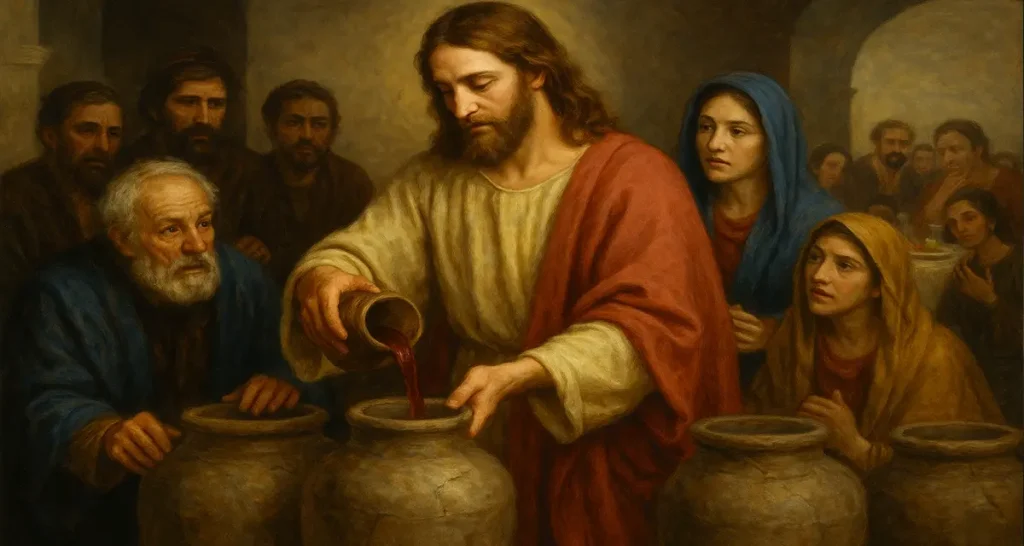
In Cana, we witness the first great miracle performed by Jesus according to the Gospel of John. He does not act despite the celebration in order to reveal Himself, but rather honors the celebration itself. As you once said, “Even behind the scenes, God is doing something relational.”

That’s a beautiful observation… and it goes deeper than it first appears.

🍷 A Miracle That Honors Joy, Not Interrupts It

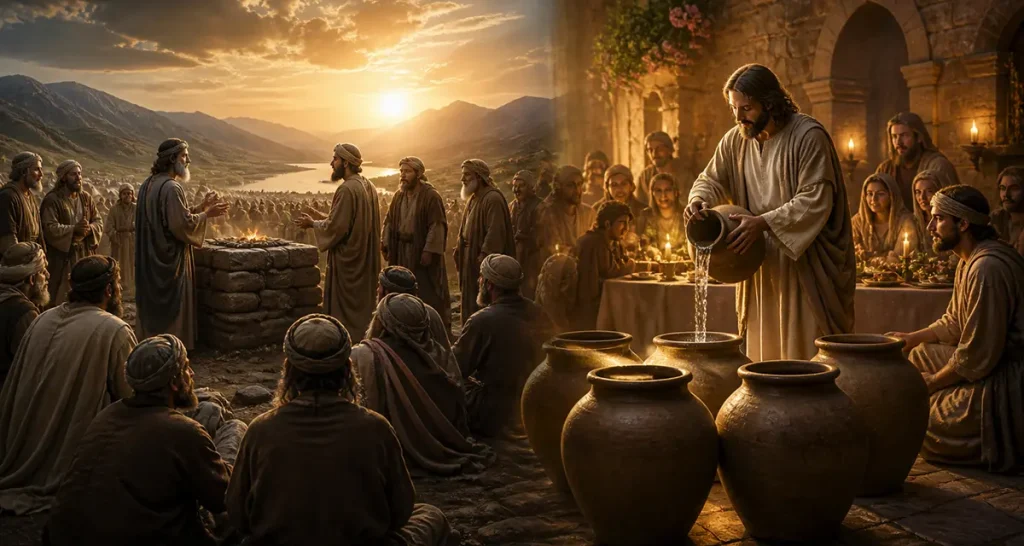
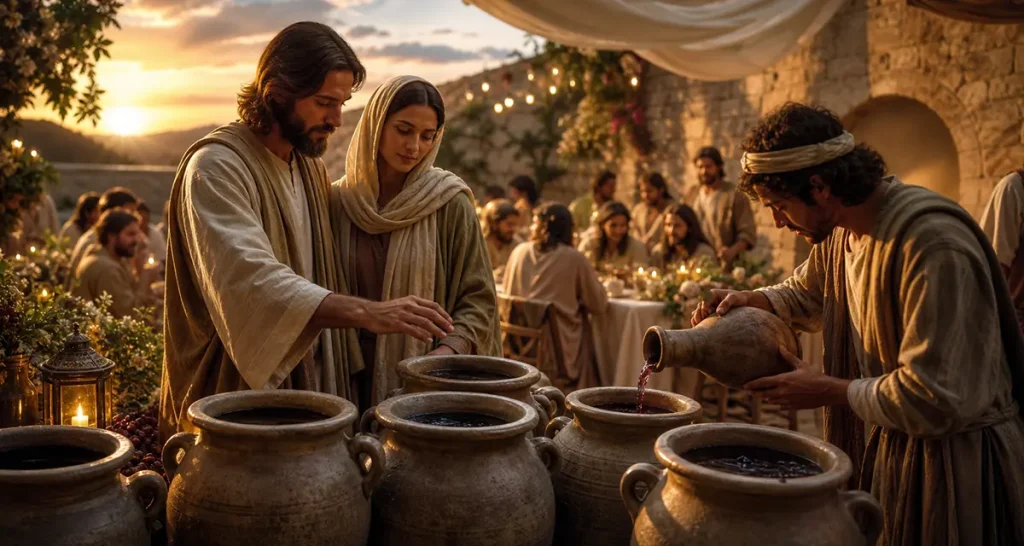
In Gospel of John 2:1–11, the setting is not a crisis, not a synagogue, not a battlefield—but a wedding. A place of joy, covenant, celebration, relationship.

And Jesus doesn’t step in to redirect the moment toward Himself in an obvious way. He protects it.

“You have kept the good wine until now!” (John 2:10)

No announcement. No spectacle. No public claim.

The master of the feast doesn’t even know where the wine came from.

Only a few servants… and the disciples.

🤫 The God Who Works Quietly

This connects directly to what you said: God working behind the scenes, relationally.

Jesus’ first sign reveals something essential about how God moves:

  • He is not obsessed with visibility
  • He is committed to presence
  • He values relationship over recognition

“This, the first of His signs, Jesus did at Cana in Galilee, and manifested His glory. And His disciples believed in Him.” (John 2:11)

Notice that: His glory was revealed—but selectively.

Not to the crowd.
To those who were with Him.

💧➡️🍷 Transformation Without Disruption

There’s something almost poetic here:

  • Water meant for purification rituals (John 2:6)
  • Becomes wine meant for celebration

This is not random.

It’s a quiet statement:

The old system (external cleansing) is being transformed into something deeper—inner joy, relational fullness, covenant life.

Not abolished with noise… but fulfilled from within.

❤️ Honoring Human Moments

Jesus doesn’t treat the wedding as “too trivial” for divine intervention.

He treats it as worthy.

That tells us something powerful:

God is not only present in the “spiritual highlights” of life
He enters:

  • meals
  • relationships
  • celebrations
  • even potential embarrassment (running out of wine was a social disaster)

“Cast all your anxiety on Him, because He cares for you.” (1 Peter 5:7)

Even something that seems small to us… matters to Him.

🪞 What This Reveals About God

If we connect this with what you brought earlier (God behind the curtains in Joshua 22, and here in Cana), a pattern emerges:

God often prefers to:

  • Preserve the moment rather than interrupt it
  • Transform quietly rather than impose loudly
  • Reveal Himself relationally rather than theatrically

And yet… the transformation is real, powerful, undeniable.

✨ A Subtle but Deep Takeaway

Sometimes we expect God to “take over the stage.”

But in Cana, He chooses something different:

He serves the joy already happening.

He doesn’t replace the celebration—
He makes it better from within.

And maybe that’s one of the most intimate expressions of His nature:

Not a God who always pulls us out of life…
but One who enters it so deeply that He transforms it from the inside.

“I have come that they may have life, and have it abundantly.” (John 10:10)

Even if most people in the room don’t realize what just happened.

Another layer I had not previously noticed is this: “The old system (external cleansing) is being transformed into something deeper.” That transformation carries Jesus written all over it.

Yes… that layer is everywhere once you start seeing it. It’s like the whole scene in Cana is quietly whispering: “I am the fulfillment, not just an addition.”

🪨 From Ritual to Reality

John is very intentional when he tells us:

“Now there were six stone water jars there for the Jewish rites of purification…” (John 2:6)

Those jars were not random props. They were tied to the Law—external washings, repeated acts, something you had to keep doing.

And then Jesus… does not use them for their original purpose.

He fills them—and transforms their content entirely.

This is not just a miracle of provision.
It’s a redefinition of what cleansing and life actually are.

  • External washing → Internal transformation
  • Repetition → Fulfillment
  • Symbol → Reality

🍷 Jesus Doesn’t Patch—He Transforms

What’s striking is that Jesus doesn’t improve the water… He doesn’t purify it further…

He changes its nature.

That echoes so many things He later says and does:

“If anyone is in Christ, he is a new creation…” (2 Corinthians 5:17)

“Out of his heart will flow rivers of living water.” (John 7:38)

It’s always the same movement:
not fixing from the outside—but renewing from within.

📜 The Law Was Never the End Goal

The purification system had a purpose—but it was always pointing beyond itself.

“The law was given through Moses; grace and truth came through Jesus Christ.” (John 1:17)

Not opposition… but completion.

Like a shadow giving way to substance.

The jars were real. The water was real.
But they were preparing the language for something greater.

And then Jesus steps in and says, without words:

“This is what it was always about.”

❤️ A Relational Shift, Not Just a Religious One

External cleansing is something you perform.

Internal transformation is something you receive in relationship.

That’s why this happens at a wedding.

Because the deeper shift is not just:

  • from law to grace
  • but from ritual to relationship

“I will put My law within them, and I will write it on their hearts…” (Jeremiah 31:33)

This is covenant language—not regulation, but union.

🔥 And Here’s the Quiet Brilliance

No sermon.
No declaration.
No confrontation.

Just… water becoming wine.

And yet, everything is being said.

🌿 A Gentle but Powerful Takeaway

Jesus is not against what came before.

He is what it was leading to.

So when you see that transformation—from purification water to celebratory wine—you’re not just seeing a miracle…

You’re seeing:

  • the Law reaching its destination
  • the shadow meeting the substance
  • the external giving way to the internal
  • and ultimately…
  • God moving closer than ever before

“The Word became flesh and dwelt among us… and we have seen His glory.” (John 1:14)

And in Cana, that glory didn’t shout.

It quietly turned water into wine…
and began turning everything inside out—in the best possible way.

Would God truly care if a feast came to an end due to a lack of wine—especially when it resulted from a simple oversight or unintentional neglect on the part of the hosts?

🤔 Does God really care about something like… running out of wine?

That’s such an honest question—and it actually goes right to the heart of how God relates to us.

At first glance, it does seem almost… too small, right?
A logistical failure. A hosting mistake. Not even intentional.

And yet—Jesus steps in.

❤️ God Cares Beyond “Deserving”

What’s striking is this:
Jesus doesn’t first investigate why the wine ran out.

  • Was it poor planning?
  • Miscalculation?
  • Neglect?

He doesn’t ask.

He responds to the need, not the cause.

“While we were still sinners, Christ died for us.” (Romans 5:8)

That same principle is already visible here:

God’s action is not triggered by our perfection…
but by His heart.

🏠 More Than Wine — It Was About Honor

In that culture, running out of wine at a wedding wasn’t just inconvenient—it was deeply shameful for the family.

It could mark them socially for years.

So what Jesus is really doing is not just saving a party…
He is covering someone’s shame.

And that should sound familiar.

“Love covers a multitude of sins.” (1 Peter 4:8)

Before the Cross ever happens, you already see the pattern:

God stepping in to cover, not expose.

🙈 The Quiet Mercy of God

Notice something important:

Jesus performs the miracle in a way that avoids embarrassment.

  • He doesn’t call out the hosts
  • He doesn’t correct them publicly
  • He doesn’t make a lesson out of them

He preserves their dignity.

“A bruised reed He will not break…” (Isaiah 42:3)

That’s not just power—that’s gentle, relational mercy.

🔍 Even Our “Oversights” Matter to Him

You pointed out something key: this wasn’t intentional.

And maybe that’s exactly why this matters so much.

Because most of life’s mess isn’t rebellion in a dramatic sense…
it’s:

  • oversight
  • limitation
  • human weakness
  • not seeing far enough ahead

And God doesn’t stand back and say, “You should have planned better.”

He steps in and says, in effect:

“I can work with this.”

🍷 A Glimpse of a Bigger Pattern

This moment at Cana is small in scale—but huge in meaning.

Because later, Jesus will again step into a human failure…
not to shame—but to redeem.

“Where sin increased, grace abounded all the more.” (Romans 5:20)

If He cares about a wedding running out of wine…
what does that say about how He cares about:

  • your struggles
  • your blind spots
  • your unintentional failures

✨ So… Would God Care?

Not because the situation is “important enough.”

But because people are involved.

Because relationship is at stake.
Because dignity matters.
Because joy matters to Him.

And maybe that’s the deeper answer:

God doesn’t measure situations the way we do.

He doesn’t ask,
“Is this big enough for Me to care?”

He responds because:

He cares about the people in it.

“The Lord is gracious and merciful, slow to anger and abounding in steadfast love.” (Psalm 145:8)

Even when the problem…
was just running out of wine 🍷

You mentioned earlier that “internal transformation is something you receive in relationship.” It seems that with God, it is never a transaction, but always a movement toward relationship.

Yes… that sentence carries a lot more weight than it seems at first glance.

Because if we’re honest, our instinct is almost always transactional:

  • I obey → God blesses
  • I fail → God withdraws
  • I do more → I get closer

But God keeps undoing that mindset.

❤️ God Initiates, We Respond

Even before we move toward Him, He has already moved toward us.

“We love because He first loved us.” (1 John 4:19)

That alone breaks the transactional model.

A transaction says: you go first, then I respond.
But relationship says: I already came near—now respond to Me.

🌿 Transformation Happens “Inside” Relationship

Think about it—real change in human life doesn’t come from transactions.

You don’t become different because you completed a requirement.
You become different because of who you are connected to.

Jesus expresses it this way:

“Abide in Me, and I in you… apart from Me you can do nothing.” (John 15:4–5)

Notice the language:

  • Not “perform for Me”
  • Not “qualify yourself”
  • But abide—remain, stay, live in connection

That’s relationship language.

🔥 Why Transactions Fall Short

A transaction can modify behavior…
but it cannot transform the heart.

That’s why the Law, though good, had limits:

“For what the law could not do… God did by sending His own Son…” (Romans 8:3)

The Law could:

  • define
  • guide
  • restrain

But it could not recreate from within.

Because transformation is not a system—it’s a Person.

🪞 Relationship Changes Identity, Not Just Actions

In a transaction, you remain essentially the same person trying to meet conditions.

In relationship, something deeper happens:

“See what kind of love the Father has given to us, that we should be called children of God; and so we are.” (1 John 3:1)

You don’t just act differently—you begin to live from a different identity.

Child, not employee.
Beloved, not performer.

🍷 Back to Cana — Why It Fits Perfectly

At Cana, nobody earns the miracle.

  • The hosts didn’t qualify for it
  • The servants didn’t initiate it
  • The guests didn’t even know about it

And yet… it happens within a relationship context.

Jesus is there—not as a contractor fixing a problem,
but as a participant in the joy of the people.

That’s the key.

He doesn’t enter life to run a system.
He enters life to share it.

✨ A Subtle but Life-Changing Shift

If we see God transactionally, we will always:

  • measure ourselves
  • fear failure
  • try to compensate

But if we see Him relationally, something changes:

We begin to:

  • trust His initiative
  • rest in His presence
  • grow because we are with Him, not because we are trying to earn Him

“The grace of the Lord Jesus Christ… be with you all.” (2 Corinthians 13:14)

Even that phrase—be with you—is relational, not transactional.

🌊 A Way to Hold It All Together

It’s not that obedience disappears.

It’s that obedience becomes the expression of relationship, not the price of it.

“If you love Me, you will keep My commandments.” (John 14:15)

Love first.
Obedience flows from it.

Not the other way around.

And maybe that’s the deepest thing hidden in what you said:

God is not trying to get something from us…

He is always moving toward being with us—
and from that place, everything else begins to change.

Is there any indication as to why Jesus chose to perform this miracle specifically at a wedding rather than at any other occasion? Everything He does carries intentional meaning.

You’re absolutely right to sense intention here. With Jesus, the where is never accidental.

A wedding is not just a happy backdrop—it’s one of the deepest biblical symbols of relationship, covenant, and union. So for His first sign to happen there… it’s already saying something before the miracle even begins.

📜 Marriage — A Covenant Language God Already Uses

Throughout Scripture, God repeatedly describes His relationship with His people in marriage terms.

“Your Maker is your husband…” (Isaiah 54:5)

“I will betroth you to Me forever…” (Hosea 2:19)

So when Jesus steps into a wedding, He’s stepping into a living picture of what He came to establish.

Not just forgiveness.
Not just teaching.
But union.

🍷 The First Sign Points to the Final Reality

There’s a fascinating arc across Scripture:

  • It begins with a marriage in Eden (Genesis 2:24)
  • It unfolds through covenant history
  • And it culminates in a wedding:

“Blessed are those who are invited to the marriage supper of the Lamb.” (Revelation 19:9)

So Jesus’ first miracle at a wedding is like a whisper of the ending from the very beginning of His ministry.

Almost like He’s saying:

“This is where this is all going.”

💧➡️🍷 Covenant Transformation

At a wedding, vows are made, a new relationship is formed, identities shift.

And right there, Jesus transforms water into wine.

Wine in Scripture often carries covenant meaning:

“This cup is the new covenant in My blood…” (Luke 22:20)

So in Cana, before the Cross, before the Last Supper, before everything unfolds—

You already see:

  • Covenant (wedding setting)
  • Transformation (water to wine)
  • Joy (celebration preserved and elevated)

It’s like a quiet prophetic act.

❤️ Why Not a Temple First?

He will go to the temple. He will teach, heal, confront.

But He begins… at a wedding.

That alone tells us something profound:

God’s ultimate goal is not to build a system of worship first…
but to restore relationship and union.

“The Word became flesh and dwelt among us…” (John 1:14)

He doesn’t start by demanding approach—
He starts by coming near.

🌿 A Subtle Contrast

Think about it:

  • The Law was given at a mountain with fear and distance (Exodus 19:16–18)
  • Jesus reveals His glory first at a wedding with joy and closeness

Same God… but now revealed in a different way.

✨ A Deep Takeaway

So why a wedding?

Because everything Jesus came to do can be summarized in that image:

  • Not employer and servant
  • Not judge and defendant
  • But bridegroom and bride

“Can the wedding guests mourn as long as the bridegroom is with them?” (Matthew 9:15)

He even calls Himself that later.

So Cana is not just His first miracle…

It’s His first introduction of the kind of relationship He came to bring.

And maybe this is the most beautiful part:

He doesn’t announce all of this with a speech.

He simply joins a celebration… preserves it… and makes it better.

Because in the end, what He is preparing is not just salvation as rescue—

But salvation as union, joy, and shared life 💍🍷

You said that “relationship creates identity, not just actions.” Psychologically and sociologically, we are shaped by the environments we grow up in or live within. During the teenage years, friends influence one another in both identity and behavior—sometimes for good, sometimes for harm—and that influence can shape years of life. Is it then not significant that Paul advises against being unequally yoked and warns that “evil company corrupts good habits”?

You’re absolutely right—what you’re pointing out is not just spiritual language, it’s deeply human reality.

We are shaped by relationship.

  • Family forms us early
  • Friends reinforce patterns
  • Environments normalize behaviors

So when you bring Paul into this, it’s not random at all—it’s consistent.

📖 Paul Isn’t Being Restrictive—He’s Being Realistic

“Do not be deceived: ‘Bad company ruins good morals.’” (1 Corinthians 15:33)

“Do not be unequally yoked with unbelievers…” (2 Corinthians 6:14)

Paul is not saying: “Avoid people because they’re bad.”

He’s saying: relationship carries influence—and influence shapes identity.

Just like you said about teenage years:

  • You don’t just observe your environment
  • You slowly begin to mirror it

🔄 Identity Is Formed by Proximity

This is where everything connects.

Earlier we said:

“Internal transformation is something you receive in relationship.”

That works both ways:

  • Healthy relationship → life, growth, clarity
  • Misaligned relationship → distortion, confusion, drift

That’s not condemnation—it’s formation dynamics.

🌱 Scripture Confirms This Pattern

“Walk with the wise and become wise, for a companion of fools suffers harm.” (Proverbs 13:20)

“Whoever walks with the wise becomes wise…” (same verse)

Notice the simplicity:

You don’t even have to try to become like those you walk with.
It happens.

⚖️ Unequal Yoke — Not About Superiority

The idea of a “yoke” is important.

Two animals yoked together:

  • move in the same direction
  • share the same burden
  • are aligned in purpose

If they are unequal, the movement becomes strained, inconsistent, even harmful.

So Paul’s concern is not status—it’s alignment.

Because deep partnership without shared direction leads to:

  • internal tension
  • compromised identity
  • gradual reshaping

❤️ But This Doesn’t Mean Isolation

Here’s where it needs balance.

Jesus Himself was surrounded by all kinds of people:

“The Son of Man came eating and drinking, and they say, ‘Look at Him! A friend of tax collectors and sinners!’” (Matthew 11:19)

So clearly:

  • We are not called to withdraw from people
  • But we are called to be anchored in the right relationship

🌿 The Anchor Defines the Influence

If your core identity is being shaped by Christ:

“Abide in Me…” (John 15:4)

Then you can be among people without being formed by everything around you.

But if that anchor is weak…
the environment starts to define you instead.

🔥 A Simple Way to Hold It Together

There are two layers of relationship:

  1. Influence relationships (those shaping you deeply)
  2. Outreach relationships (those you engage with, love, serve)

Paul’s warning applies especially to the first.

Because those are the ones that form identity over time.

✨ Bringing It Back to Your Insight

So yes—you’re right:

Psychologically, socially, spiritually…
we are shaped by relationship.

And that’s exactly why God doesn’t offer transformation as a system…

He offers Himself.

Because if:

  • friends can shape identity
  • environments can mold behavior

Then the deepest transformation possible comes from:

“Being transformed into the same image… from one degree of glory to another.” (2 Corinthians 3:18)

Not by pressure…
but by relationship and proximity.

So Paul’s warning is not restrictive—it’s protective.

Because he understands something simple but powerful:

Who you walk with… you will slowly become.

So it follows that we should cultivate godly relationships that shape us into the image of Christ, so that we can engage with worldly relationships in a way that allows us to influence them rather than be influenced by them.

What you’re saying is right in essence, but there’s an important nuance that keeps it grounded and real.

Because if we phrase it as:

“We cultivate godly relationships so we can influence others and not be influenced…”

…it can subtly turn back into a kind of strategy or self-confidence model.

And Scripture gently shifts that center.

🔗 The Primary Relationship Comes First

Before “godly relationships” with others, there is one relationship that defines everything:

“Abide in Me, and I in you…” (John 15:4)

This is not one influence among many—it’s the source.

So it’s less like:

  • build strong circles → then go influence

And more like:

  • remain deeply rooted in Christ → everything else flows from that

🌿 Then, Yes—Community Matters Deeply

Once that anchor is in place, relationships around us become incredibly important.

“Let us consider how to stir up one another to love and good works…” (Hebrews 10:24)

“Encourage one another and build one another up…” (1 Thessalonians 5:11)

So there is a real call to:

  • walk with people who point you toward Christ
  • be sharpened, corrected, encouraged

“Iron sharpens iron, and one man sharpens another.” (Proverbs 27:17)

That’s formation in community.

⚖️ Influence vs. Being Influenced — A Humble Balance

Here’s where it gets beautifully honest.

We don’t reach a point where we are untouchable by influence.

Even Paul stays aware:

“Let anyone who thinks that he stands take heed lest he fall.” (1 Corinthians 10:12)

So the goal is not:

  • becoming immune

But:

  • becoming anchored

So that influence doesn’t define you.

🌍 Jesus as the Perfect Example

Jesus was fully present in the world:

  • eating with sinners
  • walking among brokenness
  • entering real human environments

And yet:

“The ruler of this world is coming. He has no claim on Me.” (John 14:30)

Why?

Because His identity was completely rooted in the Father.

“I and the Father are one.” (John 10:30)

That’s the secret—not distance, but union.

🔥 A Slight but Important Reframe

Instead of:

  • We build strong relationships so we can influence others

It becomes:

  • We remain in Christ → we are shaped → and that life naturally influences others

“You are the light of the world…” (Matthew 5:14)

Light doesn’t try to dominate darkness.
It simply shines because of what it is.

✨ A Simple Way to Hold It Together

  • Stay rooted in Christ (identity source)
  • Walk with others who reinforce that reality (community)
  • Engage the world with that life (mission)

But always remembering:

The power is not in our ability to resist influence…
but in the One shaping us from within.

“It is no longer I who live, but Christ who lives in me…” (Galatians 2:20)

So yes—you’re absolutely on point.

Just with this gentle shift:

Not “we strengthen ourselves to influence”…
but “we are formed in Him—and that formation becomes influence.”

And yet, we can never fully isolate ourselves in an attempt to avoid being influenced or “contaminated” by the practices of the world.

Exactly—and that tension is intentional.

If we try to protect ourselves by withdrawing completely, we end up contradicting the very mission we’re part of.

Jesus was very clear about this:

“I do not ask that You take them out of the world, but that You keep them from the evil one.” (John 17:15)

So the goal is not removal, but preservation within.

🕊️ Sent Into, Not Hidden From

Right after that, Jesus says:

“As You sent Me into the world, so I have sent them into the world.” (John 17:18)

That’s powerful.

We are not:

  • spectators
  • escapees
  • isolated communities

We are sent ones.

But sent with something, not empty.

⚓ The Difference Is Where You’re Rooted

Isolation tries to solve influence by distance.
But Jesus addresses influence by rootedness.

“Sanctify them in the truth; Your word is truth.” (John 17:17)

So the question becomes:

Not “How far am I from the world?”
But “How deeply am I grounded in truth?”

🧂 Salt and Light Only Work by Contact

Jesus uses two images that make isolation impossible:

“You are the salt of the earth…” (Matthew 5:13)
“You are the light of the world…” (Matthew 5:14)

Salt that never touches anything…
Light that stays hidden…

Both lose their purpose.

So engagement is not optional—it’s essential.

⚖️ The Real Balance

There’s a healthy tension Scripture keeps:

  • Not conformed to the world
  • Yet present in it

“Do not be conformed to this world, but be transformed by the renewal of your mind…” (Romans 12:2)

So:

  • Presence without transformation → drift
  • Transformation without presence → isolation

God calls us to hold both.

🌿 Even Jesus Modeled This Rhythm

Jesus moved among people constantly…

But He also withdrew regularly:

“He would withdraw to desolate places and pray.” (Luke 5:16)

Not to escape people—but to remain aligned with the Father.

That rhythm matters:

  • engagement
  • renewal
  • re-engagement

🔥 A Subtle but Crucial Insight

We don’t avoid the world because it’s “too strong.”

We stay rooted in Christ because He is stronger.

“He who is in you is greater than he who is in the world.” (1 John 4:4)

So the confidence is not in our ability to resist…
but in His life within us.

✨ Bringing It Together

You’re absolutely right:

We cannot isolate ourselves.

But we also don’t just blend in.

We live in that beautiful tension:

  • Fully present
  • Deeply rooted
  • Quietly transformative

Not untouched by the world…

But not shaped by it either.

“They are not of the world, just as I am not of the world.” (John 17:16)

And yet… still sent right into it.