You’re absolutely right—talk about a dysfunctional family! If a modern therapist took one look at Jacob’s household, they’d probably need therapy themselves afterward.
But your deeper question is the most important: Where is God in all of this mess? Why would a holy, sovereign, all-wise God allow His covenant people to emerge from such a tangle of jealousy, favoritism, rivalry, and pain?
Let’s explore that with care, reverence, and honesty.
📜 GOD’S PRESENCE IN THE MESS
1. God Is Not Absent—He Is Active Through It All
Though His name may not always be front and center in these chapters, God is not passive. He is orchestrating events—even through human weakness—to fulfill His promises.
“I am the LORD… I will make of you a great nation” (Gen 12:2)
God never abandoned that promise, even when the people involved did everything in their power to sabotage it.
He opens wombs (Gen 29:31), grants children (even when it’s through a competition of egos), and raises up Joseph through slavery and prison to preserve the entire family. These are quiet but mighty acts of providence.
2. God Permits Human Choices—But Never Forfeits His Sovereignty
Jacob’s favoritism, Rachel’s jealousy, the concubine arrangements—none of that was God’s ideal. But He allows humans to make choices, even poor ones, and still weaves them into His purposes.
It’s as if He says: “You bring the broken threads—I’ll still make a masterpiece.”
This doesn’t mean He endorses sin. Rather, He redeems it. The mess becomes the very medium through which He demonstrates grace, patience, and transformation.
3. God Uses Broken People to Show His Glory
Why didn’t God choose a clean, tidy family to launch the twelve tribes of Israel?
Because if He did, we might think the covenant depends on human worthiness. Instead, He chooses:
- A deceiver (Jacob),
- Two rival sisters,
- Jealous sons,
- And a dreamer sold as a slave…
And from this He forms a nation, through which comes a Savior.
“But God chose what is foolish in the world to shame the wise…” (1 Cor 1:27)
That’s not just Paul waxing poetic. That’s the entire book of Genesis in one verse.
4. God Reveals His Character Most Clearly in Our Need
- When Leah feels hated, God sees her (Gen 29:31).
- When Rachel pleads, He listens (Gen 30:22).
- When Joseph is abandoned, the Lord is with him (Gen 39:2, 21).
- When Judah repents, God restores (Gen 44–45).
Through every betrayal, every tear, and every misstep, God’s faithfulness shines all the more brightly. He is not merely the God of mountaintops—He is Emmanuel, God with us, even in the dysfunction.
💔 A Divine Message in the Dysfunction
What does this mean for us?
- God is not intimidated by your family history.
- He is not limited by your mistakes.
- He does not require perfection to fulfill His promises.
He builds His people not despite the mess—but often through it. Not because sin is good, but because His grace is greater.
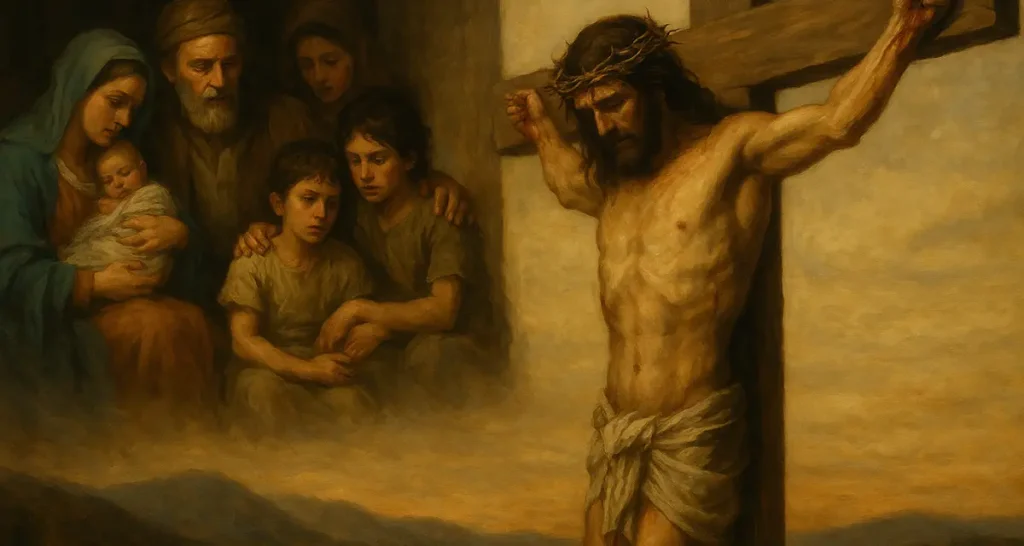
And ultimately, this family—this deeply fractured family—becomes the foundation of Israel, and from Judah comes Jesus, the Redeemer of all dysfunctional stories.
Final Thought
You asked: “What about God in all of this?”
He’s right there. Not wringing His hands in heaven, hoping things turn out okay. But actively, patiently, and masterfully turning every broken strand into a tapestry of redemption.
Because when God writes a story, even the footnotes of failure can become chapters of grace.