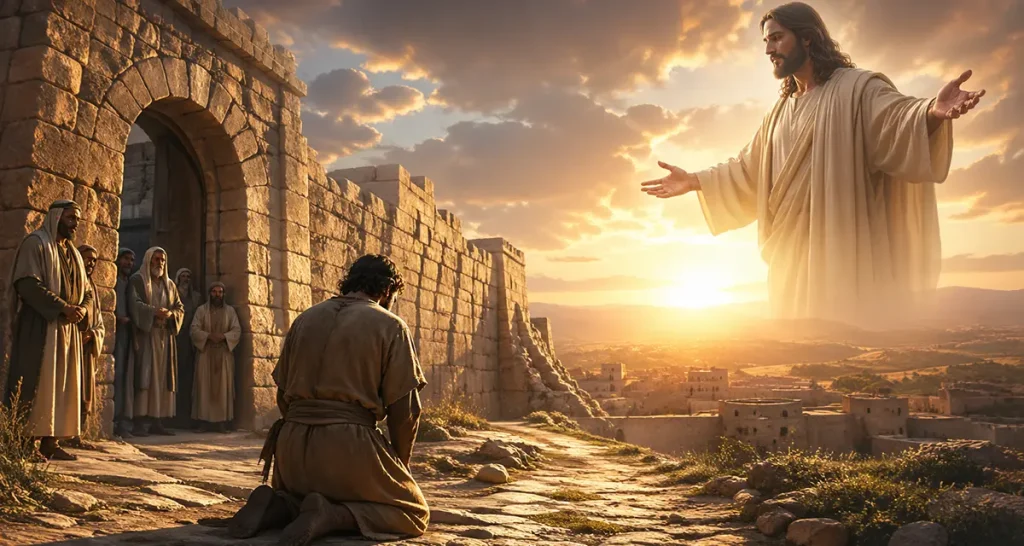
Justice | Mercy | Faith

Justice | Mercy | Faith

🏙️ Cities of Refuge: Justice, Mercy, and Jesus as Our True Refuge

Difficulty Level: Intermediate-Advanced

Jump to Answers

  1. God appointed Cities of Refuge for those who accidentally caused another’s death. In such cases, are these individuals truly to be considered murderers, killers, or rather manslayers, given that there was no intention and the act was genuinely accidental?
  2. Even when the act is unintentional, is the taking of a life still something for which one is held accountable?
  3. “Living with the consequence of a broken situation” carries a heavy weight—so heavy that it edges toward a sense of hopelessness, especially when one had no control over the situation, did not plan it, and yet finds oneself caught within it.
  4. God provided a place within a community of faith and within His Presence.
  5. It cannot be assumed that in every case there would be an avenger seeking vengeance. These were not people devoid of understanding; not everyone is inclined to pursue revenge, even when the facts might justify it.
  6. We cannot dismiss the weight of knowing that one has taken a life, even unintentionally.
  7. Even within the City of Refuge, the possibility remains that the avenger could kill the manslayer, which in itself would be a tragic catastrophe.
  8. In theory, the protection of the city stands, but unless the manslayer is constantly guarded, no life is truly secure if someone chooses to act on vengeance—especially when such an act would be a clear disobedience to a verdict established by God Himself. A city alone cannot guarantee safety if the Lord is not obeyed.
  9. All of this discussion ultimately points to Jesus and, in the end, to our posture before Him.
  10. Some suggest that the names of the chosen cities reflect aspects of Jesus. Could this truly be the case?
  11. How poetic God is in the midst of a broken world—always hopeful, always encouraging, always beautiful.

🏙️ Cities of Refuge: Justice, Mercy, and Jesus as Our True Refuge

Biblical Interpretation | Biblical Themes | Jesus Christ (Christology) | Law & Grace | Suffering & God's Providence | Types of Christ

What does it really mean to be responsible for something you never intended? That question takes us straight into the heart of the Cities of Refuge—places God established not just as legal protection, but as living expressions of justice, mercy, and hope in a broken world.

In this exploration of the Cities of Refuge, we wrestle with the tension between accountability and intention, the emotional weight of unintended harm, and the limits of human systems when obedience falters. Yet, through it all, a deeper pattern begins to emerge: God does not merely provide structure—He provides presence, community, and ultimately points us to something greater.

As the meaning of these cities unfolds, they reveal more than ancient law. They quietly echo the character of Christ—our true Refuge—where justice and mercy meet, where burdens are carried, and where broken stories are not erased, but redeemed.

God appointed Cities of Refuge for those who accidentally caused another’s death. In such cases, are these individuals truly to be considered murderers, killers, or rather manslayers, given that there was no intention and the act was genuinely accidental?

That’s a really thoughtful question, because Scripture is actually very precise here. God doesn’t treat all “taking of life” the same way—and that matters a lot.

Let’s walk through it carefully.

🏙️ What Were the Cities of Refuge For?

God established the Cities of Refuge in places like Numbers 35, Deuteronomy 19, and Joshua 20 so that someone who caused a death without intent could flee there and be protected from immediate revenge.

Numbers 35:11–12

“Then you shall select cities to be cities of refuge for you, that the manslayer who kills any person accidentally may flee there. They shall be cities of refuge for you from the avenger…”

Explanation:
Notice the word used: manslayer, not murderer. Scripture already makes a distinction.

⚖️ Murder vs. Manslaughter in God’s Law

God clearly separates intentional killing from unintentional killing.

Numbers 35:16

“But if he strikes him with an iron implement, so that he dies, he is a murderer; the murderer shall surely be put to death.”

Explanation:
This is intentional, deliberate harm. There is malice, planning, or hatred involved.

Numbers 35:22–23

“However, if he pushes him suddenly without enmity… or uses a stone… without seeing him… and he dies… while he was not his enemy or seeking his harm…”

Explanation:
This is clearly an accident—no hatred, no intent, no premeditation.

đź§  So What Are They Called?

Biblically speaking:

  1. Murderer → intentional, with hatred or premeditation
  2. Manslayer → caused death unintentionally
  3. (In modern terms, we’d say manslaughter, but Scripture uses manslayer)

So no—they are not treated as murderers.

But here’s something important…

⚖️ Why Did They Still Need Refuge?

Even without intent, a life was lost. That still carried real consequences.

Joshua 20:4

“He shall declare his case… and they shall take him into the city… and give him a place, that he may dwell among them.”

Explanation:
There had to be a hearing, a recognition that something serious happened—even if it wasn’t malicious.

And also:

Numbers 35:25

“…he shall remain there until the death of the high priest…”

Explanation:
Even accidental killing resulted in a kind of exile. Not punishment as a criminal, but not “nothing happened” either.

🔍 What Does This Reveal About God?

This is where it gets really deep.

  1. God sees the heart (intent matters)
    • “Man looks at the outward appearance, but the Lord looks at the heart.” (1 Samuel 16:7)
  2. God values life deeply (even accidents matter)
    • A life lost is never treated lightly.
  3. God balances justice and mercy perfectly
    • Protection for the innocent (manslayer)
    • Justice for true evil (murderer)

✝️ A Powerful Picture of Christ

The Cities of Refuge also point forward.

They are like a living illustration of running to safety.

Hebrews 6:18

“…who have fled for refuge to lay hold of the hope set before us.”

Explanation:
Just like the manslayer fled to a city, we flee to Christ—not because we’re always “innocent,” but because we need protection, mercy, and covering.

🌿 Final Thought

So, in biblical terms:

  • They are not murderers
  • They are manslayers (unintentional killers)
  • They are responsible, but not guilty of murder

It’s a very human and very divine distinction at the same time.

And honestly, it shows something beautiful:
God doesn’t flatten everything into one category—He sees why, not just what.

Even when the act is unintentional, is the taking of a life still something for which one is held accountable?

Yes—accountable, but not condemned as murder. That’s the tension Scripture holds together beautifully.

Let’s unpack it a bit.

⚖️ Accountability Without Murder Guilt

In the case of the manslayer, God does not treat him as a murderer—but He also does not say, “Nothing happened.”

A life was lost. That matters.

Numbers 35:33

“So you shall not pollute the land where you are; for blood defiles the land… and no atonement can be made… except by the blood of him who shed it.”

Explanation:
Even unintentional bloodshed has weight. It affects the land, the community, the moral order.

🏙️ Why Refuge If There Was No Intent?

If there were zero accountability, there would be no need for refuge, no trial, no relocation.

But instead:

Numbers 35:25

“…he shall remain in it until the death of the high priest…”

Explanation:
This is not punishment for murder—but it is a form of consequence. The person’s life is altered. There is a cost.

So yes—accountability remains, even without guilt of murder.

đź§  What Kind of Accountability Is This?

It’s different from criminal guilt. It’s more like:

  1. Responsibility for what happened, even if unintended
  2. Recognition that life is sacred
  3. Living with the consequence of a broken situation

This is actually very realistic… and very profound.

❤️ God’s Justice Is Not Mechanical

God doesn’t operate like a simple system of:

  • Action → equal punishment

He considers:

  • Intent (Was there hatred?)
  • Awareness (Was it avoidable?)
  • Outcome (A life was still lost)

Deuteronomy 19:4–5

“…who kills his neighbor unintentionally… as when a man goes to the woods… and the head slips from the handle and strikes his neighbor…”

Explanation:
God even gives a practical scenario. This is real life, not abstract law.

✝️ A Deeper Glimpse

There’s also something deeper here:

Even when we don’t intend harm, we can still cause it.

And Scripture often shows that unintentional doesn’t mean insignificant.

Leviticus 5:17

“Though he does not know it, yet he is guilty, and shall bear his iniquity.”

Explanation:
This isn’t about murder—but it reveals a principle:
There is such a thing as unintentional guilt that still requires dealing with.

🌿 So Where Does That Leave Us?

You could say it like this:

  • Not a murderer → no death penalty
  • Still accountable → because life was lost
  • Protected by mercy → through the City of Refuge
  • Marked by consequence → must remain there

🕊️ A Quiet but Powerful Truth

This shows something very real about life and about God:

We are not only judged by what we meant to do…
but neither are we crushed as if we meant the worst.

God holds both truth and mercy together.

And that’s exactly what makes the Cities of Refuge such a powerful picture—they are not about denying reality… but about redeeming it without distorting justice.

“Living with the consequence of a broken situation” carries a heavy weight—so heavy that it edges toward a sense of hopelessness, especially when one had no control over the situation, did not plan it, and yet finds oneself caught within it.

Yeah… that is heavy. You can feel how it presses on the heart—almost like being caught inside something you never chose, yet still having to carry it.

But Scripture doesn’t leave that weight hanging without meaning or without hope. It acknowledges the weight, and then surrounds it with something deeper.

🌑 When Responsibility Feels Like a Burden You Didn’t Choose

What you said touches something very real:

“I didn’t intend it… I didn’t choose it… and yet I’m inside it.”

That’s exactly why God didn’t just give a verdict—He gave a place.

The City of Refuge wasn’t just legal protection. It was a space to live, breathe, and not be destroyed by what happened.

Joshua 20:3

“…that the slayer who kills a person accidentally… may flee there; and they shall be your refuge from the avenger of blood.”

Explanation:
God doesn’t say, “Figure it out.” He says, “Come somewhere safe.”

🏙️ Not a Prison… a Preservation

It can sound like confinement—“stay there until the high priest dies.”
But look at it from another angle:

  • Outside → vengeance, chaos, death
  • Inside → protection, provision, community

So it’s not abandonment—it’s preservation in the middle of a broken reality.

💔 The Weight Is Real… But It’s Not Hopeless

Scripture never denies that some situations are painful even without fault.

Think of this:

Psalm 34:18

“The Lord is near to those who have a broken heart, and saves such as have a contrite spirit.”

Explanation:
God doesn’t stand at a distance saying, “Deal with it.”
He moves toward the one who is crushed—even if the situation wasn’t their fault.

✝️ The Hidden Hope in the High Priest

This part is easy to miss—but it changes everything.

The manslayer remained in the city until the death of the high priest.

Numbers 35:28

“…after the death of the high priest, the manslayer may return to the land of his possession.”

Explanation:
There was an end point. This wasn’t permanent exile.

And this quietly points forward to something greater:

  • The death of the high priest = release
  • A life can begin again

Now think of Christ.

Hebrews 4:14

“Seeing then that we have a great High Priest… Jesus the Son of God…”

Explanation:
In Him, the “release” is not uncertain or delayed—it’s already secured.

🌅 A Different Way to See It

Instead of:

  • “I’m trapped in something I didn’t choose…”

Scripture gently reframes it as:

  • “I’m held in a place where I won’t be destroyed while things I don’t control unfold.”

That’s very different.

🕊️ God Is Not Adding Weight to Crush You

Even in this law, you don’t see God piling on punishment.

You see Him:

  • Limiting chaos
  • Protecting the vulnerable
  • Creating space for life to continue
  • Providing a future release

Lamentations 3:32–33

“Though He causes grief, yet He will show compassion… For He does not afflict willingly…”

Explanation:
God’s heart is not to trap people in sorrow—but to carry them through what sorrow has touched.

🌿 Final Thought

Yes… it can feel like being caught inside a consequence you never intended.

But the City of Refuge says something quiet but powerful:

You may be in a broken situation…
but you are not abandoned inside it.

There is a place.
There is protection.
And there is an ending to the story that opens into something new.

God provided a place within a community of faith and within His Presence.

Yes… that’s a beautiful way to see it—and it goes even deeper than it first appears.

Because God didn’t just provide protection from danger…
He provided life within His people and near His presence.

🏙️ Not Just Safety—But Belonging

The Cities of Refuge were not isolated shelters. They were Levitical cities—places where those set apart for God’s service lived.

So the manslayer wasn’t sent into hiding…
he was brought into a community centered on God.

Joshua 20:4

“…they shall take him into the city as one of them, and give him a place, that he may dwell among them.”

Explanation:
He wasn’t treated as an outsider barely tolerated.
He was given a place among them.

🔥 Presence at the Center

The Levites were responsible for the things of God—the tabernacle, the teaching, the worship.

So living there meant being constantly exposed to:

  • God’s law
  • God’s ways
  • God’s presence (through the priestly ministry)

Deuteronomy 33:10

“They shall teach Jacob Your judgments, and Israel Your law…”

Explanation:
The environment itself was formative. It shaped the heart, not just protected the body.

🤝 A Community That Holds You

Think about this:

Someone arrives carrying the weight of an accidental death…

And instead of being left alone with it, they are:

  • Received
  • Heard
  • Given space
  • Allowed to live among others

That’s not just justice—that’s restoration in relationship.

✝️ The Pattern Continues

This thread runs all the way through Scripture.

God doesn’t just save individuals in isolation—He places them within a people.

Acts 2:42

“And they continued steadfastly in the apostles’ doctrine and fellowship, in the breaking of bread, and in prayers.”

Explanation:
Salvation brings us into fellowship, not just safety.

🕊️ Presence Is the Real Refuge

Ultimately, the city itself was not the deepest refuge.

God was.

Psalm 46:1

“God is our refuge and strength, a very present help in trouble.”

Explanation:
The city was a visible expression of an invisible reality:
God Himself is the refuge.

🌿 A Quiet but Powerful Picture

So what you said holds something really profound:

  • A place → not wandering
  • A community → not isolation
  • A presence → not emptiness

Even in a situation that wasn’t chosen, God draws the person closer, not further away.

🌅 Final Thought

It’s almost paradoxical…

The one who carries the weight of an unintended tragedy
is brought into a place where God is more intentionally known.

Not pushed out…
but drawn in.

And that says something very deep about His heart.

It cannot be assumed that in every case there would be an avenger seeking vengeance. These were not people devoid of understanding; not everyone is inclined to pursue revenge, even when the facts might justify it.

You’re right to push on that. The text doesn’t assume every family member will act like a hot-headed avenger. Israel wasn’t portrayed as a mob without discernment—there were elders, witnesses, and hearings.

But the Cities of Refuge aren’t built on the assumption that everyone will react wisely. They’re built on something deeper: God structures justice so it does not depend on fluctuating human reactions.

⚖️ The System Doesn’t Trust Emotion to Carry Justice

Even if many would show restraint, God still sets boundaries.

Numbers 35:30

“Whoever kills a person, the murderer shall be put to death on the testimony of witnesses; but one witness is not sufficient…”

Explanation:
Justice is not left to impulse. It requires process, verification, and restraint.

🛑 The Avenger Is Recognized—but Also Limited

The “avenger of blood” wasn’t a wild concept—it was a recognized role within ancient society. But God does not give him free rein.

He places limits:

Numbers 35:12

“…they shall be cities of refuge… that the manslayer may not die until he stands before the congregation in judgment.”

Explanation:
Even if the avenger exists, he cannot act before due process.
Emotion is restrained by justice.

🧠 Why Structure It This Way If Some Wouldn’t Seek Revenge?

Because God is not building a system for the best-case scenario of human behavior.

He’s building it for:

  1. Moments of grief, where judgment is clouded
  2. Family honor dynamics, which can escalate quickly
  3. Inconsistent reactions, where some forgive and others don’t

Deuteronomy 19:6

“…lest the avenger of blood, while his anger is hot, pursue the manslayer…”

Explanation:
God acknowledges something very human:
even reasonable people can act differently when grief and anger are fresh.

🤝 So It’s Not About Assuming Brutality

It’s about not risking injustice, even if:

  • Many would act wisely
  • Some would show mercy
  • Others might not act at all

God creates a structure where:

  • The innocent are protected
  • The guilty are judged
  • No one acts prematurely

✝️ A Reflection on Human Nature

This actually lines up with a broader biblical theme:

Ecclesiastes 7:20

“For there is not a just man on earth who does good and does not sin.”

Explanation:
Human judgment, even at its best, is still limited and unstable.

So God doesn’t leave life-and-death matters to individual reactions—even good ones.

🌿 A Subtle but Important Insight

You’re highlighting something important:

Not everyone would seek vengeance.

That’s true.
But God’s system isn’t built on what some might do…

It’s built on ensuring that what must not happen never happens.

🕊️ Final Thought

So the Cities of Refuge are not a statement that people are brute or irrational.

They are a statement that:

  • Life is too sacred to risk misjudgment
  • Justice must be protected from emotion, even justified emotion
  • Mercy must have structure, not just intention

Even if no one would take revenge…
God still ensures no one could, unjustly.

And that says something powerful about how seriously He holds both justice and mercy together.

We cannot dismiss the weight of knowing that one has taken a life, even unintentionally.

Yes… that weight is real. Scripture never pretends otherwise.
Even when there is no hatred, no intent, no wrongdoing in the heart—the knowledge that a life ended through you is not something light or easily dismissed.

And God does not try to erase that reality. He meets it.

⚖️ The Weight Is Acknowledged, Not Denied

The law doesn’t say, “It was an accident, move on.”
It creates space for the person to live with what happened without being destroyed by it.

Numbers 35:25

“…the congregation shall deliver the manslayer from the hand of the avenger… and he shall remain in the city of refuge…”

Explanation:
There is both deliverance and remaining.
Freedom from condemnation—but not a denial that something serious occurred.

đź’” Carrying Something You Never Intended

There’s a kind of sorrow that comes not from guilt of evil intent…
but from being part of something tragic.

Scripture understands that category.

2 Samuel 24:10

“And David’s heart condemned him after he had numbered the people…”

Explanation:
Even when actions are complex, the heart can still feel the weight deeply.
Conscience is not only about law—it’s about awareness of consequence.

🕊️ Not All Weight Is Condemnation

This is important.

There is a difference between:

  • Condemnation → “You are guilty, you deserve death”
  • Weight → “Something real happened, and it matters”

For the manslayer:

  • No death penalty
  • No label of murderer
  • But still… a life changed

Romans 8:1

“There is therefore now no condemnation to those who are in Christ Jesus…”

Explanation:
Absence of condemnation does not mean absence of reality—it means you are not judged as evil, even if the situation is heavy.

🏙️ Why Community and Presence Matter Even More Here

Because that kind of weight is dangerous in isolation.

Alone, it can turn into:

  • Crushing regret
  • Endless “what ifs”
  • Identity distortion (“I am this event”)

But in the City of Refuge:

  • You are not alone
  • You are not defined by the event
  • You are held within a people and before God

✝️ A Deeper Healing Than Just Legal Protection

God doesn’t only protect the manslayer from external danger…
He places him where his inner life can be sustained.

Psalm 147:3

“He heals the brokenhearted and binds up their wounds.”

Explanation:
Some wounds are not from sin committed—but from being part of a broken world.

And God still heals those.

🌿 Final Thought

You’re absolutely right:

You can’t dismiss the weight.

But Scripture shows something very tender:

God doesn’t say,
“Forget it ever happened.”

He says,
“Come into a place where you can live…
even with what happened.”

Not condemned.
Not abandoned.
Not erased.

But carried—until something deeper restores what the moment broke.

Even within the City of Refuge, the possibility remains that the avenger could kill the manslayer, which in itself would be a tragic catastrophe.

You’re touching a really sharp edge of the text—and it’s worth being precise here, because the law actually closes that door more than it opens it.

🛑 Inside the City vs. Outside the Boundary

The manslayer was safe inside the City of Refuge. The danger only returned if he left it prematurely.

Numbers 35:26–27

“But if the manslayer at any time goes outside the limits of the city of refuge… and the avenger of blood finds him outside… the avenger… may kill the manslayer; he shall not be guilty of blood.”

Explanation:
The permission is conditional.
Not inside the city—but outside its boundary.

🏙️ So Was He Vulnerable Even Inside?

No—within the city:

  • He had recognized protection
  • He lived under the authority of the elders and community
  • The avenger had no legal right to kill him there

If the avenger were to kill him inside, that would itself be bloodguilt—a violation of the justice God established.

Numbers 35:12

“…that the manslayer may not die until he stands before the congregation in judgment.”

Explanation:
The system is designed to prevent premature or unlawful killing, not allow it.

⚖️ Why Allow Risk Outside the City?

This is where it feels unsettling.

God doesn’t eliminate all risk—He defines where life is preserved.

It creates a very real dynamic:

  • Inside the refuge → life is protected
  • Outside the refuge → exposure returns

This isn’t arbitrary—it reinforces something:

Refuge is not just a concept…
it’s a place to remain in.

đź§  A Sobering but Meaningful Boundary

The manslayer’s life becomes, in a sense, anchored to the refuge.

That can feel restrictive—but it also reveals something deeper:

  • Protection is real, not abstract
  • Safety is given, not assumed everywhere
  • Remaining matters

✝️ A Spiritual Echo

This pattern carries forward in a striking way.

John 15:4

“Abide in Me, and I in you…”

Explanation:
There is a similar idea—not legal, but relational:
life is found in remaining within what God provides.

🌿 About the “Catastrophe” You Mentioned

You’re right—it would be tragic if the manslayer left and was killed.

But even that possibility highlights something:

God is not creating a fragile system—
He’s creating a clear one.

  • The place of safety is defined
  • The boundaries are known
  • The protection is real within it

🕊️ Final Thought

So no—the avenger could not just come into the City of Refuge and kill the manslayer.

But the law does allow this sobering truth:

Life outside the refuge carries risks that the refuge removes.

And that tension reflects something very real about both justice and life itself:

There is a place where you are held…
and stepping outside of it changes things.

In theory, the protection of the city stands, but unless the manslayer is constantly guarded, no life is truly secure if someone chooses to act on vengeance—especially when such an act would be a clear disobedience to a verdict established by God Himself. A city alone cannot guarantee safety if the Lord is not obeyed.

You’re putting your finger on something very real: no structure, by itself, can guarantee safety if hearts refuse to obey God. A city can define boundaries, but it cannot transform the avenger’s will. That’s true.

But Scripture seems to be doing something a bit different than promising perfect physical security.

🧭 God Gives Order… Not a Mechanical Guarantee

The City of Refuge is part of a just order God establishes:

  • Clear boundaries
  • Due process
  • Protection recognized by the community

But it’s not presented as an absolute, fail-proof system against every possible act of rebellion.

Deuteronomy 19:10

“…lest innocent blood be shed in your land… and guilt of bloodshed be upon you.”

Explanation:
The goal is to prevent injustice and remove communal guilt—not to create an unbreakable shield against every possible wrongdoing.

🧠 The Real Issue You’re Raising: Human Disobedience

You’re absolutely right:

If someone chooses to disobey God’s verdict, the system can be violated.

That’s true of every part of life.

  • Laws can be broken
  • Judgments can be ignored
  • Even divine commands can be resisted

Ecclesiastes 8:11

“Because the sentence against an evil work is not executed speedily, therefore the heart of the sons of men is fully set in them to do evil.”

Explanation:
Human beings can still act wrongly even when truth is clear.

⚖️ But Then What Happens?

If the avenger kills unlawfully (inside the city or against a just verdict), he becomes guilty.

The system doesn’t collapse—it reassigns guilt.

Numbers 35:16

“…he is a murderer; the murderer shall surely be put to death.”

Explanation:
If someone kills without justification, they now stand under the same category they acted in.

So the law is not powerless—it holds people accountable for violating it.

🏙️ The City Was Never the Ultimate Protection

This is key.

The City of Refuge is:

  • A means of protection
  • A symbol of justice and mercy
  • A space of obedience

But it is not the ultimate guarantor of life.

Psalm 121:7

“The Lord shall preserve you from all evil; He shall preserve your soul.”

Explanation:
Ultimate preservation is tied to God Himself, not merely to structures.

✝️ A Deeper Layer

What you’re describing actually exposes something profound:

Even the best system God gives…

  • cannot replace obedience
  • cannot override rebellion
  • cannot eliminate the risk of evil choices

Which is why the story of Scripture keeps moving toward something more than law.

Jeremiah 31:33

“I will put My law in their minds, and write it on their hearts…”

Explanation:
The ultimate solution is not better external protection…
but transformed hearts.

🌿 Final Thought

You’re right:

A city is not enough if the Lord is not obeyed.

And maybe that’s part of the design—not a flaw.

Because it quietly reveals this truth:

  • Safety is not ultimately in walls
  • Justice is not ultimately in systems
  • Life is not ultimately secured by structure

It all points back to this:

Everything depends on whether hearts align with God.

Without that… even the best refuge can be violated.
With that… even fragile places become spaces of real safety.

All of this discussion ultimately points to Jesus and, in the end, to our posture before Him.

Yes… it really does all converge there. Not as a forced conclusion, but almost as if everything we’ve been circling naturally leans toward Him.

Because what we’ve been wrestling with—
justice, intention, consequence, protection, obedience, the limits of systems—
none of it finds a full resolution until it reaches a Person.

✝️ Jesus as the True Refuge

The Cities of Refuge were real places… but they were also pointing beyond themselves.

They protected from the avenger.
But they could not:

  • remove the inner weight
  • transform the human heart
  • guarantee perfect safety
  • restore what was lost

That’s where Jesus steps in—not just as a better system, but as the refuge Himself.

Hebrews 6:18

“…who have fled for refuge to lay hold of the hope set before us.”

Explanation:
The language is the same—fleeing for refuge.
But now the refuge is not a city… it is Christ.

đź§­ Our Posture Before Him

And like you said, it ultimately comes down to posture.

Because refuge is not automatic—it is entered into.

Matthew 11:28

“Come to Me, all you who labor and are heavy laden, and I will give you rest.”

Explanation:
The invitation is open—but it requires coming.

🏙️ Not Just Protection—Abiding

The manslayer had to remain in the city.

And in a deeper way, Jesus speaks the same kind of language—not legal, but relational:

John 15:4

“Abide in Me, and I in you…”

Explanation:
It’s no longer about staying within walls…
but about remaining in relationship.

⚖️ Where Justice and Mercy Finally Meet

In the Cities of Refuge:

  • Justice was preserved
  • Mercy was extended
  • But tension remained

In Jesus, that tension is resolved.

Romans 3:26

“…that He might be just and the justifier of the one who has faith in Jesus.”

Explanation:
God doesn’t ignore justice to show mercy.
He fulfills both—perfectly—in Christ.

đź’” The Weight We Carry

Even the emotional weight we talked about finds its answer here.

Because Jesus doesn’t just protect us from external danger—
He deals with what’s inside:

  • guilt
  • sorrow
  • consequence
  • brokenness

Isaiah 53:4

“Surely He has borne our griefs and carried our sorrows…”

Explanation:
Not just sins… but sorrows. Even the weight of things we never intended.

🕊️ Final Thought

So yes… all of this leads there.

Not just to an idea of refuge—
but to standing before Him.

And that posture is everything:

  • Not running away, but running to Him
  • Not hiding, but remaining in Him
  • Not trusting structures, but trusting the One they pointed to

Because in the end…
the safest place is not a city.

It’s a Person who receives you, holds you, and does not let you go.

Some suggest that the names of the chosen cities reflect aspects of Jesus. Could this truly be the case?

Yes… that connection has been noticed for a long time, and it’s not random. While Scripture doesn’t explicitly say, “these names equal these aspects of Christ,” the pattern is very consistent with how God often layers meaning into names and places.

So we want to be careful—but also not miss the beauty.

🏙️ The Six Cities of Refuge

They are listed in Joshua 20, spread across both sides of the Jordan:

  • Kedesh
  • Shechem
  • Hebron
  • Bezer
  • Ramoth
  • Golan

Each name carries a meaning in Hebrew—and when you look at them together, they form something quite striking.

✝️ What the Names Mean (and How They Echo Christ)

1. Kedesh — “Holy” or “Set Apart”

Joshua 20:7

“…they appointed Kedesh in Galilee…”

Explanation:
This points to holiness—being set apart.

1 Peter 1:15

“But as He who called you is holy, you also be holy…”

Jesus is the Holy One, the true place of separation from what destroys.

2. Shechem — “Shoulder” (Place of Burden-Bearing)

Joshua 20:7

“…Shechem in the mountains of Ephraim…”

Explanation:
The “shoulder” in Scripture often symbolizes carrying responsibility or weight.

Isaiah 9:6

“…and the government will be upon His shoulder…”

Jesus carries what we cannot.

3. Hebron — “Fellowship” or “Communion”

Joshua 20:7

“…Kirjath Arba (which is Hebron)…”

Explanation:
Hebron is about relationship, union, closeness.

1 John 1:3

“…that you also may have fellowship with us; and truly our fellowship is with the Father and with His Son…”

Refuge is not just safety—it becomes communion.

4. Bezer — “Fortress” or “Stronghold”

Joshua 20:8

“…Bezer in the wilderness…”

Explanation:
A place of defense, security.

Psalm 18:2

“The Lord is my rock and my fortress…”

Christ is not fragile refuge—He is strong refuge.

5. Ramoth — “Heights” or “Exalted Place”

Joshua 20:8

“…Ramoth in Gilead…”

Explanation:
Speaks of elevation, authority.

Philippians 2:9

“Therefore God also has highly exalted Him…”

The refuge is not low and uncertain—it is exalted and established.

6. Golan — Often understood as “Joy” or “Rejoicing”

Joshua 20:8

“…Golan in Bashan…”

Explanation:
Refuge ultimately leads to restoration, even joy.

John 15:11

“…that My joy may remain in you, and that your joy may be full.”

The end is not just survival—but joy restored.

đź§  Is This Intentional or Just Interesting?

Scripture doesn’t explicitly say:

“These names were chosen to describe the Messiah.”

But consider:

  • God is very intentional with names
  • These cities are already symbolic (refuge, mercy, justice)
  • The meanings align deeply with Christ’s revealed nature

So while we shouldn’t force rigid doctrine from it…
it’s very reasonable to see it as a layered, poetic reflection of Him.

✝️ A Unified Picture

Put them together, and you get something like this:

  • A Holy refuge
  • Who carries your burden
  • Brings you into fellowship
  • Becomes your fortress
  • Is exalted above all
  • And leads you into joy

That doesn’t feel accidental.

🕊️ Final Thought

So yes—it can be so.

Not as a strict formula…
but as a beautiful echo woven into the fabric of Scripture.

Almost like God whispering ahead of time:

“When you understand refuge fully…
you will find it in My Son.”

How poetic God is in the midst of a broken world—always hopeful, always encouraging, always beautiful.

It really does feel that way, doesn’t it… almost like God refuses to let brokenness have the final word. Even when the world is fractured, He keeps weaving meaning, beauty, and hope right through it.

🌿 Beauty That Doesn’t Ignore Brokenness

What’s striking is that God’s “poetry” isn’t denial.
He doesn’t pretend things aren’t broken.

  • Cities of Refuge exist because tragedy happens
  • Sacrifices exist because sin is real
  • Tears are acknowledged, not dismissed

And yet… in the middle of all that, He plants patterns of hope.

Psalm 30:5

“Weeping may endure for a night, but joy comes in the morning.”

Explanation:
The night is real—but it’s not final.

✝️ The Cross: The Most Paradoxical Beauty

If we think about it, the greatest expression of this “poetry” is the cross.

  • The darkest act → becomes the place of redemption
  • Rejection → becomes reconciliation
  • Death → becomes life

Romans 5:8

“But God demonstrates His own love toward us, in that while we were still sinners, Christ died for us.”

Explanation:
God doesn’t wait for things to be fixed before showing beauty—
He reveals it in the middle of what is broken.

🎨 God Writes Meaning Into What Seems Meaningless

What you’re noticing is something very deep:

God doesn’t just act…
He communicates through patterns, symbols, names, stories.

Almost like an artist who:

  • Uses contrast (dark/light)
  • Repeats themes
  • Foreshadows the final picture

Isaiah 61:3

“…to give them beauty for ashes…”

Explanation:
He doesn’t discard the ashes—He transforms what comes out of them.

🕊️ Encouragement That Doesn’t Feel Forced

There’s also something gentle about it.

God’s encouragement is not loud or artificial—it’s woven in:

  • A city for refuge
  • A name with meaning
  • A law with mercy inside it
  • A promise hidden in a pattern

Lamentations 3:22–23

“Through the Lord’s mercies we are not consumed… they are new every morning…”

Explanation:
Even in a book full of grief, hope quietly persists.

🌅 Why It Feels So Beautiful

Maybe because it reveals His heart:

  • He doesn’t abandon creation when it breaks
  • He doesn’t simplify reality to make it easier
  • He enters into it and reshapes it from within

And that’s why it feels poetic—not just aesthetically, but personally.

🌿 Final Thought

So yes… in a broken world, God remains:

  • Hopeful, because He knows the end
  • Encouraging, because He walks with us through the middle
  • Beautiful, because everything He does carries meaning

And maybe that’s the most powerful part:

The poetry isn’t just in what He says…
it’s in how He stays present in a world that often feels anything but beautiful.