Opens in a new tab

Justice | Mercy | Faith

Justice | Mercy | Faith

Cain and Abel: Faith, God’s Acceptance, and the First Human Death

Difficulty Level: Intermediate-Advanced

Cain and Abel: Faith, God’s Acceptance, and the First Human Death

Faith & Doubt | Old Testament | Sin & Human Nature | Suffering & God's Providence | Types of Christ

The account of Cain and Abel raises questions that reach far beyond the first murder recorded in Scripture. Both brothers knew of God’s existence, both approached Him with offerings, and Cain even received direct instruction and warning from the Lord. Yet Hebrews declares that Abel offered his sacrifice by faith, introducing a profound distinction between acknowledging that God exists and genuinely trusting Him.

What did Abel possess that Cain lacked? If God’s presence and communication were so direct in those early generations, why did such knowledge not produce faith and obedience? And why did God permit the first human being born on earth to become a murderer rather than an honorable example for the generations that would follow?

These questions become even more unsettling when we return to God’s warning in Eden: “For in the day that you eat of it you shall surely die” (Genesis 2:17). Adam and Eve continued living after their disobedience, but the first human death recorded in Scripture was not theirs. It was Abel’sβ€”the righteous brother whose offering God accepted, murdered by the brother whose offering He rejected.

This conversation explores the nature of biblical faith, the relationship between divine revelation and human responsibility, God’s dealings with Cain, and the devastating consequences of Adam’s disobedience. Ultimately, it leads us from the firstborn of humanity, who took his brother’s life, to Jesus Christ, the Firstborn among many brethren, who willingly gave His life for His own.

Through Cain and Abel, we encounter not only the tragedy of humanity’s earliest generations but also the extraordinary contrast between the death that entered through Adam and the life that comes through Christ.

Scripture makes it clear that both Cain and Abel believed in God’s existence. In those early days of humanity, God’s presence and manifestations were almost tangibleβ€”He even spoke directly to Cain, warning and correcting him. Yet Hebrews 11:4 specifically commends Abel for his faith, implicitly drawing a distinction between him and Cain. This opens a much larger window into what God actually regards as faith, doesn’t it? Especially when we consider the difference between acknowledging God’s existence and possessing the personal faith that Scripture commends.

Yes! And I think that window opens much wider than we might initially expect. Because Cain and Abel confront us with a distinction that runs throughout Scripture: knowing that God exists is not necessarily the same as having faith in God.

What makes their account particularly revealing is precisely what you observed. We are not dealing with two men separated by access to divine revelation, one possessing convincing evidence and the other struggling with uncertainty. Both lived in a world where God’s existence was hardly an abstract philosophical question. Both approached Him with offerings. Both apparently understood that He was worthy of acknowledgment.

Yet Hebrews 11:4 singles out Abel for something that Genesis 4 does not explicitly name: faith.

And that raises a fascinating question: What did Abel possess that Cain apparently did not, when both knew the same God?

πŸ“– 1. Cain did not have an intellectual problem with God’s existence

Consider how extraordinary the circumstances of Genesis 4 are.

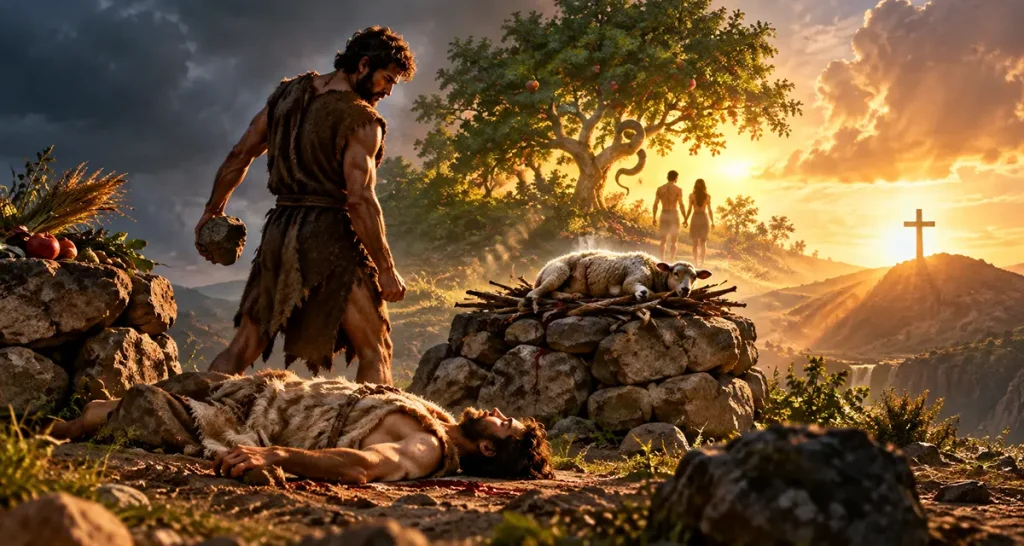
Cain brought an offering to the Lord. Abel brought an offering to the Lord. God regarded Abel and his offering, but He did not regard Cain and his offering.

Then God spoke to Cain:

“Why are you angry? And why has your countenance fallen? If you do well, will you not be accepted?” (Genesis 4:6–7)

Notice what is absent from this conversation.

God does not introduce Himself. He does not attempt to persuade Cain that He exists. He does not offer evidence of His authority or explain why Cain should take Him seriously.

Instead, God addresses Cain as someone already responsible before Him.

Cain knows whom he has approached. He knows whose acceptance he desires. He understands that God’s judgment matters.

In fact, Cain’s anger reveals something significant: he cares about receiving God’s approval, even while resisting God’s correction.

That is an uncomfortable combination, isn’t it?

A person can desire what God gives, including His approval, without being willing to submit to what God says.

And Cain’s encounter becomes even more revealing when we consider what happens next.

God warns him that sin lies at the door and desires him (Genesis 4:7). Cain subsequently murders Abel. God confronts him again, and Cain answers evasively.

This man did not lack divine communication.

He received a warning directly from God and nevertheless proceeded into disobedience.

The problem, therefore, cannot simply be explained by insufficient evidence of God’s existence.

🌿 2. Hebrews identifies what Genesis leaves implicit

Hebrews 11:4 declares:

“By faith Abel offered to God a more excellent sacrifice than Cain, through which he obtained witness that he was righteous, God testifying of his gifts.”

The author does something remarkable here.

Genesis describes the offerings and God’s response. Hebrews identifies faith as the distinguishing feature of Abel’s offering.

It does not merely say Abel brought a better sacrifice. It says that by faith Abel offered it.

This means the outward act cannot be separated from the inward disposition of the worshiper.

And there is a subtle but important detail in Genesis 4:4–5:

God respected Abel and his offering, but did not respect Cain and his offering.

The person and the offering are mentioned together.

That order deserves our attention. God’s acceptance is not presented merely as an evaluation of the material placed upon an altar. The worshiper himself is involved.

This does not mean the nature of the offerings was irrelevant. Genesis notes that Abel brought the firstborn and their fat, while Cain brought produce from the ground. Some interpreters see significance in the quality or kind of sacrifice. But Scripture does not explicitly say Cain was rejected because his offering lacked blood; grain offerings were later acceptable under the Law (Leviticus 2:1–3).

Hebrews gives us the more decisive explanation: Abel acted by faith.

And Hebrews 11:6 immediately expands the principle:

“But without faith it is impossible to please Him, for he who comes to God must believe that He is, and that He is a rewarder of those who diligently seek Him.”

Now we have something worth examining carefully.

The author mentions two aspects of approaching God: believing that He exists and believing that He rewards those who seek Him.

Cain evidently acknowledged the first. But his response to God’s correction raises serious questions about the second.

Because seeking God involves more than approaching Him with something in our hands.

It involves approaching Him on His terms.

πŸ” 3. Faith is not merely accepting a fact about God

This brings us to an important distinction.

We often use the expression “I believe in God” to mean “I believe God exists.”

But Scripture employs faith in a richer sense.

James 2:19 makes this distinction almost painfully clear:

“You believe that there is one God. You do well. Even the demons believeβ€”and tremble!”

That is an astonishing statement.

The demons are not atheists. They do not struggle with whether the supernatural exists. They recognize God’s reality and tremble before Him.

And yet their knowledge does not constitute saving faith.

James is not suggesting that knowledge is unnecessary. Rather, he is demonstrating that knowledge alone does not establish a faithful relationship with God.

This sheds considerable light on Cain.

Cain’s acknowledgment of God was real. His religious activity was real. His interaction with God was real.

But none of these things, by themselves, established that Cain trusted God.

Faith includes believing what God says about Himself, receiving His judgment as true, and entrusting oneself to Him.

And this is where Cain’s response becomes particularly troubling.

When God did not regard his offering, Cain became angry.

But why?

Genesis does not explicitly reveal every motive behind his anger. We should not pretend to know what Scripture leaves unstated.

Nevertheless, the narrative shows that Cain responded to divine disapproval with resentment rather than repentance.

God even graciously invited him to do well.

The opportunity for a different response was placed before him.

And Cain refused it.

There is a profound difference between saying, “God exists, therefore He must accept my offering,” and saying, “God is righteous, therefore I must listen when He corrects me.”

The first acknowledges God’s existence while attempting to retain authority over the relationship.

The second acknowledges God’s authority and trusts His goodness.

❀️ 4. Abel’s faith was not necessarily greater knowledge, but a different response

Here is another fascinating implication of your observation.

We have no reason to assume Abel possessed some extensive theological education unavailable to Cain.

They were brothers, raised within the same family, living in the same early human world.

They likely received much of the same knowledge concerning God, although Scripture does not describe the full extent of their instruction.

Yet Hebrews distinguishes Abel by faith.

That means faith cannot simply be measured by the amount of information available to a person.

Two people may hear the same divine truth, understand the same command, and witness the same evidence, yet respond differently.

Consider Israel in the wilderness.

They witnessed the plagues in Egypt, crossed the Red Sea, received manna, and experienced God’s presence in extraordinary ways.

Yet Hebrews 3:19 says:

“So we see that they could not enter in because of unbelief.”

Unbelief?

After all those manifestations?

Yes.

And Hebrews 4:2 explains that the word they heard did not profit them because it was not united with faith in those who heard it.

The issue was not that they lacked evidence of God’s power.

They had seen His power repeatedly.

But seeing God’s power and trusting His character are not identical.

They knew He could deliver them from Egypt. Yet when they encountered difficulties, they repeatedly questioned whether He would sustain them.

In a similar way, Cain knew enough about God to approach Him with an offering. But when God challenged him, that knowledge did not produce obedience.

Faith is revealed not only by how we approach God when seeking His favor, but also by how we respond when He confronts us.

That second part may be especially revealing.

βš–οΈ 5. Cain wanted acceptance, but what did he believe about the One who accepts?

Let us examine something easily overlooked.

God’s rejection of Cain’s offering did not end the conversation.

God spoke to him.

That is significant.

The Lord did not immediately abandon Cain or pronounce a final judgment upon him. He questioned Cain’s anger, warned him about sin, and presented the possibility of doing well.

In other words, Cain was not left without divine instruction after his offering was rejected.

And this creates a striking contrast between God’s disposition and Cain’s response.

God addresses the danger before Cain commits murder.

Cain proceeds anyway.

The tragedy is not merely that Cain failed to offer something acceptable. It is that he resisted the very God whose acceptance he sought.

We can recognize a disturbing human tendency here.

We may want God to approve our actions without allowing Him to correct our hearts.

We may desire His blessings while resenting His authority.

We may acknowledge that He is righteous until His righteousness judges something in us.

Cain’s account exposes the possibility of religious activity existing alongside a fundamentally resistant heart.

And this is not an exclusively Old Testament problem.

Jesus asks in Luke 6:46:

“But why do you call Me ‘Lord, Lord,’ and not do the things which I say?”

Notice that Jesus does not challenge their pronunciation of His title.

He challenges the contradiction between their confession and their conduct.

Calling Him Lord is appropriate. But the confession becomes hollow when it is deliberately detached from submission to Him.

The same distinction appears in Matthew 7:21–23, where Jesus warns that even remarkable religious activity does not necessarily demonstrate that someone truly belongs to Him.

The external acknowledgment may be impressive.

But God sees the person.

✨ 6. Faith is not perfection, and this distinction matters enormously

We must be careful here, however.

If we say Abel had faith because he obeyed and Cain lacked faith because he disobeyed, we might unintentionally reduce faith to flawless performance.

And that would create another problem.

Because Scripture repeatedly presents faithful people who sinned terribly.

Abraham believed God, yet he also acted out of fear (Genesis 12:11–20).

David trusted the Lord, yet committed adultery and arranged a man’s death (2 Samuel 11).

Peter confessed Jesus as the Christ, yet denied Him three times (Matthew 16:16; Luke 22:54–62).

Their failures were real. Their faith was not imaginary simply because they failed.

So what distinguishes faith from mere acknowledgment?

Not sinlessness.

One crucial distinction is what a person does with God’s truth when confronted by it.

David, when confronted by Nathan, confessed:

“I have sinned against the LORD.” (2 Samuel 12:13)

Peter, after denying Jesus, went out and wept bitterly (Luke 22:61–62). Later, he was restored by Christ (John 21:15–19).

Cain, when confronted about Abel, replied:

“I do not know. Am I my brother’s keeper?” (Genesis 4:9)

These accounts are not identical, and repentance itself is not a human achievement that purchases acceptance. But the contrast is instructive.

Faith does not make a human being incapable of falling.

Rather, genuine faith recognizes God as the One to whom we must return, even when His truth exposes our sin.

And this brings us to an essential feature of biblical faith: it is not confidence in our own acceptability before God, but trust in God Himself.

Hebrews 11:4 says Abel received testimony that he was righteous. It does not say he was righteous because he had never sinned.

His offering was made by faith, and God testified concerning him.

That should prevent us from interpreting the account as though Abel earned divine acceptance through a superior religious performance.

πŸŒ… 7. The extraordinary implication: God’s visibility does not eliminate the need for faith

Now let us return to your original observation, because I think this is where the window becomes especially large.

Cain lived in a world where God spoke to him directly.

Yet Hebrews still distinguishes faith from what Cain possessed.

This challenges a common assumption: that if God made Himself sufficiently visible, faith would become automatic.

Scripture does not support that assumption.

Adam and Eve knew God and nevertheless disobeyed Him (Genesis 3:1–13).

Israel witnessed extraordinary manifestations of His power and nevertheless rebelled (Psalm 78:12–22).

People witnessed Jesus’ miracles and still refused to believe in Him (John 12:37).

And consider Thomas.

After seeing the risen Christ, Thomas confessed:

“My Lord and my God!” (John 20:28)

Jesus answered:

“Thomas, because you have seen Me, you have believed. Blessed are those who have not seen and yet have believed.” (John 20:29)

Jesus did not reject Thomas’s faith because it followed visible evidence. He acknowledged it.

Therefore, faith is not simply believing without evidence.

Nor is it a substitute for knowledge.

Rather, biblical faith involves trusting the God who reveals Himself, whether that revelation comes through direct encounter, prophetic testimony, Scripture, or the witness of Christ.

And here is the remarkable consequence:

Even if God stood visibly before every human being tomorrow, the question of faith would not disappear.

The question would no longer be whether He exists.

But it would remain whether we trust Him, receive His word, acknowledge His authority, and entrust ourselves to His goodness.

Cain demonstrates that a person can know God is real and still resist Him.

Abel demonstrates that a person can approach God in faith and receive His testimony of righteousness.

Their contrast is not fundamentally between evidence and uncertainty.

It is between two ways of responding to the God who is known.

πŸ•ŠοΈ 8. Abel’s faith still speaks, but what is it saying?

Hebrews concludes its description of Abel with an intriguing statement:

“And through it he being dead still speaks.” (Hebrews 11:4)

Abel’s voice was silenced by his brother.

But his testimony was not.

And there is something deeply moving about the fact that Scripture records no spoken words from Abel during the events of Genesis 4.

We hear Cain speaking. We hear God addressing Cain. We hear Cain’s evasive answer.

But Abel’s recorded testimony comes through his faith.

The man whose words Genesis does not preserve is the man Hebrews says still speaks.

And what does his faith communicate?

At minimum, that God is worthy of being approached in trust, and that the acceptability of worship cannot be separated from the faith of the worshiper.

But Hebrews eventually takes us somewhere even greater.

Hebrews 12:24 speaks of Jesus, the Mediator of the new covenant, and of His blood:

“that speaks better things than that of Abel.”

Abel’s blood cried out from the ground after an act of murder (Genesis 4:10). Christ’s blood speaks of the new covenant and the redemption accomplished through His sacrifice.

The contrast is profound.

Abel was righteous by faith, yet he was murdered by his brother.

Jesus is the Righteous One who willingly gave Himself for sinners.

And the faith by which we approach God now rests upon the finished work of Christ, not upon our ability to present ourselves as acceptable through our own religious accomplishments (Hebrews 10:19–22).

This brings us back to something particularly important in our earlier discussion about worship: God graciously receives the worship of people who are still unfinished works of His grace.

Faith does not mean that we have finally become worthy of approaching Him.

It means that we approach Him trusting the provision He has made.

And perhaps the most searching aspect of Cain’s account is that he approached the right God, engaged in a recognizable act of worship, and nevertheless did not approach Him in the faith Hebrews commends.

That is a sobering distinction.

It also helps explain why Scripture does not treat faith as mere intellectual assent, emotional certainty, religious participation, or even firsthand experience of divine manifestations.

Faith concerns the relationship between the person and the God who has revealed Himself.

Cain knew God was there.

Abel trusted the God who was there.

And the difference between those two realities reaches into nearly every aspect of the Christian life.


Shouldn’t God have granted that the very first child born on earth would become an honorable and exemplary member of the human family, rather than allowing him to become the first murderer? Considering Cain’s unique place at the beginning of human history, wouldn’t it have been fitting for humanity’s firstborn to establish an example of righteousness rather than violence and death?

There is something profoundly tragic about that thought. The first human being ever born became the first murderer recorded in Scripture. The first child brought into the world through human reproduction became the man who took his own brother’s life.

And your question goes beyond Cain’s personal responsibility. You are asking why God, who knew what Cain would become, did not grant humanity a different beginning. Why not make the firstborn an exemplary son, an honorable brother, a righteous citizen of the emerging human family?

After all, wouldn’t that have been a fitting beginning for human civilization?

🌱 The firstborn of humanity: An extraordinary opportunity

Consider the historical significance of Cain’s position.

Adam was formed from the dust, Eve was formed from Adam, but Cain was born through the ordinary human process God established.

Genesis 4:1 records Eve’s declaration:

“I have acquired a man from the LORD.”

Whatever Eve understood about God’s purposes at that moment, she recognized that Cain’s arrival involved the Lord’s provision.

This was the beginning of something extraordinary. Humanity was multiplying. A new generation had arrived.

And Cain, as the firstborn, occupied a unique place in human history.

Imagine what his life could have represented.

He could have become an example of brotherly love. He could have demonstrated how a fallen human being responds to God’s correction. He could have established a pattern of righteousness for those who followed.

Instead, Scripture records the first brother becoming the murderer of the second.

The first recorded death of a human being was not from old age or illness, but from violence inflicted by another human being.

What a terrible introduction to human mortality!

And yet, we should distinguish something important: Cain was the firstborn, but Scripture never says God appointed him to be humanity’s moral exemplar. That is a role we might reasonably wish he had fulfilled, not an assignment Genesis explicitly gives him.

Nevertheless, your question remains. Could God not have made him such an example?

Certainly, God had the power.

But the deeper issue concerns what God chose to do with a fallen humanity.

βš–οΈ Did God owe the firstborn a special measure of righteousness?

The word shouldn’t in your question is particularly important.

It suggests that Cain’s unique place in history might have warranted a unique divine intervention.

And we can understand that expectation.

When we consider the firstborn of humanity, we instinctively imagine someone who should represent the best of the generation, not its worst.

But Scripture repeatedly challenges the assumption that historical privilege necessarily brings moral superiority.

Cain was the firstborn, yet Abel was commended for faith (Hebrews 11:4).

Ishmael was born before Isaac, yet the covenant promise continued through Isaac (Genesis 17:18–21).

Esau was born before Jacob, yet the covenant line continued through Jacob (Genesis 25:23).

David was not Jesse’s firstborn, yet God chose him to be king (1 Samuel 16:6–13).

There is a recurring biblical distinction between the position a person occupies and the character that person displays.

Being first does not make someone righteous.

But Cain’s case is especially troubling because he was not merely an ordinary firstborn. He was humanity’s firstborn.

Why would God allow such an important beginning to be marked by murder?

We cannot claim to know every reason God permitted Cain’s actions. Genesis does not reveal a comprehensive explanation of God’s providential decision.

However, the account does reveal something about God’s dealings with Cain before the murder.

❀️ God did not abandon Cain to his wickedness

This is where the narrative becomes particularly important.

Before Cain murdered Abel, God intervened.

He questioned Cain’s anger and warned him:

“And if you do not do well, sin lies at the door. And its desire is for you, but you should rule over it.” (Genesis 4:7)

Think about that.

God did not wait until Abel lay dead before addressing Cain.

He confronted the danger while Cain was still alive and Abel was still safe.

The firstborn received divine correction before committing his terrible crime.

And the language is striking: “you should rule over it.”

God addressed Cain as a morally responsible person, not as someone whose wickedness made obedience irrelevant.

This is significant because it prevents us from treating Cain’s murder as an unavoidable consequence of his birth.

Genesis portrays Cain as accountable for what he does.

But it also raises a harder question.

If God could warn Cain, could He not have changed Cain’s heart?

And if God could change his heart, why did He allow the murder to happen?

That question is much more difficult than asking why Cain did not behave honorably.

It concerns divine power, human responsibility, and God’s permission of evil.

Scripture affirms God’s sovereignty (Psalm 115:3), His righteousness (Deuteronomy 32:4), and human accountability (Romans 14:12). But it does not give us a complete account of why God permits each particular evil.

We should not fill that silence with a confident explanation that God needed Cain to become a murderer to accomplish some greater purpose.

Nothing in Genesis requires such a conclusion.

🩸 God permitted the first murder, but He never approved it

There is another distinction worth preserving.

God’s permission is not God’s moral approval.

The Lord did not command Cain to murder Abel. He warned him against the sin that threatened to master him.

After the murder, God confronted Cain:

“What have you done? The voice of your brother’s blood cries out to Me from the ground.” (Genesis 4:10)

That question carries enormous moral weight.

God did not regard Abel’s death as an insignificant episode in the development of civilization.

He heard the blood of the murdered man.

And consider the contrast: Cain may have imagined that by eliminating Abel, he could remove the brother whose offering God accepted.

But Cain could not remove Abel from God’s concern.

Abel was dead, yet his blood cried out to God.

The murderer could silence his brother’s earthly voice, but he could not silence the testimony of the injustice.

So even at humanity’s beginning, God demonstrated that human life was not disposable and that the death of an innocent person mattered to Him.

And this has a direct bearing on your question.

God did not give humanity a firstborn who became an exemplary citizen.

But He did reveal Himself as the Judge who holds the first murderer accountable.

πŸ‘‘ The firstborn who failed, and the Firstborn who did not

There is a remarkable contrast when we look at Cain in light of Christ.

Cain was the first human being born of a woman.

Jesus was also born of a woman (Galatians 4:4), but He entered the world as the sinless Son of God.

Cain killed his righteous brother.

Jesus, the Righteous One, gave His life for the unrighteous (1 Peter 3:18).

Cain was angry because his brother was accepted.

Christ gave Himself so that sinners could be accepted by God (Ephesians 1:6–7).

Cain’s act brought death to his brother.

Christ’s act brings life to those He calls His brethren (Hebrews 2:11–12).

And the New Testament uses a particularly meaningful title for Jesus:

“He is the image of the invisible God, the firstborn over all creation.” (Colossians 1:15)

Here, firstborn refers to Christ’s supremacy and inheritance, not to His being the first created being.

Romans 8:29 also calls Him:

“the firstborn among many brethren.”

Now the contrast becomes even more meaningful.

The firstborn of the original human family failed to love his brother.

The Firstborn among God’s redeemed family loves His brethren so completely that He gives His life for them.

Of course, we must not claim that Scripture explicitly constructs this entire Cain–Christ comparison. The New Testament directly contrasts Cain’s murderous hatred with Christ’s sacrificial love in 1 John 3:11–16, which provides a strong foundation for the connection.

John writes:

“Not as Cain who was of the wicked one and murdered his brother.” (1 John 3:12)

And only a few verses later:

“By this we know love, because He laid down His life for us.” (1 John 3:16)

What a contrast!

Cain took his brother’s life.

Christ laid down His own life.

πŸŒ… But why not begin with the honorable firstborn?

Still, I do not think the comparison with Christ completely resolves your question.

Because we could reasonably ask: Why should humanity have to wait for Christ to see the perfect righteousness that Cain could have displayed?

Why did God permit the first human family to experience such devastation?

Here we encounter the difference between what God could have done and what Scripture tells us He has done.

God could have prevented Cain’s murder. His power was not insufficient.

God could have created a world in which Cain never committed that crime.

But Genesis does not tell us why God permitted this particular act.

What it does show is that humanity’s hope was never going to rest upon the moral greatness of its firstborn son.

Even after Cain’s crime, the human story continued.

Genesis 4:25 records the birth of Seth, and Eve acknowledged God’s provision of another offspring after Abel’s death.

Then Genesis 4:26 tells us:

“Then men began to call on the name of the LORD.”

Human wickedness did not bring God’s purposes to an end.

And eventually, the promised offspring would come through whom God would accomplish redemption (Galatians 3:16).

But there is something else I would not want us to overlook.

Abel was already an honorable member of the first human family.

God did not leave that first generation without a righteous witness.

The firstborn became a murderer, but the second son became a testimony of faith that has endured throughout human history.

Hebrews 11:4 says that although Abel is dead, he still speaks.

So perhaps the tragedy is even more poignant than saying humanity lacked an exemplary son.

Humanity had one.

And his own brother murdered him.

That is the terrible reality Genesis places before us: righteousness was present, but righteousness did not prevent the righteous man from suffering at the hands of the wicked.

It is a reality that reaches all the way to Calvary.

And I think your question exposes a genuine tension we should not rush to resolve: God was entirely capable of giving the first human family an honorable firstborn, yet He permitted Cain to become a murderer.

Scripture does not explain why that particular tragedy was permitted. It does, however, refuse to make Cain’s wickedness the final word about humanity.

The first human born became a murderer of his brother.

The eternal Son became human and called redeemed sinners His brethren.

And where Cain shed his brother’s blood, Christ shed His own for His brothers and sisters.

The firstborn of humanity failed his brother. The Firstborn among many brethren will never fail His own.

And yet, God had already warned Adam in Eden: “For in the day that you eat of it you shall surely die”.

Ah! And that brings us right back to Eden, where the tragedy of Cain and Abel really began.

God had warned Adam:

“For in the day that you eat of it you shall surely die.” (Genesis 2:17)

And yet Adam and Eve ate, continued living, conceived children, and watched one of those children murder the other.

The death God warned about did not remain confined to the two people who disobeyed Him. It entered the human family they would bring into existence.

🌿 The day they ate, death became their reality

There is an important distinction in God’s warning. The Hebrew expression translated “you shall surely die” emphasizes the certainty of death. It does not necessarily require that Adam’s body cease functioning within twenty-four hours.

Genesis itself shows that Adam continued living for centuries (Genesis 5:5). Yet something decisive happened immediately upon his disobedience.

Adam and Eve became ashamed, hid from God, experienced alienation, and were eventually expelled from Eden and denied access to the tree of life (Genesis 3:7–24).

Their relationship with God and their condition before Him had fundamentally changed.

And the sentence of bodily mortality was pronounced:

“For dust you are, and to dust you shall return.” (Genesis 3:19)

They were now living under the certainty of death.

Paul later explains:

“Therefore, just as through one man sin entered the world, and death through sin, and thus death spread to all men, because all sinned.” (Romans 5:12)

Notice the movement: sin entered, death entered, and death spread.

Adam and Eve did not merely introduce a private problem into their marriage. Their disobedience had consequences for the entire human race.

🩸 The first death recorded is the death of the righteous

And this is where your observation becomes particularly unsettling.

The first recorded human death is Abel’s.

Not Adam’s.

Not Eve’s.

Not even Cain’s, the first murderer.

The first person Scripture records dying is the man Hebrews identifies as righteous by faith.

What a devastating demonstration of the consequences of the fall.

God warned Adam that disobedience would bring death. Yet the first recorded human death comes through the wickedness of Adam’s own son, and the victim is his other son.

Death does not arrive in Genesis 4 as an elderly man quietly returning to dust after a long life.

It arrives through hatred, violence, and bloodshed.

And the man who dies is the man whose offering God accepted.

That is not what we might expect if we assumed righteousness guaranteed immediate protection from the consequences of living in a fallen world.

Abel was accepted by God, but he was not spared murder.

Cain was rejected in his offering, yet he continued living.

This distinction is crucial: God’s acceptance of a person does not mean that person is exempt from suffering or physical death.

Hebrews 11 develops precisely this tension. Some people of faith experienced extraordinary deliverance, while others suffered persecution, torture, and death (Hebrews 11:32–38).

Faith did not make Abel immortal.

But death did not invalidate his faith or God’s testimony concerning him.

βš–οΈ Adam’s sin and Cain’s responsibility

There is another important distinction.

Adam introduced sin into human history, but Cain was responsible for murdering Abel.

We should not confuse the inherited condition of fallen humanity with the personal responsibility of those who commit evil.

God’s warning to Cain in Genesis 4:7 makes that clear. Cain was not portrayed as an innocent instrument carrying out a predetermined murder simply because his father had sinned.

God warned him.

Cain was accountable.

And yet Cain’s crime occurred within the world that Adam’s disobedience had changed.

Romans 5:14 says:

“Nevertheless death reigned from Adam to Moses.”

That expression, death reigned, is especially powerful.

Death had become a reigning reality in human existence.

Even those who sought God in faith were not exempt from its reach.

✝️ The promise that death would not have the final word

And now something remarkable emerges when we compare Abel with Jesus.

Abel was righteous and was murdered.

Jesus was perfectly righteous and was murdered.

Abel’s blood cried out from the ground (Genesis 4:10).

Jesus’ blood speaks better things than Abel’s (Hebrews 12:24).

But the difference is decisive.

Abel’s death could not overcome death.

Christ’s death did.

Paul writes:

“For as in Adam all die, even so in Christ all shall be made alive.” (1 Corinthians 15:22)

The surrounding passage identifies Christ as the firstfruits of the resurrection and explains the order of those who belong to Him (1 Corinthians 15:20–23).

And this brings us to a profound contrast between the two beginnings of humanity.

In Adam, death entered human experience.

In Christ, resurrection life entered human history in a way that guarantees the future resurrection of those who belong to Him.

Adam’s disobedience brought death to his descendants.

Christ’s obedience brings righteousness and life to His people (Romans 5:18–19).

And perhaps what makes your observation especially weighty is this:

God’s warning in Eden was not an exaggeration.

Adam and Eve may not have fully comprehended the magnitude of what death would mean for their descendants. Scripture does not tell us how much they understood.

But imagine the horror of discovering that death could mean one son killing another.

The consequences of sin were not limited to their own eventual return to dust. They would witness what human beings could do to one another in a world where sin had entered.

And here is the thought that stays with me: Adam was warned about death before he sinned. Abel experienced death because he lived in the world after Adam sinned, even though Scripture commends Abel’s faith.

The first recorded grave in human history belongs to the righteous, not the wicked.

Yet the first person to rise from the dead never to die again is Christ, the Righteous One (Romans 6:9; 1 Corinthians 15:20).

Death entered through the first Adam, but it will not outlast the victory of the last Adam. (1 Corinthians 15:45–57)

And that makes God’s warning in Eden far more terrible, and Christ’s victory far more magnificent, than either can appear when considered in isolation.