And that takes our discussion one step deeper! 😊 We began with the question of how God restores a body whose atoms have been scattered throughout creation. Then we considered how the departed spirit continues to exist. But now you are pointing to something even more fundamental: even the continuity of the person is not an independent possession. It depends upon God.
And your inclusion of both the righteous and the wicked is particularly important.
God does not sustain only those who love Him. Even those who reject Him owe their existence, their individuality, and their continued identity to Him.
🌌 Even our identity is not self-existent
Consider Paul’s declaration in Acts 17:28:
“For in Him we live and move and have our being.”
We usually apply this to our dependence upon God for life. But notice how comprehensive the statement is.
Not merely our breathing, movement, or biological functions, but our very being.
And our identity belongs to that being.
I am not merely a collection of atoms arranged in a particular configuration. Neither am I an autonomous spiritual entity whose existence is guaranteed by some inherent indestructibility.
I am a creature.
And whatever constitutes my continued personal existence is ultimately dependent upon the Creator.
Colossians 1:17 takes this even further:
“And He is before all things, and in Him all things consist.”
Paul is speaking about Christ.
The One through whom all things were created is also the One in whom all things hold together.
This includes the visible and invisible creation mentioned in Colossians 1:16.
The preservation of our identity is therefore part of God’s sustaining work, not an exception to it.
Scripture does not explain the metaphysical mechanism by which personal identity persists, but it leaves no room for imagining that a created spirit becomes self-sufficient simply because the body has died.
🕊️ The wicked are sustained by the God they reject
Now this is where your observation becomes rather sobering.
Suppose a person spends an entire lifetime denying God, opposing His will, and refusing His grace.
That person nevertheless continues to exist by God’s sustaining power.
Jesus teaches that the Father:
“makes His sun rise on the evil and on the good, and sends rain on the just and on the unjust.” (Matthew 5:45)
The immediate context concerns God’s generosity toward His enemies and His instruction that we love ours.
But the principle reveals something about God’s relationship with fallen humanity.
His providential care is not restricted to those who acknowledge Him.
And the dependence runs deeper than sunlight and rain.
The person who rejects God cannot reject dependence upon God.
He can reject God’s authority morally, but he cannot become independent of God’s sustaining power ontologically.
That distinction is essential.
Rebellion against God does not transform a creature into an independent being.
Even the capacity to rebel exists within a life that God sustains.
Of course, this does not make God the moral author of the rebellion. The distinction between sustaining a creature’s existence and approving that creature’s actions must be preserved.
But it does mean that no creature can escape the Creator-creature relationship merely by refusing to acknowledge it.
⚖️ Judgment requires the preservation of personal identity
Now consider what this means for the resurrection of the wicked.
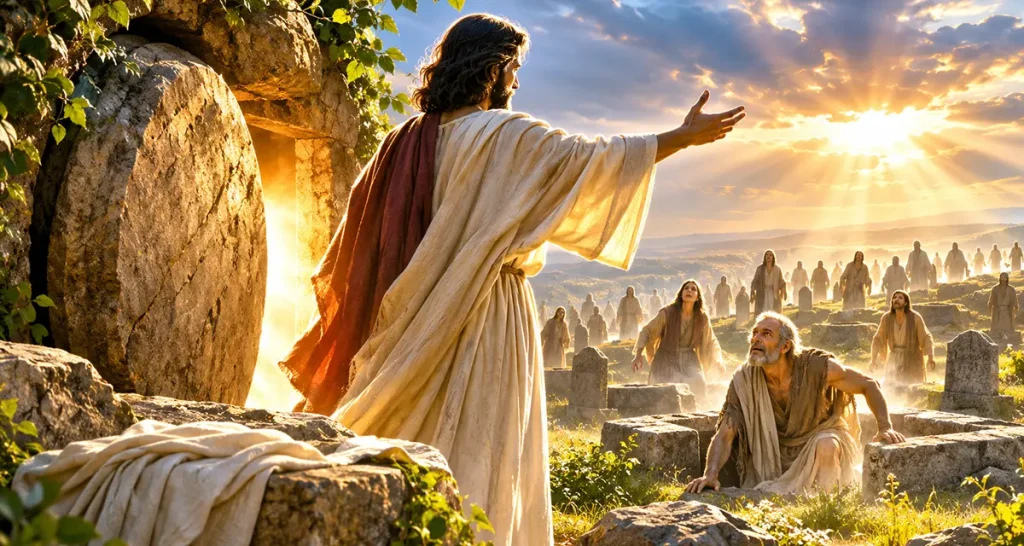
Jesus says in John 5:28–29 that all will come forth, some to the resurrection of life and others to the resurrection of condemnation.
But who is being judged?
Not an imitation of the person who lived.
Not a newly created individual who happens to possess the memories of someone who died.
The person who is raised is the person who lived.
Otherwise, the moral continuity between earthly life and divine judgment would be compromised.
Paul writes:
“For we must all appear before the judgment seat of Christ, that each one may receive the things done in the body, according to what he has done, whether good or bad.” (2 Corinthians 5:10)
The one appearing before Christ is accountable for the life that same person lived.
This requires personal continuity across death and resurrection.
And that continuity, as you have observed, is itself dependent upon God.
There is an extraordinary implication here.
Even those who face judgment cannot claim that their continued existence is something they possess independently of their Judge.
Their resurrection is an act of divine authority.
Their personal identity is preserved by the Creator.
Their accountability rests upon the fact that they remain the very persons who lived and acted.
We should distinguish this from settling every question about the final fate of the wicked. Christians differ over the interpretation of eternal punishment and final destruction. But the biblical teaching that the wicked are raised for judgment is unmistakable.
❤️ Identity is a gift, but righteousness is not identical to existence
There is another distinction worth making.
You said that our identity, righteous or wicked, is a gift of God.
Yes, insofar as we mean that God gives and sustains our personal existence.
But we should not confuse the gift of personal identity with the moral condition of that identity.
God creates persons, but He does not create their wickedness as though evil were a necessary component of their individuality.
Genesis 1:27 describes humanity as created in God’s image.
Genesis 1:31 declares the original creation very good.
Sin enters the human story as corruption and rebellion, not as an essential ingredient of personhood.
This means that our identity as creatures is more fundamental than our condition as sinners.
And that has enormous implications for redemption.
When God saves a sinner, He does not need to destroy the person and manufacture another individual.
He redeems and transforms the person who has sinned.
Paul can therefore say:
“Therefore, if anyone is in Christ, he is a new creation; old things have passed away; behold, all things have become new.” (2 Corinthians 5:17)
The person is genuinely transformed, yet remains the same person.
The new creation does not abolish personal continuity.
It restores the creature through the grace of the Creator.
🌱 And even our memories are not the foundation of our identity
Here is another interesting consequence.
We often associate personal identity with memory.
I know who I am because I remember my past, recognize my relationships, and possess a continuous sense of self.
But consider someone who suffers profound memory loss.
Has that person ceased to be the individual he or she was before?
Certainly not.
Memory is important to our experience of identity, but it cannot be the ultimate foundation of identity.
Likewise, during deep unconsciousness, we do not cease to be ourselves simply because we are not presently aware of ourselves.
And when death interrupts our bodily existence, God does not lose track of who we are.
Jesus says:
“But the very hairs of your head are all numbered.” (Matthew 10:30)
His immediate purpose is to reassure His disciples of the Father’s intimate knowledge and care.
But the statement also illustrates how completely the Creator knows His creatures.
Our identity does not depend upon our uninterrupted ability to remember ourselves.
We remain known to God even when we cannot know ourselves.
That does not answer every philosophical question about consciousness and personal identity, but it places our ultimate security somewhere far more dependable than our own mental capacities.
✨ The astonishing difference between being preserved and being redeemed
Now we reach what may be the most important distinction arising from your observation.
God sustains the existence of both the righteous and the wicked.
But sustaining existence is not the same as granting salvation.
The wicked person’s continued existence does not mean that person enjoys reconciled fellowship with God.
And the believer’s eternal life is more than the mere continuation of personal consciousness.
Jesus defines eternal life relationally in John 17:3:
“And this is eternal life, that they may know You, the only true God, and Jesus Christ whom You have sent.”
That is something far greater than simply continuing to exist.
It is knowing God through Christ.
So we can distinguish between two realities.
Existence is a gift of the Creator to His creatures. Eternal life is the gift of God in Christ to those whom He redeems.
Both depend upon God.
Neither makes the creature independent.
But they are not the same gift in their meaning or purpose.
And this returns us to the resurrection.
The righteous and the wicked will both be raised by the authority of Christ.
Yet their resurrection does not lead to the same destiny.
The same divine power that preserves personal identity across death will bring every person before the Son.
For the redeemed, that resurrection completes the salvation already begun in Christ.
For the wicked, it brings them before the judgment of the One whose sustaining power they have never escaped.
🌅 The person is never independent of the Creator
And now I think we can express your observation even more precisely.
God does not merely preserve the information necessary to reconstruct our identity.
He preserves us.
Our continued existence, our individuality, and our eventual resurrection all depend upon Him.
That does not mean we can fully explain what constitutes personal identity or how God sustains it beyond bodily death.
But it does mean that death cannot make us inaccessible to the One upon whom our existence has always depended.
And perhaps this is why Jesus’ declaration in John 5 is so extraordinary.
He does not need to search creation for the lost identity of someone who died thousands of years ago.
That person was never lost to Him.
He does not need to discover who belongs to which scattered collection of atoms.
He knows His creatures.
And when He summons the dead, the very persons who lived will rise.
What strikes me most is that this makes our creatureliness permanent.
Even in glory, even after resurrection, even when death is no more, we will never possess existence independently of God.
Our identity will remain a gift, and our everlasting life will remain dependent upon the faithfulness of the Giver.
The righteous will rejoice in that dependence.
The wicked may have resisted it.
But neither has ever existed for a single moment apart from the sustaining power of the Creator.