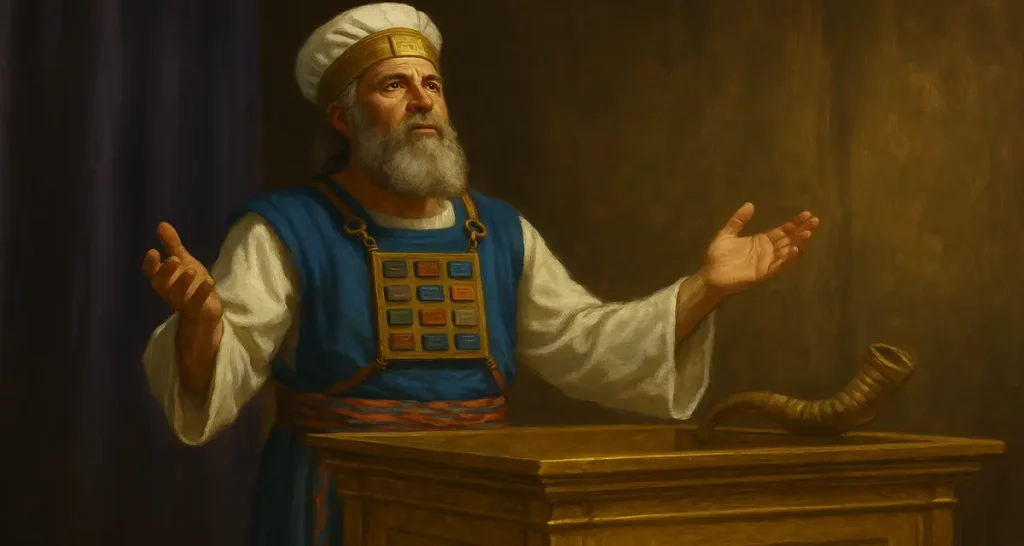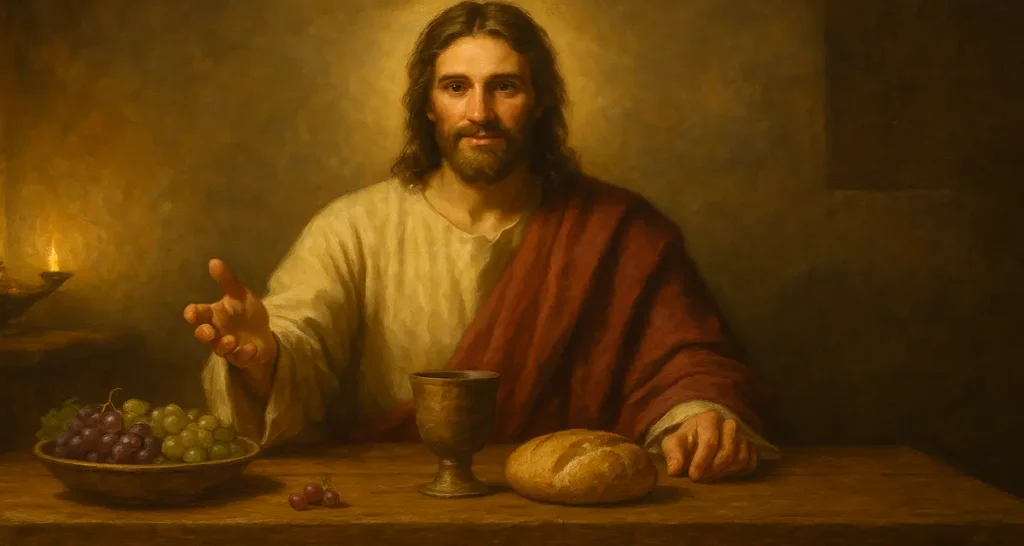

Holiness is often imagined as a life of relentless restraint—rules to obey, temptations to suppress, failures to overcome by sheer determination. Many believers quietly live under this weight, wondering why freedom feels fragile, why devotion cools so easily, and why victory seems harder than it should be. Yet Scripture offers a far more beautiful vision: holiness is not powered by effort—it is sustained by fellowship.
From the priesthood of Israel to the table of the Lord, God has always revealed the same truth—nearness to Him shapes purity more deeply than fear of sin ever could. The restrictions of the sanctuary were never meant to isolate hearts but to protect communion. Eating at God’s table symbolized belonging, intimacy, and shared life. And now, in Christ, that table has come to dwell within us.
We do not fight for acceptance—we stand in it.
We do not pursue holiness to earn love—we walk in holiness because we have been loved.
We do not resist sin as fearful servants—we resist as beloved sons and daughters who refuse to trade fellowship for compromise.
This article is a journey through ten spiritual safeguards—not as techniques for moral perfection, but as practices of nearness: ways the Spirit keeps our hearts anchored to Christ, our minds renewed, our fellowship guarded, and our devotion alive. At the center of them all stands one blazing truth:
Victory flows from remembrance of the love that first won us.
Everything that follows is an invitation—not to strive harder, but to draw nearer… and to discover that holiness grows strongest wherever love burns brightest.
⚔️ 1. Know Your Identity in Christ
Before any spiritual battle can be fought, before any discernment can be practiced, and before any liberty can be stewarded wisely, identity must be settled. Victory is not achieved by striving to become someone—we overcome because we begin already knowing who we are.
Paul does not tell believers to fight for acceptance, holiness, or standing with God. He tells them to fight from what Christ has already secured:
“You are not in the flesh but in the Spirit, if indeed the Spirit of God dwells in you.”
(Romans 8:9)
This statement is not aspirational—it is declarative. The believer is not defined by lingering weakness or the presence of temptation, but by the indwelling Spirit. Our warfare does not begin with self-analysis but with divine placement:
In Christ, you have already been transferred—from Adam to Christ, from death to life, from condemnation to sonship.
🏹 Identity Comes Before Strategy
One of Satan’s most effective devices is not temptation itself, but identity erosion. He aims first at how we see ourselves:
- “You’re weak.”
- “You’ll never overcome this.”
- “You’re just pretending to be holy.”
- “Look at your struggles—how could you be a child of God?”
The enemy never starts by denying Christ—he starts by questioning our union with Him.
Yet Paul states plainly:
“Sin shall not have dominion over you, for you are not under law but under grace.”
(Romans 6:14)
Notice what he does not say:
He does not say sin no longer exists.
He does not say temptation vanishes.
He does not say struggle is absent.
He says:
Sin no longer reigns.
Its presence remains, but its authority does not.
Victory flows not from flawless performance but from right ownership—ownership of who Christ has made you to be.
🏛 Priesthood Language of Identity
The foundational study in Leviticus reveals something powerful that continues into New Testament reality: holiness is relational, not moralistic.
In the Priesthood:
- Certain priests could not serve at the altar due to physical blemishes,
- Yet they were still permitted at the table of fellowship.
This was not exclusion—it was identity preservation.
They were not less priests.
They were not less sons of Aaron.
They did not lose their inheritance.
They were still members of God’s priesthood family.
In Christ, this priestly status is no longer symbolic—it is fulfilled:
“You are a chosen generation, a royal priesthood, a holy nation, His own special people…”
(1 Peter 2:9)
Your identity is therefore not measured by:
- Visible strength
- Personal discipline
- Emotional stability
- Spiritual victories
It is anchored in God’s declaration:
You are a priest at God’s table because you are in Christ—not because your life is perfected.
🔥 Identity and the Fellowship Table
The study beautifully connects holiness with fellowship—the table is the heart of consecration .
Under the Old Covenant:
To approach the table of sacred eating while unclean profaned the sanctuary.
Under the New Covenant:
The table no longer represents ritual purity—it represents Christ’s body broken for our purity.
That shift is critical:
You no longer eat to prove holiness.
You eat because Christ has made you holy.
Which means:
Identity precedes behavior.
You resist sin not because you are afraid of exclusion—but because you already belong.
🩸 The Priest vs. The Orphan
Many believers fight as orphans, not as priests.
An orphan says:
- “If I overcome enough, maybe God will accept me.”
- “Struggle proves I don’t really belong.”
- “I need to earn my place.”
A priest in Christ says:
- “I belong—therefore I fight.”
- “I stand accepted—therefore I rise again when I fall.”
- “I overcome because I already sit at His table.”
Paul ties this directly to sonship:
“You did not receive the spirit of bondage again to fear, but you received the Spirit of adoption by whom we cry out, ‘Abba, Father.’”
(Romans 8:15)
The spiritual war is not a trial to earn identity—it is the overflow of identity already given.
🛡 Identity Ends the Devil’s “Technicality Trap”
The concern about the devil weaponizing what is “technically clean” is precise—and this is exactly where identity becomes armor.
Technical righteousness asks:
“Can I do this and still be safe?”
Priestly identity asks:
“Does this honor the God I belong to?”
A believer rooted in identity does not live at the edge of compromise, because their goal is not innocence—it is intimacy.
They do not ask how close they can get to the line without crossing it.
They ask how close they can remain to Christ.
Paul expresses this heart:
“All things are lawful for me, but I will not be brought under the power of any.”
(1 Corinthians 6:12)
Why not?
Because bondage contradicts who he is now.
⚡ The Power of Identity Warfare
Right identity doesn’t remove temptation—it dismantles the lie behind temptation:
- “This will fulfill you.”
- No—it opposes who I am.
- “This liberty won’t hurt.”
- No—it enslaves what Christ freed.
- “God understands.”
- Yes—He understands I was made for holiness, not half-hearted compromise.
This shift is subtle but world-changing:
You do not resist sin because you’re afraid to lose salvation.
You resist sin because you know who you already are.
👑 The Core Truth
Every spiritual battle begins with this settled confession:
“I am not a striving sinner trying to be holy.
I am a redeemed priest learning to walk worthy of my calling.”
Until identity is settled, everything else becomes performance:
- Armor becomes duty.
- Prayer becomes ritual.
- Resistance becomes exhaustion.
But when identity is settled:
- Armor becomes confidence.
- Prayer becomes communion.
- Resistance becomes worship.
✨ Closing Reflection
Your foundational Q&A reaches this truth naturally: holiness is not guarded by fear—it is cultivated by fellowship .
And fellowship flows freely when identity is firm:
We approach the table not as anxious intruders—but as beloved sons and daughters seated by grace.
🛡 2. Put On the Armor of God
Once your identity in Christ is settled, the battle shifts from who you are to how you stand.
Paul does not call believers to chase victory—he calls them to stand already clothed for war:
“Be strong in the Lord and in the power of His might.
Put on the whole armor of God, that you may be able to stand against the wiles of the devil.”
(Ephesians 6:10–11)
Notice what Paul emphasizes—not conquest, but standing. The believer’s posture is not frantic offense but resilient stability. We stand because Christ has already conquered (Colossians 2:15). The armor is not given to make us warriors from scratch—it equips priests already seated at God’s table to resist the schemes that seek to undermine communion, holiness, and freedom.
The earlier exploration of the priesthood reveals that defilement was always less about catastrophic collapse and more about subtle compromise at the table of fellowship . The Armor of God exists precisely to protect that table—to guard intimacy from infiltration.
🧠 Warfare Is Not Against People
Paul clarifies the battlefield:
“For we do not wrestle against flesh and blood, but against principalities, against powers, against the rulers of the darkness of this age…”
(Ephesians 6:12)
Spiritual warfare is never a war against people, culture, or circumstances—it is a war against lies, seductions, distortions, and accusations designed to erode:
- Identity
- Conscience
- Confidence
- Fellowship
The enemy does not first attempt to destroy faith—he attempts to dilute devotion. He strikes at motivation, clarity, and loyalty long before he ever aims at obedience.
That is why each piece of armor addresses a spiritual vulnerability.
🪢 The Belt of Truth — Anchoring Discernment
“Having girded your waist with truth…” (v.14)
The belt secured every other piece of armor. Without it, movement became tangled and unstable.
Truth does the same for the believer.
Truth is not merely doctrinal accuracy—it is truth embraced inwardly. The devil’s oldest weapon remains distortion through partial truth:
- “God wouldn’t forbid that.”
- “It’s technically allowed.”
- “You’re under grace—you don’t need to worry.”
Each of these statements contains fragments of truth used to weaken consecration.
The belt of truth stabilizes the heart—not with rigid rules, but with a clear awareness of who God is and what honors fellowship with Him.
Truth keeps you from drifting into technical righteousness—the very trap the discussion highlighted .
🛡 The Breastplate of Righteousness — Guarding the Heart
“…having put on the breastplate of righteousness.”
The breastplate protects the vital organs—the seat of conscience and emotion.
This righteousness is not self-generated merit—it is Christ’s righteousness credited to the believer (2 Corinthians 5:21). When condemnation whispers,
“You’re failing. God is distant.”
the breastplate replies:
“Christ is my righteousness. My standing remains secure.”
This protection prevents two dangerous extremes:
- Shame-ridden defeatism: believing spiritual failure has revoked God’s welcome.
- Flippant liberty: mistaking forgiveness for permission to drift.
Righteousness keeps communion safe from both self-accusation and self-justification.
👣 The Shoes of Peace — Stability in Calling
“…having shod your feet with the preparation of the gospel of peace.”
Footwear allowed soldiers to stand firm under pressure.
Peace does not mean comfort—it means reconciliation with God and inward rest in His gospel promise.
Peace stabilizes you when:
- The flesh demands shortcuts.
- Trials provoke fear.
- Pressure tempts compromise.
A believer at peace does not scramble for relief through sin or escape—they remain anchored.
This directly protects fellowship. Spiritual anxiety drives compromise; spiritual peace cultivates patience and obedience.
🔥 The Shield of Faith — Extinguishing Darts
“…above all, taking the shield of faith with which you will be able to quench all the fiery darts of the wicked one.”
Fiery darts were tipped with burning pitch, designed to inflame panic or confusion.
The enemy’s darts today are thoughts:
- “God won’t come through.”
- “You’ve gone too far.”
- “Your desire matters more than obedience.”
- “You deserve relief.”
Faith does not argue with emotion—it counters deception by trusting God’s proven character over present feelings.
Faith quenches:
- Lust before it expands.
- Bitterness before it roots.
- Doubt before it multiplies.
Faith keeps the heart from igniting into destructive reaction.
🪖 The Helmet of Salvation — Guarding the Mind
“And take the helmet of salvation.”
The mind remains the primary battlefield.
The helmet guards assurance. Without assurance, believers fight fearful and unstable:
- “What if I fail?”
- “What if God rejects me?”
- “What if I’m not really saved?”
This destabilizes obedience by shifting focus to self-preservation rather than Christ-centered trust.
Salvation means settled belonging:
“There is therefore now no condemnation for those who are in Christ Jesus.” (Romans 8:1)
A believer secure in salvation fights boldly—not to be accepted, but because they already are.
⚔️ The Sword of the Spirit — Cutting Through Lies
“…the sword of the Spirit, which is the word of God.”
The sword is not for conversation—it is for combat.
Jesus Himself modeled its use:
“It is written…”
Scripture:
- Exposes temptation’s lies.
- Anchors conviction.
- Clarifies God’s will.
The Word is not wielded to shame yourself—but to align yourself.
In moments of pressure, Scripture recalibrates desire:
- Not emotional reasoning
- Not situational ethics
- But eternal truth
🙏 Prayer — The Breath of the Armor
“Praying always with all prayer and supplication…”
The armor is sustained through prayer.
Armor without prayer becomes automation.
Prayer keeps gear relational—not mechanical.
Prayer:
- Keeps dependence alive.
- Prevents pride.
- Restores intimacy after battle.
In prayer, victory is not demanded—it is received afresh from Christ.
🏛 Priesthood, Armor, and the Table
The original focus on the sacred table reveals why the armor matters .
The enemy does not aim first to destroy faith.
He aims to pollute fellowship.
Every piece of armor serves to defend the sanctity of communion:
- Truth preserves clarity at the table.
- Righteousness guards confidence of welcome.
- Peace keeps fellowship from anxiety.
- Faith extinguishes tempting distractions.
- Salvation stabilizes assurance of belonging.
- Scripture directs obedient response.
- Prayer sustains relational dependence.
The armor is not the attire of anxious warriors—it is the covering of priests walking toward the holy table daily.
✨ Final Word
Putting on the armor is not about constructing spiritual toughness—it is about protecting relational holiness.
The battle is not merely “don’t fall into sin.”
The battle is: “don’t drift from intimacy with Christ.”
Every piece of armor exists for that purpose.
🧠 3. Renew Your Mind Daily
No battlefield is more active, more contested, or more decisive than the mind.
Paul does not say spiritual warfare is won first in behavior—it is won in thinking:
“Do not be conformed to this world, but be transformed by the renewing of your mind…”
(Romans 12:2)
Transformation does not begin with new habits—it begins with new mental alignment. Every temptation, fear, doubt, compromise, or discouragement enters as a thought long before it becomes an act.
The mind is the gatekeeper of the heart—and therefore the gatekeeper of fellowship.
🧭 Renewal: Not Mind Control, but Reorientation
Renewing the mind does not mean suppressing thoughts or striving for mental perfection. It means retraining spiritual perception—learning to automatically interpret reality through Christ rather than through the flesh or the world.
Paul teaches:
“We destroy arguments and every lofty opinion raised against the knowledge of God, taking every thought captive to the obedience of Christ.”
(2 Corinthians 10:5)
The renewal process is not about silencing thoughts—it is about evaluating them under Christ’s authority.
Every thought must now pass through three priestly questions:
- Is this thought true according to God’s Word?
- Does this thought promote fellowship with Christ—or distance from Him?
- Does this thought strengthen holiness—or nurture compromise?
This daily examination preserves the purity of the sacred table—the inward place of communion described throughout your source study .
🪤 Where the Battle Is Usually Lost
Spiritual defeat rarely begins with open rebellion.
It begins quietly:
- Justifying bitterness.
- Entertaining discouragement.
- Feeding imagination more than truth.
- Replaying condemnation.
- Normalizing compromise.
None of these appear dangerous initially. They present themselves as reasonable thoughts:
- “It’s understandable to be angry.”
- “It’s just thoughts—I haven’t acted.”
- “I deserve relief.”
- “Holiness is exhausting.”
These thoughts erode communion long before they produce visible sin. The connection to Levitical priesthood becomes clear here:
The priest did not wait until defilement became visible—he was forbidden from approaching fellowship the moment inner defilement existed. note 1
The mind under unfinished renewal is equivalent to approaching the table while unclean. Compromise begins internally before it ever surfaces externally.
🪞The Mirror of Truth
Renewal occurs through the steady mirror of Scripture:
“Moreover by them your servant is warned, and in keeping them there is great reward.”
(Psalm 19:11)
God’s Word functions as a daily cleansing agent upon the mind:
“Christ loved the church… cleansing her by the washing of water with the word.”
(Ephesians 5:26)
The Word doesn’t merely instruct—it washes. It smooths distorted thinking, removes lingering lies, and realigns the believer’s internal compass.
This is why neglect of Scripture always precedes spiritual drift—not because ignorance brings judgment, but because distance from the Word creates distance from clarity.
🛎 From Reaction to Discernment
A renewed mind replaces impulsive reaction with priestly discernment.
Instead of:
- Reacting emotionally
- Making decisions under pressure
- Latching onto technical liberty
The believer pauses and asks:
“Is this pulling me closer to the heart of God—or slowly bending me away?”
This aligns precisely with Paul’s maturity test:
“All things are lawful for me, but not all things are helpful.”
(1 Corinthians 6:12)
Renewed thinking shifts the believer from legality to love-based logic.
The believer becomes less obsessed with permission and more attracted to what protects communion.
🧱 Thought Replacement — Not Thought Suppression
Paul never teaches emptying the mind—he teaches filling it:
“Whatever is true, whatever is noble, whatever is just, whatever is pure… think on these things.”
(Philippians 4:8)
Dark thoughts do not demand mere resistance—they demand replacement.
Unrenewed thought:
“I am trapped.”
Renewed truth:
“I am not in the flesh, but in the Spirit.” (Romans 8:9)
Unrenewed thought:
“I deserve this.”
Renewed truth:
“My satisfaction is in Christ.”
Unrenewed thought:
“God is disappointed with me.”
Renewed truth:
“There is no condemnation in Christ.”
The mind becomes holy not by vacuum—but by occupation.
🕯 The Inner Tabernacle
Levitical imagery resurfaces beautifully here. God desired to dwell in the midst of Israel, and ceremonial rules protected that dwelling from insult and intrusion.
In Christ, Scripture declares:
“Your body is the temple of the Holy Spirit.”
(1 Corinthians 6:19)
The Holy of Holies is now inward.
That means the mind becomes the outer court of devotion—where sacred atmosphere is either preserved or compromised.
Dirty thoughts, unchecked bitterness, cultivated fantasy, or protected grievance all function as spiritual pollutants within the temple’s environment.
Renovation of the mind keeps the temple atmosphere pure.
🔄 Renewal Is Daily—Not One-Time
Paul writes in the present tense:
“Be transformed by the renewing…”
Renewal never finishes in this life. It is:
- Ongoing.
- Repetitive.
- Gentle.
- Persistent.
Every day that the mind returns to the Word, prayer, worship, and obedience, fellowship deepens.
Every day neglect creeps in, renewal weakens and old patterns regain oxygen.
This is not about condemnation—it is about maintenance of communion.
Just as the altar fire was commanded never to go out (Leviticus 6:13), so renewal preserves:
- Spiritual warmth.
- Devotional clarity.
- Discernment against compromise.
✨ Final Word
The mind will either be:
- The workshop of the Spirit, shaping Christlikeness…
or
- The playground of the enemy, growing footholds through suggestion and distraction.
There is no spiritual neutrality zone.
Renewal keeps the sanctuary swept and lighted—ready to receive the Presence of God in unhindered intimacy.
🌿 4. Walk in the Spirit, Not in the Flesh
Renewed thinking leads to renewed living. The Christian life does not remain theoretical—it becomes relational movement. Paul places the battle squarely in everyday experience:
“Walk in the Spirit, and you shall not fulfill the lust of the flesh.”
(Galatians 5:16)
He does not say:
- “Fight the flesh harder.”
- “Suppress temptation better.”
- “Perfect your discipline.”
He says: walk.
Victory comes not through forceful struggle but through relational alignment—learning to move with the Spirit’s presence moment by moment.
This perfectly echoes the priestly pattern explored in the earlier work: holiness flowed from proximity to God—not mere correctness. Walking in the Spirit is simply the New-Covenant expression of living near the Holy Place instead of drifting toward what defiles fellowship.
🚶♂️ “Walk” — A Way of Life, Not a Moment
In Scripture, to walk means daily conduct, habitual orientation, lived trajectory.
Walking in the Spirit means:
- Ordering choices around His voice rather than impulses.
- Evaluating options in light of intimacy rather than convenience.
- Keeping awareness of His nearness in ordinary moments.
This is not about flawless living—it is about ongoing dependence.
The priest did not purify the sanctuary once and then forget it;
the altar fire was kept burning continually.
Likewise, walking in the Spirit is continual sensitivity—not perfectionism.
⚔️ Flesh vs. Spirit — Two Operating Systems
Paul is brutally honest about inner tension:
“For the flesh lusts against the Spirit, and the Spirit against the flesh…”
(Galatians 5:17)
This conflict does not invalidate faith—it proves spiritual life exists.
The flesh is not merely sinful desires—it is the whole mindset of autonomous living:
- craving control
- demanding comfort
- avoiding surrender
- unlatching from dependence
The Spirit counters with a different operating system:
- trust instead of anxiety
- obedience instead of expedience
- worship instead of entitlement
Walking in the Spirit does not eliminate the flesh—it transcends it. The believer no longer obeys the loudest desire but follows the strongest Presence. note 2
🕊 Yielding, Not Striving
The command is not “defeat the flesh” but “walk in the Spirit.”
The implication is stunning:
Victory does not come through resisting weakness directly—it comes through yielding to God deliberately.
This is why Paul does not say:
The Spirit will remove fleshly desires…
He says:
The Spirit will prevent their fulfillment.
The flesh remains real, but it is slowly starved as attention feeds a stronger appetite.
🍞 Fellowship Is the Fuel
The study centered beautifully on eating as fellowship —approaching God’s table as both belonging and consecration.
Walking in the Spirit arises from precisely this same dynamic:
- The soul feeds on what it communes with.
- Communion with Christ nourishes virtue.
- Neglect of communion strengthens flesh impulses.
We often try to conquer sin without first cultivating deeper fellowship—and then wonder why temptation seems more powerful than our resolve.
The gospel approach is reversed:
- Feed the Spirit life—and flesh weakens by neglect.
Prayer, Scripture, worship, fasting, thanksgiving—these are not legalistic disciplines; they are daily meals of presence.
🌳 Fruit, Not Performance
Paul contrasts works of the flesh with fruit of the Spirit:
“The fruit of the Spirit is love, joy, peace, patience, kindness, goodness, faithfulness, gentleness, self-control.”
(Galatians 5:22–23)
Works are manufactured.
Fruit is grown.
Walking in the Spirit allows Christ’s life to grow naturally within the heart.
This fruit is not maintained by willpower but by abiding:
“He who abides in Me… bears much fruit.” (John 15:5)
Discipline guards fellowship—but abiding creates transformation. note 3
🛎 Listening Before Moving
Walking implies paying attention.
The Spirit leads quietly rather than forcefully:
- through conviction
- through peace
- through restraint
- through comfort
The flesh rushes.
The Spirit guides.
Learning to walk involves slowing internal urgency long enough to ask:
“Holy Spirit, what honors the nearness of Christ right now?”
This cultivates priestly discernment—the same sacred attentiveness demanded in the tabernacle.
🔄 Daily Re-Yielding
Walking by the Spirit isn’t a permanent state triggered once—it is daily posture:
“If we live by the Spirit, let us also keep in step with the Spirit.” (Galatians 5:25)
Keeping in step means continual recalibration:
- repenting when drifting
- rejoicing when aligned
- realigning after failure
Nothing breaks communion faster than isolation—and nothing restores it faster than surrender.
🏛 Living as Walking Sanctuaries
Because God now dwells within His people:
“Your body is the temple of the Holy Spirit.” (1 Corinthians 6:19)
Walking by the Spirit becomes:
- guarding atmosphere,
- stewarding attention,
- honoring the Presence residing in us.
The heart becomes the new sanctuary.
The choices of the day become the new offerings.
Life itself becomes liturgy.
✨ Final Reflection
Walking in the Spirit is the practical fulfillment of everything the study has been pointing to:
Holiness flows from fellowship, not fear.
Obedience rises from communion, not compulsion.
The believer does not drag themselves toward righteousness—they walk beside the Spirit who walks within them.
💡 5. Test All Things and Hold Fast to What Is Good
If walking in the Spirit is the posture of faith, discernment is the guardrail of faithfulness.
Paul exhorts believers:
“Test all things; hold fast what is good. Abstain from every form of evil.”
(1 Thessalonians 5:21–22)
This command arrives precisely after Paul discusses the Spirit’s leading—because spiritual sensitivity without discernment becomes emotionalism, and freedom without discernment becomes license.
Testing everything means evaluating desires, habits, influences, freedoms, and invitations through the lens of consecrated fellowship rather than convenience or emotion.
The earlier discussions about the danger of “technical cleanness” find their defense right here . The enemy often succeeds not by presenting obvious evil but by offering clean alternatives that drain devotion.
🔍 What Does “Test All Things” Mean?
The word test (δοκιμάζετε) means to examine for authenticity—like refining metal until only what is pure remains.
It is not suspicion toward life; it is devotion toward God.
Testing asks:
- Does this strengthen or dilute my attentiveness to Christ?
- Does this promote spiritual warmth—or spiritual numbness?
- Does this deepen fellowship—or leave me distracted, hollow, or restless?
This standard guards against two errors:
1. Legalism
Declaring forbidden what God has permitted.
2. Compromise
Declaring beneficial whatever God has merely permitted.
Paul targets both when he says:
“All things are lawful… but not all things edify.” (1 Corinthians 10:23)
Testing is not about permission—it is about profit to the soul.
🍃 Good vs. Permissible
Scripture carefully distinguishes:
- Lawful = allowed
- Good = spiritually beneficial
Much of what weakens believers today lives squarely in this gap.
Not sinful.
Not condemned.
Yet not holy.
This middle ground slowly dims spiritual hunger—until desire for God becomes outweighed by desire for distraction, comfort, or indulgence.
The priestly fellowship theme illuminates this perfectly :
Eating while ceremonially “unclean” was not gross immorality—it was informational disobedience.
The act itself was lawful—the timing violated communion.
And so today:
- Certain entertainments are lawful—but sap prayer.
- Certain relationships are lawful—but dilute holiness.
- Certain comforts are lawful—but dull sensitivity to God’s voice.
Testing protects the “holy table” of intimacy from quiet encroachment.
⚖️ Holding Fast What Is Good
Discernment does not stop at saying no—it clings tightly to what nourishes spiritual life.
Paul says:
“Hold fast what is good.”
Meaning:
- Grip what sharpens faith.
- Cling to habits that deepen Christ-awareness.
- Preserve practices that anchor fellowship.
This often means strengthening:
- Scripture intake
- Prayer rhythms
- Corporate worship
- Confession and accountability
- Kingdom service
These practices are not burdens—they are guardians of joy. They sustain what legal permission never could: holy hunger.
🧗♂️ The Discernment Shift
The mature believer shifts their core question from:
“Is this allowed?”
to:
“Is this forming Christ in me?”
That shift dismantles the devil’s most subtle strategy: persuading believers to live at the very edge of holiness while convinced they are walking in freedom.
Discerning hearts understand:
- Technical innocence never produces spiritual fullness.
- Consecration always leads to deeper joy.
🏛 The Internal Temple Check
Because we are now the temple of God, our hearts function as sanctuary environments—not neutral marketplaces.
Everything we invite into thought, entertainment, relationships, or routines either enhances or pollutes the spiritual atmosphere.
Discernment becomes spiritual housecleaning:
- Removing mental clutter.
- Evicting influences that dull conviction.
- Rearranging priorities toward Christ.
Just as the priests protected sacred space, Spirit-led believers now protect sacred interior life.
🛑 Abstaining From Evil’s “Appearance”
Paul adds:
“Abstain from every form of evil.”
Appearance here does not mean optics—it means every expression, shade, or embodiment of evil, including disguised forms.
The most dangerous evil is not obvious corruption—it is compromise clothed as wisdom.
Testing unmasks it.
Discernment shuts the gates long before consequence arrives.
✨ Final Reflection
Discernment keeps the believer’s freedom holy.
Without testing:
- Liberty becomes license.
- Fellowship becomes diluted.
- Spiritual appetite fades.
With testing:
- Freedom becomes worship.
- Holiness becomes joy.
- Communion deepens.
This entire discipline safeguards what the Q&A points toward as the ultimate purpose of holiness:
Not moral superiority—but sustained fellowship at God’s table.
🤝 6. Stay in Fellowship and Accountability
Spiritual life was never meant to be lived alone.
From the tabernacle to the Church, God’s design has always been communal: a holy people, a gathered priesthood, a family at His table. Holiness was not safeguarded by solitary devotion but by shared responsibility and shared joy.
Scripture makes this unmistakably clear:
“Let us consider one another in order to stir up love and good works, not forsaking the assembling of ourselves together…”
(Hebrews 10:24–25)
Growth happens where believers are known, seen, and supported—not when they remain spiritually anonymous.
🛤 Why Isolation Is the Enemy’s Playground
The enemy knows this truth well: isolation weakens conviction and magnifies temptation.
- Isolated faith breeds unaccountability.
- Without counsel, personal rationalization replaces wisdom.
- Discouragement grows louder when it echoes undisturbed.
Solomon states the ancient warning plainly:
“Woe to him who is alone when he falls, for he has no one to help him up.”
(Ecclesiastes 4:10)
Isolation does not immediately lead to overt sin—it first leads to:
- self-justification,
- hidden struggles,
- private grief,
- quiet compromise.
All the vulnerabilities you identified around “technically clean” liberties increase under isolation . Without trusted believers in our spiritual orbit, conscience dulls and blind spots expand quietly.
🏛 The Priesthood Was Never Individual
Israel’s priests never ministered single-handedly. They served:
- In structured unity,
- Under shared standards,
- Within relational oversight.
Their very garments bore the names of the twelve tribes—signifying that ministry before God was always corporate representation, not personal performance.
The New Covenant echoes this truth:
“You, as living stones, are being built together into a spiritual house…”
(1 Peter 2:5)
Not scattered stones.
Not isolated sanctuaries.
One spiritual house, interconnected under Christ.
🩺 Confession Heals What Loneliness Conceals
James gives one of the most practical commands in Scripture:
“Confess your sins to one another, and pray for one another, that you may be healed.”
(James 5:16)
Healing requires exposure—not to shame, but to Spirit-filled mercy through trusted believers.
This is not public spectacle.
This is safe vulnerability:
- trusted friendships
- pastoral counsel
- prayer partnerships
Confession releases what secrecy strengthens.
Isolation fosters shame.
Fellowship invites healing.
🔦 Accountability: Gentle, Not Legalistic
Biblical accountability is not policing behavior—it is shepherding hearts.
Accountability says:
- “Are you growing in joy?”
- “Are you staying near the table of Christ?”
- “Are you walking in light?”
This protects believers from drifting into technical righteousness—the state where conduct remains acceptable while devotion quietly evaporates .
The goal is never shame—the goal is preservation of communion.
True accountability feels less like supervision and more like:
“Let me walk with you.”
🔥 Encouragement Keeps the Altar Burning
Hebrews commands believers:
“Exhort one another daily… lest any of you be hardened through the deceitfulness of sin.”
(Hebrews 3:13)
Encouragement is spiritual firewood:
- It softens hardened hearts.
- It restores weary faith.
- It guards joy.
Without encouragement, people don’t fall into gross immorality first—they become spiritually cold.
And cold sanctuaries lose Passion for Presence.
🫶 Fellowship Protects Identity
Earlier, it was established that identity in Christ is the first defense.
Fellowship reinforces identity.
Believers remind one another:
- “You belong.”
- “You are not alone.”
- “Christ is working in you.”
Isolation causes identity erosion.
Community reinforces belonging.
Even mature believers can forget who they are when walking alone too long.
The Church becomes a mirror to the soul—reflecting Christ back when self-perception dims.
🌿 Safe Fellowship vs. Spiritual Socializing
Not every gathering constitutes true fellowship.
Biblical fellowship entails:
- Shared prayer
- Mutual confession
- Spiritual honesty
- Scripture-centered encouragement
- Worshipful unity
Entertainment alone does not strengthen holiness.
Conversation without spiritual depth rarely preserves consecration.
True fellowship feels more like a holy family and less like a spiritual club.
🏠 God’s Design: Healing Through Belonging
The entire priestly theme converges here :
Holiness was never about cold separation—it was about sustaining sacred belonging.
Fellowship creates spiritual gravity toward God:
- It keeps eyes lifted from personal struggle to communal purpose.
- It keeps freedom nested inside wisdom.
- It keeps discipline sustained by love.
✨ Final Reflection
If isolation is the soil where compromise grows, then fellowship is the soil where holiness flourishes.
God’s sanctuary was always a place of gathering—and so is the sanctuary of the Church today.
We overcome together—or slowly drift apart alone.
✝️ 7. Fix Your Eyes on Jesus
Every spiritual victory ultimately flows from where we look.
The author of Hebrews does not say, “Look to your discipline.”
He does not say, “Look to your progress.”
He does not even say, “Look to your armor.”
He says:
“Let us run with endurance the race that is set before us, looking unto Jesus, the author and finisher of our faith.”
(Hebrews 12:1–2)
This is not a poetic suggestion—it is a strategic command.
The gaze determines the race.
What occupies our vision quietly governs what occupies our hearts.
🧭 The Direction of the Gaze
In Scripture, “looking” is never neutral—it is directional devotion.
- Eve looked at the fruit.
- Israel looked to idols.
- Peter looked at the waves.
- Stephen looked to heaven.
Every time the gaze shifted, behavior followed.
The Christian life is not driven by willpower alone—it is steered by attention.
You move toward what you behold.
🔥 Beholding Transforms
Paul unveils one of the deepest truths in Scripture:
“We all, with unveiled face, beholding the glory of the Lord, are being transformed into the same image…”
(2 Corinthians 3:18)
Transformation does not occur primarily through striving, effort, or discipline—it flows from sustained beholding.
We do not change ourselves into Christlikeness—we are changed by looking at Him.
This explains why attempts at moral reform collapse under pressure—because morality without adoration becomes exhaustion.
🏛 Priesthood Fulfilled in Christ
Your priestly fellowship framework finds its crescendo here .
Under the Old Covenant:
- Priests ministered toward the veil.
- Their eyes were fixed on the holy furnishings.
- Access to the Presence was partial.
In the New Covenant:
- The veil is torn.
- Access is direct.
- The Priest Himself has become the way.
“Since we have a great High Priest who has passed through the heavens—Jesus the Son of God…”
(Hebrews 4:14)
You do not strive to approach God’s Presence.
You look at Jesus—and His Presence surrounds you.
🪞 The Problem of Secondary Focus
Spiritual drift begins when believers start looking anywhere instead of Christ:
- Looking inward → shame or pride.
- Looking sideways → envy or comparison.
- Looking backward → regret.
- Looking outward → fear or compromise.
All these directions steal power from holiness because they shift the gaze away from the only one who transforms.
The enemy rarely attempts to remove Christ from our lives—he simply tries to crowd Him out of our attention.
⚔️ Jesus and the Battle Against Sin
Hebrews connects gaze to warfare:
“Consider Him who endured such hostility from sinners against Himself, lest you become weary and discouraged in your souls.”
(Hebrews 12:3)
Weariness grows when the burden of victory shifts onto ourselves.
Discouragement sharpens when we measure holiness by progress rather than by proximity to Christ.
Fixing our eyes on Jesus re-centers the equation:
- We overcome not because we perform well—
- but because He has performed perfectly on our behalf.
Victory flows from recognizing His triumph as final.
🩸 The Cross: The Permanent Battlefield Victory
Every temptation must be viewed through the lens of Calvary:
“He disarmed principalities and powers, making a public spectacle of them, triumphing over them in the cross.”
(Colossians 2:15)
The war is not uncertain.
The devil fights from defeat—not strength.
Fixing eyes on Jesus means:
- remembering Satan’s power is already judged,
- remembering sin’s dominion has already been broken,
- remembering holiness flows from completed victory.
👁 The Table of Fellowship
The Q&A linked eating with fellowship. That fellowship now meets its ultimate expression:
“Behold, I stand at the door and knock…”
(Revelation 3:20)
Jesus invites us not to technical obedience—but to a living table relationship.
When we fix our eyes on Him:
- We resist sin because it dims intimacy.
- We choose holiness because it feeds communion.
- We seek righteousness because it draws us nearer.
Obedience becomes relational preservation—not anxious performance.
🏃 Endurance Is Born from Beholding
Hebrews says to run the race with endurance—not speed.
Endurance is not grit.
It is fascination.
We keep walking because we keep looking.
Those who stumble usually do so not because temptation proves too powerful—but because their gaze gradually dims.
Holiness thrives wherever vision burns bright.
✨ Final Reflection
Every spiritual discipline has meaning only insofar as it keeps Christ centered.
Without Him:
- Armor becomes ritual.
- Renewal becomes routine.
- Discernment becomes prudence.
- Fellowship becomes social activity.
But with Him:
- Armor becomes confidence.
- Renewal becomes restoration.
- Discernment becomes worship.
- Fellowship becomes pursuit of Presence.
💥 8. Resist the Devil, and He Will Flee
Scripture’s command is startlingly direct:
“Submit to God. Resist the devil and he will flee from you.”
(James 4:7)
There is no defensive hesitation in this verse.
No suggestion of prolonged struggle.
No call to panic or desperation.
The directive is simple and powerful:
Submit → Resist → Victory.
Resistance is not passive endurance—it is active refusal grounded in Christ’s triumph.
🏳️ Submission Comes Before Resistance
James places submission first for a reason:
“Submit to God.”
Spiritual authority flows from spiritual alignment.
Submission means:
- surrendering independence,
- yielding personal agendas,
- placing friendship with God above emotional comfort.
When hearts surrender to Christ, the enemy loses jurisdiction.
Resistance without submission becomes futile striving.
Submission without resistance becomes spiritual apathy.
But together they produce spiritual authority.
🛡 Resistance Is Relational Loyalty
Resisting the devil is not primarily about addressing darkness—it’s about defending fellowship.
The priestly Q&A uncovered this beautifully: holiness was demanded not to satisfy rules but to preserve uncontaminated communion at God’s table .
Resistance today follows the same logic:
We do not resist because we fear demons—we resist because we cherish Christ.
Every refusal declares:
“Nothing is worth disrupting my communion with Him.”
⚔️ How Resistance Actually Works
Resistance is not emotional confrontation. It is scriptural, faith-centered refusal.
Jesus modeled resistance perfectly:
“It is written…”
No debate.
No emotional wrestling.
No prolonged negotiation.
Resistance involves:
- Declaring God’s Word aloud or inwardly.
- Choosing obedience immediately.
- Refusing to entertain temptation psychologically.
“Lingering” is the enemy of victory.
Eve lingered.
Samson lingered.
David lingered.
Jesus never lingered—He answered.
🔥 Resistance Is Not About the Enemy
It is important to note:
James does not say: “Study the devil.”
He does not say: “Observe the darkness closely.”
He says: resist.
Fixation on demons weakens faith.
Fixation on Christ strengthens resistance.
Gazing at Jesus weakens Satan faster than confronting darkness directly.
The enemy simply cannot function effectively when Christ occupies the center of attention.
✨ “He Will Flee”
This promise deserves reflection.
The Bible does not say:
- The devil may retreat.
- The devil might slowly weaken.
- The devil will reduce influence.
It says:
He will flee.
The verb indicates decisive withdrawal under authority—not drawn-out conflict.
Why?
Because the devil is already defeated.
“He disarmed principalities and powers… triumphing over them in the cross.”
(Colossians 2:15)
Jesus did not initiate the war—He concluded it.
We resist not to fight for victory—but to stand inside victory already secured.
🏃 Resistance as Immediate Obedience
True resistance doesn’t feel heroic—it feels ordinary:
- Turning away from a screen.
- Not indulging bitterness.
- Ending flirtation.
- Choosing prayer instead of distraction.
- Speaking truth instead of gossip.
Resistance is obedience applied quickly.
Delayed obedience invites escalation.
Swift obedience crushes temptation before momentum grows.
🕯 Resistance Protects the Inner Sanctuary
Through your fellowship-centered theology, you traced holiness as preservation of sacred space . That logic holds:
Your heart is now the sanctuary.
Every temptation invites spiritual intrusion.
Resistance guards the spiritual environment—not through fear, but through zealous love for God’s Presence.
It is not sin management—it is sanctuary stewardship.
🏆 Confidence—not Anxiety
Believers do not resist nervously.
Authority breeds quiet confidence:
“Greater is He who is in you than he who is in the world.”
(1 John 4:4)
Resistance becomes effective when fear disappears.
We do not face the enemy as trembling sinners but as indwelt priests clothed with divine authority.
✨ Final Reflection
Resistance is not avoidance—it is allegiance.
We resist not because Satan is terrifying—but because Christ is enthralling.
Victory flows naturally where devotion runs deepest.
🙏 9. Pray Without Ceasing
Paul’s command appears simple—but it is radical:
“Pray without ceasing.”
(1 Thessalonians 5:17)
Prayer is not presented as a spiritual exercise to be scheduled—it is a relational posture to be lived.
Paul is not commanding believers to speak words continuously—he is calling them to live continually aware of God’s nearness.
Prayer is the atmosphere of communion.
🕯 Prayer Is the Breath of the Priest
Under the Old Covenant, priests tended the fire and incense continually so that smoke would rise before the Lord without interruption.
Under the New Covenant:
The believer is the priest—and prayer is the incense rising from the heart.
“Let my prayer be set before You as incense.”
(Psalm 141:2)
Prayer sustains the inner altar.
Without prayer:
- Identity becomes intellectual only.
- Armor becomes empty ceremony.
- Renewal becomes mental discipline.
- Discernment becomes self-analysis.
- Fellowship becomes social connection.
- Resistance becomes willpower.
Prayer is the breath that keeps everything alive.
🏛 Communion > (greater than) Communication
Prayer is not primarily about talking to God—it is abiding with Him.
Jesus teaches this relational dynamic:
“Abide in Me, and I in you.”
(John 15:4)
True prayer is:
- awareness of His nearness,
- quiet yielding of the will,
- continual thanksgiving,
- humble listening.
Unceasing prayer is not loud—it is continuous presence-consciousness.
🔄 Prayer as Ongoing Alignment
Prayer isn’t only petition—it is spiritual alignment.
Like a compass recalibrating toward magnetic north, prayer continually resets the heart toward Christ:
- Before speaking → prayer checks motives.
- Before decisions → prayer seeks wisdom.
- When temptation surfaces → prayer invites escape.
- When discouragement rises → prayer restores hope.
Prayer realigns thoughts, desires, emotions, and will toward God.
❤️ Prayer Guards the Table of Fellowship
The Q&A study centers on eating as sacred fellowship—the table of intimacy .
Prayer preserves that table.
We do not pray to gain access—we pray to remain seated.
Every prayer whispers:
“I stay near You, Lord.”
When prayer fades, distance creeps in quietly, and fellowship becomes distant long before sin becomes visible.
⚔️ Prayer Strengthens Resistance
James teaches resistance flows from submission—and prayer is submission in motion:
“Submit to God. Resist the devil…” (James 4:7)
Prayer submits the heart before temptation demands submission to flesh.
The believer who prays:
- Discerns earlier,
- Yields faster,
- Recovers quicker,
- Resists stronger.
Prayer injects spiritual alertness that keeps temptation from maturing into sin.
🌿 Prayer Is the Shepherd of the Mind
After renewing the mind comes continual maintenance.
Prayer becomes mental detox:
- Confession clears conscience.
- Thanksgiving resets contentment.
- Scripture meditation restores truth.
- Lament releases pressure without bitterness.
Without prayer, the mind slowly fills with clutter, fear, and unexamined rationalizations.
With prayer, clarity returns.
🔥 Prayer Sustains Spiritual Fire
The altar fire was commanded never to go out:
“A fire shall always be burning on the altar; it shall never go out.”
(Leviticus 6:13)
Prayer is the bellows that fuels that fire inwardly.
No prayer → no fire.
No fire → no hunger.
No hunger → no holiness.
Your priestly framework shows that God’s Presence thrives in maintained devotion .
📵 Prayer Dismantles Distraction
The great enemy of today’s spirituality isn’t gross immorality—it’s busyness.
Silent drifting replaces open rebellion.
Prayer interrupts:
- mindless scrolling,
- endless worry,
- spiritual numbness,
- emotional exhaustion.
Prayer reestablishes sacred rhythm:
Life slows so God becomes visible again.
✨ Final Reflection
Prayer is not the last item on the spiritual list—it is the means by which every spiritual safeguard remains alive.
To pray without ceasing means:
- breathing holiness,
- walking conscious of God,
- living from fellowship rather than effort.
The priest doesn’t visit the sanctuary occasionally.
He lives there.
🕊️ Closing Summary
The unfolding journey now forms a complete arc:
✅ Know your identity in Christ
✅ Put on the armor of God
✅ Renew your mind daily
✅ Walk in the Spirit, not in the flesh
✅ Test all things and hold fast what is good
✅ Stay in fellowship and accountability
✅ Fix your eyes on Jesus
✅ Resist the devil and he will flee
✅ Pray without ceasing
Each safeguard leads not toward legalistic obedience—but toward deeper fellowship at God’s everlasting table .
✝️ Final Benediction
“Now may the God of peace Himself sanctify you completely…
He who calls you is faithful, who also will do it.”
(1 Thessalonians 5:23–24)
You are not left defenseless.
You are not walking alone.
You are not striving for holiness.
You are living from holy fellowship—guarded by grace and sustained by presence.
And now we come to the crown jewel of the article—the closing safeguard that gathers every preceding truth into a single consuming flame. Identity, armor, renewal, Spirit-walking, discernment, fellowship, Christ-focused vision, resistance, prayer—all of them are sustained by one supreme power:
Love remembered. Love received. Love returned.
This final movement completes the priesthood-of-fellowship arc which the Q&A has woven throughout the foundation: holiness was never created by fear, rules, or striving—but by being undone by the love of God .
💞 10. Remember the Love That Won You
Scripture distills the entire journey into a single sentence:
“We love Him because He first loved us.”
(1 John 4:19)
This verse does not describe theology—it describes gravity.
Holiness flows toward God not through discipline alone, but because love pulls the heart home.
You do not obey to be loved—you obey because you are loved.
🩸 Love Was Established at the Cross
Our love for Christ began before we were aware of it—rooted in an act of unspeakable grace:
“God demonstrates His own love toward us, in that while we were still sinners, Christ died for us.”
(Romans 5:8)
You were won, not recruited.
You were purchased, not persuaded.
You were claimed, not merely tolerated.
Nothing touches motivation like being chosen while still unworthy.
The cross eliminated fear-based obedience.
Those who have seen Calvary clearly do not obey to escape judgment—they obey to honor a Savior who paid everything already.
💔 The Bride Who Was Loved First
The earlier exploration of bridal themes finds their emotional summit here .
Scripture does not describe the church as a trophy bride—it describes her as a redeemed adulteress, rescued from betrayal, filth, weakness, and despair.
“Christ loved the church and gave Himself for her, that He might sanctify and cleanse her…”
(Ephesians 5:25–26)
The purity of the Bride came after the love of the Bridegroom—not before.
This utterly transforms spiritual motivation:
- We pursue holiness not to earn affection,
- But to protect the affection already given to us.
🔥 Love Defeats the “Technicality Trap”
We’ve traced how the enemy uses technical righteousness—feeling “clean enough” to drift from consecration .
Love exposes that trap instantly.
The question ceases to be:
“Can I get away with this?”
And becomes:
“Would I willingly wound the One who died for me?”
When love becomes the motive, temptation loses its shine.
Sin no longer feels forbidden—it feels foreign.
🏛 Love Protects Fellowship
The fellowship-at-the-table theme reaches completion here.
God does not seek sterile obedience—He seeks relational proximity.
“Abide in My love.”
(John 15:9)
Fellowship is not maintained by law-keeping—it is sustained by love-keeping.
The heart preserved in remembrance of divine love naturally guards holiness—not because rules demand it, but because intimacy requires it.
🕊 Love Disarms Condemnation
The believer who forgets God’s love will drift toward:
- Fear-based obedience,
- Harsh self-judgment,
- Spiritual exhaustion,
- Legalistic striving.
But John reassures:
“There is no fear in love; but perfect love casts out fear.”
(1 John 4:18)
Condemnation evaporates whenever love is consciously remembered.
The cross assures us:
- Our standing is secure.
- Our belonging is unshakeable.
- Our failures do not dissolve God’s affection.
🌿 Love Sustains Endurance
You fix your eyes on Jesus and run your race not just to obey—but because your heart burns toward Him:
“The love of Christ constrains us.”
(2 Corinthians 5:14)
Love doesn’t exhaust—it energizes.
Duty drains.
Devotion strengthens.
Love explains why martyrs sing, missionaries endure hardship, and believers persevere in holiness—not from fear, but from affection.
✨ Love = The True Weapon
Spiritual warfare collapses without love:
- Armor becomes heavy.
- Resistance becomes strained.
- Prayer becomes mechanical.
But love strengthens everything:
- Armor becomes light.
- Resistance becomes quick.
- Prayer becomes sweet.
- Sanctification becomes joyful.
The greatest defense against sin is not stronger rules—it is a stronger memory of grace.
🕯 Remembering Is Spiritual Maintenance
Forgetfulness weakens faith:
“Beware lest you forget the Lord who brought you out…”
(Deuteronomy 6:12)
Holiness decays fastest where love fades from memory.
Daily remembering:
- Returns wonder.
- Rekindles gratitude.
- Restores spiritual fire.
This remembrance is not emotional nostalgia—it is doctrinal meditation:
- The cross is revisited often.
- Christ’s gentleness is pondered deeply.
- The undeserved mercy that redeemed us is embraced constantly.
💗 The Final Reflection
Remembering love is the ultimate safeguard.
When love stays bright:
- Identity remains secure,
- Discipline stays joyful,
- Resistance remains strong,
- Fellowship stays warm,
- Worship remains alive.
And holiness ceases to be a struggle—it becomes the glad offering of a heart captured by redeeming love.
✝️ Closing Benediction
Your entire journey now resolves into this single truth:
You were never meant to fight for holiness—you were meant to fall deeper in love.
Everything else flows from that love:
“May the Lord direct your hearts into the love of God and into the patience of Christ.”
(2 Thessalonians 3:5)
💞 You don’t resist sin because you’re afraid of darkness.
You walk in holiness because you’re captivated by Light.
You belong to the Bridegroom—
and love is the victory that will keep you faithful until the end.
🔔 Conclusion — Living From the Table of Love
Holiness was never meant to be a grinding uphill climb fueled by fear, pressure, or human resolve. From the first altar to the torn veil, from priestly fellowship to Christ’s finished work, the story has always been the same:
God draws His people near not to burden them with perfection—but to transform them through communion.
Every safeguard explored in this journey flows from that single center:
Knowing your identity anchors the heart.
Armor guards the mind and conscience.
Renewal reshapes perception.
Walking in the Spirit sustains daily obedience.
Discernment protects devotion.
Fellowship strengthens the weary.
Fixing eyes on Jesus renews endurance.
Resisting the enemy defends sacred intimacy.
Prayer keeps the altar burning.
And remembering divine love fuels everything.
The Christian life ultimately resolves into this simple reality:
We do not live from discipline alone — we live from devotion.
Victory does not come from stricter restraint but from deeper affection. Sin loses its grip not merely when rules grow louder, but when a greater love grows stronger. We walk in holiness not because darkness frightens us, but because the brilliance of Christ captivates us.
The Christian does not stand at the edge of holiness trying to resist falling backward.
We stand at the table of fellowship, eyes lifted toward our Bridegroom, hearts secured by grace — moving forward simply because we do not want to live anywhere else.
And so the call that remains is not primarily:
“Try harder.”
But rather:
“Draw nearer.”
For wherever communion deepens, holiness grows naturally — and love, once remembered, becomes victory that never fades.
Recommended reading: