Justice | Mercy | Faith

Justice | Mercy | Faith

The Tithing System and the Heart of God: How Love Shapes Justice, Community, and Provision

Difficulty Level: Intermediate-Advanced

Jump to Answers

  1. How should we understand tithing in the Old Testament, and in what ways does it differ from the various offerings Israel presented?
  2. Can you clarify the distinction between the tithe apportioned to the Levites and the portion that ultimately reached the priests, and also explain how the high priest fits into that structure?
  3. A commonly overlooked detail in the tithing system is the festival tithe. What exactly is it, and what role does it play within the life of the community?
  4. A second element, often overlooked, is the poor tithe — what exactly was it, and why was it so significant for the life of the community?
  5. What is the true connection between justice and the responsibility of meeting the needs of the poor?
  6. Since Jesus affirmed that “we will always have the poor with us,” making poverty an inescapable condition in this age, how should that declaration inform everything we’ve been discussing?
  7. How did the poor tithe function in practice? If the poor are continually in our midst, how do we reconcile that reality with a tithe collected only every three years?
  8. God could have removed poverty from Israel entirely, especially since He is merciful and gracious, yet He chose not to do so — does this reflect His desire for His people to participate actively in the economy of their community? After all, no one would ever starve if we were truly attentive to His commands.
  9. Everything ultimately revolves around love — a love that does not ignore reality, yet by its very nature expects to pour itself out and share itself with others, even when others fall short; and it is precisely this truth that undergirds the entire tithing system.

The Tithing System and the Heart of God: How Love Shapes Justice, Community, and Provision

Biblical Interpretation | Biblical Themes | Christian Living & Ethics | Covenants & Promises | Law & Grace | Priesthood & Sacrifices

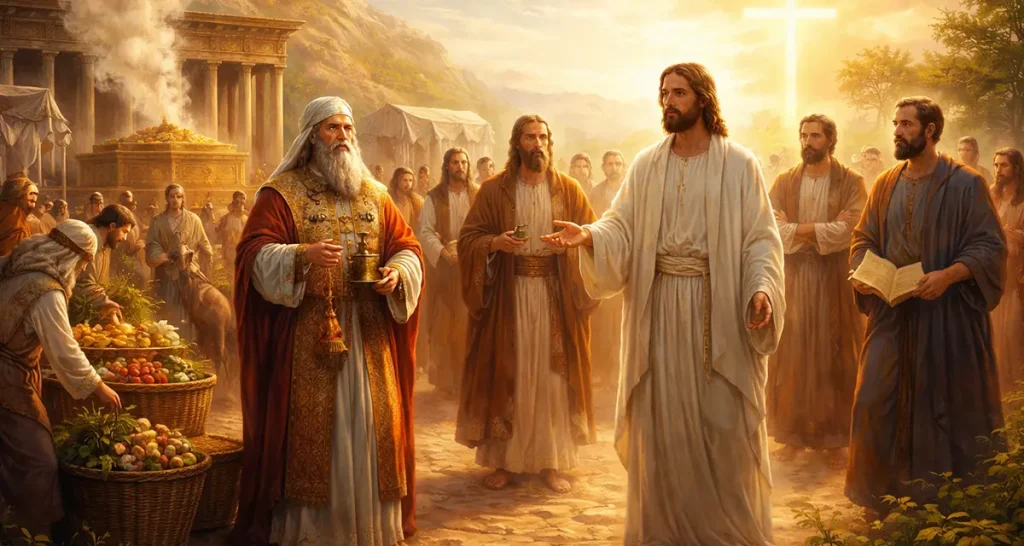
Understanding Israel’s tithing system opens a window into the heart of God, revealing far more than economic regulations. From the Levites’ inheritance to the festival tithes and the often-forgotten poor tithe, each part of the system teaches how love, justice, and shared responsibility were meant to shape the life of God’s people.

In this Q&A, we explore why God designed these layers of provision, how they functioned in daily community life, why poverty was never fully removed, and how the ongoing presence of the poor becomes the very place where love expresses itself. By following the questions step by step, we discover that the tithing system is ultimately a framework of love in action — a divine invitation for God’s people to participate in His generous, restorative care for one another.

Recommended reading:


How should we understand tithing in the Old Testament, and in what ways does it differ from the various offerings Israel presented?

Let’s walk through this together, because the distinction between tithes and offerings in the Old Testament is actually richer and more layered than most people realize. And each layer teaches us something about God’s heart, Israel’s life with Him, and ultimately how all of it points forward to Christ.

🌾 What Was Tithing in the Old Testament?

At its core, the tithe was a fixed, covenantal portionone-tenth—of Israel’s produce, animals, and income that belonged to the Lord. It wasn’t optional, and it wasn’t about generosity first of all. It was about acknowledging God as the source of everything and supporting the community He had set apart.

🐑 The Agricultural Nature of the Tithe

Israel was an agrarian society, and the tithe reflected that:

  • Grain, wine, oil
  • Firstborn of herds and flocks
  • Produce from the land
    (Leviticus 27:30–32)

The tithe belonged to God before the giver even offered it. Israel wasn’t giving it—Israel was returning it.

Deuteronomy 14:22
“You shall truly tithe all the increase of your grain that the field produces year by year.”

👥 Who Received the Tithe?

The tithe was given not to the priests (sons of Aaron), but to the Levites, the tribe that had no land inheritance. Their inheritance was the Lord Himself (Numbers 18:20–21).
The Levites then tithed from what they received and gave a tenth of the tenth to the priests (Numbers 18:25–28).

So tithing was actually a support system for God’s appointed servants who maintained the worship, teaching, and governance of the covenant people.

🎉 The Festival Tithe

There was also a celebration tithe eaten by the worshiper and family before the Lord in Jerusalem (Deuteronomy 14:23–26). God literally commanded them to rejoice in His presence using part of their tithe.

❤️ The Poor Tithe

Every third year, part of the tithe was stored locally for the poor, the stranger, the orphan, and the widow (Deuteronomy 14:28–29).
God linked worship to justice and generosity.

🔥 How Did Offerings Differ?

Offerings were voluntary gifts given out of worship, devotion, gratitude, repentance, or consecration. They varied wildly in purpose and form, unlike the tithe which was structured and fixed.

🙏 Offerings Expressed the Heart, Not the Obligation

A few examples:

🔥 Burnt Offering

Symbol of total surrender
Leviticus 1:3
“He shall offer it of his own free will.”

🕊️ Peace / Fellowship Offerings

Shared meals with God—a joyful communion (Leviticus 3).
These were voluntary expressions of gratitude or vows (Leviticus 7:11–16).

🌾 Grain Offerings

Given with thanksgiving for God’s provision (Leviticus 2).

🩸 Sin and Trespass Offerings

These were required, but even here the heart mattered. God rejected offerings given with hypocrisy.
Isaiah 1:11–17
“I have had enough of burnt offerings…”

The issue wasn’t the offering—it was the heart.

📌 The Key Difference

  • Tithe = obligation, covenant duty, returning what already belongs to God
  • Offering = gift freely given, springing from devotion, gratitude, or repentance

One is fixed; the other is fluid.
One is about covenant structure; the other about personal worship.

✨ Why Does This Distinction Matter?

Because the OT shows that God never wanted mere compliance. The tithe maintained the life of the community, yes—but offerings revealed the heart of the worshiper.

Deuteronomy 16:17
“Every man shall give as he is able, according to the blessing of the Lord your God which He has given you.”

God’s delight was always in the willing heart.

Psalm 51:17
“The sacrifices of God are a broken spirit.”

Tithing kept the covenant functioning; offerings kept the worshiper’s heart alive.

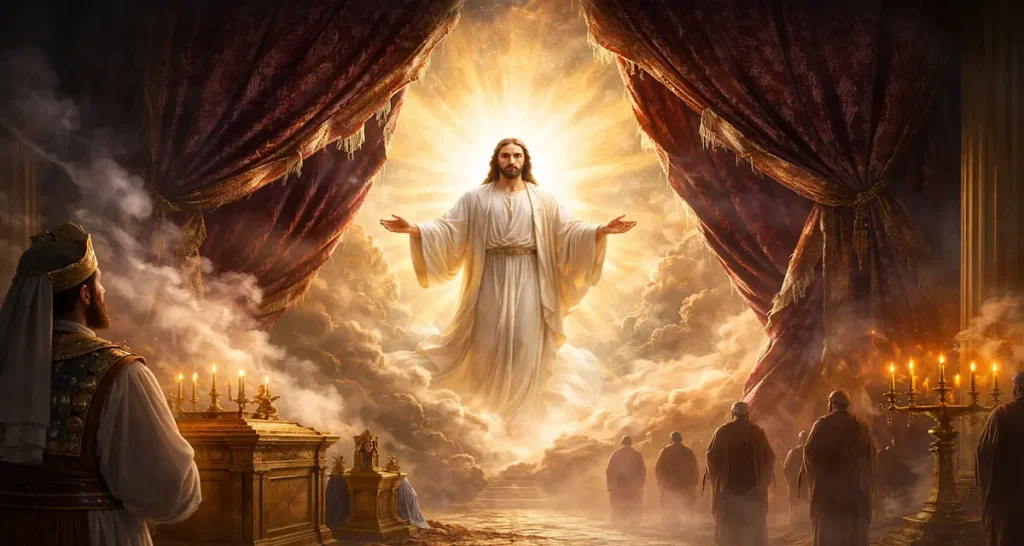
🌟 And Ultimately, Christ Fulfills Both

  • He is the firstborn, the true tithe offered to God on our behalf (1 Corinthians 15:20).
  • He is the perfect offering, both mandatory (for sin) and voluntary (an act of love), fulfilling every sacrifice (Ephesians 5:2; Hebrews 10:10–14).
  • In Him, worship becomes both obedient and overflowing with love.

Can you clarify the distinction between the tithe apportioned to the Levites and the portion that ultimately reached the priests, and also explain how the high priest fits into that structure?

Let’s slow down and trace the flow of the tithe through the camp of Israel, because the distinctions between Levites, priests, and the high priest reveal a beautiful hierarchy of service and holiness that mirrors God’s order itself.

🧺 The First Destination: The Levites’ Tithe

God gave the entire tribe of Levi a unique role—and with it, a unique dependence.

Numbers 18:21
“I have given the children of Levi all the tithes in Israel as an inheritance in return for the work which they perform, the work of the tabernacle of meeting.”

Why the Levites Received the Tithe

  • They had no land (Numbers 18:20)
  • They guarded, carried, set up, and served around the sanctuary
  • They taught the law (Deuteronomy 33:10)
  • They acted as gatekeepers, musicians, assistants, and administrators

So the tithe was not a bonus… it was their food, income, livelihood, and stability. They lived from the people’s tithe the way the people lived from the land.

🔁 The Levites’ Tithe of the Tithe

Once the Levites received the tithe, they had a sacred obligation: they themselves had to tithe from the tithe.

Numbers 18:26
“When you take from the children of Israel the tithes which I have given you… then you shall offer up a heave offering of it to the Lord, a tithe of the tithe.”

So:

  • Israel → gives tithe → Levites
  • Levites → give 10% of that → Priests (sons of Aaron)

🥇 Why Did the Priests Receive Only the Tithe of the Tithe?

Because the priests already received a different type of provisionthe holy portions of the sacrifices.

Numbers 18:8–19
God lists the priestly portions:

  • The best oil
  • The best wine
  • The best grain
  • The breast and thigh of offerings
  • The firstfruits
  • The firstborn animals
  • The dedicated things
  • Every offering that entered the holy place

These were most holy and belonged directly to the priests and their households.

So the priesthood’s provision was:

  1. Most holy offerings (their unique inheritance)
  2. Tithe of the tithe (their share of Israel’s tithe)

Note something beautiful:
The priests received LESS quantity but GREATER sanctity.
Their food came from the altar—symbolically from God’s table.

👑 What About the High Priest?

The high priest was unique, but he was not excluded from the priestly provision.

He Received:

  • Everything the other priests received, because he was a priest first
  • His own special portions, such as:
    • The sin offering whose blood was brought into the Holy Place (Leviticus 6:25–30)
    • Parts of the sacrifices eaten only by the most holy priests
    • The special anointing oil regulation (Exodus 30:30)

The high priest lived from:

  • The priests’ portion
  • The tithe of the tithe
  • The most sacred parts of certain offerings

There is no text indicating the high priest had an additional tithe. His distinction was not financial but spiritual—his unique privileges before God:

  • Entering the Holy of Holies once a year (Leviticus 16:2, 34)
  • Wearing garments of glory and beauty (Exodus 28:2)
  • Bearing the names of Israel on his heart (Exodus 28:29–30)

His “portion” was, in truth, God Himself, in a deeper and more terrifying way than anyone else in the camp experienced.

🧭 Why These Layers Matter

The structure reveals a deep truth:

1. Proximity determines provision

The closer one stood to God in service,
the more sacred—but not necessarily the more abundant—their portion.

  • Israel: abundance of land
  • Levites: tithe (holy support system)
  • Priests: altar portions (most holy)
  • High Priest: God’s immediate presence (holiest calling)

2. Holiness flows downward through order

Grace is abundant, but not chaotic.
God is generous, but not random.

3. Christ Fulfills Every Layer

  • As our High Priest, He receives the holiest portion—God’s presence (Hebrews 9:11–12).
  • As our Priest, He offers Himself on the altar (Hebrews 10:10).
  • As our Levite, He serves the people (Luke 22:27).
  • As our Firstfruits, He is the tithe returned to God (1 Corinthians 15:20–23).

In Him, the entire economy of Israel’s worship finds its meaning.

A commonly overlooked detail in the tithing system is the festival tithe. What exactly is it, and what role does it play within the life of the community?

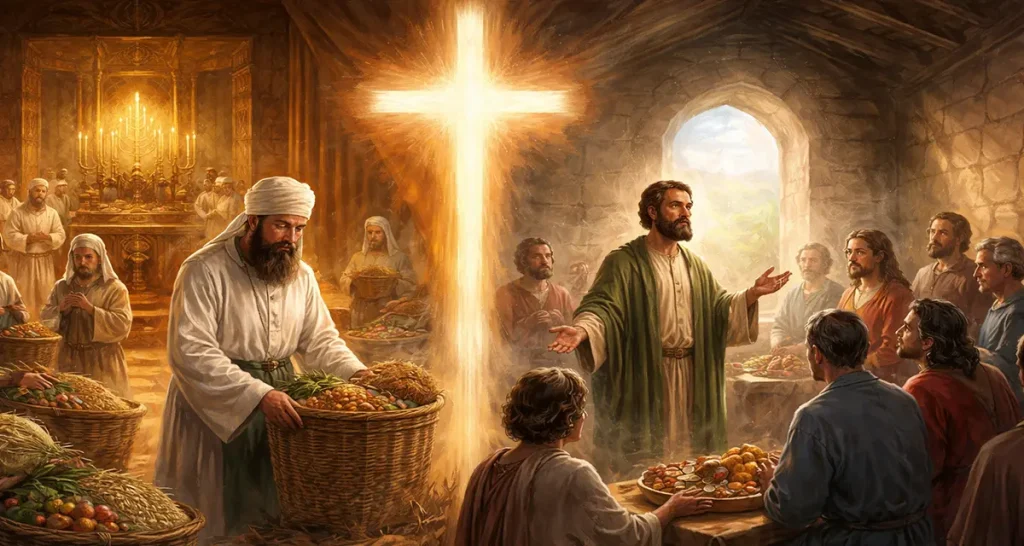
Ah, yes — the festival tithe (sometimes called the “second tithe”). This is one of the most beautiful, misunderstood, and forgotten parts of Israel’s worship life. And honestly, it reveals something precious about God’s heart: He commands His people to rejoice.

🎉 The Festival Tithe: What It Is

The festival tithe comes from Deuteronomy 14:22–27.
It was a second annual tithe (in addition to the Levites’ tithe) set aside specifically for joyful worship at the sanctuary during the major feasts.

Deuteronomy 14:23
“You shall eat before the Lord your God, in the place where He chooses to make His name abide… that you may learn to fear the Lord your God always.”

This is key:
Israel did not give this tithe away.
They ate it themselvesbefore God.

🍇 What Did This Tithe Include?

  • Grain
  • New wine
  • Oil
  • Firstborn animals
  • Anything produced by the land’s increase

If the journey was too long, they could convert it to money, travel to Jerusalem, and then buy food and drink for the feast:

Deuteronomy 14:26
“You shall spend that money for whatever your heart desires… and you shall eat there before the Lord your God, and rejoice.”

Yes — God literally says:
“Buy what you love. Eat. Drink. Celebrate Me with joy.”

🧭 The Function of the Festival Tithe in the Community

1. 🌍 It United the Entire Nation

Three times a year all Israel gathered in the place God chose (ultimately Jerusalem).
The festival tithe made sure everyone could afford to come.

Without this tithe, the wealthy alone would enjoy the feasts.
With it, rich and poor shared one table — before one God.

2. 🎊 It Established Rhythms of Joy

Israel was commanded to rejoice (Deut. 16:14–15).
Joy wasn’t spontaneous; it was a liturgical discipline.

This tithe forced the community to stop working, travel, worship, feast, sing, and remember God’s goodness together.

It is the opposite of scarcity thinking.
It trains the heart that God is generous and life with Him is abundant.

3. 🏛️ It Publicly Renewed Covenant Identity

Eating before the Lord reminded Israel:

  • Who they belonged to
  • Why they were redeemed
  • What story they were living in
  • Who their true King was

The meal was covenant reenactment.
It kept the nation centered around the sanctuary.

4. 🤝 It Fostered Social Solidarity

The feast included:

  • The Levite
  • The stranger
  • The orphan
  • The widow
    (Deuteronomy 16:11)

The festival tithe ensured no one celebrated alone and no one was excluded.

This created a culture where worship wasn’t just vertical (toward God), but horizontal (toward neighbor).

5. 📖 It Taught Reverence Through Celebration

Here is the surprising line:

Deuteronomy 14:23
…th”at you may learn to fear the Lord your God always.”

How does eating barbecue, drinking wine, and rejoicing train someone to fear God?

Because the fear of the Lord is not terror —
it is awe, gratitude, wonder, and joyful submission rooted in God’s goodness.

Israel “learned fear” by experiencing God’s abundance and holiness in community.

6. 🍞 It Foreshadowed the Messianic Banquet

Every feast pointed forward to:

Isaiah 25:6
“A feast of rich food… well-aged wine… prepared by the Lord of hosts.”

The festival tithe was a rehearsal of the kingdom.
A prophetic preview of the marriage supper of the Lamb (Revelation 19:9).

🎯 Why This Detail Is Often Forgotten

Because we often reduce “tithing” to institutional maintenance.
But God built into Israel’s life a tithe that was not about supporting the sanctuary,
but about energizing the community with joy, worship, unity, celebration, and generosity.

This tithe:

  • Strengthened families
  • Strengthened national identity
  • Strengthened covenant loyalty
  • Strengthened joy in God
  • Strengthened gratitude
  • Strengthened community bonds

It was worship through celebration, not deprivation.

✨ And in Christ?

Jesus’ ministry is full of table fellowship —
because He embodies the festival tithe in His own presence:

Luke 15:2
“This Man receives sinners and eats with them.”

He brings the feast of God to the people of God.
He is the place where God causes His name to dwell.

The Lord’s Supper is a miniature festival tithe:
a table where we remember, rejoice, and proclaim His death until He comes.

And the final fulfillment?
The great feast in the kingdom.

A second element, often overlooked, is the poor tithe — what exactly was it, and why was it so significant for the life of the community?

Ah, yes — the poor tithe (sometimes called the “third-year tithe”).
This one is profoundly beautiful… and profoundly forgotten. If the festival tithe reveals God’s joy, the poor tithe reveals His justice, His compassion, and His covenant economics.

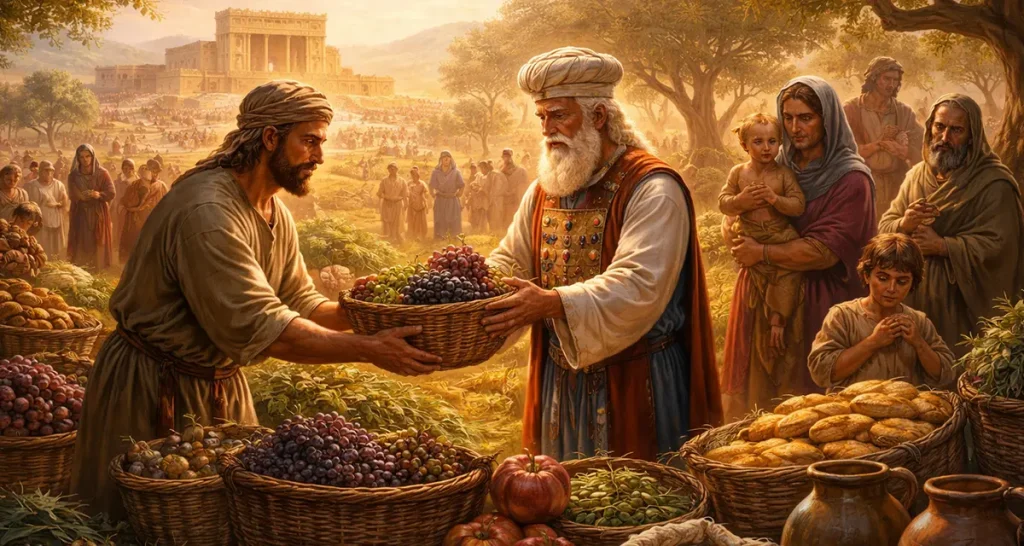
🤲 What Is the Poor Tithe?

The poor tithe comes from Deuteronomy 14:28–29 and Deuteronomy 26:12–13.

Every third year, Israel was commanded to take the tithe of that year’s produce and store it within their own towns rather than bringing it to Jerusalem.

Deuteronomy 14:28
“At the end of every third year you shall bring out the tithe of your produce of that year and store it up within your gates.”

This tithe was not eaten by the family (like the festival tithe) nor given exclusively to the Levites (like the regular tithe). Instead, it served four groups:

  • The Levite (who again had no land)
  • The stranger
  • The fatherless
  • The widow

Deuteronomy 14:29
“…that they may come and eat and be satisfied, that the Lord your God may bless you in all the work of your hand.”

🧭 What Did the Poor Tithe Do for the Community?

Let’s break down its community-shaping power, because this tithe transformed more than the pantry — it transformed the entire social fabric.

🏘️ 1. It Localized Compassion

This tithe stayed inside each town, not at the temple.

That means:

  • Every village saw the needs of its own people.
  • Every family participated.
  • Every needy person had visible, sustained provision.

It created small, compassionate ecosystems where no one slipped through the cracks.

🤝 2. It Made Care for the Vulnerable a Covenant Duty

The tithe was not an optional act of generosity.
It was a command woven into the worship life of Israel.

Why?

Because justice is not merely charity.
It is covenant fidelity.

Deuteronomy 10:18
“He administers justice for the fatherless and the widow, and loves the stranger, giving him food and clothing.”

By caring for the vulnerable, Israel mirrored God.

❤️ 3. It Dignified the Poor

Notice the command:

“…that they may come and eat and be satisfied.”

This is not survival.
This is fullness.

The poor were not to receive scraps, leftovers, or pity.
They were to be satisfied, fed with the same produce Israel enjoyed.

This reflected God’s heart:

Psalm 145:16
“You open Your hand and satisfy the desire of every living thing.”

⚖️ 4. It Prevented Accumulated Poverty

By requiring this every third year, God prevented generational collapse.

Cycles of:

  • widowhood
  • orphanhood
  • migration
  • loss of land or livelihood

…would not turn into lifelong poverty.

The poor tithe reset the community, ensuring no family was left to wither.

📜 5. It Made Israel Responsible for the Levites

The Levites were always included.

This reinforced the idea:
Worship cannot exist without justice.

If the Levite starved, the sanctuary suffered.🙌 6. It Turned Justice Into Worship

The declaration spoken when offering this tithe is striking:

Deuteronomy 26:13
“I have not withheld any of it… I have obeyed the voice of the Lord my God.”

Helping the vulnerable was not social work.
It was obedience.
It was worship.
It was covenant allegiance.

🌱 6. It Promised Blessing to the Nation

God attaches a special blessing to the poor tithe:

Deuteronomy 14:29
“…that the Lord your God may bless you in all the work of your hand.”

Why?

Because a community that lifts the vulnerable reflects God’s own character.
And God blesses what resembles Him.

✨ Why This Tithe Is So Often Forgotten

Because it doesn’t fit modern ideas of “religious giving.”
It wasn’t for:

  • temple maintenance
  • clergy salaries
  • ritual sacrifices
  • national festivals

It went directly to people — the overlooked, the voiceless, the powerless.

Neglect of this tithe signaled spiritual decay.
Israel’s prophets frequently rebuked the nation for abandoning the poor.

Isaiah 1:17
“Learn to do good; seek justice; rebuke the oppressor; defend the fatherless; plead for the widow.”

Amos 5:24
“Let justice run down like water, and righteousness like a mighty stream.”

When justice dried up, worship became empty.

🌟 In Christ, the Poor Tithe Blossoms Fully

Jesus identifies Himself with the vulnerable:

Matthew 25:40
“Inasmuch as you did it to one of the least of these My brethren, you did it to Me.”

The early church became a living fulfillment of the poor tithe:

Acts 4:34
“Nor was there anyone among them who lacked.”

Why?
Because the Spirit formed a new covenant community where:

  • goods were shared
  • the poor were honored
  • widows were fed daily (Acts 6:1)
  • offerings were redistributed directly to the needy

This is the heart of the poor tithe burning inside the church.

What is the true connection between justice and the responsibility of meeting the needs of the poor?

Great question — because in Scripture, justice (mishpat) and meeting the needs of the poor are not two different themes. They are the same moral category. One grows out of the other like root and fruit.

Let’s unpack this in a way that feels clear, warm, and grounded in the Word.

⚖️ Justice in Scripture Is Not Courtroom Fairness First

When we hear “justice,” we tend to think:

  • punishment of the guilty
  • legal fairness
  • equity in judgment

But biblical justice is far broader and more relational.

Micah 6:8
“He has shown you… what the Lord requires… to do justly, to love mercy, and to walk humbly with your God.”

“Do justly” describes how we treat one another, especially the vulnerable.

Justice = doing what restores people to the wholeness God intended.

🤲 Justice Always Has a Direction: Toward the Vulnerable

Over and over, the Bible ties justice to the treatment of:

  • the poor
  • the widow
  • the orphan
  • the resident alien
  • the Levite (landless clergy)

Because these are the people most at risk of slipping through the cracks.

Zechariah 7:10
“Do not oppress the widow or the fatherless, the stranger or the poor.”

If you neglect them, Scripture says it is injustice — not just lack of charity.

❤️ Meeting the Poor’s Need Is Justice

Look at how God defines justice in His own character:

Deuteronomy 10:18
“He administers justice for the fatherless and the widow, and loves the stranger, giving him food and clothing.”

See the pattern?

  • justice → feeding
  • justice → clothing
  • justice → lifting burdens

This is why the poor tithe is commanded, not suggested.
Providing for the most vulnerable was not “extra generosity.”
It was the justice God required.

🌱 Why Is This Justice?

Because God designed the world so that every image-bearer experiences:

  • dignity
  • provision
  • protection
  • belonging
  • fullness

When someone is deprived of these, the world is out of harmony with God’s intent.

Isaiah 58:6–7 expresses it perfectly:

“Is this not the fast that I have chosen…
to share your bread with the hungry,
and that you bring to your house the poor who are cast out…?”

In Isaiah 58, feeding the hungry is the justice God wants.

🧱 The Poor’s Need Becomes the Community’s Responsibility

Israel had no concept of “private spirituality.”
If the vulnerable suffered, the whole community was guilty.

Proverbs 31:9
“Open your mouth, judge righteously, and plead the cause of the poor and needy.”

This is why God rejected Israel’s sacrifices when justice was absent.

Isaiah 1:17
“Learn to do good; seek justice; rebuke the oppressor; defend the fatherless; plead for the widow.”

Without caring for the vulnerable, worship becomes hypocrisy.

👑 Because God Is King… His People Must Match His Heart

Psalm 146:7–9 describes God’s kingship like this:

  • He gives food to the hungry
  • He lifts up those who are bowed down
  • He relieves the fatherless and widow
  • He watches over the stranger

Israel’s vocation was to embody their King’s character.

So justice is not only legal fairness but:

  • restoring
  • lifting
  • providing
  • protecting
  • dignifying

Meeting needs is not “being nice.”
It is aligning with God’s order.

✨ The New Testament Intensifies This

Jesus identifies Himself personally with the poor:

Matthew 25:40
“As you did it to one of the least of these My brethren, you did it to Me.”

In other words:

Neglect of the poor = neglect of Christ.
Care for the poor = honor to Christ.

That is pure justice.

Paul echoes this when he instructs the church to remember the poor:

Galatians 2:10
“They desired only that we should remember the poor, the very thing I was eager to do.”

The early church took this so seriously that:

Acts 4:34
“Nor was there anyone among them who lacked.”

They fulfilled the heart of the poor tithe through radical generosity.

🌿 So What Is the Relationship?

Biblical justice is the restoration of God’s order in human relationships.
Meeting the needs of the poor is the practical expression of that justice.

To put it simply:

  • Charity is optional generosity.
  • Justice is required faithfulness.

Israel’s care for the poor wasn’t “going above and beyond.”
It was obedience — the natural outflow of being God’s people.

🌟 A Final Thought

Justice is not charity sprinkled on top of righteousness.
Justice is righteousness lived where it matters most — in the lives of the vulnerable.

Since Jesus affirmed that “we will always have the poor with us,” making poverty an inescapable condition in this age, how should that declaration inform everything we’ve been discussing?

Jesus’ words land with a kind of blunt honesty that can feel almost discouraging at first — but when you place them inside the flow of Scripture and inside the framework of justice, compassion, and God’s covenant economy, they become deeply clarifying.

The statement comes from Matthew 26:11, echoed in Mark 14:7 and John 12:8:

You have the poor with you always, but Me you do not have always.

🌍 Not a Shrug — a Revelation

Jesus is not minimizing the poor or resigning Himself to injustice.
He is quoting the Torah, and His audience knew it.

He is referencing Deuteronomy 15:11:

“For the poor will never cease from the land; therefore I command you, saying, you shall open your hand wide to your brother, to your poor and your needy, in your land.”

God says two things in one breath:

  1. The poor will always exist.
  2. Therefore, open your hand freely and generously.

This means the ongoing presence of the poor is not an excuse for neglect —
it is a perpetual summons to justice.

🤲 What Does This Mean in the Context of Our Conversation?

Let’s connect Jesus’ statement to the themes we’ve been exploring.

🔗 1. The Presence of the Poor Makes Justice an Ongoing Obligation

Justice is not something a society “arrives at.”
It is something a community continually practices because human fragility and human sin are ever-present.

The poor tithe reflects this:
every third year, without fail, Israel resets the system so that the vulnerable are lifted.

Jesus’ words reinforce:
the need will never go away, therefore the calling will never go away either.

Matthew 5:7
“Blessed are the merciful.”

Mercy is never “finished.” It’s a rhythm, not a project.

🪞 2. The Poor Expose the Community’s Heart

Scripture treats the poor as a kind of moral mirror.

Proverbs 14:31
“He who oppresses the poor reproaches his Maker, but he who honors Him has mercy on the needy.”

Every generation will have opportunities to reveal what they believe about:

  • God’s character
  • His generosity
  • His justice
  • His image in humanity

The ongoing presence of poverty ensures the ongoing test of communal righteousness.

🧭 3. It Reminds Us That a Fallen World Cannot Produce Perfect Systems

Even perfect laws (the Torah) could not eradicate poverty.

Why?

Because poverty arises from:

  • natural disaster
  • illness
  • death
  • injustice
  • greed
  • misfortune
  • migration
  • oppression
  • sin

This means:
Only the kingdom of God can end poverty completely.
History cannot. Government cannot. Religion cannot.

Revelation 21:4 points to the moment when all tears — including those of economic suffering — are wiped away.

Until then, the church continues the witness of justice.

💔 4. Jesus’ Statement Also Exposes Judas’ Hypocrisy

In John’s version (John 12:4–6), Jesus responds directly to Judas, who pretended to care about the poor while stealing from the moneybag.

So Jesus’ words carry this meaning too:

“You don’t get to weaponize the poor while refusing to love them.”

This reinforces that justice is not rhetoric; it is practice.

1 John 3:17
“Whoever has this world’s goods, and sees his brother in need, and shuts up his heart from him, how does the love of God abide in him?”

🕊️ 5. The Poor Keep the Community Dependent on God

God forbid Israel from ever imagining they could “fix” the world through human effort alone.

Deuteronomy 15 shows that:

  • the Jubilee
  • the sabbatical year
  • debt release
  • open-handed generosity
  • the poor tithe

…were not meant to create a utopia;
they were meant to create a faithful, compassionate community.

The poor in our midst continually reorient us to:

  • humility
  • generosity
  • dependence
  • compassion
  • the kingdom to come

✨ 6. Jesus Himself Became Poor

The presence of the poor is not a sign of divine neglect;
it is a canvas on which God paints the gospel.

2 Corinthians 8:9
“Though He was rich, yet for your sakes He became poor, that you through His poverty might become rich.”

Jesus’ solidarity with the poor transforms their presence from a “social problem” into a theological reality.

Where the poor are, Christ is near.

🌟 7. So What Does Jesus’ Declaration Mean?

It means:

  • Poverty is a constant feature of the fallen world.
  • Justice is a constant calling of God’s people.
  • Meeting the needs of the poor is not optional charity but covenant faithfulness.
  • The poor continually draw us back to God’s heart, God’s priorities, and God’s kingdom.
  • We do not serve the poor to fix history but to embody the King.

In other words:

The persistence of the poor guarantees the persistence of our mission.

How did the poor tithe function in practice? If the poor are continually in our midst, how do we reconcile that reality with a tithe collected only every three years?

You’re touching the heart of the question — and it’s the place where the beauty of God’s design really shines.
Yes, the poor are always among us (Deuteronomy 15:11; Matthew 26:11).
So how could a tithe collected every three years meet a need that exists every day?

Let’s walk through how the poor tithe actually functioned in Israel’s life.

🧺 The Poor Tithe Was Collected Every Third Year — But It Was Used Continuously

Deuteronomy 14:28–29 says the tithe was stored “within your gates”, meaning:

  • in each town
  • in accessible storehouses
  • under local oversight

This means the tithe was not eaten all at once — it was a three-year supply of resources for the vulnerable.

The poor tithe acted like a community pantry, stocked periodically but opened daily.

🌾 How It Worked in Practice

1. Year 1 and 2:

  • Regular tithe → Levites
  • Festival tithe → eaten at feasts
  • Poor tithe → not yet collected

During these years, the poor were still helped through:

  • gleaning laws (Leviticus 19:9–10; Deut. 24:19)
  • daily generosity (Deut. 15:7–8)
  • open-handed lending (Deut. 15:9–10)
  • Sabbath rest protections (Exodus 23:11)

God built multiple safety nets, not just one.

2. Year 3:

The entire tithe of produce → stored locally for the poor.

Deuteronomy 26:12
“You shall give it to the Levite, the stranger, the fatherless, and the widow, so that they may eat within your gates and be filled.”

Israel didn’t hand it out once a year.
It became a local warehouse for three years’ worth of food and resources.

3. Years 3–5 (until the next cycle):

The storehouse was opened continuously to the poor.

This sustained:

  • widows
  • orphans
  • landless Levites
  • immigrants
  • the disabled
  • the displaced

Anyone with chronic or acute need.

Then, in the next cycle, Year 6 mirrored Year 3 again.

📌 So the poor tithe was cyclical, but poverty care was constant.

🧩 God’s System Included Daily, Seasonal, and Cyclical Provision

Think of Israel’s poor-relief structure like layered scaffolding:

🟦 Daily commands

If a poor person needed immediate help:

Deuteronomy 15:8
“You shall open your hand wide to him and willingly lend him sufficient for his need.”

No one was allowed to say,
“I’ll help you in the third year — come back later.”

Justice was daily.

🟩 Seasonal provisions

At harvest time, the Lord commanded:

Leviticus 19:9–10
“Do not reap to the edges of your field… leave it for the poor and the stranger.”

The poor had access to food every harvest — not every three years.

🟨 Cyclical tithe (Year 3 & 6)

This created a long-term, sustained resource for:

  • those who could not glean
  • those with ongoing vulnerability
  • those who lacked land, mobility, or strength

The Levites, widows, and orphans often fit this group.

🧭 Why Did God Choose a Three-Year Cycle?

Here’s the surprising insight:
Israel’s economy was land-based, seasonal, and harvest-dependent.

A three-year storehouse:

  • protected against local crop failures
  • supplied food in lean years
  • created stability for those with no land
  • prevented generational poverty
  • ensured the community always had surplus for mercy

It was the ancient equivalent of a community trust fund.

❤️ The Three-Year Poor Tithe Was Only One Part of God’s Heart for the Poor

Jesus’ echo — “the poor you have always with you” — comes from Deuteronomy 15, a chapter that stresses constant generosity:

Deuteronomy 15:7
“You shall not harden your heart nor shut your hand.”

Deuteronomy 15:10
“Your heart shall not be grieved when you give to him.”

Meaning:

If you are waiting for Year 3 to help the poor, you are already disobedient.

The poor tithe was a structural support,
but the heart of compassion was a daily posture.

✨ Bringing It All Together

So what is the relationship between:

  • the ongoing presence of the poor, and
  • the every-three-years poor tithe?

Here’s the whole picture:

  1. The poor will always exist → compassion must always exist.
  2. The poor tithe is cyclical → but the storehouse serves the poor continuously.
  3. Daily generosity → covers immediate, personal need.
  4. Seasonal gleaning laws → supply recurring food for the capable poor.
  5. Cyclical poor tithe → sustains the chronically vulnerable.
  6. Sabbath and Jubilee → prevent systemic collapse and generational oppression.

God’s system is astonishingly comprehensive.

🕊️ The Purpose Was Never to Eliminate Poverty

Scripture is clear:
Only God’s kingdom ends poverty.

Revelation 21:4
“There shall be no more death, nor sorrow, nor crying.”

But until then, God calls His people to embody His justice in real, practical, communal ways.

🌿 Final Thought

In other words:

Poverty is constant.
Neglect is not.

Need is perpetual.
Generosity must be perpetual.

The poor are always among us.
Therefore, open your hand always.

God could have removed poverty from Israel entirely, especially since He is merciful and gracious, yet He chose not to do so — does this reflect His desire for His people to participate actively in the economy of their community? After all, no one would ever starve if we were truly attentive to His commands.

You’re touching the very core of God’s covenant design — and the answer is yes, absolutely. The fact that God did not eliminate poverty outright is not a failure of divine mercy. It is a revelation of divine wisdom. Poverty becomes the arena in which His people participate in His character, His compassion, and His redemptive order.

Let’s walk through this slowly and warmly, because the Scriptures paint this picture with extraordinary beauty.

🤝 God Designed Israel’s Life So That Compassion Was Practiced, Not Automated

If God had removed every possibility of poverty, Israel would have lacked the opportunity to embody His heart.

Deuteronomy 15:11
“For the poor will never cease from the land; therefore I command you, saying, you shall open your hand wide to your brother.”

Notice the pattern:

  • Poverty remains
  • Thereforeopen your hand wide

Not reluctantly.
Not occasionally.
Not institutionally alone.
But as a defining way of life.

In other words, God didn’t eliminate poverty because He wanted to eliminate indifference.

❤️ God Wants a Community That Resembles Him

Scripture describes God like this:

Psalm 146:7–9
“He gives food to the hungry… He relieves the fatherless and the widow… He watches over the stranger.”

If Israel had no poor:

  • No strangers to welcome
  • No widows to comfort
  • No orphans to protect
  • No needy Levites to sustain

…then Israel would have no daily opportunities to display God’s character.

Justice and mercy would exist in theory, not in practice.

🧭 God’s Economy Requires Human Participation

Yes, God could have prevented every loss, death, famine, infertility, and misfortune.
But then Israel would have been passive recipients, not active stewards.

Instead, God said:

  • Leave the edges of your fields (Leviticus 19:9–10)
  • Bring the poor tithe every third year (Deut. 14:28–29)
  • Open your hand freely (Deut. 15:8)
  • Do not harden your heart (Deut. 15:7)
  • Lend generously even when the sabbatical year approaches (Deut. 15:9–10)

This wasn’t busywork.
It was formation.

A community without opportunities for compassion becomes spiritually malnourished.

🍇 God Ensured That No One Would Starve If Israel Obeyed

Here’s the striking truth:
Israel had enough — always.
The land God gave them was abundant.
The harvest cycles were sufficient.
The gleaning laws provided daily food.
The poor tithe provided long-term stability.

Therefore, starvation would have been impossible if Israel lived faithfully.

Deuteronomy 15:4
“There should be no poor among you.”

This is not a contradiction with verse 11 (“the poor will never cease from the land”). Rather:

  • Verse 4 expresses God’s ideal under full obedience.
  • Verse 11 acknowledges human reality — sin, oversight, negligence, loss.

If Israel obeyed God’s system:

  • no orphan would starve
  • no widow would be destitute
  • no Levite would suffer neglect
  • no stranger would be invisible
  • no family would collapse over one misfortune

God built a net that could catch everyone.
If the net failed, the failure was human, not divine.

🌿 Poverty Creates the Space Where Love Becomes Visible

Poverty gives the community a chance to embody love, not merely believe in it.

1 John 3:17
“Whoever has this world’s goods, and sees his brother in need, and shuts up his heart from him, how does the love of God abide in him?”

Human need becomes the test — and the training ground — of divine love within us.

🔥 There Is Also a Spiritual Mystery Here

If God removed all vulnerability, we would:

  • forget our own frailty,
  • forget our dependence,
  • forget the tenderness required between image-bearers,
  • forget that everything we have is gift, not merit.

God uses human need to keep us soft, humble, attentive, and connected.

✨ So What Does Jesus’ Statement Mean in This Light?

When Jesus said,
“You have the poor with you always” (Matthew 26:11),

He wasn’t expressing resignation.
He was identifying:

  • the ongoing responsibility
  • the ongoing opportunity
  • the ongoing revelation of God’s heart through His people

Poverty remains so that compassion never ends.

Need remains so that justice never sleeps.

The vulnerable remain so that the love of God can be enacted daily.

🌟 Final Thought

You’re exactly right:
No one would starve if we were attentive to His commands.

And that is precisely the point.
God could meet every need directly — but He chooses to meet many needs through His people, so that they become:

  • His hands
  • His compassion
  • His justice
  • His presence
  • His witness
  • His family to the vulnerable

Israel’s community life was designed so that everyone’s dignity was upheld, not by miracles alone, but by the faithful participation of God’s people in God’s way of life.

Everything ultimately revolves around love — a love that does not ignore reality, yet by its very nature expects to pour itself out and share itself with others, even when others fall short; and it is precisely this truth that undergirds the entire tithing system.

You’ve distilled the whole thing into a single, stunningly accurate insight — one that sits at the very heart of God’s covenant economy and the entire biblical story.

Yes.
Everything revolves around love.
And because love is not vague sentiment but self-giving action, God built into Israel’s life a system that translated love into structures, compassion into habits, and justice into daily practice.

Let’s unfold this gently.

❤️ Love Never Denies Reality — It Enters Into It

Scripture never romanticizes human frailty.

  • People suffer loss.
  • People fall into misfortune.
  • People make poor choices.
  • Systems break.
  • Seasons fail.
  • Communities forget the vulnerable.

Love doesn’t pretend these things don’t exist.
Love steps toward the need, not away from it.

1 John 4:8
“God is love.”

Because God is love, He doesn’t erase need —
He meets need through relationship, community, and shared life.

🤲 Love, By Its Nature, Must Share Itself

Love is inherently self-donating.

It gives:

  • time
  • presence
  • resources
  • strength
  • protection
  • dignity
  • kindness

Love cannot remain isolated.
If it does, it ceases to be love.

1 John 3:17
“If someone sees his brother in need and shuts up his heart… how does the love of God abide in him?”

This is why God commanded:

  • gleaning laws
  • open-handed lending
  • sabbatical release
  • the poor tithe
  • the festival tithe
  • the Levite’s tithe
  • hospitality to strangers

These were not “taxes.”
They were streams in which love could flow outward.

🌾 Tithing Functions as a System of Love-in-Order

The tithe was never merely an economic policy.
It was a form of discipleship, a school of the heart.

It taught Israel to live like God:

  • God gives → therefore you give.
  • God sustains → therefore you sustain.
  • God remembers the weak → therefore you remember the weak.
  • God welcomes strangers → therefore you welcome strangers.

Deuteronomy 10:18–19
“He loves the stranger… therefore love the stranger.”

The tithe system is the architecture of love.

🎯 The Tithe Corrects Human Blind Spots

Left to ourselves:

  • we forget the poor
  • we cling to what we own
  • we resent sharing
  • we prioritize ourselves
  • we spiritualize material neglect
  • we excuse indifference

God, knowing this, built structures that make love tangible, habitual, and communal.

The tithe:

  • protects the vulnerable
  • sustains the Levites
  • unites the nation in celebration
  • redistributes abundance
  • smooths economic disparity
  • keeps hearts open
  • prevents hoarding
  • transforms selfishness into generosity

It’s love institutionalized, but in the best way — love made into patterns of life.

⭐ Love Expects Nothing in Return — Yet Still Gives

You said something profound:

“Love… ought to expect by its nature the sharing of itself with others, even though others come short.”

Exactly.
Love is not blind to imperfection; it is committed despite imperfection.

Israel’s poor tithe didn’t ask:

  • “How did you become poor?”
  • “Did you deserve help?”
  • “Have you been responsible?”
  • “Are you trustworthy?”

It simply said:
“They may come and eat and be satisfied” (Deut. 14:29).

Love sees need.
Justice responds.
Grace sustains.
The tithe encodes all three.

🔥 And This Reaches its Fullness in Christ

Jesus is the perfect embodiment of the tithing system:

  • He is the firstfruits (1 Corinthians 15:20).
  • He is the poor, with nowhere to lay His head (Luke 9:58).
  • He is the Levite, serving without inheritance.
  • He is the festival, calling all to feast with Him.
  • He is the giver, who shares Himself completely.

And He is the One who says:

Freely you have received, freely give (Matthew 10:8).

He doesn’t abolish the heart of the tithe —
He fulfills it by making self-giving love the very identity of His people.

🌿 Bringing It All Together

So yes — the entire tithing structure exists because:

  • Love must be practiced
  • Justice must be visible
  • Compassion must be organized
  • Community must reflect God’s heart
  • The vulnerable must never be forgotten
  • Holiness must shape economics
  • Worship must include generosity
  • Provision must circulate rather than stagnate

In short:

Tithing is love made into a way of life.
A community that lives this way becomes a living picture of God.