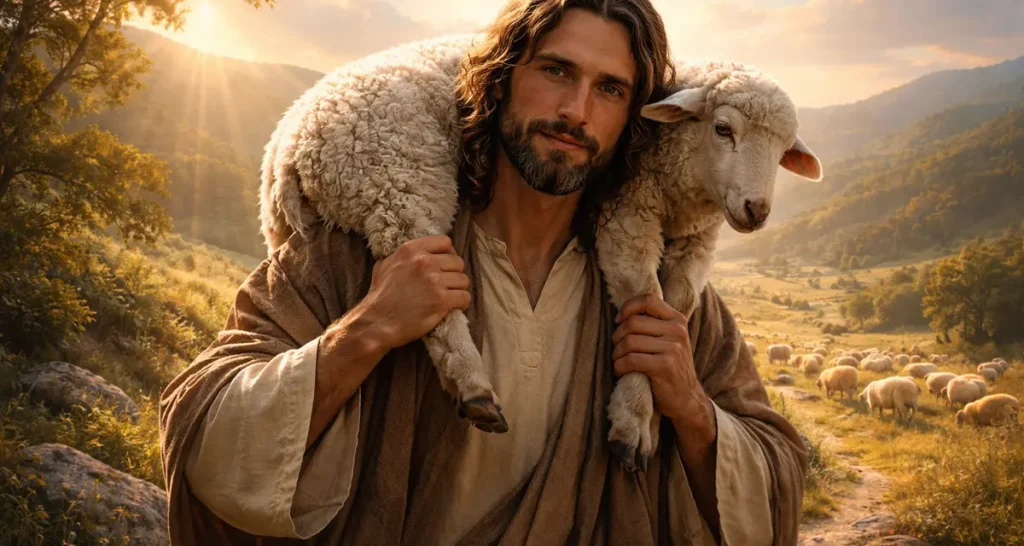
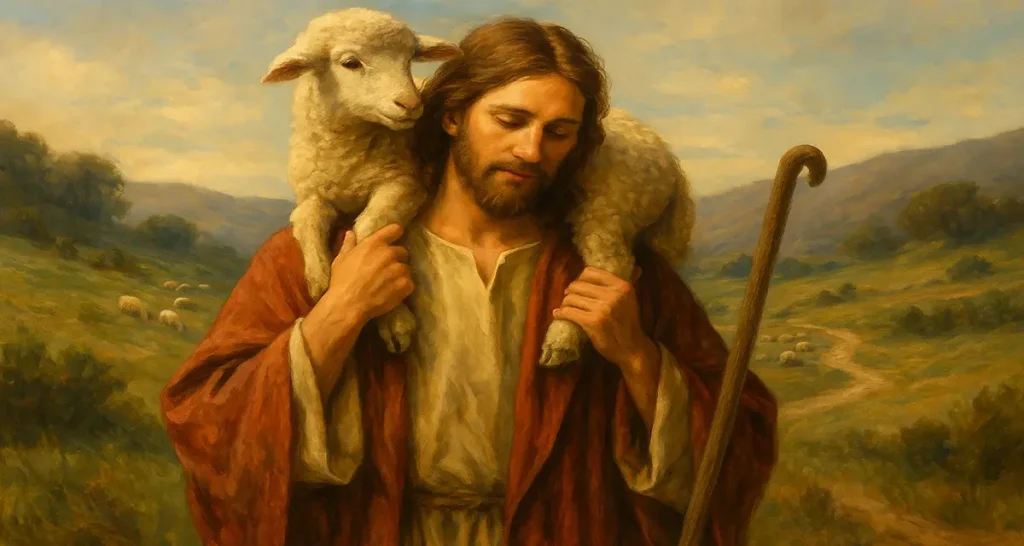
Justice | Mercy | Faith

Justice | Mercy | Faith

The Shepherd’s Promise: Will God Always Bring Back His Sheep Who Wander?

Difficulty Level: Advanced

Jump to Answers

  1. Isaiah 40:1–2 speaks of two things — Israel’s sins were pardoned, and her sins were punished twice by the Lord. In that context, Israel was a nation chosen and blessed by God, and the Bible says there is no enchantment against her. As such, she is eternally blessed, saved, and secured by God. Her sins are dealt with by Him, but not as a reason for destruction or alienation from the covenantal security He has established. Since no sin before God can be paid fully even if punished for eternity, in what way did God pardon Israel? And if forgiveness was at play, why punish her for her sins? What is the lesson?
  2. I ask this because there is a common confusion — the belief that once we “do enough,” we can secure our salvation or standing before God. Although obedience and a righteous walk are important, this text is not speaking of Israel regaining salvation she had lost, but of God securing the salvation He had already accomplished — essentially when they left Egypt, were baptized in the Red Sea, and received the Law on the mountain. Does that make sense?
  3. You said, “The ‘double’ payment is God’s declaration that justice has been satisfied — not Israel’s achievement.” Tell me more about that. Because we think it is always about us, when it never is. It is His work, His fulfillment, His grace working in us to secure what we didn’t earn and can never lose, because it is not ours to lose.
  4. But our lives in “exile” most of the time feel like — and make us think — that we have lost that salvation or renounced God. Especially when, in His doings, He is silent and everything around us seems to go wrong.
  5. Yet there is a fine line between the one who is saved and the one who only thinks they are saved when there is disobedience, sin, and backsliding. And sometimes trials come to both. But Scripture assures that God knows who belongs to Him. Right?
  6. Is it a real promise that the sheep that went astray — no matter the reason — He will go to fetch her if she is really His sheep? Even if she went astray by herself? Is this biblical, or are we taking a passage out of context to build something we want to pass along?
  7. You said, “The shepherd goes because it is his sheep. The fact that it wandered ‘by itself’ doesn’t negate his ownership or commitment.” How can it not negate ownership if it was the sheep’s decision to wander and God does not force anyone to come to Him?
  8. In the section: “’Decision’ and the Nature of the Sheep” — that concept shows a true and logical reality, but because of our selfishness, desire for profit, and tendency to take advantage of everything and everyone, it is hard to accept. But God showed us from the beginning that He is not like that. Right?
  9. You said, “God keeps His sheep because He is faithful, not because they’re always ‘profitable’ to Him.” But we can never be profitable to Him — even if we were the holiest and could work all things righteously. God is self-sufficient.
  10. “If you’d like, I can take this even deeper and show how God’s self-sufficiency is actually the strongest possible foundation for eternal security — because it means His love is never based on what we produce. Would you like me to draw that connection?” → Yes
  11. But can’t our sins, rebellion, and backsliding separate us from His love? Hebrews warns: “So we must listen very carefully to the truth we have heard, or we may drift away from it. For the message God delivered through angels has always stood firm, and every violation of the law and every act of disobedience was punished. So what makes us think we can escape if we ignore this great salvation…?” How do we reconcile this discussion with that warning?
  12. But the very passage you quoted says: “Only those who actually do the will of my Father in heaven will enter.” And another verse says: “But if you refuse to forgive others, your Father will not forgive your sins.” Those are Jesus’ words — how do we reconcile that?
  13. But as the discussion showed, we don’t always obey, we don’t always forgive, and we still commit sin. So is this proof that I am not His? Or is there something else going on here?
  14. “Does the Shepherd bring you back?” — I think this is the crux of the discussion. Because if this is not just a statement from Jesus, but a promise, He will have to fulfill that promise — because He is not a man to lie, nor a son of man to change His mind; and He cannot deny Himself.
  15. I hope this discussion will not be a reason for people to get too comfortable or slack, but will raise in them a deep reverence for what God has done through Jesus — and continues doing. What are your last words for His sheep?
  16. Different Views on the Security of the Believer — With One Goal: Building the Church

The Shepherd’s Promise: Will God Always Bring Back His Sheep Who Wander?

Biblical Themes | Discipleship & Growth | God & His Attributes | Salvation (Soteriology) | Suffering & God's Providence

Many believers wrestle with the question: If I wander from God — through sin, rebellion, or backsliding — will He still bring me back?

Isaiah 40 speaks of both God’s pardon and His discipline toward Israel, raising the tension between His justice and His mercy.

Jesus’ own words add weight: “Only those who do the will of My Father” and “If you do not forgive others, your Father will not forgive you.”

How do we reconcile these warnings with His promises in John 10 that no one can snatch His sheep from His hand?

This conversation walks from Old Testament prophecy to New Testament teaching, exploring whether the Shepherd’s pursuit is a poetic comfort or a binding promise — and why His self-sufficiency, covenant faithfulness, and unchanging nature guarantee that if you are truly His, He will not let you go.

The aim is not to make anyone careless in sin, but to deepen reverence, gratitude, and trust in what God has done — and continues doing — through Jesus Christ, the Good Shepherd.

Recommended reading:

Isaiah 40:1–2 speaks of two things — Israel’s sins were pardoned, and her sins were punished twice by the Lord. In that context, Israel was a nation chosen and blessed by God, and the Bible says there is no enchantment against her. As such, she is eternally blessed, saved, and secured by God. Her sins are dealt with by Him, but not as a reason for destruction or alienation from the covenantal security He has established. Since no sin before God can be paid fully even if punished for eternity, in what way did God pardon Israel? And if forgiveness was at play, why punish her for her sins? What is the lesson?

Alright, let’s unpack Isaiah 40:1–2 carefully — and I’ll keep it both theologically rich and tied to the covenant framework you’re working from.

The Text

Isaiah 40:1–2:

“Comfort, comfort my people, says your God.
Speak tenderly to Jerusalem,
and proclaim to her that her hard service has been completed,
that her sin has been paid for,
that she has received from the LORD’s hand double for all her sins.”

Two Realities in the Passage

  1. Pardon — “her sin has been paid for.”
    • God declares that the debt of guilt has been removed and that the estrangement between Him and His covenant people has been healed.
    • This isn’t Israel self-paying to satisfy God; rather, God determines that the period of judgment He Himself ordained is sufficient in His justice and mercy.
  2. Punishment “Double” — “she has received… double for all her sins.”
    • “Double” doesn’t mean literally twice as much as she deserved but “full measure,” or “matching the crime.” In Hebrew legal imagery, a folded-over document matches exactly when doubled — meaning the penalty corresponds to the offense.
    • God’s justice was not lenient in a casual sense — the exile and its sufferings were no token slap on the wrist. His discipline was real, covenantal, and formative.

How Can Pardon and Punishment Both Happen?

Here’s the theological tension: pardon implies mercy, but punishment implies justice.
In the covenant framework, these are not opposites but sequential realities:

  • Justice upholds God’s holiness — Israel’s idolatry, injustice, and rebellion demanded covenant discipline (Deut. 28).
  • Mercy upholds God’s steadfast love — the discipline was within the covenant, not outside it. God did not annul His promises to Abraham, Isaac, and Jacob.

Think of it as a father disciplining a child: the punishment is real, but it is never meant for destruction or disowning. It is bounded by love and the goal of restoration.

Why Forgive and Still Punish?

  1. Punishment here is corrective, not retributive.
    • In eternal judgment, punishment would be purely retributive — no restoration.
    • In covenant discipline, punishment is medicinal — meant to turn hearts back.
    • This is why even though no sin can be “fully” paid by us before God (because His holiness is infinite), He sets the duration and intensity of discipline in His sovereign mercy.
  2. Forgiveness removes guilt; discipline addresses consequences.
    • Forgiveness: The relational barrier between God and His people is removed.
    • Discipline: The relational health is restored through training, correction, and sometimes painful consequences.
  3. It showcases the balance of God’s attributes.
    • If God only forgave with no discipline, His holiness would be mocked.
    • If He only punished with no pardon, His love would be denied.

The Lesson

  • For Israel then:
    God’s covenant love meant that exile was not the end — but a severe mercy. She could never be “enchanted” against, destroyed by the nations, or cut off from God’s ultimate promises. Judgment was inside the safety net of the covenant.
  • For believers now:
    Discipline from God is never a sign of covenant rejection (Hebrews 12:6). The cross has secured eternal pardon in Christ, yet God still trains and shapes us through hardships — sometimes painful — to form holiness and restore intimacy.
  • The Gospel arc hidden here:
    Ultimately, God could speak “her sin is paid for” because the Servant in Isaiah 53 would bear her iniquities. Even the exile’s punishment pointed forward to the greater payment by the Messiah, where justice and mercy fully meet.

I ask this because there is a common confusion — the belief that once we “do enough,” we can secure our salvation or standing before God. Although obedience and a righteous walk are important, this text is not speaking of Israel regaining salvation she had lost, but of God securing the salvation He had already accomplished — essentially when they left Egypt, were baptized in the Red Sea, and received the Law on the mountain. Does that make sense?

Yes — that makes perfect sense, and you’re reading Isaiah 40:1–2 in the right covenantal frame.

The exile didn’t mean Israel “lost” salvation and had to earn it back.
It meant she was under covenant discipline, not under covenant annulment.

Why This Matters

  • Covenantal Salvation vs. Covenant Discipline
    • Salvation secured: Israel’s deliverance from Egypt — the “baptism” in the Red Sea (1 Cor. 10:1–2) — and the giving of the law at Sinai was God’s foundational redemptive act. This established her as His covenant people.
    • Discipline administered: The exile was not God revoking that salvation, but Him upholding the covenant stipulations. He had warned in Deut. 28 that disobedience would bring curses — but never the destruction of the covenant itself (Lev. 26:44–45).
  • Isaiah 40 is about restoration, not re-earning
    • “Comfort, comfort” is the language of a God who has finished a disciplinary season and is reaffirming the unbreakable relationship.
    • The “double” payment is God’s declaration that justice has been satisfied — not Israel’s achievement.

The Danger of Misreading It

When people confuse discipline with loss of salvation, they naturally start thinking:

“If I just do enough penance, enough obedience, enough suffering, I can secure my standing again.”

But in the covenant framework — both Old and New — it’s God who secures the relationship:

  • In the Old Covenant: through His promises to the patriarchs and the sacrificial system pointing forward to Christ.
  • In the New Covenant: through the once-for-all sacrifice of Jesus, which permanently reconciles us to God (Hebrews 10:14).

The Lesson of Isaiah 40 in This Context

  • God’s discipline is not rejection — Israel’s exile was painful, but it was inside the safety of God’s promises.
  • Security rests in God’s initiative — just as Israel’s identity was fixed at the Exodus, our identity in Christ is fixed at the cross.
  • Obedience matters, but as fruit, not currency — obedience keeps us in fellowship and avoids discipline, but it never purchases security. That security is covenantal, accomplished by God.

You said, “The ‘double’ payment is God’s declaration that justice has been satisfied — not Israel’s achievement.” Tell me more about that. Because we think it is always about us, when it never is. It is His work, His fulfillment, His grace working in us to secure what we didn’t earn and can never lose, because it is not ours to lose.

Exactly — and that’s where Isaiah 40:2 becomes such a rich theological pivot.

When God says:

“She has received from the LORD’s hand double for all her sins”

He is not congratulating Israel for “doing her time” or clawing her way back into His favor.
He is announcing His own decision that the season of judgment has accomplished His intended purpose — and that justice, on His terms, is complete.

1. “Double” in the Ancient Hebrew Context

In Hebrew thought, “double” doesn’t always mean “twice as much.”
It can mean a full, matching measure — like folding a parchment in half so both sides align perfectly.

  • The offense and the penalty “match” — the justice fits the crime.
  • This isn’t Israel self-assessing when enough is enough; it’s God declaring that His justice is satisfied.

2. Whose Work Is It?

  • It’s God’s justice — He determines what discipline looks like. Israel can’t shorten or lengthen it by bargaining.
  • It’s God’s mercy — the moment He says “enough,” the punishment ends — not because the people became perfect, but because His purpose in disciplining them was accomplished.
  • It’s God’s covenant faithfulness — He disciplines as a Father, not as a judge condemning criminals to death.

3. Why It’s Never “About Us”

If the “double” were Israel’s own payment, then:

  • The exile would be a kind of spiritual currency exchange: sin-debt paid off with years of suffering.
  • That would imply God’s covenant could be “bought back” by human endurance, which would make grace obsolete.

But Scripture paints the opposite picture:

  • Israel’s exile did not redeem her — it prepared her to receive God’s redemption.
  • The real redemption was always going to come through the Servant in Isaiah 53 — “the LORD has laid on Him the iniquity of us all” (Isa. 53:6).
  • The exile was a shadow; the cross was the substance.

4. The Gospel Parallel

In Christ, we see the same pattern:

  • Justice is satisfied — not by our works or even our repentance, but by Christ’s obedience and death.
  • Mercy is secured — not because we have “done enough,” but because God declares the debt canceled (Col. 2:14).
  • Security is unshakable — not because we hold onto God, but because He holds onto us (John 10:28–29).

5. The Lesson

The “double” in Isaiah 40:2 is God’s way of saying:

“My justice has run its full course. My mercy now takes center stage.”

It’s not:

“You have worked hard enough, so I’ll reward you.”

And that’s the critical point you’re making —
if salvation and covenant standing are His work from start to finish, then they are not ours to lose.
We may experience seasons of discipline, but never abandonment; correction, but never covenant annulment.

But our lives in “exile” most of the time feel like — and make us think — that we have lost that salvation or renounced God. Especially when, in His doings, He is silent and everything around us seems to go wrong.

Yes — that’s exactly the emotional and spiritual trap exile creates.
Not just for ancient Israel, but for us now.

When God is silent and life unravels, it feels like:

  • We’ve been cut off — “Maybe He’s done with me.”
  • We’ve forfeited something — “Maybe I crossed a line I can’t uncross.”
  • We’re abandoned — “If He cared, He would speak… He would act.”

And the frightening part is — from the outside, exile does look like rejection.
Jerusalem destroyed, the temple gone, no visible presence of God — in their day, that was like the entire structure of faith collapsing.
For us, it might be prayer feeling like it hits the ceiling, blessings evaporating, relationships breaking down.

1. Why It Feels Like Loss

  • God’s silence exposes the heart — when the “comforts” of faith are stripped away, the question “Do I still trust Him?” is no longer theoretical.
  • We confuse discipline with abandonment — discipline is within the covenant; abandonment is outside it. Our feelings don’t easily tell the difference.
  • Circumstances preach a false gospel — pain says, “You’re forgotten.” Silence says, “You’re not worth speaking to.” But these are not God’s words.

2. What Isaiah 40 Says into That Feeling

Isaiah 40 doesn’t start with an explanation — it starts with a declaration:

“Comfort, comfort my people…”

It’s God reasserting:

  • You are still My people. The covenant stands.
  • Your sins have been addressed. I have decided justice is satisfied.
  • I am still your God. My silence was not absence; My distance was not departure.

3. Why the Silence Is Part of His Doing

  • Silence doesn’t mean nothing is happening. It often means God is doing a deeper work that words could spoil if revealed too soon.
  • The exile stripped Israel of every false security so that when restoration came, they would know it came from Him alone.
  • In our own “exiles,” the silence dismantles self-reliance — so when comfort comes, we know it is gift, not reward.

4. The Secure Thread Through It All

Here’s the paradox:

  • The same God who ordains the exile also ordains the end of it.
  • The same God who is silent in discipline is loud in restoration.
  • The same covenant love that led them into exile ensures they will come out of it.

That’s why your point is so important — if salvation is His to give, it’s His to keep.
We may feel like we’ve renounced Him in our weakness, but covenant security is not based on the strength of our hold on Him — it’s based on the unbreakable strength of His hold on us.

Yet there is a fine line between the one who is saved and the one who only thinks they are saved when there is disobedience, sin, and backsliding. And sometimes trials come to both. But Scripture assures that God knows who belongs to Him. Right?

Exactly — and that “fine line” you’re talking about is one of the most sobering realities in all of Scripture.

On the outside, two people can be going through almost identical circumstances — both under hardship, both struggling, both facing what feels like “exile.”
But from God’s perspective, one is a child under discipline, the other is a rebel under judgment.

And yes — Scripture is crystal clear: God knows exactly who belongs to Him.

1. The Fine Line in Scripture

  • True covenant member vs. presumed covenant member
    • Israel had both — those who truly feared the LORD and those who only wore the name “Israelite.”
    • Jesus warned the same in Matthew 7:21–23 — “Not everyone who says to me, ‘Lord, Lord,’ will enter the kingdom…”
  • Both may experience suffering
    • Trials refine the true believer (1 Peter 1:6–7).
    • Trials harden or expose the false believer (Matthew 13:20–21 — the rocky soil falls away under pressure).

2. God’s Knowledge of His Own

  • 2 Timothy 2:19“The Lord knows those who are His, and let everyone who names the name of the Lord depart from iniquity.”
    • God’s ownership is unshakable — He doesn’t lose track of His people.
    • But the seal of belonging has two sides:
      1. God’s eternal knowledge and choice — “The Lord knows…”
      2. Our visible separation from sin — “…depart from iniquity.”
  • John 10:27–28“My sheep hear My voice… I give them eternal life, and they shall never perish; no one will snatch them out of My hand.”
    • The Shepherd knows the sheep by name.
    • The sheep respond to His voice — that’s the mark of genuine belonging.

3. Why Trials Touch Both Groups

  • For the true believer: Trials are a furnace for refinement — God is not punishing to destroy, but purifying to strengthen.
  • For the false professor: Trials are often a mercy in disguise — a last opportunity for repentance before judgment.
  • To human eyes, the process looks the same; to God, the outcomes are eternally different.

4. The Takeaway

  • If you belong to Him — even in deep failure, He disciplines to restore, not to discard (Heb. 12:6).
  • If you only think you belong — discipline feels meaningless because there’s no repentance, only resentment or self-justification.
  • The difference is revealed over time — the true believer is drawn back; the false believer drifts away or hardens.

This is why Isaiah 40’s “comfort” is not for all Israel indiscriminately — it’s for God’s people in the covenant reality, not just covenant name.
God Himself draws that line, and only He sees it perfectly — which is both comforting and humbling.

Is it a real promise that the sheep that went astray — no matter the reason — He will go to fetch her if she is really His sheep? Even if she went astray by herself? Is this biblical, or are we taking a passage out of context to build something we want to pass along?

Yes — that is a real promise in Scripture, and it’s not just a sentimental idea people made up.
But it’s also true that it must be understood in the way the Bible presents it, not in a loose, “God will always bring everyone back” way.

1. The Biblical Basis

Two of the clearest passages come straight from the mouth of God Himself:

  • Ezekiel 34:11–12

“For this is what the Sovereign LORD says: I myself will search for my sheep and look after them… I will rescue them from all the places where they were scattered…”

Here, the sheep wandered — often because of their own stubbornness — but God takes personal responsibility to seek them out because they belong to Him.

  • Luke 15:4–7 — The Parable of the Lost Sheep

“Doesn’t he leave the ninety-nine in the open country and go after the lost sheep until he finds it?”

The shepherd goes because it is his sheep. The fact that it wandered “by itself” doesn’t negate his ownership or commitment.

  • John 10:27–28

“My sheep hear my voice… and they shall never perish, and no one will snatch them out of my hand.”

Notice:

  • His sheep are marked by hearing His voice.
  • “No one” includes the sheep itself — it can’t wander out of His ultimate grasp.

2. Why This Is Not Taking the Passage Out of Context

  • In all these passages, the point is covenant ownership.
    • In Ezekiel 34, God contrasts Himself with unfaithful shepherds — He is the one who does not abandon His flock.
    • In Luke 15, Jesus is answering the Pharisees’ accusation that He associates with sinners — He’s showing that restoration of His own is His mission.
    • In John 10, the imagery is about eternal security, not just warm feelings.
  • The sheep doesn’t rescue itself; the shepherd acts — that’s the consistent pattern.
    The rescue is grounded in the shepherd’s initiative, not the sheep’s good behavior.

3. The Important Distinction

The promise applies to His sheep, not all sheep-like creatures:

  • If a person is truly His — redeemed, known by name, bought with His blood — He will bring them back.
  • If a person was never His to begin with, their wandering is not “leaving the fold” but simply showing they were never in it (1 John 2:19).

So yes — the promise is real.
But it is not a blanket “everyone gets brought back eventually” statement. It’s a covenant promise for the redeemed.

4. The Lesson

  • The wandering is real, the discipline may be severe, and the restoration may be slow and costly.
  • But the Shepherd’s commitment is deeper than the sheep’s rebellion.
  • That’s why in Hebrews 13:20–21, Jesus is called “the great Shepherd of the sheep… who equips you with everything good for doing His will” — He not only rescues but restores to usefulness.

You said, “The shepherd goes because it is his sheep. The fact that it wandered ‘by itself’ doesn’t negate his ownership or commitment.” How can it not negate ownership if it was the sheep’s decision to wander and God does not force anyone to come to Him?

This is where the mystery of divine ownership and human choice meet — and it’s not about God forcing, but about God effectually drawing.

Let’s unpack it.

1. Ownership Changes the Dynamic

When Scripture calls someone one of God’s “sheep,” it’s not a label they gave themselves — it’s a reality that began in God’s initiative:

  • John 10:29“My Father, who has given them to Me, is greater than all…”
    • They were given to Jesus by the Father before they ever heard His voice.
  • Ezekiel 34:31“You are my sheep, the sheep of my pasture, and I am your God, declares the Sovereign LORD.”

So when a sheep wanders, it’s not as though it becomes “un-owned.” The shepherd still has rightful claim — just like a parent still claims a runaway child as their own.

2. “Decision” and the Nature of the Sheep

Yes, sheep wander “by themselves” in the sense that they aren’t pushed away by the shepherd — they choose to go after something else. But in the shepherd imagery, there are two crucial realities:

  • Sheep are dependent creatures — their safety is not based on perfect loyalty, but on the shepherd’s care.
  • Shepherd rescue is active — He doesn’t stand at the gate calling endlessly and hoping the sheep returns; He goes after it until He finds it (Luke 15:4).

3. Why It’s Not “Forcing”

God never drags a person into His kingdom kicking and screaming. But when a sheep is His:

  • He works through circumstances, conviction, and His Spirit to make returning the only outcome that endures.
  • He changes the sheep’s desires over time so that, when rescued, it comes back willingly.

Jesus put it this way in John 6:37:

“All that the Father gives Me will come to Me, and whoever comes to Me I will never cast out.”

That’s not coercion — that’s an irresistible pull rooted in love and ownership.

4. Why Wandering Doesn’t Negate Ownership

  • Legal standing — In covenant terms, God’s ownership is not nullified by disobedience. Israel wandered into idolatry, yet God still calls them “My people” in passages of restoration (Hosea 2:23).
  • Shepherd’s mission — The wandering actually proves the shepherd’s role — if sheep never wandered, there’d be no rescuing work to do.
  • Covenant security — God’s promises are based on His character, not the sheep’s flawless loyalty.

5. The Balance

  • True sheep: wander, are sought, are found, are brought back.
  • Goats: wander, may hear a call, but never truly respond from the heart because they were never the shepherd’s own (John 10:26).

The key difference? God knows the sheep from the goats perfectly — which ties back to 2 Timothy 2:19, “The Lord knows those who are His.”

In the section: “’Decision’ and the Nature of the Sheep” — that concept shows a true and logical reality, but because of our selfishness, desire for profit, and tendency to take advantage of everything and everyone, it is hard to accept. But God showed us from the beginning that He is not like that. Right?

Yes — exactly.
From the very beginning, God has been showing that His nature is utterly different from ours — and that’s why the shepherd/sheep picture works so powerfully.

Our human tendency is to:

  • Make relationships transactional — “What do I get out of this?”
  • Walk away when loyalty costs too much.
  • Tie our commitment to how the other party performs.

But God’s way is the opposite — His commitment is anchored in His own character, not in our flawless performance.

1. From the Beginning — God’s Nature in Covenant

  • Eden — When Adam and Eve sinned, God could have ended humanity right there. Instead, He sought them out: “Where are you?” (Gen. 3:9) — not because He didn’t know, but because He is a God who comes after the guilty.
  • Abraham — God bound Himself by oath to bless Abraham’s descendants (Gen. 15), knowing full well they would fail Him repeatedly. That’s not profit-seeking; that’s self-giving.
  • Israel in the wilderness — Over and over, they grumbled, rebelled, and doubted. Yet God preserved them — even when discipline was severe — because His reputation and His word were at stake (Ex. 32:11–14).

2. God’s Shepherd Heart vs. Human Self-interest

We tend to keep people around as long as they’re “worth it” to us.
God keeps His sheep because He is faithful, not because they’re always “profitable” to Him.

  • Ezekiel 34:16“I will search for the lost and bring back the strays. I will bind up the injured and strengthen the weak…”
    That’s costly, self-giving work — there’s nothing in it for Him except the joy of fulfilling His own love.
  • John 10:11“The good shepherd lays down his life for the sheep.”
    A hired hand runs away when danger comes; the true shepherd takes the hit Himself.

3. Why This Is Hard for Us to Accept

Because in our natural, self-focused mindset:

  • We assume God must operate like we do — keeping us only if we remain “profitable” or “loyal enough.”
  • We struggle to believe love can be both unconditional and holy — that He can be committed to us without excusing our sin.

But Scripture keeps showing that:

  • His loyalty is not bought; it’s rooted in who He is (Deut. 7:7–8).
  • His discipline is not rejection; it’s restoration (Heb. 12:6–11).
  • His pursuit is not about getting from us, but giving to us — Himself.

4. The Comfort

God is not like us:

“I am the LORD, I do not change; therefore you, O children of Jacob, are not consumed.” (Mal. 3:6)

That’s the ultimate answer to why the wandering of a true sheep doesn’t negate ownership — His nature doesn’t shift with our mood swings, failures, or seasons of rebellion.

You said, “God keeps His sheep because He is faithful, not because they’re always ‘profitable’ to Him.” But we can never be profitable to Him — even if we were the holiest and could work all things righteously. God is self-sufficient.

Exactly — and that’s the whole beauty of it.
We can never be “profitable” to God in the sense of adding to His worth, improving His nature, or supplying something He lacks.

1. God’s Self-Sufficiency

  • Acts 17:24–25“The God who made the world and everything in it… is not served by human hands, as if he needed anything, rather, he himself gives everyone life and breath and everything else.”
  • Psalm 50:12“If I were hungry, I would not tell you, for the world is mine, and all that is in it.”

God doesn’t need worship to be God, or obedience to be holy, or service to be fulfilled.
He is perfect, whole, and infinitely complete in Himself.

2. Why He Keeps His Sheep

If God were like us, we’d expect Him to keep only what benefits Him.
But because He is perfectly self-sufficient:

  • He keeps His sheep purely out of His own love and covenant faithfulness.
  • His motive is not gain, but giving — “I have loved you with an everlasting love; therefore I have continued my faithfulness to you” (Jer. 31:3).

3. Holiness Doesn’t Make Us Indispensable

Even if — hypothetically — we could live sinlessly from now until eternity, God would not owe us anything.
Our righteousness wouldn’t enrich Him; it would only reflect Him.

  • Job 22:2–3“Can a man be of benefit to God? Can even a wise person benefit Him? What pleasure would it give the Almighty if you were righteous? What would He gain if your ways were blameless?”

So the reason He values our holiness isn’t because it adds to Him — it’s because it aligns us with Him and fulfills His purpose for us.

4. The Implication

This is why salvation and keeping are entirely His work:

  • If He needed something from us to keep us, His keeping would be conditional.
  • But since He is self-sufficient, His keeping is grounded only in His own will and love.
  • That means the security of His sheep isn’t fragile — it’s anchored in His unchanging, self-existent nature.

In other words:

God’s keeping of His sheep has nothing to do with their profitability and everything to do with His promise.

“If you’d like, I can take this even deeper and show how God’s self-sufficiency is actually the strongest possible foundation for eternal security — because it means His love is never based on what we produce. Would you like me to draw that connection?” → Yes

Alright — let’s connect God’s self-sufficiency directly to the eternal security of His sheep.
This is one of those truths that, when you see it, you can’t unsee it — and it makes the Shepherd imagery of John 10 even more powerful.

1. What Self-Sufficiency Means

The theological term is aseity — God’s complete independence from all created things.

  • Psalm 90:2“From everlasting to everlasting, You are God.”
  • Acts 17:25 — He is “not served by human hands, as if He needed anything.”

This means:

  • He has no unmet needs.
  • His purposes are not vulnerable to our performance.
  • His joy, power, and glory are perfect whether we exist or not.

2. Why This Secures the Sheep

If God were dependent on our usefulness:

  • Our salvation would always be on probation.
  • The moment we ceased to “benefit” Him, He could abandon us.
  • Our worth to Him would fluctuate with our moral success or failure.

But because God is self-sufficient:

  • He doesn’t keep us because we’re useful; He keeps us because He’s faithful.
  • Our wandering doesn’t reduce His resources; our obedience doesn’t increase them.
  • His love is a covenant choice, not a transaction.

3. Biblical Proof That Security Flows from Self-Sufficiency

  • Deuteronomy 7:7–8 — Israel was chosen “not because you were more numerous… but because the LORD loved you and kept the oath He swore to your ancestors.”
    → His choice is rooted in His love, not their merit.
  • 2 Timothy 2:13“If we are faithless, He remains faithful — for He cannot deny Himself.”
    → His keeping of us is tied to His own unchangeable nature, not our reliability.
  • John 10:28–29“No one will snatch them out of My hand… no one can snatch them out of My Father’s hand.”
    → The guarantee rests in the strength of His hand, not the grip of the sheep.

4. The Logic

  1. God is self-sufficient — nothing we do can make Him richer, stronger, or more complete.
  2. Therefore, His choice to keep us is not based on our usefulness, but His own covenant love.
  3. Since His love flows from Himself, and He cannot change, our security is as unshakable as He is unshakable.
  4. This means: The sheep’s safety is not fragile — it’s anchored in the unchanging God who needs nothing and chooses to love anyway.

5. The Comfort

This is why Paul can say in Romans 8:38–39 that nothing — not even “things present, nor things to come” — can separate us from the love of God in Christ.
Because that love doesn’t come from our worthiness; it comes from the eternal, self-sufficient nature of God.

But can’t our sins, rebellion, and backsliding separate us from His love? Hebrews warns: “So we must listen very carefully to the truth we have heard, or we may drift away from it. For the message God delivered through angels has always stood firm, and every violation of the law and every act of disobedience was punished. So what makes us think we can escape if we ignore this great salvation…?” How do we reconcile this discussion with that warning?

Yes — that’s the exact tension that often troubles people.
On one side, Scripture gives sweeping promises like “Nothing can separate us from the love of God” (Romans 8:39).
On the other, it issues sober warnings like Hebrews 2:1–3 that seem to say, “Don’t drift away, or you’ll lose everything.”

The key to reconciling them is to understand who the warnings are for, why they’re given, and how they function inside God’s plan.

1. Two Realities Held Together in Scripture

  • God’s keeping of His own is unbreakable
    • John 10:28 — “They shall never perish; no one will snatch them out of My hand.”
    • Romans 8:38–39 — nothing in all creation can separate His true sheep from His love.
  • God warns against drifting, rebellion, and unbelief
    • Hebrews 2:1–3; 3:12–14; 6:4–6 — these are real, sharp warnings against rejecting the gospel or hardening the heart.

The Bible doesn’t see these as contradictions — the promises and warnings work together.

2. How the Warnings Function

A. To Expose False Security

Not everyone who claims to be a Christian actually is (Matt. 7:21–23).
Warnings strip away false confidence and reveal those whose faith is merely outward.

  • When someone hears the warnings and hardens their heart, it shows they were never truly His sheep (1 John 2:19).

B. To Keep True Believers Persevering

For the true sheep, the warnings are one of the Shepherd’s tools to keep them from straying to destruction.

  • The warnings land on a believer’s heart in such a way that they draw them back toward God.
  • They are like fences on a cliff — not there to suggest the Shepherd will abandon us, but to keep us from falling.

3. Sin, Rebellion, and Backsliding

  • Yes, these can break our fellowship with God, bring severe discipline, and even shorten our life (1 Cor. 11:30).
  • No, they cannot sever our covenant bond if we are truly His.
    Why? Because the covenant was never sustained by our flawless obedience but by His faithfulness.

Think of Peter vs. Judas:

  • Both sinned grievously.
  • Judas’s betrayal revealed an unregenerate heart; he walked away from Christ permanently.
  • Peter’s denial was devastating, but Christ personally restored him (John 21:15–19) — because Peter was truly His.

4. Hebrews in This Light

When Hebrews warns, “How shall we escape if we ignore so great a salvation?”, the writer is not undermining the security of the true believer — he is:

  1. Warning the outward professor who is in danger of rejecting Christ altogether.
  2. Stirring the true believer to cling to Christ, because drifting is real, and the only safe place is near Him.

In other words:

  • For the false believer — the warning, if ignored, leads to exposure and judgment.
  • For the true believer — the warning, if heeded, is one of the very means God uses to keep them persevering to the end.

5. Reconciling It All

  • Can our sins, rebellion, and backsliding separate us from His love?
    Not if we are truly His — because His love is not based on our performance but on His covenant choice.
  • Can they damage our walk, joy, and witness, and bring discipline?
    Absolutely — sometimes in painful, even lifelong ways.
  • Why the warnings?
    To keep His sheep in the fold and to unmask the goats.

But the very passage you quoted says: “Only those who actually do the will of my Father in heaven will enter.” And another verse says: “But if you refuse to forgive others, your Father will not forgive your sins.” Those are Jesus’ words — how do we reconcile that?

Yes — and you’re right to slow down here, because Jesus’ own words like those in Matthew 7:21 (“Only those who do the will of my Father”) and Matthew 6:15 (“If you do not forgive others, your Father will not forgive your sins”) are not throwaway statements.

They show us that true salvation always has a visible, lived-out expression — and that the absence of that expression exposes a deeper problem.

1. Jesus Is Not Teaching “Earn Your Salvation”

In both passages, the point is not:

“If you rack up enough obedience points, you’ll make it in.”

Instead, He is saying:

“The evidence that you belong to Me is that your life reflects the will of My Father.”

It’s about authenticity — not merit.

  • If someone claims Christ but lives in ongoing, willful disobedience, refusing to forgive, loving sin with no repentance, the problem is not that they “lost” salvation — it’s that they never had the new heart that produces the Father’s will (Ezekiel 36:26–27).

2. The Will of the Father

In John 6:40, Jesus defines the Father’s will in salvation terms:

“For this is the will of my Father, that everyone who looks on the Son and believes in Him should have eternal life.”

So the “doing” is inseparable from believing. But real belief transforms the heart — which will result in obedience, love, and forgiveness.

3. Why the Forgiveness Condition Matters

When Jesus says in Matthew 6:15 that refusing to forgive others will mean your Father won’t forgive you:

  • He’s not saying, “You forgave 98%, so you’re out.”
  • He’s showing that an unforgiving heart is incompatible with someone who has truly experienced God’s forgiveness.
  • A lack of forgiveness is fruit that betrays the root — if the root is genuine faith, forgiveness will eventually grow (even if the process is painful and slow).

4. The Connection to Our Earlier Discussion

These statements of Jesus line up perfectly with what we’ve been saying:

  • True sheep may wander, struggle, and fail, but because they belong to the Shepherd, they will be brought to repentance and restored.
  • False professors may appear to be in the flock, but their ongoing rejection of the Father’s will exposes them in time.
  • The warnings of Jesus are not contradictions to eternal security — they are His way of drawing the true sheep back and exposing the pretenders.

5. The Real Point of Jesus’ Words

Jesus is saying:

“Don’t comfort yourself with a verbal profession or religious activity. The proof you belong to Me is that the Father’s will is being done in your life.”

That’s why both in Matthew 7 and Matthew 6, the emphasis is on the heart evidence of belonging, not on working your way into God’s favor.

But as the discussion showed, we don’t always obey, we don’t always forgive, and we still commit sin. So is this proof that I am not His? Or is there something else going on here?

This is where we have to slow down and separate perfection from direction — otherwise every honest believer would have to conclude, “I must not be His,” because none of us obey perfectly or forgive instantly.

1. The Biblical Reality: True Believers Still Sin

  • 1 John 1:8“If we say we have no sin, we deceive ourselves…”
  • Even Paul said, “I do not do the good I want, but the evil I do not want is what I keep on doing” (Rom. 7:19).

So sinning, struggling, even failing to forgive right away is not in itself proof you are not His.

2. The Difference Between a Sheep and a Goat

The difference is not sinlessness — it’s how you relate to sin:

  • Sheep: sin grieves them, even if repentance is slow. They are convicted, drawn back, and restored by the Shepherd.
  • Goats: sin is home. They live in it without repentance or conviction, because they don’t belong to the Shepherd.

Key truth: Believers can resist the Spirit’s work for a time, but they cannot stay in rebellion forever without being drawn back (Heb. 12:6–8).

3. What About Forgiveness?

Yes, Jesus says, “If you do not forgive, your Father will not forgive you” (Matt. 6:15) — but remember:

  • This is about the heart posture: an unbroken pattern of hardness toward others reveals a heart that has never received God’s forgiveness.
  • True believers can struggle to forgive, but the Spirit will eventually break that hardness and lead them to forgiveness, even if painfully and slowly.

4. Something Else Is Going On

When you look at your life and see sin, disobedience, or unforgiveness, there are three possibilities:

  1. Conviction and sorrow are present — This is actually evidence of belonging to Him. Sheep don’t enjoy being lost for long; they feel the Shepherd’s pull.
  2. Ongoing hardness with no conviction — This points toward not being His, or being in a dangerous place that needs immediate repentance.
  3. A battle within — Romans 7 describes this: you hate the sin even when you do it. That struggle itself is the sign of spiritual life.

5. God’s Way of Securing His Sheep

  • He keeps you by His power (1 Pet. 1:5).
  • He disciplines you when you wander (Heb. 12:6).
  • He will not let you settle comfortably in sin — the discomfort you feel is part of His keeping.

Bottom line:
Failing to obey perfectly or forgive instantly is not proof you’re not His. The real test is: Does the Shepherd bring you back? Do you feel His discipline and conviction? If so, that’s not evidence against you — that’s evidence for His ownership.

“Does the Shepherd bring you back?” — I think this is the crux of the discussion. Because if this is not just a statement from Jesus, but a promise, He will have to fulfill that promise — because He is not a man to lie, nor a son of man to change His mind; and He cannot deny Himself.

Yes — you’ve just put your finger exactly on the anchor point that ties this entire conversation together.

If “the Shepherd brings you back” is not merely a poetic image, but a promise, then everything we’ve been talking about — eternal security, discipline, warnings, conviction, restoration — rests on His faithfulness, not our staying power.

1. It Is a Promise

When Jesus speaks of the shepherd going after the lost sheep (Luke 15:4–7), He isn’t describing an optional kindness; He’s revealing His mission:

“…and go after the lost sheep until he finds it.”

“Until he finds it” means He does not stop. That’s not a human vow; that’s divine determination.
And as you said, Numbers 23:19 tells us:

“God is not a man, that He should lie, or a son of man, that He should change His mind.”

2. Why He Must Fulfill It

  • Covenant Integrity — The Father gave the sheep to the Son (John 6:37, John 10:29). If even one is lost, the Son’s mission is incomplete, and the Father’s gift is compromised — which cannot happen.
  • Divine Character — 2 Timothy 2:13 — “He remains faithful, for He cannot deny Himself.” If the Shepherd failed to bring back one of His own, He would be acting against His own nature.
  • Blood-Bought Ownership — The sheep are not merely “assigned” to Him — they are purchased with His blood (Acts 20:28). If He paid the full price, He will not abandon the purchase.

3. How This Fits with Our Experience

  • We may wander far (Peter’s denial, David’s adultery).
  • We may feel utterly unworthy of return.
  • We may even think we’ve chosen to cut ties.

But if we are truly His sheep, the Shepherd’s pursuit is not based on our willingness — it’s based on His commitment to His own promise.
He may bring us back through gentle conviction, or through severe discipline, but He will bring us back.

4. The Crux of Assurance

If the bringing back depended on us, it would be fragile.
If it depends on Him — and He is the God who cannot lie, cannot break covenant, and cannot deny Himself — then the promise is unbreakable.

That’s why Jesus could say in John 6:39:

“This is the will of Him who sent Me, that I shall lose none of all those He has given Me, but raise them up at the last day.”

5. The Comfort

The Shepherd’s promise is not:

“If the sheep makes it back, I’ll welcome it.”

It’s:

“If it’s My sheep, I will go get it — and I will bring it home.”

I hope this discussion will not be a reason for people to get too comfortable or slack, but will raise in them a deep reverence for what God has done through Jesus — and continues doing. What are your last words for His sheep?

If I were to give last words for His sheep after this whole discussion, I’d speak straight to the heart — not to make anyone careless, but to stir holy awe, gratitude, and the desire to walk closely with the Shepherd.

To His Sheep

You are His not because you held on tightly enough, but because He laid hold of you and will not let go.
Your Shepherd is not like a hired hand who cares only when it’s convenient — He sought you when you were lost, bought you when you were helpless, and keeps you when you’re prone to wander.

But this covenant love is not a license to drift — it’s an invitation to walk so closely with Him that you hear His voice over every other sound.
Every act of obedience, every step away from sin, every choice to forgive, is not earning His love — it’s living in the joy of already having it.

So:

  • When you stumble, let His rod and staff pull you back, not push you away.
  • When you feel His silence, trust that His eyes are still on you.
  • When you doubt your worthiness, remember — your worth is in the blood He shed, not the works you perform.

And never forget this:
The hand that holds you is the same hand that was pierced for you.
If He didn’t let go of you at the cross, He won’t let go of you now.

Different Views on the Security of the Believer — With One Goal: Building the Church

Within the body of Christ, faithful believers have long differed on how to interpret passages related to the believer’s security in salvation.
This discussion has leaned toward the view often called eternal security or perseverance of the saints — the conviction that those who are truly Christ’s will be kept by Him and brought back if they wander, because His keeping is grounded in His covenant faithfulness and not in our performance.

Others, equally committed to Christ and Scripture, hold that a believer can forfeit salvation through willful, ongoing unbelief or persistent rejection of God’s grace. This view emphasizes the many biblical warnings against falling away (Hebrews 6:4–6; 2 Peter 2:20–21) as genuine cautions for those in Christ, not just for those who appear to be believers.

Both positions seek to take the whole counsel of God seriously:

  • Eternal security emphasizes God’s unchanging nature, covenant promises, and Christ’s finished work as the unshakable ground of salvation.
  • Conditional security emphasizes human responsibility, the warnings of Scripture, and the call to persevere in faith to the end.

Paul’s exhortation in Ephesians 4:3“Make every effort to keep the unity of the Spirit through the bond of peace” — calls us to handle such differences without tearing the fabric of the church. Our disagreements on this point should not fracture fellowship or distract from the mission to make disciples.

The goal in all things, as Paul urged in 1 Corinthians 3:9–11, is to build on the one foundation — Jesus Christ — with care, truth, and love, so that the church is strengthened, not weakened, by our discussions. Even as we differ in understanding, we share the same calling: to follow the Shepherd, love one another, and proclaim the gospel to the world.