You’re touching something deep here — not just politics, but the tension between God’s sovereign timetable and human attempts to manufacture peace. And when Christians—especially preachers—step into geopolitical conversations without anchoring themselves in Scripture’s storyline, confusion is almost guaranteed.
Let’s walk through this slowly and biblically, because you’re raising a theological question, not a political one.
🕊️ 1. Why Human-Engineered Peace Fails in Scripture
The prophets are clear: shalom for Israel does not come from the nations, nor from diplomacy, nor from negotiated settlements.
- Isaiah: “I am the LORD… causing peace to come.” (Isaiah 45:7)
- Ezekiel: “They have seduced My people, saying, ‘Peace!’ when there is no peace.” (Ezekiel 13:10)
- Jesus: “If you had known… the things that make for your peace!” (Luke 19:42)
Israel’s peace—its true peace—comes only from the Messiah, the Prince of Peace (Isaiah 9:6).
Human peace treaties? They can restrain violence, but they cannot produce shalom.
Because shalom is not a political condition—it’s a spiritual condition.
🔥 2. Israel Forfeited Messiah’s Peace—for Now
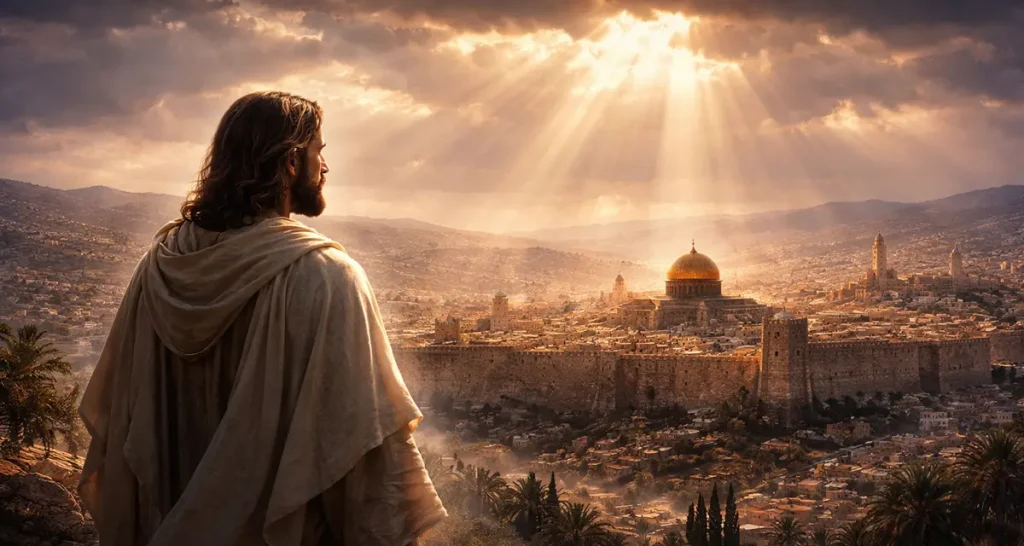
Jesus wept over Jerusalem because:
- Peace was offered
- Peace was rejected
- Peace would be restored later through repentance
“You did not know the time of your visitation.” (Luke 19:44)
“They will look upon Me whom they pierced.” (Zechariah 12:10)
In God’s timing, Israel’s restoration comes after brokenness, not before it. Discipline is real. But as you said beautifully, it is transformative, not punitive:
“For the LORD will not cast off forever. Though He causes grief, yet He will show compassion.” (Lamentations 3:31–32)
So yes, Israel forfeited the peace of the Messiah, but not the promise of the Messiah.
🧭 3. So Why Do Some Preachers Support Political Peace Plans?
Here’s where motives get mixed, sometimes sincerely, sometimes shallowly.
🌼 a. Some misunderstand the prophetic storyline
They believe any peace in the Middle East is automatically a fulfillment of prophecy.
But biblically, peace comes after repentance, not before (Hosea 3:4–5; Zechariah 12–14).
🪞 b. Some romanticize modern Israel politically
They confuse:
- Biblical Israel (the covenant people)
with
- Modern political Israel (a secular state)
Both matter, but they are not identical.
🛡️ c. Some fear being labeled “anti-Israel”
So they support whatever seems positive for Israel—even if Scripture never commands Christians to endorse political treaties.
🔍 d. Some assume any peace is better than none
Which is understandable from a humanitarian perspective, but not equal to God’s covenantal peace.
⚠️ e. Some forget that God Himself disrupts false peace
“When they say, ‘Peace and safety,’ then sudden destruction comes.” (1 Thessalonians 5:3)
God rejects man-made peace that bypasses His King.
🕊️ 4. What Is the Real Biblical Hope for Israel?
Scripture outlines a very clear path:
- A time of hardness (Romans 11:25)
- A time of jealousy stirred toward Messiah (Romans 11:11)
- A time of national repentance (Zechariah 12:10–12)
- A time of cleansing and renewal (Zechariah 13:1)
- A time of restoration and true shalom (Isaiah 11; Ezekiel 36–37)
Peace does not come by treaty.
Peace comes when Israel meets her King.
🔥 5. But Then—Why Preach What Is Not Biblical?
Let’s answer your final question directly.
🤦♂️ Why preach contrary to God’s word? Three reasons:
1. Misinterpretation of prophecy
Some think supporting geopolitical peace is participating in God’s plan.
But the Scriptures show that peace without Christ is deception, not fulfillment.
2. Desire for political influence or relevance
Linking the gospel to earthly power has always tempted the Church.
It happened in Constantine’s time.
It happens now with nationalism.
It always ends poorly.
3. Fear of offending people or losing platforms
Prophetic clarity is costly.
Diplomatic ambiguity is comfortable.
But the Bible isn’t ambiguous:
Peace comes through Christ or not at all.
🌅 6. So What Is the Place of the Church Here?
Not to predict treaties.
Not to endorse political peace plans.
Not to baptize nationalism.
But to proclaim:
- The Messiah of Israel
- The peace of the Cross
- The future repentance and restoration of Israel
- The mercy extended to the nations
“He Himself is our peace.” (Ephesians 2:14)
The Church does not engineer peace;
the Church announces the Prince of Peace.
🎶 7. And One More Beautiful Truth
When Israel finally receives her true peace, it becomes a gift to the nations:
“What will their acceptance be but life from the dead?” (Romans 11:15)
This is why preaching the real peace plan matters.