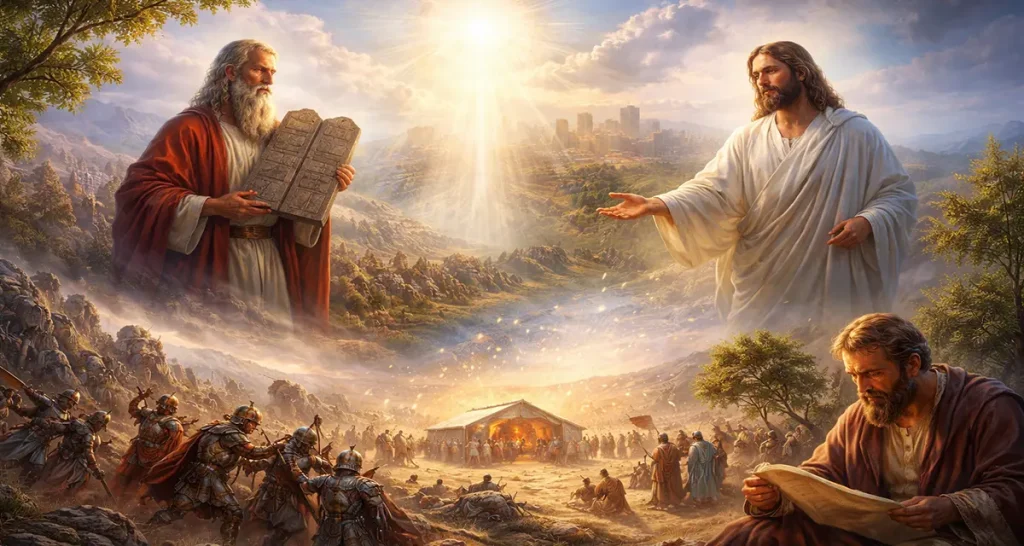
Your observation about bread and wine is very perceptive. In Scripture they often represent two pillars of human life:
- Bread → sustenance, survival, strength
- Wine → joy, celebration, delight in living
Psalm 104 beautifully captures this:
“He causes the grass to grow for the cattle… that He may bring forth food from the earth, and wine that makes glad the heart of man, oil to make his face shine, and bread which strengthens man’s heart.”
— Psalm 104:14–15
So when Moses says Israel had no bread and no wine in the wilderness (Deuteronomy 29:6), he is pointing to something profound: God temporarily removed the normal symbols of life and joy so they would see that life itself is never automatic.
Because the great danger of human beings is to believe that life runs by itself.
🫀 Life Is Not a Machine — It Is a Gift
If bread grows from the ground and wine comes from vines, it is easy to assume the system runs automatically.
But Scripture repeatedly dismantles that illusion.
Paul says to the Athenians:
“He Himself gives to all life, breath, and all things.”
— Acts 17:25
And even more directly:
“In Him we live and move and have our being.”
— Acts 17:28
Creation is not like a clock wound once and left alone.
It is more like music being played continuously.
If the musician stops, the music stops instantly.
The universe continues because God continues sustaining it.
Hebrews says this about Christ:
“Upholding all things by the word of His power.”
— Hebrews 1:3
Existence itself is a continuous act of divine will.
🍞 The Wilderness: God Removing the Illusion
The wilderness years were a kind of theological laboratory.
God temporarily removed the normal channels of provision:
- no agriculture
- no vineyards
- no stable economy
Instead:
- manna appeared daily
- water came from rock
- clothing lasted decades
Why?
So Israel could never say: “Life sustains itself.”
Moses warned them about the danger once they entered prosperity:
“Beware… lest you say in your heart, ‘My power and the might of my hand have gained me this wealth.’”
— Deuteronomy 8:17
The wilderness shattered that illusion before prosperity arrived.
🌍 The Same Principle Applies to the Whole World
You touched on something very important: God sustains everyone, not only His covenant people.
Jesus explicitly teaches this:
“He makes His sun rise on the evil and on the good, and sends rain on the just and on the unjust.”
— Matthew 5:45
Paul echoes the same truth:
“Nevertheless He did not leave Himself without witness, in that He did good, gave us rain from heaven and fruitful seasons, filling our hearts with food and gladness.”
— Acts 14:17
So the bread and wine of the world — its sustenance and its joy — are daily testimonies of God’s kindness, even to those who never acknowledge Him.
This is what theology often calls common grace.
The world lives on borrowed mercy.
🌾 Covenant People Are Meant to Recognize the Source
The difference with God’s covenant people is not that they receive provision and others do not.
The difference is recognition.
Israel was meant to understand what the world forgets.
Psalm 145 says:
“The eyes of all look expectantly to You, and You give them their food in due season.”
— Psalm 145:15
Every meal is a silent testimony of God’s sustaining hand.
But without revelation, people attribute it to:
- nature
- economy
- human effort
- luck
Covenant people are meant to see the Giver behind the gifts.
🍷 Bread and Wine Ultimately Point to Christ
There is also a deeper layer.
Bread and wine eventually become symbols of Christ Himself.
Jesus says:
“I am the bread of life.”
— John 6:35
And in the Lord’s Supper:
“This cup is the new covenant in My blood.”
— Luke 22:20
The message becomes even clearer:
not only does physical life come from God — eternal life does as well.
Just as manna sustained Israel in the wilderness, Christ sustains the life of the soul.
Jesus says:
“He who eats My flesh and drinks My blood abides in Me, and I in him.”
— John 6:56
✨ The Humbling Truth
God insists that life comes from Him because the alternative belief is the root of pride.
If life were automatic, humans could claim ownership.
But Scripture reveals a humbling reality:
- Every breath is given.
- Every harvest is granted.
- Every moment exists because God allows it.
Daniel tells King Belshazzar:
“The God who holds your breath in His hand and owns all your ways, you have not glorified.”
— Daniel 5:23
The breath we assume is already in someone else’s hand.
🌿 A Beautiful Paradox
The amazing thing is that God sustains the world even when the world ignores Him.
That patience reflects His heart:
“The Lord is good to all, and His tender mercies are over all His works.”
— Psalm 145:9
Bread and wine flow across the earth every day as quiet evidence of divine generosity.
Most people enjoy the meal without thanking the host.
But the table is still set.
And the invitation to recognize the Giver is still open.