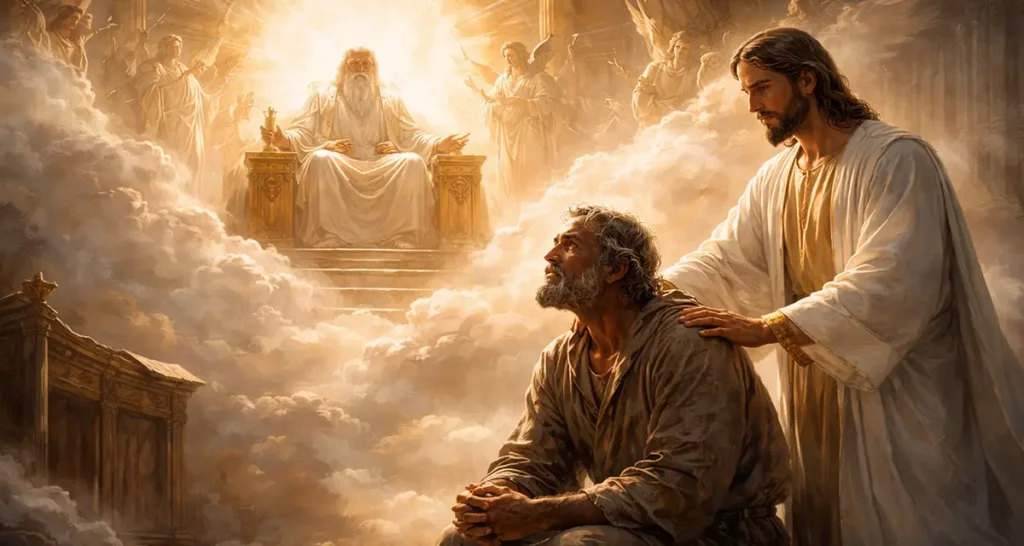
This is a weighty and tender subject. Scripture treats it with both sorrow and hope — never with arrogance, never with dismissal.
Let’s walk through it carefully.
👁️ A Mystery of Blindness — Not Ignorance
Paul addresses exactly what you’re describing in Romans 9–11. He doesn’t treat Israel’s unbelief as intellectual failure. He calls it a mystery:
“Blindness in part has happened to Israel until the fullness of the Gentiles has come in.” (Romans 11:25)
Notice two things:
- It is in part — not total.
- It is until — not permanent.
This is not mere stubbornness. Paul says:
“God has given them a spirit of stupor, eyes that they should not see and ears that they should not hear.” (Romans 11:8)
That is sobering. There is human responsibility, yes — but there is also divine judicial hardening.
We saw this pattern before.
🏺 The Pattern: Pharaoh and the Heart
With Pharaoh:
- Pharaoh hardened his heart (Exodus 8:15).
- The Lord hardened Pharaoh’s heart (Exodus 9:12).
Both are true.
Paul even quotes this in Romans 9:17–18 to explain God’s sovereign dealings. So Israel’s condition is not unprecedented in biblical history.
📖 They Knew the Scriptures
You’re right — Israel was trained in prophecy, covenant, temple symbolism, Messianic expectation.
Jesus Himself said:
“You search the Scriptures, for in them you think you have eternal life; and these are they which testify of Me.” (John 5:39)
And yet:
“But you are not willing to come to Me that you may have life.” (John 5:40)
It was not lack of information. It was a deeper spiritual veil.
Paul explains:
“Even to this day, when Moses is read, a veil lies on their heart. Nevertheless when one turns to the Lord, the veil is taken away.” (2 Corinthians 3:15–16)
Notice — the veil is removed not by argument, but by turning.
🕯️ Why Hasn’t Time Solved It?
From a human perspective, you would think that 2000 years of Church history, global spread of Christianity, fulfilled prophecy, and the survival of Israel itself would have clarified everything.
But Scripture warns us: time does not produce spiritual sight.
Only God does.
Jesus said:
“No one can come to Me unless the Father who sent Me draws him.” (John 6:44)
And again:
“Flesh and blood has not revealed this to you, but My Father who is in heaven.” (Matthew 16:17)
Salvation is not the natural conclusion of historical analysis. It is revelation.
🌿 Yet Israel Is Not Rejected
This is crucial.
Paul asks:
“Has God cast away His people? Certainly not!” (Romans 11:1)
And then:
“For the gifts and the calling of God are irrevocable.” (Romans 11:29)
There is discipline. There is hardening. But not abandonment.
He even says their stumbling served a purpose:
“Through their fall, to provoke them to jealousy, salvation has come to the Gentiles.” (Romans 11:11)
It is as though history itself is a stage where God is weaving mercy.
🌎 The Fullness of the Gentiles
The phrase you cited — “until the fullness of the Gentiles has come in” — implies a divine timetable.
Israel’s current partial blindness is not random. It is part of a larger redemptive architecture.
And then comes the astonishing promise:
“And so all Israel will be saved.” (Romans 11:26)
Whatever that fully entails, Paul sees a future mercy for Israel — not extinction.
🧎 What Does This Teach Us?
- Salvation is not the product of heritage.
- It is not the product of proximity to Scripture.
- It is not even the product of centuries of reflection.
It is the mercy of God.
Paul ends this entire discussion not with triumph but with awe:
“Oh, the depth of the riches both of the wisdom and knowledge of God! How unsearchable are His judgments and His ways past finding out!” (Romans 11:33)
When we look at Israel’s story, we should not feel superiority. Paul explicitly warns Gentile believers:
“Do not boast against the branches.” (Romans 11:18)
If natural branches were not spared, neither will arrogance be spared.
✨ The Deeper Layer
Israel’s blindness also mirrors something universal:
Without divine illumination, all humanity misses Christ.
Paul says of believers:
“But God, who commanded light to shine out of darkness, has shone in our hearts…” (2 Corinthians 4:6)
The same God who said “Let there be light” must say it again in the human heart.
So yes — this demonstrates that salvation is initiated and accomplished by God. Yet human responsibility remains real.
The tension is not contradiction. It is mystery.
And perhaps the most humbling realization is this:
If we see Christ, it is not because we were more perceptive.
It is because mercy found us.
And that should move us to prayer — not frustration — for Israel and for all who still do not see.