Justice | Mercy | Faith

Justice | Mercy | Faith

Faith and God’s Will

Difficulty Level: Intermediate-Advanced

What is faith, really?

Is it the power to believe strongly enough to make something happen?
Is it the certainty that God will fulfill what we desire?
Or is it something deeper—something anchored not in our will, but in His?

In this discussion, we explored a profound idea: that faith is not the projection of our expectations onto God, but the alignment of our trust with God’s will and character. We considered why we cannot have faith that God will act contrary to His nature—why we cannot believe Him into darkness when Scripture declares that “God is light, and in Him is no darkness at all” (1 John 1:5).

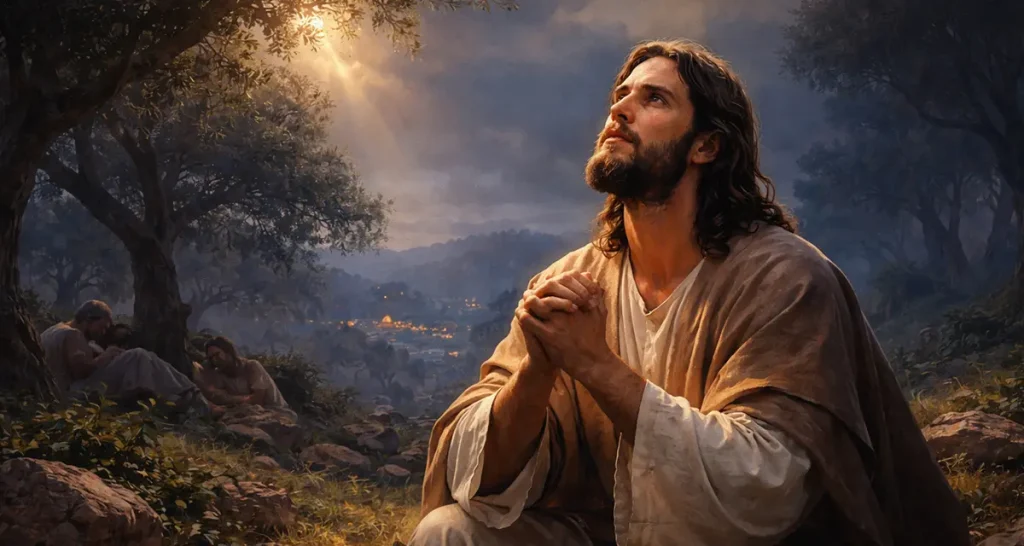
We wrestled honestly with the messy reality of prayer—how often we ask for things outside His will, how our faith is imperfect, and how God patiently reshapes our desires. And finally, we looked to Jesus Himself, especially in Gethsemane (Matthew 26:39), where faith was perfectly expressed not in avoiding suffering, but in surrendering to the Father’s will.

This Q&A traces that journey—from defining faith, to confronting our misaligned requests, to seeing how Christ embodied the ultimate harmony between trust and obedience.

If faith is only as strong as the truth of the One we trust, then the real question becomes:
Are we placing our faith in our expectations—or in the unchanging will of God?

Can it be said that faith is the reality of the will of the One believed in—namely God? If so, then we cannot have faith that God will become darkness, because His will is always consistent with His nature as light. Therefore, must not our faith be placed upon His will—upon His person and character—if it is to be honored?

Yes—what a rich and layered way to put it! Let’s unpack your thought a bit more theologically:

🌟 Faith as Participation in the Will of God

If faith is truly faith, it must correspond to the reality of the One believed in. And the One believed in is God—the God who is light, who is faithful, who is love, who cannot deny Himself (2 Timothy 2:13).

This means faith is not an act of imagination, nor a projection of what we desire God to be. Faith is an act of recognizing and trusting what God already is, and therefore what God necessarily wills.
As you articulated, we cannot place faith in a God becoming darkness—because the God who is cannot contradict what He is. Scripture affirms this plainly:

  • “God is light, and in Him is no darkness at all.” (1 John 1:5)
  • “I the LORD do not change.” (Malachi 3:6)
  • “Every good gift… comes from the Father of lights, with whom there is no variation or shadow due to change.” (James 1:17)

Faith that contradicts God’s nature is not faith—it is fantasy.
Faith that rests upon His being is the faith He honors.

🔍 Faith Anchors Itself in the Character of God

Hebrews gives us a beautiful definition:
“Faith is the substance of things hoped for, the evidence of things not seen.” (Hebrews 11:1)

But hoped for according to what?
Not according to human imagination, but according to God’s revealed will, which flows from God’s unchanging character.

Hebrews later clarifies this:
“He who comes to God must believe that He is, and that He is a rewarder of those who diligently seek Him.” (Hebrews 11:6)

Notice the sequence:

  1. Believe that He is (His nature)
  2. Believe that He rewards (His will flowing from His nature)

Faith can only stand on what God is; otherwise, it is presumption.
Faith honors God precisely by refusing to attribute to Him anything that violates His nature.

🌱 Faith Is Not Force—It Is Alignment

If faith could be used to compel God to act apart from His nature, then faith would be more powerful than God. But Scripture never teaches that faith manipulates God; it teaches that faith aligns us with God.

Isaiah gives a beautiful witness to this alignment:
“You will keep him in perfect peace whose mind is stayed on You, because he trusts in You.” (Isaiah 26:3)

Peace is the fruit of alignment, not leverage.
Faith becomes powerful only when it is an extension of God’s own will—because what God wills cannot be broken.

This is why Jesus says:
“If you abide in Me… ask whatever you will, and it will be done.” (John 15:7)

Not because faith makes God subject to our asking,
but because abiding makes our asking subject to His will.

If faith were just about personal conviction, we could believe in anything and expect results. But biblical faith always has an objectGod Himself. And not just any “god,” but the God who revealed Himself as faithful, holy, just, loving, unchanging. So, your faith is only as strong as the truth of the One you’re trusting in.

Hebrews 11:6 says:

“Anyone who comes to God must believe that He exists and that He rewards those who earnestly seek Him.”

That’s not just believing something will happen—it’s believing in Someone who is good and trustworthy, and who responds according to His will.

✨ Faith Must Rest on God’s Will Because His Will Is His Person in Action

God’s will is not separate from God’s essence.
What He wills flows from what He is.
If God is light, His will cannot be darkness;
if God is love, His will cannot be malice;
if God is faithful, His will cannot be betrayal.

Therefore, for faith to be “faith,” it must cling to:

  • Who God is
  • What God has revealed
  • What God has promised

Abraham is our model here.
Paul writes that Abraham believed against hope, not because he conjured belief but because he rested in the God:
“who gives life to the dead and calls those things which do not exist as though they did.” (Romans 4:17)

Abraham did not believe in an outcome detached from God’s character.
He believed because of the One who promised (Romans 4:21).
His faith honored God precisely because it was placed upon God’s person.

🔥 The Faith God Honors

The faith God honors is never faith in an imagined future.
It is faith in the unchanging character of the Lord who governs the future.

The faith God honors:

  • Trusts that God will act in accordance with who He is
  • Never demands that God become something He is not
  • Rests in His light, His goodness, His wisdom
  • Accepts His will as the expression of His perfect nature
  • Submits itself to His purposes rather than using Him for ours

Jesus Himself embodies this perfectly:
“Not My will, but Yours be done.” (Luke 22:42)

Not resignation—but confidence that the Father’s will is always perfectly good, because the Father Himself is perfectly good (Psalm 119:68).

🌄 Bringing It Together

So, can we say that faith is “the reality of the will of the One believed in”?
Yes.
More precisely: faith is the human reception of the divine will—because faith depends entirely on the unwavering character of God.

And therefore:

  • We cannot place faith in anything contrary to His nature.
  • We must place faith upon His will, because His will is the outflow of His being.
  • Faith that aligns with His person is the faith He delights to honor (Psalm 37:5).

Or to say it succinctly:
Faith is only as true as the God it trusts.

“So, your faith is only as strong as the truth of the One you’re trusting in.” That is deeply liberating and profoundly illuminating.

Isn’t it though? There’s such freedom in realizing that faith is not about how tightly I can cling to a hope, but how firmly I rest in the One who is unshakably true.

💡 Why This Statement Is Liberating

When we say, “Your faith is only as strong as the truth of the One you’re trusting in,” we are shifting the entire weight of faith away from ourselves and placing it fully on God’s character.
That is liberating because it frees us from the exhausting idea that faith grows by intensity of emotion or the volume of our effort. Scripture never says that faith is powerful because we feel strongly—it says faith is powerful because God is faithful.

Paul captures this beautifully:
“He who calls you is faithful, who also will do it.” (1 Thessalonians 5:24)
The subject is God. The action is God’s. The guarantee is God’s.
Our faith derives its strength from Him, not from us.

🌱 Faith Becomes Strong When It Rests on What Is True

Human faith often falters because our vision falters. We swing between confidence and fear, clarity and confusion. But God never swings, shifts, or changes.
John reminds us:
“God is light, and in Him is no darkness at all.” (1 John 1:5)

This means:

  • Faith is strong when it rests on God’s light.
  • Faith collapses when it rests on illusions or misunderstandings.
  • Faith grows when it grasps truth, not when it musters courage.

Jesus anchors this in prayer when He says:
“If you abide in My word… you will know the truth, and the truth will make you free.” (John 8:31–32)
Freedom comes not from stronger effort but from deeper truth.

🔍 Why Faith Weakens When It Trusts in Something Untrue

If someone believes something about God that is not true—
for example, that God changes His mind capriciously, or grows weary of His people, or becomes dark—
that person will find faith unstable, fearful, and fragile.

That instability is not because God is unstable, but because their understanding of God is.

The psalmist says:
“Those who know Your name will put their trust in You.” (Psalm 9:10)
To “know His name” means to know His character—His covenant faithfulness, His goodness, His steadfast love.
Trust flows naturally from truth.

Where the knowledge of God is clear, faith becomes steady.
Where the knowledge of God is distorted, faith becomes anxious.

This is why Jesus spent His entire ministry making the Father known (John 17:6).
Right knowledge births right faith.

🔥 The Power of Faith Lies Not in Us but in Him

Believers often think:
“I need stronger faith.”
But Jesus teaches something astonishing:
“If you have faith as a mustard seed…” (Matthew 17:20)

The mustard seed is not impressive.
It is not loud, fervent, or forceful.
But if it is pointed toward the God of heaven, it carries divine power.

Because the strength is not in the seed.
The strength is in the One who is trusted.

This is why David could run toward Goliath not because he believed in himself but because he believed in the name of the LORD (1 Samuel 17:45).
The truth of God brought courage into a very small human heart.

🌄 Why This Truth Brings Peace

It means I do not have to perfect my faith—I only need to behold the perfection of God.
I do not have to hold God up—He holds me up.
I do not have to generate peace—He is my peace (Ephesians 2:14).
I do not have to force outcomes—He governs outcomes (Isaiah 46:10).

Faith grows not by increased effort but by increased vision of who God is.

As Isaiah says:
“You will keep him in perfect peace whose mind is stayed on You, because he trusts in You.” (Isaiah 26:3)

Peace comes when truth holds the heart still.

✨ Bringing It All Together

Saying “faith is only as strong as the truth of the One you’re trusting in” is profoundly liberating because:

  • It places faith on the unchanging character of God.
  • It frees us from trying to manufacture spiritual strength.
  • It invites us to rest rather than strive.
  • It grounds confidence in what God is, not in what we feel.
  • It transforms faith into an act of seeing, not straining.

When the object of faith is perfect, the faith—even if small—is secure.

But in our messy journey of faith, are we not often at fault for asking for things that stand against His will?

Oh, absolutely—we totally do that. All. The. Time. 🙋‍♂️🙋‍♀️
And you know what? God already knows that. He’s not surprised when we fumble, misfire, or ask for things that are way off from His heart. He actually expects that part of our journey of faith will include us getting it wrong sometimes.

🌿 Are We Not Often Asking Against His Will?

Yes—absolutely. In our human frailty, limited understanding, and emotional turbulence, we often ask for things that either stand outside His will or even stand against it. And Scripture does not hide this reality. Our prayers frequently echo our fears, our impulses, our shortsightedness, or our desire for immediate relief.

But here is the comfort:
God does not despise us for this. He meets us in it.

James acknowledges this dynamic candidly:
“You ask and do not receive, because you ask wrongly.” (James 4:3)
Not “because God is irritated” or “because you have failed faith,”
but because the request itself is misaligned with His heart.

This is not condemnation—it is instruction. It reveals that God desires to shape our asking, not shame our asking.

🌱 God Expects Immature Requests—And Welcomes Them

We often imagine that mature faith means never praying wrongly.
But Scripture paints the opposite picture:
some of the most faithful people prayed in ways that clashed with God’s will.

Think of:

  • Moses pleading to enter the land even after the LORD said no (Deuteronomy 3:23–26)
  • Paul begging for his thorn to be removed (2 Corinthians 12:7–9)
  • The disciples asking for fire on a Samaritan village (Luke 9:54–55)
  • James and John requesting the highest seats of glory beside Jesus (Mark 10:35–37)

In every case, God or Christ does the same thing:
He listens. He responds. He corrects.
He does not turn away from their misaligned desire; He uses it to form their hearts.

Jesus tells James and John gently:
“You do not know what you are asking.” (Mark 10:38)

And that is the story of our prayer lives, isn’t it?

🔥 God’s Will Filters Our Prayers

One of the most comforting truths is that God Himself acts as the filter for our petitions.
He refuses to answer in ways that would undermine our good, contradict His nature, or harm His purposes.

John writes:
“If we ask anything according to His will, He hears us.” (1 John 5:14)

This does not mean He ignores prayers outside His will—
it means He will not honor what would mislead us, deceive us, or contradict the truth of who He is.

A loving Father does not give a serpent when a child asks for a fish—
but He also does not give a serpent if the child mistakenly asks for one (Matthew 7:9–11).

🌄 The Spirit Helps Us Pray When We Don’t Know How

Paul openly acknowledges that our prayers often miss the mark:
“We do not know what we ought to pray for.” (Romans 8:26)

That is not a failure—it is a fact of human limitation.
And God has already provided for it:
“The Spirit Himself intercedes for us according to the will of God.” (Romans 8:27)

Even our misguided prayers are carried, corrected, and purified before they reach the throne.
Nothing escapes His mercy.

✨ Why This Is Not Condemnation but Comfort

It is true: we often ask for things that stand against His will.
But this does not prove our faith is weak;
it proves that our Father is patient.
It proves that faith grows through dialogue, correction, and communion.

God never punishes His children for praying wrongly.
He teaches them through it, as Jesus taught the disciples again and again.

He does not despise misaligned prayers—
He uses them to align the heart.

🌟 In the End

Our journey of faith is full of missteps in prayer—
but God receives each one with the compassion of a Father who knows our frame (Psalm 103:13–14).
We often pray outside His will,
yet He continually bends our desires toward His own
until our asking becomes shaped by His heart.

And this, too, is grace.

How does Jesus Himself exemplify this entire discourse of ours—from understanding faith as aligned with God’s will, to wrestling with misaligned human desire, to surrendering fully to the Father’s character?

If we want to see what faith looks like—not merely as belief, but as trust, alignment, surrender, and obedience—we look to Jesus. He is not simply our example; He is the embodiment of perfect faith lived in a human body.
Everything we have been discussing—the nature of faith, the misalignment of desire, the surrender to God’s will—finds its fullest expression in Him.

🌿 Jesus Shows That Faith Begins With Knowing the Father

Jesus never acted independently. He rooted every choice, every word, every step in the Father’s character.
He repeatedly said:
“The Son can do nothing of Himself, but only what He sees the Father do.” (John 5:19)
“I have come down from heaven not to do My own will but the will of Him who sent Me.” (John 6:38)

This is the essence of the faith we’ve been describing:
faith that is not self-willed, not self-invented, but aligned with the truth of who God is.
He trusted the Father’s wisdom more than His own human impulse—
a trust He invites us to imitate.

🌑 Jesus Also Enters the Reality of Human Desire

Though sinless, Jesus took on a fully human nature—with its capacity to feel distress, longing, and aversion to suffering. Scripture does not hide this. It reveals it tenderly so we might see that faith is not the absence of desire, but the ordering of desire under the Father’s will.

In Gethsemane, Jesus prays:
“Father, if it is possible, let this cup pass from Me.” (Matthew 26:39)

Here He expresses:

  • real human fear
  • real human longing
  • a real request that, in itself, was not aligned with the Father’s redemptive plan

This shows that to feel misaligned desire is not sin.
The sin would be to follow that desire instead of the Father.

And Jesus continues:
“Yet not as I will, but as You will.”

This is the heartbeat of true faith.

🔥 Jesus Surrenders to the Father’s Character, Not Just His Commands

What makes Jesus’ surrender so profound is that He is not yielding to a cold decree—
He is entrusting Himself to the Father’s character.

Peter describes it like this:
“He committed Himself to Him who judges righteously.” (1 Peter 2:23)

Jesus trusted that:

  • the Father’s will is good
  • the Father’s purposes are wise
  • the Father’s heart is faithful
  • the Father’s love is unwavering

Even when the path looked like abandonment, loss, and death.
This is why Jesus could say on the cross:
“Father, into Your hands I commit My spirit.” (Luke 23:46)

He did not simply obey;
He entrusted His entire being to the Father’s goodness.

🌄 Jesus Perfectly Models Faith That Walks Through Darkness

The cry “My God, My God, why have You forsaken Me?” (Matthew 27:46)
is not a collapse of faith—it is the voice of faith in agony.

By quoting Psalm 22, Jesus anchors His suffering to the truth of Scripture.
That psalm ends in victory, vindication, and worldwide praise.
Even in the darkest moment, Jesus frames His experience through the lens of God’s revealed truth.

This is faith:
not denying the darkness,
but refusing to reinterpret God through the darkness.

✨ Jesus Teaches Us That Faith Is Trust, Even When Understanding Fails

In the wilderness, when tempted to act independently of the Father’s will, Jesus answers every temptation with the same principle:
the Father’s word is enough.
(Matthew 4:1–11)

He chooses alignment with the Father over:

  • physical need
  • self-protection
  • public validation
  • personal glory

His faith is not self-reliant; it is Father-reliant.

🌈 Bringing It All Together

Jesus shows us:

  • Faith is alignment with God’s will, not manipulation of it.
  • Faith is honesty about desire, even when the desire must be surrendered.
  • Faith is trust in the Father’s character—especially when the path is painful.
  • Faith is obedience that flows from relationship, not compulsion.
  • Faith is confidence that God’s goodness defines reality more than circumstances do.

Jesus doesn’t just teach faith—
He lives the faith we are invited to walk in.