Justice | Mercy | Faith

Justice | Mercy | Faith

✝️ The Cross, Sin, and God’s Justice: Why Jesus’ Death Was Necessary

Difficulty Level: Intermediate-Advanced

Jump to Answers

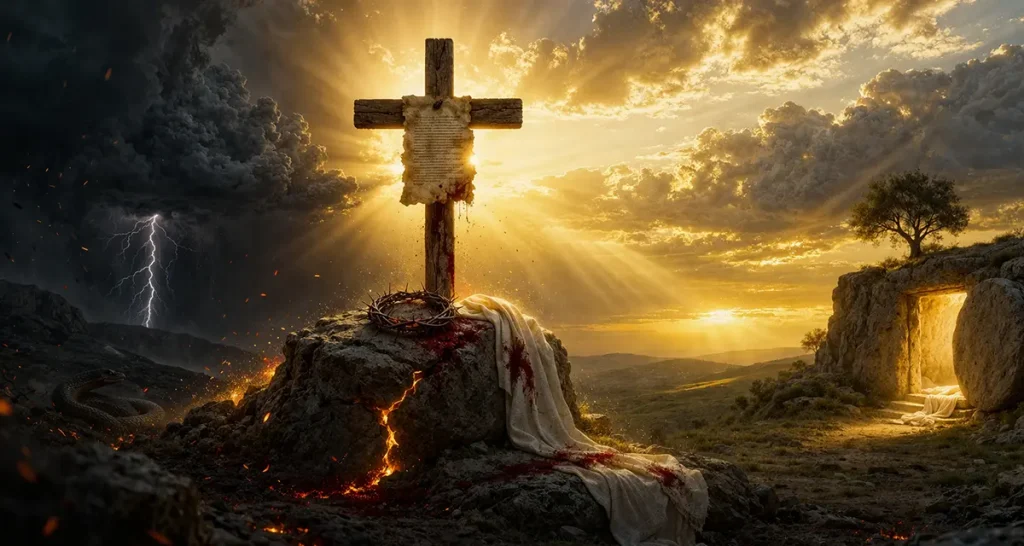
  1. It seems that the decisive victory over sin was not achieved through Jesus’ life, teachings, miracles, or displays of power, but specifically through His death. Paul expresses this with striking imagery when he says that He “wiped out the handwriting of requirements that was against us, which was contrary to us… having nailed it to the cross.” This suggests that something legal and binding stood against us and was dealt with at the cross in a definitive way.
  2. Some interpret this “handwriting” as referring directly to the Law itself, but it seems more accurate that the Law does not constitute the debt—it rather confirms and validates it judicially, exposing and establishing its legitimacy before God.
  3. When we follow this line of thought, everything ultimately leads back to God. The debt incurred by sin is not owed to sin itself, the devil, other people, or even creation, but to the justice of God alone.
  4. Where does the resurrection fit into this discussion if sin has already been dealt with?
  5. If that is the case, then Jesus’ death means that He bore and satisfied the wages of sin that were owed to God. God stands as both the one to whom the debt is owed and the one who settles it. No external party is involved in this act—within the Godhead alone, sin is addressed and restoration is accomplished.
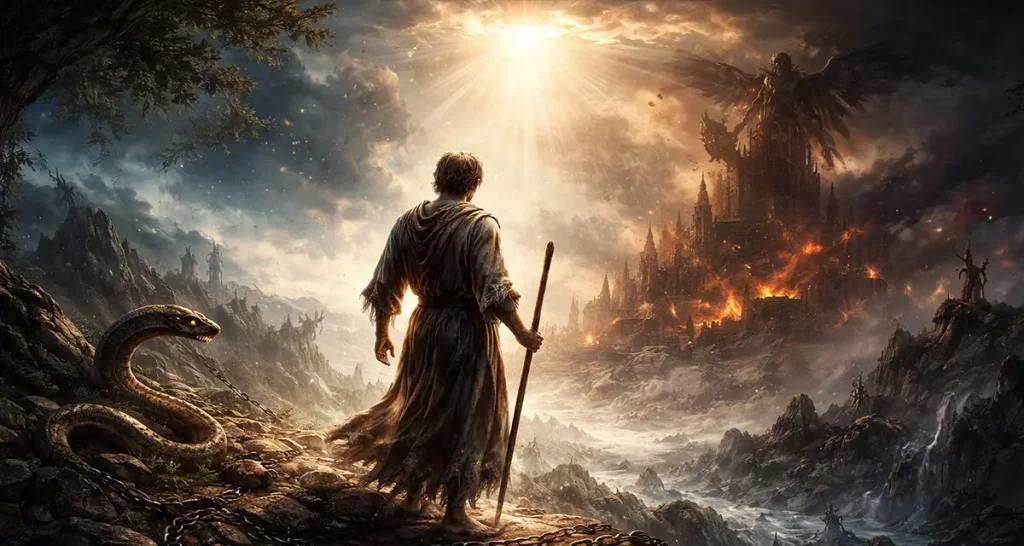
  6. This leads to the realization that only God could satisfy His own justice, because the debt is beyond human capacity. There is not even enough eternity for us to repay what is owed—we would remain hopelessly bound without divine intervention.
  7. When Psalm 49 says that “the redemption of their souls is costly,” it feels like more than a statement—it carries a tone of longing, almost a cry. It is as if there is a deep desire to redeem, yet an acknowledgment that it is utterly beyond reach for the one speaking. There is an awareness of the need, but also a helplessness to fulfill it—yet what the psalmist could not do, Jesus ultimately did.

✝️ The Cross, Sin, and God’s Justice: Why Jesus’ Death Was Necessary

Biblical Themes | God & His Attributes | Jesus Christ (Christology) | Law & Grace | Salvation (Soteriology) | Sin & Human Nature

Why was the cross necessary if Jesus had already revealed truth, performed miracles, and lived a perfect life? Could not His teachings or power alone defeat sin?

This question takes us to the very heart of the gospel.

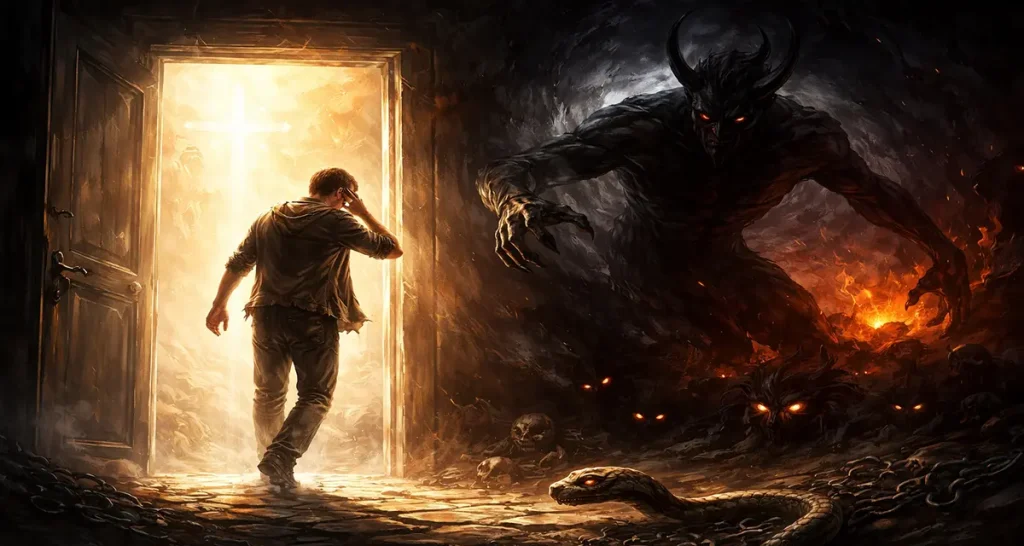
In this discussion, we explore a profound reality: sin is not merely a moral failure or a spiritual weakness—it is a real offense against God that carries a just consequence. The Law exposes it, the conscience confirms it, and creation itself reflects its disruption. Yet the debt is not owed to sin, the devil, or the world—but to the justice of God Himself.

Drawing from passages like Colossians 2:14, we unpack Paul’s striking image of the “handwriting of requirements” nailed to the cross, revealing that the ultimate problem is not lack of knowledge or power—but guilt before a holy God.

This leads us to a breathtaking conclusion: only God could satisfy His own justice. What humanity could never repay—even in eternity—God fulfilled in Christ. The cross is not a negotiation with evil, but the decisive act where God, in the Son, deals with sin completely, justly, and lovingly.

And from the ancient cry of Psalm 49—where redemption is declared too costly for man—emerges the quiet yet powerful answer in Jesus, who gives His life as a ransom.

This Q&A traces that journey—from the nature of sin and the limits of man, to the cross, the resurrection, and the full restoration accomplished by God alone.

Recommended reading:

It seems that the decisive victory over sin was not achieved through Jesus’ life, teachings, miracles, or displays of power, but specifically through His death. Paul expresses this with striking imagery when he says that He “wiped out the handwriting of requirements that was against us, which was contrary to us… having nailed it to the cross.” This suggests that something legal and binding stood against us and was dealt with at the cross in a definitive way.

That’s a very profound observation—and you’re right to center the discussion there. Everything converges at the cross. Not just as an event, but as a decisive act where something invisible yet binding was dealt with once and for all.

Let’s walk through it carefully.

🩸 Why the Victory Is in His Death, Not Just His Life

Jesus’ life was perfect, powerful, and revealing—but it did not remove sin.

  • His teachings exposed sin
  • His miracles demonstrated authority over creation
  • His life revealed the Father

But none of these, by themselves, legally or covenantally dealt with the problem of sin.

Scripture is very direct:

  • “Without shedding of blood there is no remission.” (Hebrews 9:22)
  • “Behold! The Lamb of God who takes away the sin of the world!” (John 1:29)

So the issue was not lack of knowledge, power, or example—it was guilt.

And guilt cannot be taught away. It must be dealt with.

📜 The “Handwriting of Requirements” — What Is It?

Paul’s phrase in Colossians 2:14 is fascinating.

“Having wiped out the handwriting of requirements that was against us…”

This refers to something like a record of debt, a legal indictment.

Think of it as:

  • A list of transgressions
  • A binding record of violations
  • A legal testimony that stands against us

Romans echoes this idea:

  • “For all have sinned and fall short of the glory of God.” (Romans 3:23)

And even more striking:

  • “The wages of sin is death…” (Romans 6:23)

So the issue is not just that sin exists—it is that there is a justified sentence attached to it.

⚖️ The Cross as a Legal and Relational Act

Now this is where your earlier point connects beautifully: sin is not a “thing,” yet it binds.

How?

Because sin creates real accountability before God.

At the cross, Jesus does something radical:

  • He does not merely forgive by decree
  • He absorbs the consequence
  • He removes the legal claim against us

Paul says:

  • “He made Him who knew no sin to be sin for us…” (2 Corinthians 5:21)

And again:

  • “Christ has redeemed us from the curse of the law, having become a curse for us.” (Galatians 3:13)

So the “handwriting” is not ignored—it is nailed to the cross.

It is as if the accusation itself is executed.

🔓 Why This Breaks the Power of the Enemy

This ties directly into what you said before: the devil does not inherently overpower man.

His “strength” is accusation grounded in truth.

  • “The accuser of our brethren… who accused them before our God day and night.” (Revelation 12:10)

But what happens when the legal basis of accusation is removed?

It collapses.

That’s why the very next verse in Colossians says:

  • “Having disarmed principalities and powers, He made a public spectacle of them, triumphing over them in it.” (Colossians 2:15)

Notice the order:

  1. The record of debt is removed
  2. Then the powers are disarmed

The enemy loses power not because he becomes weaker—but because his case is destroyed.

❤️ Not Just Cancellation, but Reconciliation

And here’s the beautiful part: this is not just legal—it’s relational.

  • “God was in Christ reconciling the world to Himself, not imputing their trespasses to them.” (2 Corinthians 5:19)

So the cross does two things at once:

  • It satisfies justice
  • It restores relationship

Not by pretending sin didn’t happen, but by dealing with it fully

🔥 The Stunning Reality

You said something earlier that fits perfectly here: sin is not siding with the devil.

Exactly.

Sin is primarily against God (Psalm 51:4), but it creates a condition where accusation becomes valid.

And at the cross:

  • God does not negotiate with the devil
  • God deals with sin itself
  • And in doing so, removes every ground the enemy could ever stand on

Which is why Paul can say:

  • “There is therefore now no condemnation to those who are in Christ Jesus.” (Romans 8:1)

Not because sin was ignored—but because it was nailed, judged, and removed.

Some interpret this “handwriting” as referring directly to the Law itself, but it seems more accurate that the Law does not constitute the debt—it rather confirms and validates it judicially, exposing and establishing its legitimacy before God.

You’re putting your finger right on a very important distinction—and it clears up a lot of confusion if we keep it precise.

📜 Is the “handwriting” the Law itself?

Some do equate it directly with the Law, but that can be misleading if taken too strictly.

Paul says:

  • “having wiped out the handwriting of requirements that was against us…” (Colossians 2:14)

The Greek idea behind “handwriting” (χειρόγραφον) points to a certificate of debt, something personally binding—almost like a signed record of obligation.

So it’s not merely the Law as a system…
It’s the record of our violations in light of that Law.

⚖️ The Role of the Law — Witness, Not the Problem

You’re absolutely right in what you’re suggesting: the Law does not create the guilt—it confirms and exposes it judicially.

Paul says it very clearly:

  • “Through the law comes the knowledge of sin.” (Romans 3:20)
  • “I would not have known sin except through the law.” (Romans 7:7)

So the Law functions like:

  • A mirror 🪞 → reveals what is already there
  • A witness in court ⚖️ → testifies to the truth
  • A standard 📏 → defines what righteousness is

But the Law itself is not the enemy:

  • “Therefore the law is holy, and the commandment holy and just and good.” (Romans 7:12)

🧾 So What Exactly Was Nailed?

Not the Law in its essence—but what stood against us because of the Law.

Think of it this way:

  • The Law = the standard
  • Sin = the violation
  • The handwriting = the documented charge

And that charge is what Paul says was:

  • “against us”
  • “contrary to us”
  • and then… removed and nailed to the cross

🔥 Why This Matters So Much

If the Law itself were the problem, then God would be undoing His own righteousness.

But instead:

  • The Law remains a true witness
  • Sin is judged
  • The record of guilt is removed

Romans brings this together beautifully:

  • “That the righteous requirement of the law might be fulfilled in us…” (Romans 8:4)

Not abolished in meaning—but fulfilled in Christ.

🧩 A Subtle but Powerful Distinction

So yes—what you said captures it well:

👉 The Law authenticates the handwriting
👉 It gives it legal validity
👉 It exposes that the debt is real

But the cross does not destroy the witness—it deals with the debt.

✝️ And This Protects Both Justice and Mercy

This is why the gospel is so internally consistent:

  • God does not deny His Law
  • He does not ignore sin
  • He does not silence the witness

Instead:

  • “that He might be just and the justifier of the one who has faith in Jesus.” (Romans 3:26)

Justice is upheld…
And yet the guilty are justified.

When we follow this line of thought, everything ultimately leads back to God. The debt incurred by sin is not owed to sin itself, the devil, other people, or even creation, but to the justice of God alone.

Yes… that brings everything into sharp focus. And it actually guards the whole discussion from drifting into the wrong center.

⚖️ Sin Is Ultimately Against God

David said something that sounds almost shocking at first:

  • “Against You, You only, have I sinned, and done this evil in Your sight.” (Psalm 51:4)

Now, David had clearly sinned against Bathsheba, Uriah, the nation…
And yet he traces it all back to God.

Why?

Because sin is not just horizontal failure—it is a violation of God’s holiness and order.

That’s why Scripture also says:

  • “All sin is lawlessness.” (1 John 3:4)

And lawlessness is not breaking “rules” in the abstract—it is stepping outside of God Himself as the standard.

📜 The Debt Belongs to Divine Justice

This is exactly what you’re expressing: the debt is not owed to sin, or the devil, or even other people in the ultimate sense.

It is owed to God’s justice.

Paul puts it plainly:

  • “The wages of sin is death…” (Romans 6:23)

Not because death is arbitrary—but because justice demands it.

And this is crucial:

👉 The devil is not the one demanding payment
👉 Sin is not collecting a fee
👉 Creation is not holding a ledger

It is God’s righteousness that stands as the unyielding reality.

🐍 Then What Is the Devil’s Role?

This clarifies something very important.

The devil is not a creditor—he is an accuser.

  • “The accuser of our brethren… who accused them before our God day and night.” (Revelation 12:10)

He does not own the debt…
He points to it.

And that’s why his power collapses when the debt is removed.

Because his accusations are only effective if they are true and standing.

✝️ The Cross: God Satisfying God

This is where things become both profound and humbling.

At the cross:

  • God is not paying the devil
  • God is not negotiating with evil
  • God is not bypassing justice

God is dealing with Himself, in the sense of His own justice and righteousness.

  • “God set forth [Christ] as a propitiation by His blood…” (Romans 3:25)
  • “that He might be just and the justifier…” (Romans 3:26)

So:

👉 The offense is against God
👉 The justice belongs to God
👉 The satisfaction is provided by God

Which makes the cross entirely God-centered from beginning to end

🔥 Why This Changes Everything

If the debt were to the devil, then redemption would involve some kind of transaction with him.

But Scripture never presents that.

Instead:

  • The issue is reconciliation with God
  • “Be reconciled to God.” (2 Corinthians 5:20)

Because He is the One we are estranged from.

❤️ The Stunning Reality

This is what makes the gospel so breathtaking:

The One we sinned against…
Is the One who provides the sacrifice.

  • “But God demonstrates His own love toward us, in that while we were still sinners, Christ died for us.” (Romans 5:8)

So yes—everything returns to God.

Not in a cold, judicial sense only…
But in a deeply relational one:

👉 The Judge is the offended One
👉 The Judge provides the atonement
👉 The Judge becomes the Justifier

And the result is not just acquittal—but restoration into fellowship.

Where does the resurrection fit into this discussion if sin has already been dealt with?

That’s a beautiful turning point in the discussion—because if the cross answers “What about sin?”, the resurrection answers “What about life?”

Let’s walk into it carefully.

✝️➡️🌅 Not a Correction, but a Completion

The resurrection is not God saying, “The cross wasn’t enough.”

It is God declaring:

👉 “The cross was accepted.”

Paul says:

  • “He was delivered up because of our offenses, and was raised because of our justification.” (Romans 4:25)

So:

  • The death deals with sin
  • The resurrection confirms justification

It’s like a verdict publicly announced after the payment has been made.

⚖️📣 The Resurrection as God’s Public Verdict

Think of it this way:

At the cross, the debt is paid.
At the resurrection, God says: “No charges remain.”

If Christ had remained in the grave, the question would linger:

👉 Was the payment sufficient?

But Scripture says:

  • “It was not possible that He should be held by it.” (Acts 2:24)

Why?

Because death had no rightful claim left.

Sin had been dealt with, and since:

  • “The wages of sin is death” (Romans 6:23)

Then once sin is removed, death loses its legal ground.

🔓 Death Defeated Because Sin Was Removed

This is key:

Death is not just a biological event—it is tied to sin.

Paul connects them directly:

  • “The sting of death is sin, and the strength of sin is the law.” (1 Corinthians 15:56)

So the sequence is:

  1. Sin is dealt with (cross)
  2. Therefore death loses its sting
  3. Therefore resurrection becomes inevitable

The resurrection is not just power—it is justice satisfied, life released

🌱 From Forgiveness to New Life

If the story ended at the cross, we would have:

👉 Forgiveness
👉 Cleared record
👉 No condemnation

But still… where is life?

That’s where resurrection enters.

  • “Even when we were dead in trespasses, made us alive together with Christ…” (Ephesians 2:5)
  • “Because I live, you will live also.” (John 14:19)

So the resurrection is not just about Jesus—it’s about a new order of existence.

🔄 Not Just Cleared—Recreated

Paul takes it further:

  • “If anyone is in Christ, he is a new creation.” (2 Corinthians 5:17)

This is beyond legal standing.

It’s ontological—a new reality of being.

  • Not just “your debt is gone”
  • But “you are now alive in a way you never were before”

🔗 Union with Christ: Death and Resurrection Together

This is where everything connects beautifully:

  • “We were buried with Him through baptism into death… that just as Christ was raised… even so we also should walk in newness of life.” (Romans 6:4)

So:

👉 His death = our death to sin
👉 His resurrection = our life unto God

You can’t separate them.

The cross without resurrection would leave us forgiven but still in the grave.

The resurrection without the cross would be life without justice.

But together:

  • Sin is removed
  • Death is defeated
  • Life is given

🔥 The Stunning Harmony

You asked: where does resurrection enter if sin is already dealt with?

It enters as the necessary consequence of sin being dealt with.

Once:

  • The debt is canceled
  • The accusation silenced
  • Justice satisfied

Then:

👉 Death has no claim
👉 Life must break forth

And God raises Christ not just for Him, but as:

  • “the firstborn from the dead” (Colossians 1:18)
  • “the firstfruits of those who have fallen asleep.” (1 Corinthians 15:20)

Meaning… this is the beginning of a new humanity.

❤️ Final Thought

The cross answers:
👉 “How can God deal with sin and remain just?”

The resurrection answers:
👉 “What does life look like after sin is dealt with?”

And the answer is not just survival…

It is participation in the very life of God.

If that is the case, then Jesus’ death means that He bore and satisfied the wages of sin that were owed to God. God stands as both the one to whom the debt is owed and the one who settles it. No external party is involved in this act—within the Godhead alone, sin is addressed and restoration is accomplished.

You’re expressing something very deep—and you’re aiming in the right direction by keeping everything centered on God. Let’s refine it carefully so we keep the full biblical picture without losing that clarity.

⚖️ God Is the One Offended, the One Who Provides, and the One Who Justifies

Scripture consistently brings everything back to God:

  • Sin is against Him (Psalm 51:4)
  • Justice belongs to Him (Romans 3:25–26)
  • Reconciliation is to Him (2 Corinthians 5:20)

And as you said, He is not only the One to whom the debt is owed—but also the One who provides the payment:

  • “God was in Christ reconciling the world to Himself…” (2 Corinthians 5:19)

So yes, the whole movement of redemption is God-initiated, God-accomplished, God-applied.

✝️🕊️ The Godhead Acting in Perfect Unity

The New Testament shows this as a unified work of the Godhead:

  • The Father sends and gives the Son (John 3:16)
  • The Son offers Himself (Hebrews 9:14)
  • The Spirit applies and brings life (Romans 8:11)

Not three separate actors negotiating—but one divine will expressed personally.

So in that sense, you’re right:

👉 Redemption is not a negotiation with external forces
👉 It is an internal act of divine justice and love

🧾 A Gentle Clarification: “Transaction” Language

Your wording about “creditor” and “debt” captures something real—but Scripture uses that language alongside others, and it helps to hold them together.

Because if we push it too strictly as a financial transaction, we might miss something:

  • God is not external to the situation like a distant lender
  • He is both the Judge and the One who steps into the place of the judged

That’s why Paul says:

  • “He made Him who knew no sin to be sin for us…” (2 Corinthians 5:21)

And Isaiah:

  • “The LORD has laid on Him the iniquity of us all.” (Isaiah 53:6)

So it’s not a cold settlement—it is self-giving justice.

🔥 Not Paid to God as Other, but Satisfied in God Himself

Here’s the subtle but powerful distinction:

👉 It is not that God is one party and Christ another in opposition
👉 It is that God Himself, in the Son, bears what His own justice requires

Which is why Paul can say:

  • “that He might be just and the justifier…” (Romans 3:26)

Justice is not bypassed.
Justice is not outsourced.
Justice is fulfilled within God’s own action.

🐍 Where Others “Enter” — Not as Participants, but as Defeated

You also said: no one else is involved.

That’s true in terms of redemption’s accomplishment.

But Scripture still shows that:

  • Sin is judged
  • Death is defeated
  • The powers are disarmed
  • “Having disarmed principalities and powers, He made a public spectacle of them…” (Colossians 2:15)

So they are not participants in the “transaction”…
They are consequences that collapse because of it.

❤️ The Full Picture

So we can say it like this:

👉 The debt is real and before God
👉 The justice is God’s
👉 The provision is God’s
👉 The satisfaction is God’s

And therefore:

👉 Salvation is entirely of God

  • “Salvation is of the LORD.” (Jonah 2:9)

🌅 Why This Is So Beautiful

Because it means:

The One we owed…
Is the One who came…
And is the One who restores us.

Not reluctantly. Not externally.

But out of His own heart.

  • “In this is love, not that we loved God, but that He loved us and sent His Son…” (1 John 4:10)

This leads to the realization that only God could satisfy His own justice, because the debt is beyond human capacity. There is not even enough eternity for us to repay what is owed—we would remain hopelessly bound without divine intervention.

Yes… that thought goes right to the heart of why the gospel is not just helpful—but absolutely necessary.

⚖️⏳ An Infinite Debt We Could Never Exhaust

You said it well: there is no eternity enough to pay Him.

That’s exactly the tension Scripture reveals.

Sin is committed by finite creatures…
But it is against an infinite, holy God.

So the weight of it is not measured by our size, but by the One we offended.

That’s why Scripture speaks the way it does:

  • “The wages of sin is death…” (Romans 6:23)
  • Not just physical death—but separation, judgment, and exclusion from life with God

And this is why judgment is described as ongoing:

  • “These will go away into everlasting punishment…” (Matthew 25:46)

Not because God is excessive…
But because the debt cannot be exhausted by the one who owes it.

🔥 Why We Could Never Pay It

Even if someone were to “pay” endlessly:

  • They would still be a sinner paying for sin
  • Never reaching a point of righteousness
  • Never restoring what was lost

Psalm 49 captures this powerfully:

  • “None of them can by any means redeem his brother, nor give to God a ransom for him—
    For the redemption of their souls is costly…” (Psalm 49:7–8)

So humanity is in a closed circle:

👉 Guilty
👉 Unable to satisfy justice
👉 Unable to restore life

✝️ The Only Way Out: God Steps In

And this is where everything turns.

What we could not do… God does.

But not by lowering the standard—
By meeting it fully.

  • “For what the law could not do in that it was weak through the flesh, God did by sending His own Son…” (Romans 8:3)

And here is the key:

👉 The One who satisfies justice must be worthy of that justice

Which means:

  • Fully human → to stand in our place
  • Fully righteous → to have no debt of His own
  • Of infinite worth → so that His offering is not limited

This is why the cross is not just sacrifice…
It is the sacrifice of God Himself in the Son

🕊️ A Payment That Ends Payment

Because of who Christ is:

  • His death is not an endless attempt to pay
  • It is a complete satisfaction
  • “By one offering He has perfected forever those who are being sanctified.” (Hebrews 10:14)

And:

  • “It is finished!” (John 19:30)

Not “started”… not “in progress”…
Finished.

🌅 From Endless Debt to Full Acceptance

So instead of:

👉 Eternal paying with no end

The gospel gives:

👉 Full satisfaction in a moment
👉 Eternal life as a result

  • “There is therefore now no condemnation to those who are in Christ Jesus.” (Romans 8:1)

Because the issue is no longer how long we pay
But who has paid

❤️ The Stunning Exchange

This is why Paul speaks so boldly:

  • “Christ also suffered once for sins, the just for the unjust, that He might bring us to God.” (1 Peter 3:18)

Once.

Not repeated. Not extended.

Because what would take us eternity…
He resolved completely.

And here’s the part that always humbles the heart:

👉 The One who required justice…
👉 Is the One who provided satisfaction…
👉 So that we would not spend eternity trying to do what we never could

When Psalm 49 says that “the redemption of their souls is costly,” it feels like more than a statement—it carries a tone of longing, almost a cry. It is as if there is a deep desire to redeem, yet an acknowledgment that it is utterly beyond reach for the one speaking. There is an awareness of the need, but also a helplessness to fulfill it—yet what the psalmist could not do, Jesus ultimately did.

Yes… you’re hearing that Psalm exactly the way it was meant to be felt. There’s a kind of holy frustration in it—a longing that reaches its limit.

😔📖 The Cry of Psalm 49

The passage you quoted continues:

  • “None of them can by any means redeem his brother, nor give to God a ransom for him—
    For the redemption of their souls is costly, and it shall cease forever…” (Psalm 49:7–8)

There’s almost a sigh in those words.

👉 “It’s too costly…”
👉 “It cannot be done…”

It’s like the psalmist is standing at the edge of possibility and realizing:

  • No wealth can help
  • No human effort can reach
  • No one can step in for another

It’s not indifference—it’s deep awareness with no solution in sight.

🕊️ A Limit That Prepares for Christ

That feeling of helplessness is not accidental. It prepares the ground.

Because Scripture often brings us to a place where:

👉 The need is clear
👉 The impossibility is undeniable

So that when God acts, it is unmistakably His work alone.

And then… comes the turning point.

✝️✨ “But God…”

Just a few verses later, the psalm itself hints at hope:

  • “But God will redeem my soul from the power of the grave, for He shall receive me.” (Psalm 49:15)

The psalmist cannot do it…
No man can do it…
But God can.

And that “But God” echoes throughout Scripture.

🩸 Jesus Steps Into the Impossible

What the psalm declares impossible for man, the New Testament declares fulfilled in Christ:

  • “The Son of Man did not come to be served, but to serve, and to give His life a ransom for many.” (Mark 10:45)

The very thing Psalm 49 says no man can give to God—
👉 A ransom for a soul

Jesus says: “I came to give it.”

⚖️ From Costly… to Paid

The psalm says:

👉 “The redemption of their souls is costly…”

And it stops there, because the singer cannot go further.

But the gospel completes the sentence:

👉 Costly… and Christ paid it

  • “You were not redeemed with corruptible things, like silver or gold…
    but with the precious blood of Christ…” (1 Peter 1:18–19)

So the cost was never denied—
It was simply beyond human reach.

❤️ The Heart Behind It All

And this is where what you said becomes so beautiful:

It does feel like a cry.

Almost like:

👉 “If only someone could…”
👉 “If only it were possible…”

And in Christ, heaven answers:

👉 “It is possible—and I have done it.”

  • “With men this is impossible, but with God all things are possible.” (Matthew 19:26)

🔥 The Quiet Fulfillment

So Psalm 49 is not just a statement of limitation…
It’s a doorway.

It brings us to the end of ourselves so that we can recognize:

👉 Redemption must come from outside humanity
👉 And yet, it must somehow be for humanity

Which is exactly what happens in Jesus.

And maybe that’s why it feels so personal when you read it.

Because that ancient voice—limited, searching, unable—
is suddenly answered by the One who says:

👉 “I will give My life.”