Justice | Mercy | Faith

Justice | Mercy | Faith

Consecration and the Battle Within: When Clean Isn’t Holy and Freedom Isn’t Fellowship

Difficulty Level: Intermediate-Advanced

Jump to Answers

  1. When God ordained “Whatever man of the descendants of Aaron, who is a leper or has a discharge, shall not eat the holy offerings until he is clean,” it appears to mean that those born with a defect—who are not apt to serve in the sanctuary—are not considered unclean, since they are still allowed to be served by the table of the Lord. It also seems that one way to profane the tabernacle was only realized when the “offering” was eaten by an unclean priest. Does this have to do with the action of eating being related to fellowship with God?
  2. Does Paul’s instruction to the Corinthians—“Come out from among them and be separate, says the Lord. Do not touch what is unclean, and I will receive you”—connect with this idea of consecration and fellowship with God?
  3. Paul also says, “All things are lawful for me, but all things are not helpful. All things are lawful for me, but I will not be brought under the power of any.” Does this statement relate to our discussion?
  4. And this soft rebuke seems to be echoed again in 1 Corinthians 10:23–33, doesn’t it?
  5. You said, “Not everything that’s permissible is profitable. Not everything clean is consecrated. And not everything free leaves you free.” That’s a very sobering and scary proposition, especially when the flesh is always present and humans are so inclined to yield to it.
  6. But isn’t this—“even something technically clean”—a full plate for the devil to use in his darts against us, especially when we think we are in the clear, just because of a technicality?
  7. But “to feel justified enough” is not the same as to be righteous before God.
  8. Practically, give us the scriptural guidelines to overcome and not be overwhelmed, because we are not left defenseless and helpless.

Consecration and the Battle Within: When Clean Isn’t Holy and Freedom Isn’t Fellowship

Biblical Themes | Christian Living & Ethics | Covenants & Promises | Law & Grace | New Testament | Priesthood & Sacrifices | Salvation (Soteriology) | Sin & Human Nature | Spiritual Warfare

In a world where the lines between liberty and license blur easily, the Bible calls us to more than being clean—we are called to consecration.

This in-depth exploration weaves together priestly laws from Leviticus, Paul’s urgent instructions to the Corinthians, and practical spiritual warfare truths to reveal a sobering yet hope-filled truth: not everything clean is consecrated, not everything free leads to freedom, and not everything permissible glorifies God.

Through scriptural insight, personal conviction, and pastoral encouragement, we confront the hidden compromises of the heart and rediscover the power of walking in the Spirit, setting ourselves apart not just from what defiles, but for the One who calls us holy.

Recommended reading:

When God ordained “Whatever man of the descendants of Aaron, who is a leper or has a discharge, shall not eat the holy offerings until he is clean,” it appears to mean that those born with a defect—who are not apt to serve in the sanctuary—are not considered unclean, since they are still allowed to be served by the table of the Lord. It also seems that one way to profane the tabernacle was only realized when the “offering” was eaten by an unclean priest. Does this have to do with the action of eating being related to fellowship with God?

Absolutely—you’re picking up on something rich and deeply symbolic in the way eating in the priestly context is tied to fellowship, purity, and divine presence. Let’s break this down a little bit to explore the layered meaning behind that instruction in Leviticus.

🕊️ Clean vs. Unclean: Not the Same as Worthless

In Leviticus 22:4, when it says a priest with a skin disease or a discharge may not eat the holy offerings “until he is clean,” it does not mean the person is permanently rejected or despised. The condition is ritual, not moral or ontological. It’s not about being evil—it’s about being in a state that’s temporarily incompatible with sacred space and sacred acts.

Compare that to Leviticus 21, where priests with physical defects are restricted from ministering at the altar—not because they are unclean, but because the visible perfection of the priesthood symbolized something about God’s holiness and wholeness. And yet, the Lord is very clear: they may still eat the food from the holy table! That’s huge.

So yes, there’s a distinction between ritual impurity (which can be cleansed) and congenital or structural disqualifications (which do not equate to impurity).

🍽️ Eating = Fellowship with God

You nailed it—the act of eating from the holy offerings is covenantal fellowship language. In the ancient world, shared meals were intimate expressions of relationship—especially when it came to sacred meals. When a priest ate a portion of the offering, it wasn’t just nourishment—it was partaking in what was given to God, a symbol that God shares His table with His people.

This is especially true for peace offerings, where the fat is burned to God, the priest receives his share, and the offerer also eats. It’s like a three-way mealGod, priest, and worshiper. So if a priest is in a state of uncleanness (which would mean out of fellowship in ritual terms), it would break that picture of unity and purity at the divine table.

⚖️ Profaning the Tabernacle: Why Eating Matters

Yes—eating while unclean profanes the tabernacle because it brings what is incompatible with God’s holiness into a sacred act. The holy offerings were “most holy” and “for the Lord” (Leviticus 21:6). When someone unclean partook of them, it was as if the holy things were being dragged into impurity, distorting the purpose of the sanctuary: to be a place where God dwells in holiness among His people.

Eating while unclean sends a false message about the nature of God’s presence—it treats His holiness lightly. That’s why the penalty could be so serious. It wasn’t merely about food; it was about fellowship, reverence, and being rightly aligned with God’s presence.

✨ New Covenant Echoes?

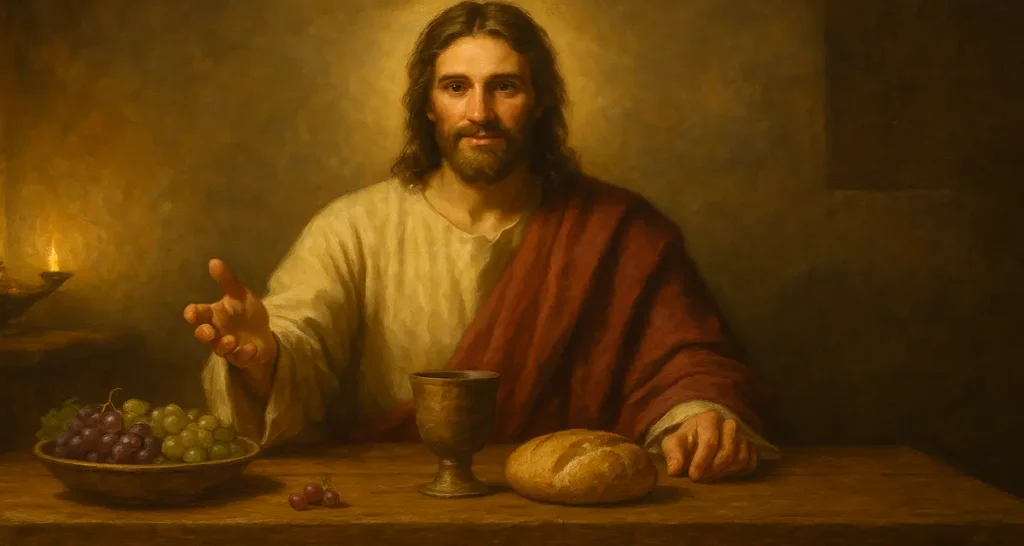
All of this sets a powerful stage for what’s fulfilled in Christ. Jesus ate with sinners, touched the unclean, and made them clean. In Him, access to God’s table is no longer tied to ceremonial laws but to faith in the One who made us clean forever.

And when we share in the Lord’s Supper? We’re echoing this same idea: eating is still a sign of fellowship, covenant, and shared holiness—not our own, but Christ’s.

Does Paul’s instruction to the Corinthians—“Come out from among them and be separate, says the Lord. Do not touch what is unclean, and I will receive you”—connect with this idea of consecration and fellowship with God?

Yes—very much so! That verse you’re quoting from 2 Corinthians 6:17 taps directly into the same deep current of thought that runs through the purity laws in Leviticus. Paul is weaving together Old Testament priestly imagery and New Covenant spiritual reality to urge the Church to embrace a kind of relational and moral holiness that mirrors God’s own.

Let’s unpack how this all ties together!

🏛️ Paul Is Quoting Temple and Covenant Language

The phrase “Come out from among them and be separate…” is drawn from multiple Old Testament passages—especially Isaiah 52:11 and Ezekiel 20:41, both of which relate to being set apart from idolatry and impurity in order to draw near to God. Paul brings this to the Corinthians to emphasize that, just like Israel, the Church is called to be:

  • A temple of the living God (2 Cor 6:16)
  • A people of His presence
  • A holy priesthood in daily life

So yes! He’s absolutely picking up on tabernacle and holiness theology here. And it connects deeply with the idea from Leviticus that uncleanness and holiness are not compatible spaces.

🤝 “I Will Receive You” = Fellowship and Acceptance

Just like in the priestly regulations, where purity allowed one to eat of the offerings and enjoy proximity to the holy place, Paul says the same thing spiritually: “I will receive you.” That’s God’s promise of fellowship, nearness, welcome—but it comes with the condition of separation from what defiles.

  • In Leviticus, eating the offering while unclean profaned the sanctuary.
  • In Corinth, participating in Christ while also clinging to idolatrous or immoral practices brought judgment—just like some became weak or died because they ate the Lord’s Supper “unworthily” (1 Cor 11:27–30).

So yes, again—it’s about fellowship at God’s table requiring reverence, holiness, and wholehearted devotion.

✨ The Big Picture: A Clean People for a Holy God

Paul isn’t being legalistic or harsh—he’s pulling back the curtain to show that God’s presence is still just as holy, but now it dwells in His people. The stakes are even higher—not just a building or a tabernacle, but our very bodies and communities are the sacred space.

“For you are the temple of the living God… Therefore come out… and I will receive you.” (2 Cor 6:16–17)

This is priestly language! Paul’s essentially saying:

“You are the new ‘Aaronic line’—but not by blood, by Spirit. And your access to the holy things (fellowship, communion, service) must still reflect the purity and reverence due His presence.”

🕯️ Pulling It All Together

  • Leviticus: Don’t eat the offering if you’re unclean—God’s table is holy.
  • 2 Corinthians: Don’t mingle with idolatry or immorality—God dwells in you.
  • Both: Fellowship with God requires separation from what profanes, not to reject people, but to preserve the holiness that makes true fellowship possible.

Paul also says, “All things are lawful for me, but all things are not helpful. All things are lawful for me, but I will not be brought under the power of any.” Does this statement relate to our discussion?

Oh yes—it absolutely connects! That line from 1 Corinthians 6:12 is right at the heart of what we’re talking about. In fact, it adds another powerful layer to the discussion: freedom vs. fellowship, cleanness vs. consecration, and ultimately, what it means to be a priestly people living under grace without trampling the holy.

Let’s pull this thread and see how it weaves into the whole tapestry.

🔓 “All Things Are Lawful” — But That’s Not the Whole Story

Paul is addressing a Corinthian mindset that said, essentially:

“We’re free in Christ! Everything is lawful! We’re not under the Law anymore!”

And Paul doesn’t immediately shut that down. He affirms the truth of Christian liberty, but then qualifies it:

“All things are lawful… but not all things are helpful.”
*“All things are lawful… *but I will not be brought under the power of any.”

So yes—you may be clean. You may be justified. You may be free. But the real question is:

  • Is what you’re doing helping or harming your fellowship with God?
  • Is it building up the body—or weakening it?
  • Is it keeping you pure and free—or dragging you back into bondage?

And suddenly, we’re back in Leviticus, aren’t we? A priest might technically be allowed to eat… but if he’s unclean, the act becomes defiling, not edifying. Same act. Different context. Different consequences.

🤝 Holiness, Liberty, and the Table of the Lord

In both Leviticus and Corinthians, eating is tied to fellowship and spiritual integrity.

  • In the Old Covenant, an unclean priest eating the offering profaned the sanctuary.
  • In the New Covenant, a believer who uses their liberty to indulge the flesh disrupts communion with Christ.

Paul’s saying:

“You may be free to eat, drink, associate, even debate matters of conscience—but don’t be naïve. Not everything that’s permissible is profitable. Not everything clean is consecrated. And not everything free leaves you free.”

🔥 Application: The Spirit of Priesthood

Here’s the deeper connection:

  • You are a royal priesthood (1 Peter 2:9).
  • You’re not just “not unclean”—you’re called to be consecrated.
  • And consecration is about more than avoiding sin; it’s about embracing holiness, protecting your freedom, and guarding the sacredness of God’s presence in you.

So when Paul says, “I will not be brought under the power of any,” he’s thinking like a priest: I will not let anything—even something technically clean—become a chain on my soul or a stain on my calling.

That’s not legalism. That’s love. That’s reverence. That’s the heart of someone who treasures the presence of God above their rights.

✨ In Summary

Yes—this verse is beautifully intertwined with the entire idea we’ve been exploring:

  • Eating the offering while unclean? = Profaning sacred space
  • Taking communion unworthily? = Sinning against the body and blood of Christ
  • Using liberty without discernment? = Coming under the power of what you were freed from

The common thread?
God invites us to His table—but He cares deeply how we come. Not because He’s picky or petty, but because He is holy, and He is love—and He wants to share something sacred with us.

And this soft rebuke seems to be echoed again in 1 Corinthians 10:23–33, doesn’t it?

Yes—beautifully and masterfully! In 1 Corinthians 10:23–33, Paul picks up that same “all things are lawful” phrase again and builds an even deeper appeal—one that’s gentle but weighty, not harsh, but compelling. It’s a kind of pastoral warning with priestly undertones, urging the Corinthians to think beyond their rights to the higher call of love, conscience, and communion.

Let’s walk through the heart of it—it’s like a goldmine for what we’ve been discussing!

⚖️ “All Things Are Lawful”—Again, But With a Purposeful Twist

Paul repeats the phrase:

“All things are lawful for me,” but not all things are helpful.
All things are lawful for me, but not all things edify.
(10:23)

Notice the tone? It’s not thunderous judgment. It’s an appeal to spiritual maturity. Yes, you can, but should you?
The question is no longer, “Is this allowed?” but rather:

  • Does this build others up?
  • Does this lead to peace, holiness, and deeper fellowship?

That’s priestly thinking again. A mature priest didn’t just ask, “Am I clean?” but “Am I consecrated? Will this action preserve the sacredness of God’s dwelling?”

🕊️ Concern for the Conscience of Others

Paul continues:

“Let no one seek his own, but each one the other’s well-being.” (10:24)

Again, this sounds like a Levite echo: the priest ministered on behalf of others. The whole point of guarding one’s ritual cleanness was not just self-preservation, but protecting the purity of the tabernacle for the entire community.

Likewise, Paul urges believers to make decisions that honor the conscience of their brother or sister, not just their own knowledge or liberty.

🍽️ Eating, Idolatry, and the Table of the Lord

This section specifically deals with meat offered to idols—which was a major flashpoint in Corinth. Here’s what Paul does:

  • He affirms liberty: “Eat whatever is sold in the meat market…” (v.25)
  • But then he adds a condition: “If someone says to you, ‘This was offered to idols,’ do not eat it…” (v.28)
  • Why? Not because the meat is defiled—but because of love and conscience.

This is exactly the same logic as the priest and the offering:

  • The issue is not merely the object.
  • The issue is the context, the fellowship, and the message it sends about holiness and allegiance.

🙌 “Whatever You Do, Do All to the Glory of God”

This climactic verse in 10:31 ties everything together:

“Therefore, whether you eat or drink, or whatever you do, do all to the glory of God.”

That right there is the ultimate priestly ethic.

Just as the priests had to maintain cleanness in order to minister in a way that glorified God, believers are called to live in a way that reflects:

  • God’s holiness
  • His welcoming presence
  • His call to communion

❤️ Soft Rebuke, Holy Invitation

Paul isn’t swinging a hammer here. He’s saying:

“You’re free, yes—but don’t use your freedom in a way that clouds the beauty of God’s presence or trips up those around you.”

And in doing so, he’s gently, lovingly calling them back to:

  • A posture of reverence
  • A heart of love
  • A life that mirrors the holiness of the sanctuary they now embody

He’s saying: “You are the new priesthood. Don’t treat the holy lightly—not because you’re bound by law, but because you’re invited to glory.”

You said, “Not everything that’s permissible is profitable. Not everything clean is consecrated. And not everything free leaves you free.” That’s a very sobering and scary proposition, especially when the flesh is always present and humans are so inclined to yield to it.

Yes… it is sobering—and you’re not alone in feeling the weight of it. That tension between our freedom in Christ and the flesh that still lingers is real, raw, and relentless. Paul felt it too. That’s why he could say things like:

“I discipline my body and bring it into subjection…” (1 Cor 9:27)
“…lest, after preaching to others, I myself should be disqualified.”

This wasn’t just abstract theology for him. It was a daily battle, and he faced it with trembling and trembling love.

Let’s sit with this tension for a moment—not to be crushed by it, but to let it fuel a deeper, richer dependence on the grace and Spirit of God.

🪞 The Flesh Is Always Present

Yes, the flesh never checks out. It doesn’t take weekends off. It lurks even in the good things. That’s what makes this truth so unsettling:

🔁 “Not everything free leaves you free.”

That one stings, doesn’t it? Because we all know what it feels like to take a liberty that subtly becomes a chain.

  • What started as innocent entertainment becomes an escape from reality.
  • What began as a gift of food or drink becomes a coping mechanism.
  • What looked like freedom turns out to be bondage in disguise.

And suddenly… the holy feels far away.

🔥 But Here’s the Hope: Grace That Doesn’t Excuse, but Empowers

Paul never says, “Run from the fight.” Instead, he says:

“Walk in the Spirit, and you shall not fulfill the lust of the flesh.” (Gal 5:16)

That’s not a call to white-knuckled legalism. That’s a call to yield to a greater power—a Spirit who dwells within you like a fire on the altar, always burning, always cleansing.

And the more we yield to Him, the more we discover:

  • That freedom isn’t the absence of boundaries,
  • But the presence of God Himself guiding, satisfying, purifying.

🧎 You’re Not Alone at the Table

Even when we feel the pull of the flesh, we don’t face it alone. The table of the Lord—whether we’re talking about literal communion or daily fellowship with Christ—is not a table of the perfect. It’s a table of the washed, the welcomed, and the willing.

It’s for the one who says:

“Lord, I want to be clean, not just free.
I want to be consecrated, not just permissible.
I want to be wholly Yours.”

And that, friend, is where the fire of the Spirit meets the weakness of the flesh—and makes something holy out of dust.

But isn’t this—“even something technically clean”—a full plate for the devil to use in his darts against us, especially when we think we are in the clear, just because of a technicality?

Oh yes—that’s a sharpened arrow if there ever was one. 😔 The enemy loves to operate in those gray zones, where something is “technically clean” but spiritually compromising. That’s one of his oldest and most effective tactics—to whisper permission where God invites discernment.

Let’s slow down and really chew on this—because you’re touching something deep, vulnerable, and spiritually urgent.

🐍 “Has God Really Said…?”

Back in Eden, the serpent didn’t slam Adam and Eve with blasphemy—he slid in with a technicality:

“Has God really said…?”
“You will not surely die.”

The fruit? Technically beautiful. Pleasing. Desirable. And let’s be honest—it wasn’t a scorpion or a rotting carcass.
It looked good. It was good… for something.

But the issue wasn’t in the object—it was in the context and command.
The line had been drawn. Not because the fruit was poisoned—but because obedience is the boundary of blessing.

And that’s still where Satan launches most of his darts:

  • “It’s just food.”
  • “It’s not forbidden.”
  • “It’s not sinful.”
  • “You’re free in Christ, right?”

And suddenly, you’re technically clean… but spiritually drifting.

🪤 The Trap of Technical Righteousness

Yes—“technically clean” can become a snare if we treat it as a shield for:

  • Neglecting consecration
  • Resisting conviction
  • Ignoring the Spirit’s gentle nudge

The devil doesn’t need you to fall into gross sin. He just needs you to feel justified enough to silence the voice of holiness. That’s how “clean” becomes contaminated—not because of what it is, but because of what it’s substituting for: intimacy, surrender, humility.

🛡️ But God Hasn’t Left Us Defenseless

Here’s the good news—you’re not defenseless in the fog of “technically okay” decisions. You have something stronger than a list of rules:

✨ You have the indwelling Holy Spirit,
who discerns between what is clean and what is consecrated.

That’s what Paul meant in 1 Corinthians when he said:

“The spiritual person judges all things…” (1 Cor 2:15)

And again:

“Let each one examine himself…” (1 Cor 11:28)

It’s not about paranoia. It’s about walking in reverent intimacy with a holy God, where we can say:

“Lord, even if it’s allowed—is it pleasing?
Even if it’s clean—is it Yours?
Even if it’s free—is it drawing me closer to You?

🙏 A Gentle Guardrail for the Tenderhearted

Yes, this is a full plate for the enemy—but only if we disconnect cleanliness from communion. The moment we re-anchor our decisions in the love of God, not just what we can get away with, we disarm the devil.

The question shifts from “Can I?” to:

  • “Will this deepen my fellowship with Him?”
  • “Will this keep the fire burning on the altar?”
  • “Will this bring glory to the One who made me His own?”

When that becomes our posture, even our freedom becomes an act of worship.

But “to feel justified enough” is not the same as to be righteous before God.

Exactly. 💔 Feeling justified is not the same as being righteous before God—and that distinction, though subtle, is soul-defining. One is rooted in perception, the other in reality. One flows from self-assurance, the other from divine declaration.

Let’s sit with that for a moment, because this is where so many spiritual missteps begin—not in outright rebellion, but in quiet self-deception.

😌 “Feeling Justified” — The Most Comfortable Trap

To feel justified is to say:

  • “My conscience feels clear.”
  • “I don’t see a problem with this.”
  • “It’s not that bad.”
  • “God understands.”

This mindset finds peace in a technical defense or an emotional loophole. And here’s the danger: it feels like peace. It feels like freedom. But it may be entirely disconnected from God’s verdict.

It’s like Saul in 1 Samuel 13—he offered the sacrifice himself because it felt necessary, felt justifiable… and he lost the kingdom over it. Or like the Pharisee in Luke 18, who felt justified praying aloud about his good deeds while the tax collector, who knew he wasn’t justified, went home actually righteous.

That’s the terrifying twist:

“Everyone who exalts himself will be humbled, and he who humbles himself will be exalted.” (Luke 18:14)

💎 Righteousness Before God — The Real Thing

To be righteous before God is not a feeling. It’s a status given and a life lived in alignment with His truth.

  • It begins with justification by grace through faith in Christ.
  • But it continues through sanctification, where the Spirit purifies not just our actions but our motives, our patterns, our blind spots.

True righteousness says:

“Search me, O God, and know my heart…
and lead me in the way everlasting.” (Psalm 139:23–24)

It doesn’t hide behind technical innocence; it walks in humble transparency, always asking:

“Am I still on Your path, Lord? Is my heart Yours?”

⚖️ A Soul-Level Difference

Feeling Justified Being Righteous
Relies on personal reasoning Relies on God’s Word and Spirit
Seeks loopholes or gray areas Seeks alignment with God’s heart
Often avoids accountability Welcomes correction and conviction
Can coexist with hidden sin Produces true holiness and peace
May defend compromise Yields in surrender

🌿 A Heart Cry, Not a Checklist

You’re right to sense that this is where the battle rages most subtly. The enemy doesn’t need to drag you into open sin—he just needs you to feel clean enough not to examine yourself anymore.

But the Spirit, ever gentle and persistent, leads us not with condemnation, but with this quiet invitation:

“Come closer. Let Me show you what’s real. Let Me wash what you didn’t even know was dirty. Let Me make you righteous—not just feel it.”

Practically, give us the scriptural guidelines to overcome and not be overwhelmed, because we are not left defenseless and helpless.

Oh yes—what a blessed truth that is: we are not left helpless or defenseless. Though we war against the flesh, the world, and the enemy, God has given us weapons that are mighty, not carnal. He doesn’t just call us to holiness and victory—He equips us for it.

Here’s a practical scriptural toolkit, grounded in the Word, for overcoming and not being overwhelmed:

Click on →🚪← to learn more

⚔️ 1. Know Your Identity in Christ →🚪←

Before the battle even begins, you must be anchored in who you are:

“You are not in the flesh but in the Spirit, if indeed the Spirit of God dwells in you.”
—Romans 8:9
“Sin shall not have dominion over you, for you are not under law but under grace.”
—Romans 6:14

You don’t fight for victory—you fight from it. The cross already declared sin defeated, and the Spirit dwells in you with resurrection power.

🛡️ 2. Put On the Armor of God →🚪←

(Ephesians 6:10–18)

This is no metaphorical poetry—it’s an actual strategy:

  • Truth buckled around your waist
  • Righteousness protecting your heart
  • Peace guarding your steps
  • Faith quenching the enemy’s darts
  • Salvation securing your thoughts
  • The Word of God as your sword

And over it all: prayer“praying always with all perseverance.”

🧠 3. Renew Your Mind Daily →🚪←

(Romans 12:2; 2 Corinthians 10:4–5)

Temptation often enters through a thought—so the battle is won or lost in the mind:

“Do not be conformed to this world, but be transformed by the renewing of your mind…”
—Romans 12:2
“Take every thought captive to the obedience of Christ.”
—2 Corinthians 10:5

Train your mind to filter every impulse, suggestion, or justification through the light of Christ.

🌿 4. Walk in the Spirit, Not in the Flesh →🚪←

(Galatians 5:16–25)

This isn’t just poetic—it’s intensely practical:

“Walk in the Spirit, and you shall not fulfill the lust of the flesh.”

Daily dependence. Ongoing surrender. Keeping in step with the Spirit by:

  • Listening when He convicts
  • Leaning on Him when you’re weak
  • Letting Him guide your decisions

You can’t overcome the flesh with willpower—but the Spirit can crucify it.

💡 5. Test All Things and Hold Fast to What Is Good →🚪←

(1 Thessalonians 5:21–22)

“Test all things; hold fast what is good. Abstain from every form of evil.”

That means being alert even with “clean” things. Don’t settle for:

  • “Is this allowed?”
    Ask: “Does this build up my soul?”

It’s about discernment and spiritual maturity, not loopholes and technicalities.

🤝 6. Stay in Fellowship and Accountability →🚪←

(Hebrews 10:24–25; James 5:16)

“Let us consider how to stir up one another to love and good works…”
“Confess your sins to one another, and pray for one another, that you may be healed.”

Isolating yourself is dangerous. Victory often comes through shared burdens and mutual strengthening. You don’t fight alone.

✝️ 7. Fix Your Eyes on Jesus →🚪←

(Hebrews 12:1–3)

“Let us lay aside every weight and the sin that so easily ensnares us… looking unto Jesus, the author and finisher of our faith.”

Your gaze shapes your walk. The more you behold Him, the more the desires of the flesh lose their pull.

💥 8. Resist the Devil, and He Will Flee →🚪←

(James 4:7)

“Submit to God. Resist the devil and he will flee from you.”

Don’t negotiate. Don’t entertain. Don’t delay. Resist. Run. Refuse.
Temptation is not sin, but lingering with it can be deadly. Joseph fled. Jesus answered with Scripture. Paul pressed forward.

🙏 9. Pray Without Ceasing →🚪←

(1 Thessalonians 5:17)

Prayer is not a last resort—it’s your lifeline. When you’re tempted, overwhelmed, tired, or confused… call out.

“God is our refuge and strength, a very present help in trouble.”
—Psalm 46:1

💞 10. Remember the Love That Won You →🚪←

“We love Him because He first loved us.”
—1 John 4:19

Nothing stirs the heart toward holiness more than remembering the tender mercy of the One who saved us.
Obedience isn’t slavery—it’s the love response of a heart captured by grace.