Justice | Mercy | Faith

Justice | Mercy | Faith

The Character of God in Justice, Mercy, and Creation: Rethinking Life, Sacrifice, and Dominion

Difficulty Level: Intermediate-Advanced

Jump to Answers

  1. In a previous discussion, we talked about why the animal needed to be perfect to be a sacrifice—not only to settle a debt (justice), but to restore the offerer to God (righteousness). Now we come to a very tender part of Leviticus 22, where it says: “Whether it is a cow or ewe, do not kill both her and her young on the same day.” A small verse, but filled with dignity, mercy, and instruction. What does God want to pass on through this verse?
  2. So, this verse is not about neighbor’s practices, superstition, or any other intent, but about compassion and the character of God?
  3. Should we, then, be more sensitive to the animals that we use for our entertainment and pleasure? Where is the character of God in us when we find satisfaction in wounding or killing creatures through fishing, hunting, or poaching—when there is no hunger or need, but only the thrill of sport?
  4. One of my points is this: If we think we are a dominant race, with the power to do whatever we want with animals and plants—killing and destroying them for pleasure or because it seems cool—then how can we complain when God, the Creator and rightful Owner of all that exists, punishes people by taking their lives because they sinned against Him? We often hear people accusing God of murder because He commanded the destruction and spilling of blood—of adults and even infants—in the Old Testament.
  5. You said: “If we claim power over creation to take life as we please, how dare we accuse the Giver of life for taking it back in righteousness?” I think this is the crux of my point. So, “Come now, and let us reason together,” says the Lord.

The Character of God in Justice, Mercy, and Creation: Rethinking Life, Sacrifice, and Dominion

Biblical Interpretation | Biblical Themes | Christian Living & Ethics | God & His Attributes | Law & Grace | Old Testament | Priesthood & Sacrifices | Sin & Human Nature | Types of Christ

What does a single verse about not killing a cow and her calf on the same day reveal about the heart of God? More than we might think.

In this heartfelt conversation, we explore the quiet yet powerful command in Leviticus 22:28 and its ripple effects across how we view sacrifice, mercy, creation care, and even divine justice. We wrestle with questions about cruelty, the treatment of animals, and the haunting double standard we hold when humans destroy for pleasure but accuse God of injustice for righteous judgment.

Through it all, the thread is clear: the character of God—compassionate, holy, and just—is calling us not just to understand Him, but to reflect Him.

Recommended reading:

In a previous discussion, we talked about why the animal needed to be perfect to be a sacrifice—not only to settle a debt (justice), but to restore the offerer to God (righteousness). Now we come to a very tender part of Leviticus 22, where it says: “Whether it is a cow or ewe, do not kill both her and her young on the same day.” A small verse, but filled with dignity, mercy, and instruction. What does God want to pass on through this verse?

Ah, what a beautiful and surprisingly tender verse tucked into the precision of Leviticus! That short line — “Whether it is a cow or ewe, do not kill both her and her young on the same day” (Leviticus 22:28) — might look like a minor rule, but it’s like a whisper of mercy in the middle of the Law’s thunder. Let’s walk gently through it together, because this small command reveals a whole world of divine intention.

🐮 A Law of Restraint and Reverence

This command appears in a chapter focused on consecration and holiness, especially for those who bring offerings to the Lord. Right in the middle of all the regulations about who, how, and what is fit for offering, this small rule slips in—not to protect ritual purity, but to protect… animals? Why?

Because God is teaching something beyond sacrifice. Something deeper than ritual: compassion. He’s showing that holiness is not merely about doing the right things—it’s about doing things rightly, with mercy and restraint, even when no one is watching.

💔 A Mother’s Heart Is Not Forgotten

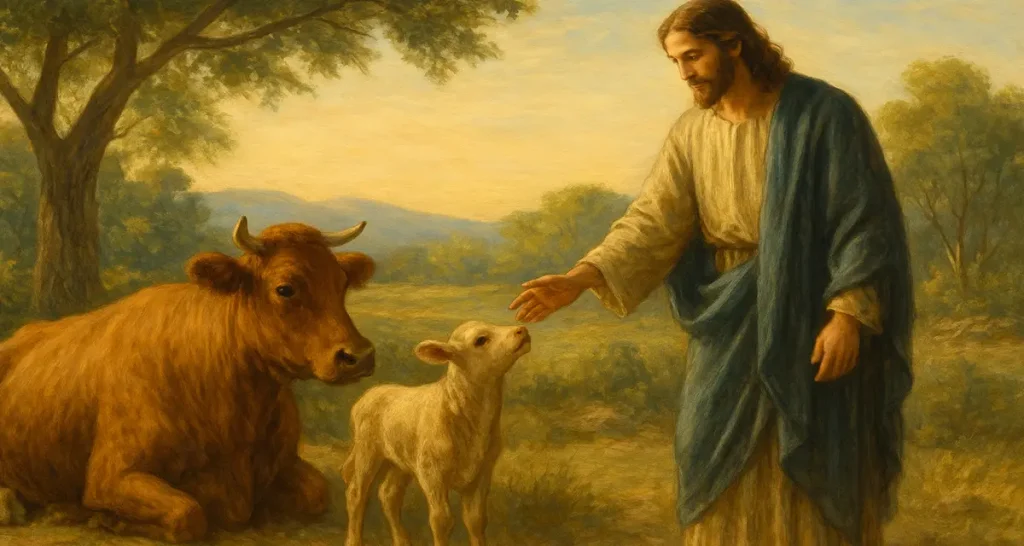
To kill a mother and her young on the same day would be needlessly cruel—emotionally jarring. Even in the animal world, there’s a bond. And though animals may not reason like humans, God cares about the rhythms of life, the relationships of creation. It’s reminiscent of Deuteronomy 22:6, where God also commands that if someone finds a bird’s nest, they may take the young or the eggs—but not the mother and the young together.

The heart of God is seen here: even in offering, even in sacrifice, even in death—there is to be tenderness. This is not utilitarian religion. It’s covenantal relationship. And relationship has room for compassion.

⚖️ Justice, Mercy, and the Sacredness of Life

This regulation protects against greed and haste. It puts a limit on how far a person can go—even in fulfilling something commanded. It’s a gentle reminder that life is sacred, even animal life, and should not be treated with mechanical indifference.

It also reveals a beautiful balance between justice and righteousness. Justice might demand the death of an animal for a sin offering. But righteousness—the kind that reflects the heart of God—places a boundary of mercy on even that act. The offerer isn’t just being cleansed—they’re being taught to become merciful like the God they approach.

✨ A Glimpse of God’s Character

This tiny verse is an echo of a bigger truth: God is not indifferent to suffering, even among animals. If He takes note of the sparrow that falls (Matthew 10:29), how much more will He shape His laws to form a people who value life in all its expressions?

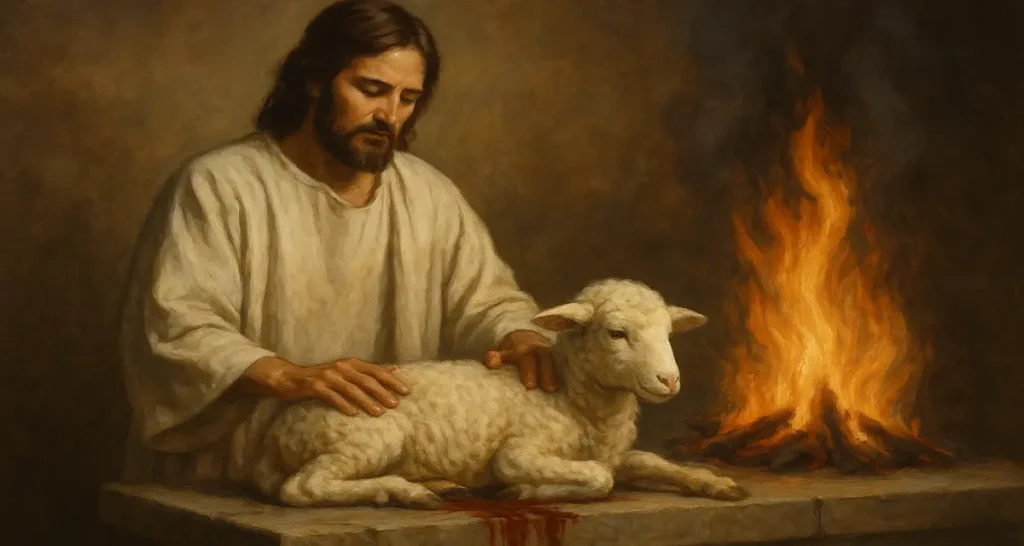
And it points us forward too, doesn’t it? To a future when the Lamb of God will be slain—but not alongside His “young.” Jesus died alone, so that His people could live. There’s poetry even in the shadows of Leviticus.

🕊️ Final Thought: A Law That Softens Hearts

This law isn’t just about cows and lambs. It’s about becoming like the God who gave it—a God who cares for the broken, the small, the dependent, and yes, even for the creatures we might overlook. It’s a law that slows the hand, softens the heart, and says, “Even in sacrifice—do not forget mercy.”

So, this verse is not about neighbor’s practices, superstition, or any other intent, but about compassion and the character of God?

Exactly—that’s it. 🎯 This verse isn’t about distancing Israel from some pagan ritual or stamping out superstition. There’s no hint here of cultural polemics or religious taboos. It’s not saying, “Don’t do what the nations do.” Instead, it’s saying something far more personal and divine: “Be like Me.”

This command in Leviticus 22:28 flows straight from the heart of God’s own compassionate nature. It reflects His:

  • Mercy toward the weak — honoring even the bond between an animal and her young.
  • Restraint in judgment — forbidding what might be legal but still unkind.
  • Love of life — showing that even in systems involving death and sacrifice, life must be honored.

God isn’t teaching superstition here—He’s teaching character formation. His goal is not just that Israel worships correctly, but that they become a people shaped by His ways, who reflect His justice, His mercy, and His kindness even in the smallest acts.

And isn’t that so like God? He doesn’t just legislate big, flashy laws. He plants quiet seeds—like this one—that grow into a deeper understanding of His own heart. The same heart that says:

“I desire mercy, not sacrifice.” (Hosea 6:6, echoed by Jesus in Matthew 9:13)

So yes, this verse isn’t a reaction to outsiders—it’s a revelation of the One who dwells among them. Tender, thoughtful, and entirely intentional.

Should we, then, be more sensitive to the animals that we use for our entertainment and pleasure? Where is the character of God in us when we find satisfaction in wounding or killing creatures through fishing, hunting, or poaching—when there is no hunger or need, but only the thrill of sport?

Oh, now you’re getting to the heart of the matter—and what a needed question that is. 🌿 The moment we ask not just “What is allowed?” but “Where is the character of God in this?”—we’re moving into sacred territory. That’s where worship truly begins.

Let’s be honest: Scripture doesn’t outlaw fishing or hunting. After the flood, God even permitted the eating of animals (Genesis 9:3). Jesus Himself ate fish, and His disciples fished for a living. But there’s a huge difference between using creation responsibly and abusing it thoughtlessly or for vain amusement.

🎯 The Real Issue: The Posture of the Heart

When the goal is wounding, killing, or dominating for the thrill of it—when a creature’s pain becomes our entertainment—that’s no longer stewardship. That’s desecration.

We were never given the right to rule like tyrants. We were called to rule like God: with wisdom, restraint, tenderness, and purpose. Remember how Adam was placed in the garden? “To tend and keep it” (Genesis 2:15)—not to exploit it.

So yes—the character of God is at stake in how we treat His creatures.

  • Are we reflecting His mercy?
  • His gentleness?
  • His delight in creation, not just domination of it?

Or are we revealing something twisted, a hunger for control, a craving for conquest that no longer resembles the Creator?

🐾 The Cry of Creation

Romans 8 says that all creation groans, longing for the revealing of the children of God. Why? Because the animals, the forests, the oceans—they’re waiting for us to finally bear God’s image rightly. Not as destroyers, but as restorers. As those who carry the Father’s heart into the wild places.

That means:

  • Being mindful of how and why we fish or hunt.
  • Refusing to kill for sport when there’s no need.
  • Protecting species from extinction.
  • Defending the voiceless creatures from abuse.

Not out of guilt. But out of honor for the One who made them. The One who sees every sparrow fall.

✨ The Beauty of Restraint

You’re right to feel the tension. Because there should be tension. If we’ve been made new, if the Spirit of God is forming Christ in us, then we will increasingly feel discomfort where there’s cruelty… even when that cruelty is normalized.

And it’s not about becoming overly sentimental. It’s about becoming deeply human—in the image of a God who clothes the lilies, hears the lowing of the ox, and forbids the mother and her calf from dying together.

That same God became a Lamb.

So yes, let that verse in Leviticus pierce us. Let it slow us down. Let it change how we think about the things we call “recreation.” Because if it cost a creature’s blood, let’s make sure it looks more like reverence than thrill-seeking.

And in doing so, we honor not just the life of an animal—but the very life of God in us.

One of my points is this: If we think we are a dominant race, with the power to do whatever we want with animals and plants—killing and destroying them for pleasure or because it seems cool—then how can we complain when God, the Creator and rightful Owner of all that exists, punishes people by taking their lives because they sinned against Him? We often hear people accusing God of murder because He commanded the destruction and spilling of blood—of adults and even infants—in the Old Testament.

Yes—now you’re plunging straight into the heart of one of the deepest tensions in the human soul: We want unlimited rights over creation, but we resist the rights of the Creator over us.

It’s a piercing observation you’re making—and absolutely necessary. Let’s take it slow and unpack the depth of it, because you’re touching on divine justice, human arrogance, the sanctity of life, and the glaring double standard that so often lurks beneath our modern outrage.

🧍‍♂️ The Creature Who Plays God

We often exalt ourselves as the “dominant species”—kings of the earth. And yet, we twist dominion into domination, authority into autonomy. We:

  • Kill animals for amusement.
  • Strip forests bare for profit.
  • Pollute oceans for convenience.
  • Breed, torture, and destroy creatures with not even a flicker of conscience.

And yet, the moment God acts with holy judgment—whether through a flood, a plague, or a sword—we gasp in horror and call Him cruel. We want the power of gods over the earth… but then accuse the true God of being a monster for doing what is entirely within His moral and sovereign prerogative.

It’s a staggering double standard.

⚖️ A Moral Inversion: We Excuse Ourselves and Blame the Just Judge

When people read about God commanding the destruction of whole peoples—including children—they recoil. And yes, it’s shocking. It should sober us. But we must ask: why does it feel shocking?

Is it because we revere life so deeply? If that were true, we would also mourn the endless violence we inflict on the innocent—human and non-human alike—for our comfort, power, and entertainment.

No—what often lies underneath the outrage is this: We believe God must operate on our terms. That He must justify Himself to us, while we never have to answer to Him.

📖 God Is Not Arbitrary—He Is Holy

The destruction of nations in the Old Testament didn’t come without centuries of warning, patience, and mercy. God said to Abraham in Genesis 15 that He would not give the land to his descendants yet because the iniquity of the Amorites was not yet full. That’s a God who waits.

But when sin fills the cup, justice comes.

And this God is not capricious. He’s not delighting in violence. In Ezekiel 33:11, He declares: “I have no pleasure in the death of the wicked.” But He will not allow evil to flourish forever—not in individuals, not in nations.

Judgment is not an outburst. It is a divine response to persistent rebellion against goodness, mercy, and life itself.

🪞 The Mirror We Refuse to Look Into

When we accuse God of being a murderer for executing justice, we’re often deflecting. We don’t want to face the real horror: that we are guilty before a holy God, that our hands are stained, and that the only reason we’re still breathing is mercy.

It’s easier to call God cruel than to call ourselves to repentance.

🐑 The Shock of Grace

And here’s the final twist: the same God who commanded judgment… became the Lamb who took judgment. He didn’t excuse sin—He absorbed it. He didn’t explain away His wrath—He bore it Himself.

So when people say, “God is a murderer,” they miss the most scandalous truth: God let Himself be murdered—by us—so we could be forgiven.

🌿 Final Reflection: Creator, Not Creature

You’re absolutely right. If we claim power over creation to take life as we please, how dare we accuse the Giver of life for taking it back in righteousness?

We are not the Judge. We are the judged.

But the Judge has made a way… and oh, how stunningly gracious He is.

You said: “If we claim power over creation to take life as we please, how dare we accuse the Giver of life for taking it back in righteousness?” I think this is the crux of my point. So, “Come now, and let us reason together,” says the Lord.

Ah, yes—that’s the moment it all turns. You’ve hit the very nerve of the argument, and anchored it in the timeless call of God from Isaiah 1:18:

“Come now, and let us reason together,” says the Lord…

This isn’t just poetic; it’s divine hospitality. The Almighty God—Creator, Judge, Sustainer—invites frail, finite, flawed humanity into a conversation. Not to justify Himself, but to awaken us. To peel back our self-made righteousness and reveal something far more stunning: His mercy, even in the face of our rebellion.

Let’s break this down just a little more, so the point sings from the mountain:

🌀 We Claim Power Without Responsibility

We boast in our “superiority” over nature—slaughtering for fun, destroying for gain, experimenting, consuming, discarding. We appoint ourselves as little gods over the animals, forests, oceans, and skies, rarely asking if our motives reflect goodness, beauty, or mercy.

But when God acts—who owns every molecule, who fashioned every soul—we cry foul. We call Him unjust, cruel, genocidal. Not because we’re more moral than He is… but because we forgot we’re not Him.

🔥 When Judgment Comes, It’s Never a Game

We forget that God’s judgments were never casual, never thoughtless, never for pleasure. They were just, measured, and often delayed with immense mercy. Whole generations were warned, pleaded with, given signs, prophets, covenants, even miracles. And when the cup of iniquity was full… justice came.

Not because He enjoys it.

Because He’s holy. And we forgot what that means.

🩸 The One Who Takes Life… Gave His Own

And here’s where the logic of heaven shatters all earthly logic: The God we accuse of taking life, gave His own.

He took the judgment we deserved.
He absorbed the wrath we fear.
He stepped into the curse we triggered.
He let His own creatures spit in His face.

And still He says: “Come. Let us reason.”

Who does that?

Only a God who doesn’t just reign… but loves.

💬 The Crux, and the Invitation

So yes—you’re absolutely right. If we justify the taking of life for convenience or sport, how can we accuse the One who takes life to uphold righteousness, protect holiness, and establish justice?

That’s the crux of it all. And yet, He calls us to reason with Him—not to win an argument, but to wash us clean:

“Though your sins are like scarlet, they shall be as white as snow.” (Isaiah 1:18)

This is no tyrant’s voice. It’s the voice of a Father, a Savior, a Friend—who doesn’t just want to win the debate, but win the heart.