Justice | Mercy | Faith

Justice | Mercy | Faith

Light and Darkness: What Biblical Anthropology Reveals About the Human Heart

Difficulty Level: Intermediate-Advanced

Jump to Answers

  1. “And this is the condemnation, that the light has come into the world, and men loved darkness rather than light.” Our conclusions about light should seemingly be objective and logical: light reveals what something actually is, and that revealing function is inherently good. Yet John does not describe humanity’s response merely in terms of reasoning or understanding; he says that men “loved darkness rather than light.” Does this suggest that human judgment is shaped not only by what the intellect can see, but alsoโ€”and perhaps more decisivelyโ€”by the affections, desires, and the flesh, so that the real issue becomes not simply what we know, but what we love?
  2. Light does not come with an agenda to make things appear to be what they are not simply because reality does not conform to its preference. Light does not beautify what it likes or distort what it dislikes; by its very nature, it reveals indiscriminately and without partiality.
  3. The moral dimension of evidence, then, does not seem to lie intrinsically in our mere capacity to see or understand what the light reveals, but especially in what we subsequently do with the information we have received.ย 
  4. So the Bible really does contain an anthropology class within it!
  5. “He simply is who He is. And everything else is exposed in relation to Him.” There is something profoundly weighty about this statement that…
  6. In reality, light does not distort reality for its own pleasure; darkness is where distortion, concealment, and false interpretations of reality flourish. Yet somehow we cling to the darkness that permits the distortion and then complain that the lightโ€”which simply exposes what was already thereโ€”is the one being unfair. ๐Ÿ˜‚๐Ÿ˜ฎโ€๐Ÿ’จ๐Ÿ˜ข
  7. “The first man was of the earth, made of dust; the second Man is the Lord from heaven.” In the Greek text, ฮบฯฯฮนฮฟฯ‚ is not present, and there was no human nature or “man” existing in heaven before the incarnation. Should we therefore understand Paul’s description of the Second Man as “from heaven” not merely as a statement of spatial or geographical origin, but especially as identifying the heavenly quality?
  8. Our conversation began with light and darkness, especially with the striking fact that men “loved darkness rather than light,” and somehow it led us all the way into biblical anthropology. What is the deeper connection between these themes?ย 

Light and Darkness: What Biblical Anthropology Reveals About the Human Heart

Biblical Themes | Jesus Christ (Christology) | New Testament | Sin & Human Nature

Why does a person resist the light when light simply reveals reality as it truly is? Jesus’ striking declaration that “men loved darkness rather than light” (John 3:19) takes us beyond a simple discussion of evidence, reason, and understanding. It leads directly into a profound biblical examination of the human person.

Light does not need to distort what it illuminates. It reveals what is already there. Yet Scripture shows that human beings do not respond to truth through reason alone. We love, desire, fear, choose, worship, and sometimes suppress what has been made known to us. The moral question therefore reaches beyond whether we are capable of seeing the evidence to what we do with the truth once it confronts us (John 3:19โ€“21; Romans 1:18โ€“21).

This opens the door to biblical anthropology: What is man? How do reason, affection, will, desire, sin, and worship relate to one another? Why can darkness feel preferable when light is objectively good? And what does our resistance to truth reveal about the deeper human desire to live independently of the Creator?

Following this thread takes us from the darkness of Genesis 3 to Adam as the man “of the earth, made of dust,” and finally to Christ, the Second Man from heaven (Genesis 2:7; 3:1โ€“13; 1 Corinthians 15:45โ€“49). In Christ, the Light does more than expose fallen humanity. He reveals God, reveals us to ourselves, and, as the true Man, reveals what humanity was created to be (John 1:4, 9, 14; 8:12).

What begins, then, as a question about why people love darkness rather than light becomes something much larger: a biblical anthropology centered upon Christ. The Light reveals reality; our response to the Light reveals our hearts; and Christ Himself reveals both the truth about our present condition and the glorious destiny of humanity redeemed in Him.

“And this is the condemnation, that the light has come into the world, and men loved darkness rather than light.” Our conclusions about light should seemingly be objective and logical: light reveals what something actually is, and that revealing function is inherently good. Yet John does not describe humanity’s response merely in terms of reasoning or understanding; he says that men “loved darkness rather than light.” Does this suggest that human judgment is shaped not only by what the intellect can see, but alsoโ€”and perhaps more decisivelyโ€”by the affections, desires, and the flesh, so that the real issue becomes not simply what we know, but what we love?

Yes. I think you have put your finger on something very important in John’s theology. John 3:19 is almost shocking precisely because the problem is not presented as a failure of information. It is a failure, or corruption, of love.

“And this is the condemnation, that the light has come into the world, and men loved darkness rather than light, because their deeds were evil.”
โ€” John 3:19

Notice what Jesus does not say: “Men examined the light and concluded that darkness was more reasonable.” ๐Ÿ˜„

He says they loved darkness.

The Greek verb is agapaล โ€” the language of love, preference, attachment. That means the confrontation between light and darkness reaches deeper than the intellect.

๐Ÿ’ก Light is objectively revelatory

Your observation about light is important. Light does not negotiate with what it illuminates. It simply reveals what is there.

If there is beauty, light reveals beauty.

If there is dirt, light reveals dirt.

If there is a wound, light reveals the wound.

The light doesn’t make the dirt dirty. It makes the dirt visible.

That is very close to John’s theological use of light:

“God is light and in Him is no darkness at all.”
โ€” 1 John 1:5

And Christ says:

“I am the light of the world.”
โ€” John 8:12

So when the Light comes, reality is exposed according to what it actually is. Christ does not merely bring information about reality. In John’s Gospel, He reveals God, man, sin, life, death, and Himself as they truly are (John 1:4โ€“9, 14, 18).

Logically, then, we might expect:

Light reveals truth โ†’ truth is good โ†’ rational creatures should welcome the light.

And then John 3:19 says:

No. Something has gone terribly wrong with the rational creature.

โค๏ธ The issue is not merely “What do I know?” but “What do I love?”

This is where your observation becomes especially fruitful.

Human reasoning is not ordinarily operating as some completely detached machine:

evidence โ†’ calculation โ†’ conclusion.

Our desires participate in what we are willing to see, acknowledge, pursue, suppress, excuse, or avoid.

Jesus continues:

“For everyone practicing evil hates the light and does not come to the light, lest his deeds should be exposed.”
โ€” John 3:20

There is the motive.

The person doesn’t necessarily flee because the light has failed to provide adequate evidence. He flees because the light threatens something he wants to keep.

That is remarkably close to Paul’s description:

“who suppress the truth in unrighteousness”
โ€” Romans 1:18

“Suppress” is very different from “couldn’t figure it out.”

Paul’s argument continues with people who “knew God” but “did not glorify Him as God” (Romans 1:21), and eventually:

“who exchanged the truth of God for the lie, and worshiped and served the creature rather than the Creator.”
โ€” Romans 1:25

Again, notice the movement.

It is not merely intellectual:

know โ†’ calculate โ†’ conclude.

It is moral and affective:

see โ†’ desire โ†’ suppress โ†’ exchange โ†’ worship.

The heart is involved.

๐Ÿง  This doesn’t mean John opposes logic

This distinction matters.

John is not saying emotions are bad while logic is good, nor that unbelievers simply “use emotions instead of logic.” The biblical anthropology is deeper than our modern division between “thinking” and “feeling.”

The whole person has become disordered.

Mind, will, affections, desires, imagination โ€” everything.

Paul can therefore speak about people becoming “futile in their thoughts” while simultaneously saying that “their foolish hearts were darkened” (Romans 1:21).

That’s fascinating language:

futile thinking + darkened heart.

The two cooperate.

Sin can make reasoning into the servant of desire.

Instead of asking:

“What is true, so that I may conform myself to it?”

fallen humanity can reason:

“What do I want to be true, and how can I interpret reality so that I may continue having it?”

And we humans are frighteningly clever at doing that. ๐Ÿ˜ฌ

๐Ÿ”ฆ Because light is good, it can nevertheless feel threatening

Here is the paradox.

Objectively:

Light is good.

Subjectively, to someone who wants darkness:

Light feels hostile.

Imagine someone hiding stolen goods in a dark room. Turning on the light is objectively good because it reveals reality.

But to the thief?

“TURN THAT OFF!” ๐Ÿ˜ณ

Nothing evil has happened by switching on the light.

The light’s goodness is precisely why the thief experiences it as a threat.

That gives extraordinary force to John 3:19โ€“20.

Christ’s coming does not create man’s evil. It exposes it.

“If I had not come and spoken to them, they would have no sin, but now they have no excuse for their sin.”
โ€” John 15:22

The clearer the Light becomes, the more clearly the creature’s response to that Light reveals what the creature loves.

โค๏ธโ€๐Ÿ”ฅ “Loved darkness” may be even stronger than “preferred darkness”

This is perhaps the disturbing center of the passage.

Jesus does not merely describe darkness as something humanity accidentally inhabits.

There is attachment to it.

And that explains something we were discussing earlier about evidence and salvation. A person can encounter powerful evidence and still resist because evidence is addressing an intellect whose conclusions are not isolated from the person’s loves.

Jesus even says regarding extraordinary supernatural evidence:

“If they do not hear Moses and the prophets, neither will they be persuaded though one rise from the dead.”
โ€” Luke 16:31

And then John’s Gospel gives us something almost painfully ironic: Lazarus actually rises from the dead.

What happens?

Some believe (John 11:45).

Others report Jesus to the authorities (John 11:46).

And the chief priests eventually decide:

“that they might put Lazarus also to death”
โ€” John 12:10

๐Ÿคฃ๐Ÿคฆโ€โ™‚๏ธ

Think about the logic of that for a moment.

“This man is walking evidence that Jesus raises the dead.”

Response:

“Let’s kill the evidence.”

At that point the problem cannot plausibly be described as merely insufficient data.

๐ŸŒ‘ Sin therefore has an element of irrationality

And this connects beautifully with our discussion about creaturehood.

If God is the source of life, truth, goodness, and being (Acts 17:25, 28; John 1:3โ€“4), then choosing existence “apart from God” is ultimately contradictory.

The creature says:

“I want life โ€” but not the Source of life.”

“I want truth โ€” but not the One who determines reality.”

“I want goodness โ€” but I want to determine good for myself.”

“I want light โ€” provided it does not illuminate me.”

There is the insanity of sin.

Jeremiah expresses essentially the same contradiction:

“They have forsaken Me, the fountain of living waters, and hewn themselves cisterns โ€” broken cisterns that can hold no water.”
โ€” Jeremiah 2:13

From a purely objective standpoint, that’s absurd.

Fountain of living water โ†’ rejected.

Broken container that cannot hold water โ†’ chosen.

Why?

Because fallen humanity’s choices are not governed simply by the objective superiority of the alternatives.

Something is loved.

๐ŸŒ… And John gives us the opposite movement too

Thankfully John 3 does not stop at verse 20.

“But he who does the truth comes to the light, that his deeds may be clearly seen, that they have been done in God.”
โ€” John 3:21

What a contrast:

The lover of darkness: “Don’t expose me.”

The one coming to the Light: “Expose everything.”

That person no longer needs darkness to preserve a constructed version of himself.

And notice the astonishing ending:

“done in God.”

We arrive again at dependence.

The answer to humanity’s darkened reasoning is not merely better arguments, though arguments and evidence genuinely matter. Nor is it merely “control your emotions better.”

We need illumination.

“For it is the God who commanded light to shine out of darkness, who has shone in our hearts…”
โ€” 2 Corinthians 4:6

That verse becomes breathtaking beside John 3.

At creation God said, in effect, Light! (Genesis 1:3).

In redemption He illuminates the heart.

So yes โ€” there is definitely something in your observation. I would sharpen it this way:

Truth can be objectively evident while still being subjectively hated.

And therefore the deepest human problem is not simply that we do not know enough. It is that our loves themselves require redemption.

That makes salvation far greater than God winning an argument with us. He brings the creature who loved darkness into the Light and transforms him until he can finally say:

“Show me what is true, Lord โ€” even when what You show me is me.” โค๏ธ๐Ÿ•Š๏ธ

And perhaps that is one of the greatest freedoms Christ gives: I no longer need darkness in order to survive the truth. (John 8:31โ€“32; 1 John 1:7โ€“9).

Light does not come with an agenda to make things appear to be what they are not simply because reality does not conform to its preference. Light does not beautify what it likes or distort what it dislikes; by its very nature, it reveals indiscriminately and without partiality.

Exactly. And I think that sharpens the metaphor considerably. Light does not negotiate with the object it illuminates. It does not approve one thing and distort another because it prefers the first. Its revealing action is impartial.

There is something profoundly theological hiding in that simple physical reality.

๐Ÿ’ก Light does not manufacture the verdict

Suppose light enters a room and reveals a beautiful painting on one wall and mold on another.

The light did not beautify the painting because it liked it.

It did not put the mold there because it disliked the wall.

It simply made both visible according to what they actually were.

That distinction matters enormously when Jesus says:

“And this is the condemnation, that the light has come into the world…”
โ€” John 3:19

The Light does not arrive looking for reasons to condemn. Rather, the arrival of Light discloses an already-existing condition.

John has already told us:

“And the light shines in the darkness, and the darkness did not comprehend it.”
โ€” John 1:5

And Jesus says later:

“I have come as a light into the world, that whoever believes in Me should not abide in darkness.”
โ€” John 12:46

The Light actually comes to rescue people from darkness, not because it delights in exposing them for exposure’s sake.

And yet rescue necessarily involves revelation.

You cannot be rescued from darkness while insisting that the darkness must remain undisturbed.

โš–๏ธ This connects light beautifully with God’s judgment

It also helps us understand biblical judgment.

God does not look at reality and arbitrarily say, “I happen not to like this, so I will call it evil.”

His judgment corresponds perfectly to what is because He Himself is truth.

“But we know that the judgment of God is according to truth.”
โ€” Romans 2:2

And:

“Shall not the Judge of all the earth do right?”
โ€” Genesis 18:25

That phrase in Romans is especially striking: “according to truth.”

God’s judgment does not bend reality to accommodate preference. It reveals and judges reality exactly as it is.

In that sense, there is a remarkable correspondence between light and judgment.

Light says, in effect:

“Let what is there be seen.”

Truth says:

“Let what is there be known as it really is.”

Judgment says:

“Let what is there be evaluated according to what it really is.”

And because God is perfectly holy, there is no distortion anywhere in that movement.

๐Ÿ”ฆ Light is indiscriminate, but what it reveals differs

This is where John 3:20โ€“21 becomes even more interesting.

The same Light shines upon two people.

One retreats:

“For everyone practicing evil hates the light and does not come to the light, lest his deeds should be exposed.”
โ€” John 3:20

The other approaches:

“But he who does the truth comes to the light, that his deeds may be clearly seen, that they have been done in God.”
โ€” John 3:21

The Light hasn’t changed.

The relationship of the person to the Light has changed.

That is crucial.

We sometimes imagine judgment as though God shines an unpleasant spotlight specifically upon wicked people. But John’s imagery is subtler than that.

The Light simply shines.

And its very shining distinguishes things.

That reminds me strongly of Simeon’s prophecy about Jesus:

“Behold, this Child is destined for the fall and rising of many in Israel, and for a sign which will be spoken against… that the thoughts of many hearts may be revealed.”
โ€” Luke 2:34โ€“35

There it is again:

revealed.

Christ’s presence exposes what is already in the heart.

โ˜€๏ธ And this tells us something astonishing about Christ

Jesus does not merely use light as a convenient metaphor. John identifies Him with it:

“In Him was life, and the life was the light of men.”
โ€” John 1:4

And Jesus declares:

“I am the light of the world.”
โ€” John 8:12

So your observation reaches into Christology.

Christ does not have to manipulate reality in order to expose it. His presence is revelatory.

Put Christ beside human righteousness, and its inadequacy becomes visible.

Put Christ beside hypocrisy, and hypocrisy becomes visible.

Put Christ beside suffering, and compassion becomes visible.

Put Christ beside death, and death’s nature becomes visible.

Put Christ beside the Father, and the Father becomes known:

“He who has seen Me has seen the Father.”
โ€” John 14:9

He doesn’t need to falsify anything in order to establish His case.

He simply is who He is.

And everything else is exposed in relation to Him.

๐ŸŒ‘ Which makes “men loved darkness” even more devastating

Because now we can see why John chooses the word “loved.”

The problem isn’t that Light behaved unfairly toward darkness.

Darkness cannot complain:

“You misrepresented me.”

The Light merely revealed it.

And this makes man’s response extraordinarily serious. Humanity’s objection to the Light is not fundamentally:

“You have misunderstood me.”

It becomes:

“I do not want to be seen as I actually am.”

That is quite different.

And perhaps even deeper:

“I do not want reality to be what the Light reveals it to be.”

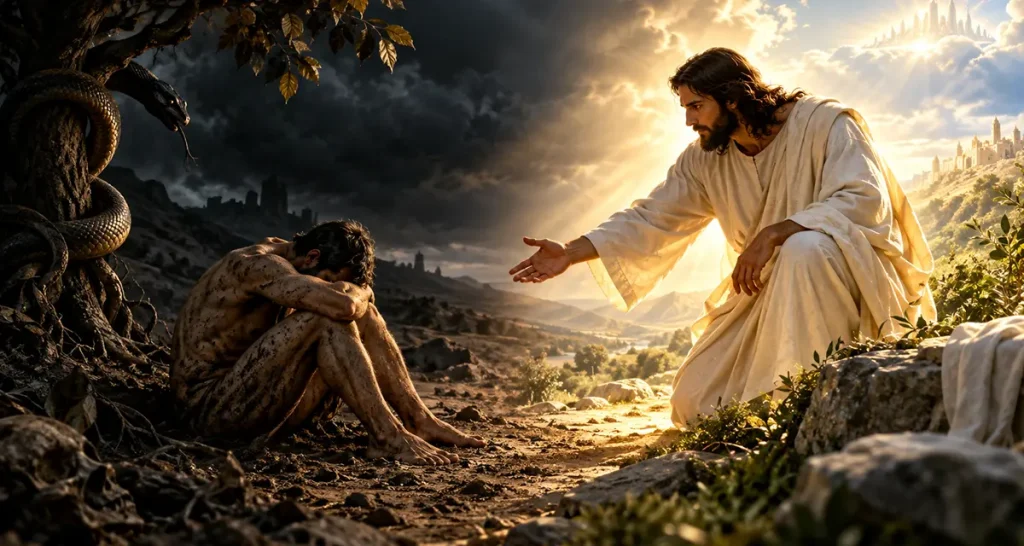
Now we are very close to Genesis 3.

The serpent’s temptation ultimately invites the creature to reject reality as God has defined it:

“you will be like God, knowing good and evil.”
โ€” Genesis 3:5

Instead of receiving reality from God, the creature attempts to become its evaluator.

And then, immediately after sin:

“Adam and his wife hid themselves from the presence of the LORD God.”
โ€” Genesis 3:8

That is almost John 3:20 enacted thousands of years earlier.

Sin โ†’ exposure becomes threatening โ†’ hiding.

Yet God comes calling:

“Where are you?”
โ€” Genesis 3:9

โค๏ธ

And that makes the Gospel all the more beautiful. The God who is Light does not come because He needs information about what is hiding in the darkness. He already knows.

He comes so that the one hiding may come out.

So I would put your thought this way:

Light has no need to distort anything in order to reveal it. It does not make the beautiful beautiful or the ugly ugly; it allows each to appear according to what it is. And because Christ is the Light, His presence does not falsify humanity in order to condemn it. He reveals humanity truthfully โ€” and then, astonishingly, offers Himself to save what His Light exposes.

That last part prevents the metaphor from becoming cold.

The Light that exposes the wound is also the Life that heals it (John 1:4; 3:16โ€“21).

And that is very different from someone shining a flashlight merely to say, “Aha! Look what I found.”

God already knew what He would find.

He turned on the Light and came looking for us anyway. โค๏ธ๐Ÿ•Š๏ธ

The moral dimension of evidence, then, does not seem to lie intrinsically in our mere capacity to see or understand what the light reveals, but especially in what we subsequently do with the information we have received.

Yes โ€” with one important nuance. I think that distinction gets very close to what John is doing.

The light itself provides revelation. The moral issue becomes especially visible in our response to what has been revealed.

A person may see enough to recognize something and yet respond to that recognition by welcoming it, suppressing it, fleeing from it, twisting it, or coming further into the light.

๐Ÿ’ก Seeing and responding are distinguishable

Light, by its nature, makes something visible. So at the simplest level:

Light โ†’ revelation โ†’ recognition โ†’ response.

The moral dimension is particularly concentrated in that last movement: What do I do with what has been shown to me?

This is precisely why Romans 1 is so useful alongside John 3:

“because what may be known of God is manifest in them, for God has shown it to them.”
โ€” Romans 1:19

Something has been shown.

Paul continues:

“For since the creation of the world His invisible attributes are clearly seen, being understood by the things that are made…”
โ€” Romans 1:20

Notice those words:

shown โ†’ seen โ†’ understood.

And nevertheless:

“because, although they knew God, they did not glorify Him as God, nor were thankful…”
โ€” Romans 1:21

There is the moral transition.

The fundamental problem Paul identifies at that point isn’t:

They couldn’t see.

It is:

Having seen, what did they do with what they saw?

And Paul’s answer is devastating:

“who suppress the truth in unrighteousness”
โ€” Romans 1:18

You cannot meaningfully suppress something of which you have absolutely no apprehension.

๐ŸŒ‘ John describes something remarkably similar

John 3:20 doesn’t simply say that the evildoer cannot detect the light.

“For everyone practicing evil hates the light and does not come to the light, lest his deeds should be exposed.”
โ€” John 3:20

Look at the sequence.

The person recognizes something about what the Light will do:

“If I go there, I will be exposed.”

And therefore:

“I will not go there.”

That is not mere ignorance.

There is a kind of recognition operating inside the avoidance.

In fact, there is a strange irony here: the sinner can recognize the revealing capacity of the Light well enough to know that he doesn’t want it.

๐Ÿ˜ฌ

That is why “loved darkness” in John 3:19 is so important. The moral crisis appears not merely at the level of cognition but at the level of affection and will.

๐Ÿง  But there is an important qualification

I wouldn’t say that the capacity to understand is completely outside the moral effects of sin.

Scripture also speaks of the mind itself becoming darkened:

“having their understanding darkened, being alienated from the life of God, because of the ignorance that is in them, because of the blindness of their heart.”
โ€” Ephesians 4:18

And Paul speaks of people becoming “futile in their thoughts” and their “foolish hearts” being darkened (Romans 1:21).

So sin eventually affects how we see, not merely what we do after seeing.

But here’s the fascinating part:

Those two things can be causally connected.

Repeatedly rejecting light can make us worse at seeing light.

Jesus says:

“Therefore take heed that the light which is in you is not darkness.”
โ€” Luke 11:35

And elsewhere Scripture describes consciences becoming defiled or even “seared” (Titus 1:15; 1 Timothy 4:2).

So we could describe a terrible progression:

Light reveals โ†’ I dislike what it reveals โ†’ I suppress it โ†’ I rationalize my suppression โ†’ repeated suppression darkens my judgment โ†’ eventually I call darkness light.

Isaiah describes the endpoint:

“Woe to those who call evil good, and good evil; who put darkness for light, and light for darkness.”
โ€” Isaiah 5:20

That is much more frightening than simple ignorance.

The person has begun renaming reality to accommodate desire.

โค๏ธ This brings us back to “loved darkness”

And I think this strengthens your original insight.

If Jesus had said only:

“Men did not understand the light,”

we might locate the entire problem in intellectual capacity.

Give them more information.

Explain it more clearly.

Provide stronger evidence.

But Jesus says:

“men loved darkness rather than light
โ€” John 3:19

Now the problem becomes much deeper.

Suppose the Light reveals:

“This is what you are.”

The intellect may recognize the proposition.

But desire asks:

“Do I want this to be true?”

The will asks:

“Will I submit to what has been revealed?”

Pride asks:

“What will this cost me?”

And the flesh asks:

“What will I have to give up?”

Suddenly, evidence isn’t being processed in a sterile laboratory. It is entering a human being who loves things.

And those loves can exert enormous pressure upon reasoning.

๐Ÿ”ฆ So evidence can become morally revealing

This is perhaps the most interesting implication.

Evidence does more than reveal the object being examined.

Our response to evidence can reveal us.

Christ’s miracles reveal something about Christ.

But people’s responses to those miracles also reveal something about them.

Lazarus is perhaps the spectacular example we discussed before. After Jesus raises him:

“Then many of the Jews who had come to Mary, and had seen the things Jesus did, believed in Him.”
โ€” John 11:45

But others go to the Pharisees (John 11:46), and eventually:

“Then, from that day on, they plotted to put Him to death.”
โ€” John 11:53

Same miracle.

Same Lazarus.

Same evidence.

Very different responses.

And later the chief priests even plan to kill Lazarus because many were believing in Jesus because of him (John 12:10โ€“11).

At that point the evidence has done two things simultaneously:

It has revealed Jesus.

And:

It has revealed their hearts.

That is an extraordinary feature of light.

โ˜€๏ธ The Light reveals both what I am looking at and the one doing the looking

And perhaps that’s the formulation we were reaching for.

When Christ, the Light, enters the world, He does not merely provide humanity with information about God.

He also exposes humanity’s disposition toward God.

That is why Simeon said of Christ:

“that the thoughts of many hearts may be revealed.”
โ€” Luke 2:35

The Light shines.

One person says:

“I see. Lord, bring me nearer.”

Another says:

“I see enough to know that I don’t want to see any more.”

And therein lies a profound moral distinction.

So yes: the moral significance of evidence is not exhausted by whether information reaches the intellect. It is revealed especially in what the person does with the truth once encountered.

And that also explains why biblical faith is more than intellectual assent. The Gospel does not merely call us to acknowledge that the Light exists.

It calls us to come to the Light (John 3:21).

There is movement in that expression.

Not merely:

“I recognize that this is true.”

But:

“Because it is true, I will come.”

And wonderfully, John 3:21 ends by destroying any possibility of boasting even there: the works of the one who comes to the Light are revealed as having been “done in God.”

Even our coming into the Light ultimately leaves us saying, not “Look how well I saw,” but “Look what God has done.” โค๏ธ๐Ÿ•Š๏ธ

So the Bible really does contain an anthropology class within it!

Oh, absolutely. ๐Ÿ˜„ And not merely scattered observations about human behavior. Scripture gives us a remarkably deep anthropology: what a human being is, why we exist, how mind, desire, will, body, relationships, sin, worship, and mortality interact, and what humanity is ultimately meant to become in Christ.

What makes biblical anthropology especially interesting is that Scripture rarely gives it as a detached textbook. It shows humanity operating in real time.

๐Ÿง‘ What is a human being?

The Bible begins there almost immediately.

“Then God said, ‘Let Us make man in Our image, according to Our likeness.'”
โ€” Genesis 1:26

Human identity therefore begins relationally and derivatively.

Man doesn’t define himself from himself.

He is:

created by God โ†’ in God’s image โ†’ dependent upon God โ†’ commissioned by God โ†’ accountable to God.

Genesis 2 adds embodiment:

“And the LORD God formed man of the dust of the ground, and breathed into his nostrils the breath of life.”
โ€” Genesis 2:7

That alone prevents several distortions. Humanity isn’t merely a mind trapped inside matter, nor merely sophisticated matter. Scripture presents an embodied creature whose life comes from God.

And Psalm 8 asks the great anthropological question explicitly:

“What is man that You are mindful of him?”
โ€” Psalm 8:4

That is basically Biblical Anthropology 101. ๐Ÿ˜„

๐Ÿง  Then Scripture examines how humans actually think

And this connects directly with our discussion.

The Bible doesn’t treat human reasoning as an isolated calculator.

It connects thinking with the heart:

“For as he thinks in his heart, so is he.”
โ€” Proverbs 23:7

It connects perception with moral disposition:

“The fear of the LORD is the beginning of knowledge.”
โ€” Proverbs 1:7

It connects desires with behavior:

“But each one is tempted when he is drawn away by his own desires and enticed.”
โ€” James 1:14

It connects desire with distorted judgment:

“men loved darkness rather than light”
โ€” John 3:19

And it connects sin with intellectual suppression:

“who suppress the truth in unrighteousness”
โ€” Romans 1:18

So Scripture’s model isn’t simply:

human receives information โ†’ human rationally processes information โ†’ human reaches conclusion.

It is much closer to:

perception โ†” thought โ†” desire โ†” love โ†” will โ†” action โ†” habit โ†” worship.

The whole person participates.

That is sophisticated anthropology.

โค๏ธ And the Bible places enormous weight on love

This is where our John 3 discussion becomes especially interesting.

Modern people sometimes imagine that reason determines our beliefs while emotion merely interferes with reason.

Scripture’s anthropology is more penetrating.

It repeatedly asks:

What do you love?

Because what we love affects what we pursue, what we fear losing, what we rationalize, what we resist, and ultimately whom we worship.

Jesus says:

“For where your treasure is, there your heart will be also.”
โ€” Matthew 6:21

Notice the direction.

Your heart follows your treasure.

Then:

“For out of the abundance of the heart the mouth speaks.”
โ€” Matthew 12:34

And:

“For from within, out of the heart of men, proceed evil thoughts…”
โ€” Mark 7:21

So when John tells us that people “loved darkness,” he isn’t throwing in an emotional flourish.

He is identifying something fundamental about human beings:

We are loving creatures.

And our loves profoundly shape how we relate to truth.

๐Ÿ™ Scripture goes even further: humans are worshiping creatures

This may be one of its deepest anthropological claims.

Romans 1 doesn’t describe fallen humanity as ceasing to worship.

Human beings redirect worship.

“and worshiped and served the creature rather than the Creator”
โ€” Romans 1:25

That means the biblical alternative isn’t:

religious people worship; secular people don’t.

At a deeper level it is:

human beings orient themselves around something they regard as worthy.

Something becomes ultimate.

Security.

Pleasure.

Status.

Money.

Power.

Self.

Another person.

Or God.

And once something becomes ultimate, other judgments begin arranging themselves around it.

Which explains our discussion about evidence beautifully.

If accepting a truth threatens what I worship, my intellect suddenly has an incentive to find reasons that the truth isn’t true.

That doesn’t mean every disagreement is dishonest. Far from it. People can genuinely misunderstand evidence.

But Scripture recognizes something modern psychology also finds difficult to ignore: reasoning can become motivated reasoning.

The Bible noticed that problem a very long time ago. ๐Ÿ˜„

๐ŸŒณ Genesis 3 is practically an anthropology laboratory

Look at what happens around the forbidden tree.

The serpent presents a proposition (Genesis 3:4โ€“5).

Eve evaluates it:

“So when the woman saw that the tree was good for food, that it was pleasant to the eyes, and a tree desirable to make one wise…”
โ€” Genesis 3:6

There are multiple human faculties operating:

seeing

evaluating

desiring

reasoning

choosing

acting

Then immediately afterward:

shame โ†’ covering โ†’ hiding โ†’ fear โ†’ blame.

Genesis 3:7โ€“13.

That is an astonishingly compact anatomy of fallen human behavior.

And notice something particularly relevant to what we’ve been discussing:

God doesn’t have to teach Adam that something has changed.

Adam hides.

Like John 3:20:

“does not come to the light, lest his deeds should be exposed.”

Genesis 3 and John 3 almost speak to one another across Scripture.

๐Ÿชž And then comes perhaps the greatest biblical anthropology of all: Christ

This is where Christian anthropology becomes profoundly Christological.

If we ask:

“What was humanity actually intended to be?”

Scripture ultimately points us not merely backward to Adam but to Jesus.

Pilate unknowingly says something enormous:

“Behold the Man!”
โ€” John 19:5

Christ is the true human being.

Paul calls Him:

“the last Adam”
โ€” 1 Corinthians 15:45

And says believers are being transformed:

“conformed to the image of His Son”
โ€” Romans 8:29

So biblical anthropology doesn’t merely tell us:

Here is what humans are.

It tells a story:

Creation โ†’ image of God

Fall โ†’ distorted humanity

Christ โ†’ perfect humanity revealed

Union with Christ โ†’ humanity renewed

Resurrection โ†’ humanity glorified

That last point is crucial because salvation doesn’t abolish creaturehood.

God doesn’t rescue us by turning us into little gods.

He restores us to true human creaturehood in communion with God.

Which takes us straight back to something we’ve discussed repeatedly: dependence is not a defect in humanity.

It is part of what humanity is.

“for in Him we live and move and have our being.”
โ€” Acts 17:28

The great lie of Genesis 3 was therefore anthropological as much as theological:

“You can flourish while determining reality independently of God.”

Christ reveals the opposite:

“without Me you can do nothing.”
โ€” John 15:5

And remarkably, that isn’t the humiliation of humanity.

It is the liberation of humanity from pretending to be God.

So yes โ€” the Bible definitely has an anthropology class in it. ๐Ÿ˜„๐Ÿ“–

But its final exam isn’t merely, “Do you understand what a human being is?”

It eventually puts Jesus Christ before us and says:

Look.

This is humanity without rebellion against God.

This is humanity filled with the Spirit.

This is humanity perfectly dependent upon the Father.

This is humanity loving what is good, seeing reality truthfully, obeying freely, suffering faithfully, and ultimately passing through death into incorruptible life.

And then comes the astonishing promise:

“we shall be like Him, for we shall see Him as He is.”
โ€” 1 John 3:2

Biblical anthropology therefore begins with “What is man?” (Psalm 8:4) and ultimately answers the question by bringing us to the Man, Christ Jesus (1 Timothy 2:5). โค๏ธ

“He simply is who He is. And everything else is exposed in relation to Him.” There is something profoundly weighty about this statement that…

Yesโ€ฆ I know why that sentence catches. There is something almost ontological about it. It moves the discussion beyond “Jesus tells us what is true” toward something much larger:

Christ does not need an external standard by which He first measures reality and then reports the results to us.

He simply is who He is. And because of who He is, everything brought into relation with Him becomes manifest for what it is.

That is an enormous claim.

โ˜€๏ธ The Light does not need another light

Think about the metaphor we’ve been developing.

You can use a flashlight to inspect an object. But you don’t normally need another flashlight to discover whether the first flashlight is illuminating. Light makes itself known by shining.

John says something remarkably similar about Christ:

“That was the true Light which gives light to every man coming into the world.”
โ€” John 1:9

Christ isn’t standing beneath some higher illumination saying, “According to this external standard, I have determined what reality is.”

He says:

“I am the way, the truth, and the life.”
โ€” John 14:6

Not merely:

I know the truth.

Not merely:

I teach the truth.

But:

I am the truth.

That changes everything.

๐Ÿ”ฆ Everything becomes visible in relation to Him

This is where that sentence becomes almost unsettling.

Bring human goodness near Him, and we discover what goodness really is.

Bring human pride near Him, and pride becomes visible.

Bring our conception of power near Him, and suddenly the King washing His disciples’ feet exposes how distorted our idea of greatness has become (John 13:3โ€“15).

Bring our conception of love near Him:

“By this we know love, because He laid down His life for us.”
โ€” 1 John 3:16

Even love is exposed and defined in relation to Him.

Bring death near Him, and death itself is exposed as something temporary before the One who says:

“I am the resurrection and the life.”
โ€” John 11:25

Bring Satan’s accusations near Him.

Bring religious hypocrisy near Him.

Bring political power near Him.

Bring suffering near Him.

Bring me near Him.

Everything begins showing what it actually is.

Not because Christ manipulates the comparison.

But because perfect reality exposes distortion simply by being present.

๐Ÿ‘€ And perhaps this explains reactions to Jesus

People encountering Jesus aren’t merely encountering another religious teacher offering propositions for consideration.

They are being revealed by their encounter with Him.

Simeon’s prophecy becomes astonishing in this light:

“that the thoughts of many hearts may be revealed.”
โ€” Luke 2:35

Jesus walks into the room, so to speak, and hearts become visible.

Peter falls down:

“Depart from me, for I am a sinful man, O Lord!”
โ€” Luke 5:8

Isaiah’s experience before the LORD has the same structure:

“Woe is me, for I am undone!”
โ€” Isaiah 6:5

Nobody has to hand Isaiah a questionnaire explaining his moral condition. ๐Ÿ˜„

Holiness is present.

And suddenly Isaiah sees himself.

That is what light does.

๐Ÿชž Yet Christ reveals more than our sin

This part is crucial.

If Christ merely exposed how far humanity falls short, His presence would only crush us.

But because He is also the true Man, He reveals what humanity was intended to be.

“The first man was of the earth, made of dust; the second Man is the Lord from heaven.”
โ€” 1 Corinthians 15:47

So when I stand before Christ, two things happen simultaneously.

I discover:

“This is not what I am.”

But also:

“This is what humanity was meant to be.”

And then the Gospel adds the staggering third movement:

“And God intends to conform me to Him.”

“For whom He foreknew, He also predestined to be conformed to the image of His Son.”
โ€” Romans 8:29

So the Light doesn’t merely expose.

It transforms.

“But we all, with unveiled face, beholding as in a mirror the glory of the Lord, are being transformed into the same image…”
โ€” 2 Corinthians 3:18

That is beautiful.

We don’t defeat darkness by constructing our own little light.

We are brought into relation with Him.

โค๏ธ And now “I AM” begins hovering over the conversation

This may be part of what you sensed in the phrase “He simply is who He is.”

Because Scripture has already given us those extraordinary words:

“I AM WHO I AM.”
โ€” Exodus 3:14

Then John’s Gospel repeatedly places egล eimi โ€” “I am” โ€” on Jesus’ lips:

“I am the bread of life.”
โ€” John 6:35

“I am the light of the world.”
โ€” John 8:12

“Before Abraham was, I AM.”
โ€” John 8:58

“I am the resurrection and the life.”
โ€” John 11:25

“I am the way, the truth, and the life.”
โ€” John 14:6

And suddenly our little metaphor about light has brought us somewhere enormous.

Created things can say:

“I am this because…”

Because I was created.

Because God gave.

Because something sustains me.

Because I participate in something I did not originate.

But when we reach God, that chain cannot continue indefinitely.

Ultimately we arrive at:

I AM.

God does not receive being from somewhere else.

And John tells us concerning the Son:

“In Him was life.”
โ€” John 1:4

Jesus later says:

“For as the Father has life in Himself, so He has granted the Son to have life in Himself.”
โ€” John 5:26

That is why our previous discussions about creaturely dependence keep converging here.

I can only say:

I am because He is.

Christ does not say:

“I am because you recognize Me.”

Our acceptance adds nothing to His identity.

Our rejection subtracts nothing from it.

Our misunderstanding doesn’t alter Him.

Our darkness cannot redefine the Light.

He simply is who He is.

And therefore everything else is exposed in relation to Him.

๐ŸŒ… That also means reality is wonderfully stable

This may be the part of the statement I find most beautiful.

If ultimate reality depended upon our evaluation of it, existence would be terrifying.

Everything would ultimately rest upon shifting human perception, preference, emotion, power, and consensus.

But Christ remains:

“Jesus Christ is the same yesterday, today, and forever.”
โ€” Hebrews 13:8

So I don’t have to make reality true.

I don’t have to sustain the Light.

I don’t have to make Christ Lord by recognizing Him as Lord.

I don’t have to carry the unbearable burden of determining what ultimately is.

I am the creature.

He is.

And therefore I am finally free to stop trying to make reality conform to me and instead allow the Light to show me reality โ€” including myself โ€” as it truly is.

And perhaps that’s why the sentence has that strange weight:

“He simply is who He is. And everything else is exposed in relation to Him.”

It leaves Christ completely unmoved at the center while everything else is being measured, revealed, corrected, healed, and ultimately brought into its proper relationship around Him.

“And He is before all things, and in Him all things consist.”
โ€” Colossians 1:17

Not Christ finding His place within reality.

Reality finding its place in relation to Christ. โค๏ธ

In reality, light does not distort reality for its own pleasure; darkness is where distortion, concealment, and false interpretations of reality flourish. Yet somehow we cling to the darkness that permits the distortion and then complain that the lightโ€”which simply exposes what was already thereโ€”is the one being unfair. ๐Ÿ˜‚๐Ÿ˜ฎโ€๐Ÿ’จ๐Ÿ˜ข

Yes! ๐Ÿ˜‚๐Ÿ˜ฎโ€๐Ÿ’จ๐Ÿ˜ข And there is a painful irony in it: we accuse the revealer of reality of distorting reality, while clinging to the very darkness that prevents us from seeing reality clearly.

That is almost the human condition in one sentence.

Light says:

“Here is what is.”

Darkness says:

“Here is what you would prefer it to be.”

And we sometimes answer:

“Light, you’re being unfair!” ๐Ÿ˜‚

๐Ÿ”ฆ Light doesn’t insult the room

Suppose you enter a dark room and everything looks wonderful. Then someone turns on the light.

Dust everywhere.

A stain on the wall.

Something unpleasant crawling in the corner. ๐Ÿ˜ณ

Our absurd response would be:

“This light makes this room look terrible!”

Wellโ€ฆ no.

The room was already like that.

The light has committed no offense against the room. It has merely removed our inability to see it.

That’s what makes Jesus’ words so penetrating:

“For everyone practicing evil hates the light and does not come to the light, lest his deeds should be exposed.”
โ€” John 3:20

Notice: “exposed.”

Not manufactured.

Not exaggerated.

Not maliciously interpreted.

Exposed.

๐ŸŒ‘ Darkness, however, permits distortion

Strictly speaking, physical darkness doesn’t create an alternative reality either; it conceals reality. But morally, that concealment gives us room to construct one.

And that is where the lie thrives.

Jesus says concerning the devil:

“When he speaks a lie, he speaks from his own resources, for he is a liar and the father of it.”
โ€” John 8:44

The lie doesn’t have the creative power to make falsehood become reality.

That’s important.

Falsehood cannot create an alternative ontology.

It can only persuade the creature to live as though the alternative were real.

That’s Genesis 3 all over again.

God:

You are creatures made in My image, dependent upon Me.

Serpent:

You can become like God on your own terms. (Genesis 3:4โ€“5)

The serpent cannot actually abolish creaturehood.

He cannot give Eve self-existent life.

He cannot rewrite ontology.

He can only produce a false interpretation of reality and persuade her to act upon it.

And then reality eventually collects its debt.

๐Ÿ˜ฎโ€๐Ÿ’จ Then we blame reality for refusing to cooperate

This is where your observation gets painfully funny.

We construct an interpretation of reality according to what we desire.

Then God’s truth exposes the contradiction.

And instead of saying:

“My interpretation was wrong,”

we are tempted to say:

“God is unfair.”

Paul actually anticipates this:

“Is there unrighteousness with God? Certainly not!”
โ€” Romans 9:14

And elsewhere:

“Indeed, let God be true but every man a liar.”
โ€” Romans 3:4

That is an extraordinarily radical commitment to reality.

If there is ultimately a contradiction between my judgment and God’s, Scripture doesn’t leave the matter undecided.

God doesn’t need correction.

I do.

โš–๏ธ And this changes how we understand judgment

We’ve sometimes imagined judgment as though God becomes angry and therefore begins portraying sinners in the worst possible light.

But divine judgment is terrifying precisely because God doesn’t need to exaggerate anything.

“But we know that the judgment of God is according to truth.”
โ€” Romans 2:2

According to truth.

No embellishment.

No malicious prosecution.

No missing exculpatory evidence.

No emotional distortion.

No favoritism.

“For there is no partiality with God.”
โ€” Romans 2:11

God doesn’t have to make anyone look worse than he is.

Perfectly accurate revelation is enough.

And that’s sobering.

โค๏ธ But here comes the astonishing Gospel reversal

Because if God were interested merely in exposing us for His pleasure, John 3 would be horrifying.

But immediately before “men loved darkness,” we have:

“For God so loved the world that He gave His only begotten Son…”
โ€” John 3:16

And:

“For God did not send His Son into the world to condemn the world, but that the world through Him might be saved.”
โ€” John 3:17

That completely destroys the accusation that the Light came looking for an excuse to condemn us.

The Light came to save us.

That’s what makes verses 19โ€“20 so tragic.

We are hiding from the very Light that came for our rescue.

It’s Adam behind the trees again.

“Adam, where are you?” (Genesis 3:9).

God knows where Adam is.

Adam is the one who needs to discover where Adam is.

๐Ÿ˜ข

๐Ÿชž And perhaps grace means we can finally tolerate reality

There is something beautiful here.

Without grace, exposure feels like annihilation:

“If God sees what I really am, I am finished.”

But the Gospel says something radically different:

He already saw.

“But God demonstrates His own love toward us, in that while we were still sinners, Christ died for us.”
โ€” Romans 5:8

The Cross means I no longer need darkness to protect myself from reality.

That is enormous.

I can allow the Light to say:

“This is sin.”

Yes, Lord.

“This motive is corrupt.”

Yes, Lord.

“You were wrong.”

Yes, Lord.

“You cannot save yourself.”

Yes, Lord.

Why can I endure that?

Because the same Christ who exposes me says:

“the one who comes to Me I will by no means cast out.”
โ€” John 6:37

โค๏ธ

So repentance becomes something far more beautiful than self-condemnation.

Repentance is surrendering my preferred version of reality to God’s true one.

And faith says:

“Lord, I would rather be painfully seen in Your Light than comfortably deceived in my darkness.”

That makes John 3 almost heartbreakingly ironic:

Darkness distorts, and we call it comfort.
Light reveals, and we call it cruel.
Then the Light goes to the Cross to save the very people accusing Him of being the problem.

And He remains Light all the way through. ๐Ÿ•Š๏ธ

“The first man was of the earth, made of dust; the second Man is the Lord from heaven.” In the Greek text, ฮบฯฯฮนฮฟฯ‚ is not present, and there was no human nature or “man” existing in heaven before the incarnation. Should we therefore understand Paul’s description of the Second Man as “from heaven” not merely as a statement of spatial or geographical origin, but especially as identifying the heavenly quality?

Yes โ€” and your observation about the Greek is important. In the critical Greek text of 1 Corinthians 15:47, ฮบฯฯฮนฮฟฯ‚ (“Lord”) is absent. The reading is essentially:

แฝ ฯ€ฯแฟถฯ„ฮฟฯ‚ แผ„ฮฝฮธฯฯ‰ฯ€ฮฟฯ‚ แผฮบ ฮณแฟ†ฯ‚ ฯ‡ฮฟฯŠฮบฯŒฯ‚,
แฝ ฮดฮตฯฯ„ฮตฯฮฟฯ‚ แผ„ฮฝฮธฯฯ‰ฯ€ฮฟฯ‚ แผฮพ ฮฟแฝฯฮฑฮฝฮฟแฟฆ.

Literally:

“The first man [was] from earth, earthy/dusty; the second man [is] from heaven.”

So we should be careful not to make Paul say that a human being, as human, was spatially living in heaven before the incarnation. That would collide with Paul’s own theology of Christ becoming human.

๐ŸŒŽ “From earth” and “from heaven”

The parallel is fascinating:

แผฮบ ฮณแฟ†ฯ‚ โ€” from earth
แผฮพ ฮฟแฝฯฮฑฮฝฮฟแฟฆ โ€” from heaven

But Paul adds ฯ‡ฮฟฯŠฮบฯŒฯ‚ (choikos) to Adam:

“earthy,” “made of dust,” “dust-like.”

That comes directly from Genesis:

“And the LORD God formed man of the dust of the ground…”
โ€” Genesis 2:7

Paul has just quoted Genesis 2:7 in the preceding context:

“The first man Adam became a living being.”
โ€” 1 Corinthians 15:45

So Adam belongs to the present earthly, dust-derived, mortal order.

Christ introduces another order.

And verse 48 makes Paul’s concern especially clear:

“As was the man of dust, so also are those who are made of dust; and as is the heavenly Man, so also are those who are heavenly.”
โ€” 1 Corinthians 15:48

Then:

“And as we have borne the image of the man of dust, we shall also bear the image of the heavenly Man.”
โ€” 1 Corinthians 15:49

Now we can see what Paul is doing.

He isn’t primarily giving us Christ’s travel itinerary. ๐Ÿ˜„

He is establishing two representative humanities:

Adam โ†’ earthy โ†’ natural โ†’ mortal โ†’ corruptible

Christ โ†’ heavenly โ†’ spiritual โ†’ immortal โ†’ incorruptible

And humanity bears the image of whichever representative order is in view.

โ˜๏ธ But “from heaven” still says something about Christ’s origin

Here I would add a qualification to “quality rather than origin.”

I wouldn’t reduce แผฮพ ฮฟแฝฯฮฑฮฝฮฟแฟฆ merely to quality. The preposition แผฮบ/แผฮพ genuinely carries a “from/out of” sense, and Paul’s Christology elsewhere certainly includes Christ’s preexistent divine identity (1 Corinthians 8:6; 10:4; Philippians 2:6โ€“8).

John states the descent language even more explicitly:

“No one has ascended to heaven but He who came down from heaven, that is, the Son of Man…”
โ€” John 3:13

And:

“For I have come down from heaven, not to do My own will, but the will of Him who sent Me.”
โ€” John 6:38

Yet this does not mean that Christ’s humanity existed in heaven before Mary.

The Person who became man is from heaven.

His humanity begins in the incarnation.

That’s an important Christological distinction.

We shouldn’t imagine:

heavenly human Jesus โ†’ descends โ†’ enters Mary’s womb.

Rather:

eternal Son โ†’ comes from heaven โ†’ assumes human nature โ†’ becomes truly man.

“And the Word became flesh…”
โ€” John 1:14

The One who became flesh existed before the flesh He assumed.

๐Ÿงฌ And that makes Paul’s phrase even stronger

Paul could simply have contrasted:

earthly Adam vs. heavenly spirit.

But he doesn’t.

He says:

first man โ€” second man.

That is astonishing.

Christ doesn’t merely rescue Adam’s humanity from outside humanity. He enters humanity and becomes its new representative Head.

That’s why “second man” and “last Adam” belong together:

“The first man Adam became a living being. The last Adam became a life-giving spirit.”
โ€” 1 Corinthians 15:45

“Last Adam” means there won’t be another representative humanity after Christ.

“Second man” means another humanity has begun in Him.

And then Paul’s conclusion makes perfect sense:

“as we have borne the image of the man of dust, we shall also bear the image of the heavenly Man.”
โ€” 1 Corinthians 15:49

We don’t become beings who originated in heaven before incarnation. ๐Ÿ˜„

We become heavenly in character and condition because we participate in the resurrection humanity of Christ.

๐ŸŒฑ Resurrection is really Paul’s subject

This is probably the strongest reason not to read “from heaven” as merely geographical.

The whole chapter is about resurrection.

Paul has just contrasted:

“It is sown a natural body, it is raised a spiritual body.”
โ€” 1 Corinthians 15:44

And shortly afterward:

“flesh and blood cannot inherit the kingdom of God; nor does corruption inherit incorruption.”
โ€” 1 Corinthians 15:50

Then:

“this corruptible must put on incorruption, and this mortal must put on immortality.”
โ€” 1 Corinthians 15:53

So “earthly” and “heavenly” describe two orders of embodied human existence.

Adam receives life.

Christ gives life.

Adam’s body is corruptible.

Christ’s resurrection body is incorruptible.

We presently bear Adam’s image.

We will bear Christ’s.

And here’s where this becomes beautiful in light of our anthropology discussion: Christ does not cease being human in order to become heavenly.

That is crucial.

“Heavenly” does not mean less creaturely, less bodily, or less human.

The resurrected Jesus remains genuinely human and bodily (Luke 24:39; John 20:27).

Therefore, the contrast isn’t:

human โ†’ eventually something nonhuman.

It is:

Adam’s mortal humanity โ†’ Christ’s glorified humanity.

Or even more compactly:

dust is not humanity’s final form.

โค๏ธ

Adam shows us humanity from the dust and destined to return to dust because of sin (Genesis 3:19).

Christ shows us humanity raised beyond the dominion of death.

And that makes Paul’s final statement breathtaking:

“And as we have borne the image of the man of dust, we shall also bear the image of the heavenly Man.”
โ€” 1 Corinthians 15:49

So yes, your instinct is substantially right. “From heaven” cannot mean that Christ’s human nature was already a man living in heaven before the incarnation. It identifies the Second Man with the heavenly order and, because the Person who became man truly preexisted, also carries genuine significance concerning who He is and whence He came.

The remarkable thing is that Paul then says that what is presently true of the heavenly Man will become true of us by resurrection.

We remain creatures.
We remain human.
We remain embodied.

But dust will no longer dictate the limits of human life.

The Second Man has shown what humanity looks like when death no longer gets the final word. ๐Ÿ™Œโค๏ธ

Our conversation began with light and darkness, especially with the striking fact that men “loved darkness rather than light,” and somehow it led us all the way into biblical anthropology. What is the deeper connection between these themes?

There is actually a very tight connection. We didn’t wander from light and darkness into anthropology; John’s light-and-darkness language led us into anthropology because the moment the Light shines, the human being’s response reveals what kind of creature man is. ๐Ÿ˜ฎ

The key verse has been doing much more work than it first appeared:

“And this is the condemnation, that the light has come into the world, and men loved darkness rather than light, because their deeds were evil.”
โ€” John 3:19

At first, the subject seems to be light.

But once the Light arrives, the passage becomes a study of man.

๐Ÿ”ฆ Light reveals reality โ€” and our response reveals us

We began with a simple observation: light is objective in what it does.

It illuminates.

It doesn’t say, “I don’t like that object, so I’ll make it uglier.” It simply allows what is there to become visible.

That led us to Christ:

“I am the light of the world.”
โ€” John 8:12

Christ does not need to distort humanity in order to expose humanity. He simply is who He is, and everything else is exposed in relation to Him.

But then something unexpected happens.

Once reality becomes visible, human beings do not all respond:

“Excellent! Now that I can see reality accurately, I will conform myself to it.”

Instead:

“men loved darkness rather than light.”
โ€” John 3:19

And suddenly our investigation changes.

The question is no longer merely:

“What does light do?”

It becomes:

“What kind of creature sees light and nevertheless prefers darkness?”

There is biblical anthropology.

โค๏ธ John reveals that man is not merely a reasoning creature

This was probably the decisive turn in our conversation.

If man were simply an information-processing machine, we might expect:

evidence โ†’ understanding โ†’ correct conclusion โ†’ correct action.

But John inserts a disruptive word:

loved.

Now we discover that man doesn’t merely think.

He loves.

He desires.

He wills.

He fears.

He worships.

He protects what he treasures.

He can even employ his reasoning in the service of what he loves.

That’s why Romans 1 fits John 3 so beautifully. Paul says people:

“suppress the truth in unrighteousness”
โ€” Romans 1:18

And later:

“although they knew God, they did not glorify Him as God…”
โ€” Romans 1:21

The problem isn’t reducible to absence of information.

What man does with truth reveals something about man.

So light becomes an anthropological diagnostic.

๐Ÿชž Evidence reveals two things simultaneously

This may be the central connection.

Light reveals the thing illuminated.

But the response to light reveals the observer.

Imagine two people standing before Christ’s works.

Both see Lazarus alive.

One responds:

“This is the Christ.”

Another responds:

“We need to stop Him.”

And eventually:

“the chief priests plotted to put Lazarus to death also”
โ€” John 12:10

Same Lazarus.

Same resurrection.

Same evidence.

Yet radically different responses.

The evidence tells us something about Jesus.

Their responses tell us something about them.

That is precisely what Simeon had said Christ would do:

“that the thoughts of many hearts may be revealed.”
โ€” Luke 2:35

Christ therefore reveals reality in both directions.

He reveals God to man:

“He who has seen Me has seen the Father.”
โ€” John 14:9

And He reveals man to himself.

That is why biblical Christology inevitably begins producing biblical anthropology.

๐ŸŒ‘ Then darkness showed us something else about humanity

We noticed that darkness does not actually possess the power to change reality.

It can conceal reality and provide space for false interpretations of reality.

And that took us back to Genesis 3.

The serpent cannot actually make Adam and Eve cease being creatures.

He cannot confer self-existence.

He cannot rewrite ontology.

He can only persuade creatures to live according to a false account of what they are:

“you will be like God…”
โ€” Genesis 3:5

And that revealed something enormous about sin.

Sin isn’t merely breaking an arbitrary regulation.

At its deepest level, sin involves the creature living falsely in relation to God, itself, and reality.

God says:

You are creature.

Darkness says:

Live as though you were autonomous.

God says:

Life comes from Me.

Darkness says:

Take life into your own hands.

God says:

I determine good and evil.

Darkness says:

Determine it for yourself.

That is anthropology again.

Because now we’re asking:

What is man?

And Scripture answers:

A created, embodied, dependent, image-bearing creature whose flourishing consists in rightly related dependence upon God. (Genesis 1:26โ€“27; 2:7; Acts 17:25, 28).

Sin therefore doesn’t merely make man “bad.”

It makes man attempt to live contrary to the truth of his own creaturehood.

๐ŸŒ And then Adam naturally entered the conversation

Once we asked what humanity actually is, Genesis became unavoidable.

“The first man was of the earth, made of dust…”
โ€” 1 Corinthians 15:47

There is our anthropology in physical form.

Dust.

That is not an insult.

It is creaturehood.

Adam doesn’t generate his own existence. God forms him from dust and gives him breath (Genesis 2:7).

His very body says:

“I am received existence.”

And that connects surprisingly well with our discussion of light.

Darkness tells Adam:

Pretend you are self-determining.

Light reveals:

You are dust animated by God’s gift of life.

๐Ÿ˜ฎ

And fallen humanity finds that truth humiliating precisely because we want autonomy.

But Scripture treats dependence not as humanity’s defect, but as its proper condition.

โœจ Then Christ answers the anthropological question

And that’s why our conversation eventually arrived at:

“the second man [is] from heaven.”
โ€” 1 Corinthians 15:47

If Adam shows us humanity as created from dust, Christ shows us humanity fulfilled according to God’s purpose.

Paul deliberately calls Him:

“the last Adam”
โ€” 1 Corinthians 15:45

and:

“the second man”
โ€” 1 Corinthians 15:47

So Christ is not merely the Light exposing what’s wrong with humanity.

He is also the Man revealing what humanity is supposed to be.

That’s profound.

When Christ shines upon me, I discover both:

what I am not

and

what I was created to become.

He exposes my false autonomy while simultaneously displaying perfect human dependence upon God.

Listen to Jesus:

“The Son can do nothing of Himself…”
โ€” John 5:19

And:

“I can of Myself do nothing.”
โ€” John 5:30

And:

“I do not seek My own will but the will of the Father who sent Me.”
โ€” John 5:30

And ultimately:

“not My will, but Yours, be done.”
โ€” Luke 22:42

That is extraordinary when placed beside Genesis 3.

Adam reaches toward autonomy.

Christ lives perfect filial dependence.

Adam says through his action:

“My will.”

Christ says:

“Your will.”

And Scripture says:

There is the true Man.

โ˜€๏ธ So Light and anthropology finally meet in Christ

Now the whole path of our conversation becomes visible.

We started with:

What does Light reveal?

Then:

Why would someone hate Light?

Then:

Because human beings don’t merely reason; they love.

Then:

What we love affects what we do with truth.

Then:

Sin therefore distorts man’s relationship to reality.

Then:

What reality about himself is man resisting?

Then:

His creaturehood and dependence upon God.

Then:

What is a human being actually supposed to be?

And Scripture answers:

Look at Christ.

โค๏ธ

That’s the connection.

Biblical anthropology isn’t a side topic to John’s theology of Light.

The Light reveals man.

And even more beautifully, the Light became Man:

“And the Word became flesh and dwelt among us…”
โ€” John 1:14

So God did not merely shine a light from heaven and say:

“Look how badly humanity has gone wrong.”

The Light entered humanity.

And now He simultaneously reveals:

who God is,

what man has become,

and

what man was created to be.

That makes John’s opening language almost unbelievably rich:

“In Him was life, and the life was the light of men.”
โ€” John 1:4

Life. Light. Man.

They’re already together.

And Paul’s Adam-Christ anthropology gives us the destination:

“And as we have borne the image of the man of dust, we shall also bear the image of the heavenly Man.”
โ€” 1 Corinthians 15:49

So perhaps the entire conversation can be compressed into one movement:

The Light shows us reality.
Our reaction to the Light reveals our loves.
Our loves reveal what sin has done to humanity.
Christ reveals what true humanity is.
And grace does not merely make us admit that the Light is right โ€” it conforms us to the image of the One standing in the Light.

Or, even more astonishingly:

to the One who is the Light. โค๏ธ๐Ÿ•Š๏ธ