Justice | Mercy | Faith

Justice | Mercy | Faith

Paul’s Suffering: Why Jesus Said, “I Will Show Him How Much He Must Suffer”

Difficulty Level: Intermediate-Advanced

Jump to Answers

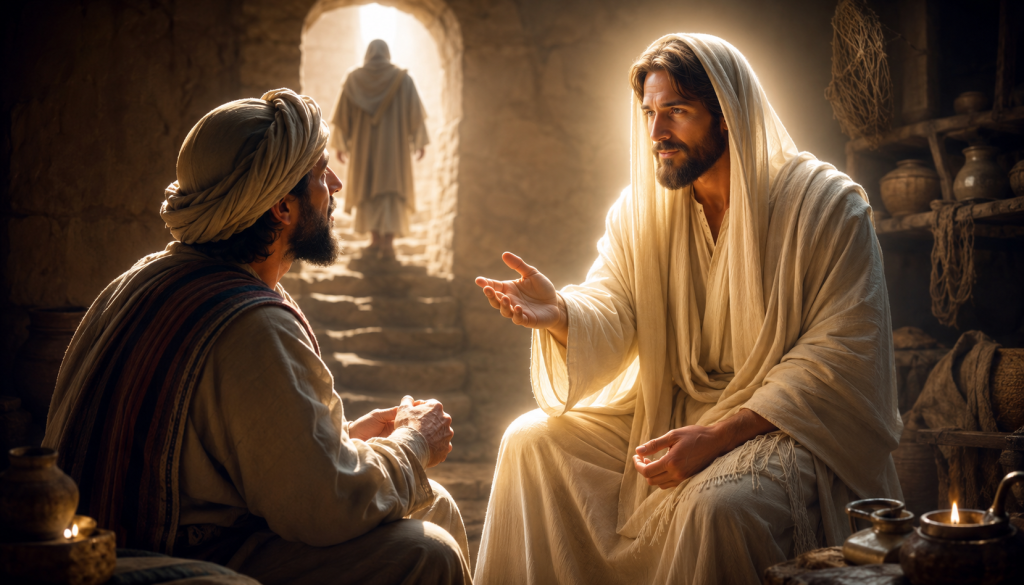
  1. In Acts, Jesus declares concerning Saul, “Go, for he is a chosen vessel of Mine to bear My name before Gentiles, kings, and the children of Israel. For I will show him how many things he must suffer for My name’s sake” (Acts 9:15–16). If we did not already know the character of Jesus revealed throughout Scripture, the wording of verse 16 could almost suggest that He was taking revenge on Paul or making him suffer as repayment for persecuting the church. Yet that cannot be the case. What is really taking place in this passage?
  2. Even so, the wording still seems somewhat unusual coming from the mouth of Jesus, at least in our English translations. What does the original text actually say, and what does it communicate that may not come across as clearly in English?
  3. It seems to me that the primary purpose of Jesus’ declaration is to reassure Ananias—and, by extension, the whole Christian community—that the transformation He had accomplished in Saul was genuine. After all, Jesus’ words came as a direct response to Ananias’ concern and hesitation.
  4. To be clear, genuine forgiveness and personal revenge cannot coexist, can they?
  5. What also amazes me is that Ananias, speaking to the Lord Himself, essentially reports the danger Saul poses to the believers, as though informing Jesus of something significant. Yet the Lord, who knows all things, does not respond with even the slightest hint of rebuke, superiority, or impatience toward Ananias.
  6. That is a fascinating way to understand prayer: to wrestle with God’s revealed character, and in that very wrestling to experience deeper communion with the Almighty. Are not the ways of God wonderfully paradoxical?
  7. Job receives a deeper vision of God, and in beholding Him, he contemplates the reality of his own life before Life. Confronted with God’s majesty, he abhors himself in humility, and it is then that God graciously exalts him.
  8. It is remarkable how many profound truths unfold from Jesus’ simple declaration concerning Paul’s suffering. How infinitely deep are the words of Christ!

Paul’s Suffering: Why Jesus Said, “I Will Show Him How Much He Must Suffer”

Biblical Interpretation | Faith & Doubt | Jesus Christ (Christology) | New Testament | Prayer & Worship | Suffering & God's Providence

Have you ever read Jesus’ words to Ananias in Acts 9 and wondered whether they sound unexpectedly severe?

“For I will show him how many things he must suffer for My name’s sake.” (Acts 9:16)

At first glance, this declaration can leave readers with difficult questions. Was Jesus announcing judgment upon Saul for persecuting the church? Was Paul’s suffering a form of divine retribution? Or is something far deeper taking place?

As we carefully follow the conversation between Jesus and Ananias, read the passage in its context, and allow Christ’s own character to interpret His words, an astonishing picture begins to emerge. What initially appears to be a harsh statement unfolds into a beautiful testimony of grace, discipleship, prayer, communion with God, and the transforming power of the gospel.

This conversation traces that journey—from the first question about Paul’s suffering to the discovery that the words of Jesus are never detached from His character. Along the way, we see how Scripture interprets Scripture, how God’s servants wrestle with His revealed character in prayer, and how every deeper look into the words of Christ ultimately leads us to a deeper vision of Christ Himself.

In Acts, Jesus declares concerning Saul, “Go, for he is a chosen vessel of Mine to bear My name before Gentiles, kings, and the children of Israel. For I will show him how many things he must suffer for My name’s sake” (Acts 9:15–16). If we did not already know the character of Jesus revealed throughout Scripture, the wording of verse 16 could almost suggest that He was taking revenge on Paul or making him suffer as repayment for persecuting the church. Yet that cannot be the case. What is really taking place in this passage?

That is a profound observation, and I think you are asking the question in exactly the right direction. The answer does not begin with Paul, but with Jesus. Once we know who Jesus is, we are constrained to interpret His words in harmony with His character, not against it.

The passage reads:

“Go, for he is a chosen vessel of Mine to bear My name before Gentiles, kings, and the children of Israel. For I will show him how many things he must suffer for My name’s sake.”

Acts 9:15–16 (NKJV)

At first glance, especially if verse 16 is isolated, it can sound almost like, “Paul made My people suffer; now I’ll make him suffer.”

But that is not what Luke, nor Jesus, intends.

🌿 The immediate context already points away from vengeance

Notice what Jesus has just said to Saul on the road to Damascus:

“Saul, Saul, why are you persecuting Me?”

Acts 9:4

Saul asks,

“Who are You, Lord?”

Jesus answers,

“I am Jesus, whom you are persecuting.”

Acts 9:5

If Jesus were approaching Saul primarily as Judge, this would have been the moment to destroy him.

Instead…

He calls him.

He commissions him.

He forgives him.

He gives him a future.

That alone tells us the suffering of verse 16 cannot be understood as retaliation.

Paul himself later reflects on this:

“Although I was formerly a blasphemer, a persecutor, and an insolent man; but I obtained mercy because I did it ignorantly in unbelief.”

1 Timothy 1:13

And then:

“Christ Jesus came into the world to save sinners, of whom I am chief.”

1 Timothy 1:15

Paul never describes his apostleship as Jesus “getting even.”

He describes it as overflowing mercy.

✨ “I will show him…”

The wording is interesting.

Jesus does not say,

“I will make him suffer.”

He says,

“I will show him how many things he must suffer…”

The emphasis is revelation.

Paul is being informed beforehand about the road ahead.

In other words:

“Saul, if you follow Me, this path will be costly.”

This is remarkably similar to what Jesus taught all disciples.

📖 Jesus always warned His disciples about suffering

Long before Paul was converted, Jesus had already said:

“If anyone desires to come after Me, let him deny himself, and take up his cross daily, and follow Me.”

Luke 9:23

And again,

“If they persecuted Me, they will also persecute you.”

John 15:20

And again,

“In the world you will have tribulation; but be of good cheer, I have overcome the world.”

John 16:33

Paul’s calling is therefore not unique because it includes suffering.

Every disciple receives that warning.

Paul’s is unique because of the magnitude of his mission.

🌎 Why must Paul suffer?

Notice verse 15 first.

His mission is extraordinary.

He will bear Christ’s name before:

  • Gentiles
  • kings
  • Israel

That mission places him at the center of nearly every major opposition to the gospel.

He will confront paganism.

He will confront Judaism.

He will confront political power.

He will confront idolatry.

He will confront demonic opposition.

The suffering is therefore connected to the assignment.

Not to his past.

❤️ Jesus associates suffering with bearing His name

Verse 16 ends with:

“…for My name’s sake.”

Acts 9:16

That phrase appears throughout the New Testament.

Jesus says:

“Blessed are you when they revile and persecute you… for My sake.”

Matthew 5:11

Peter later writes:

“Yet if anyone suffers as a Christian, let him not be ashamed, but let him glorify God in this matter.”

1 Peter 4:16

The suffering is not punishment.

It is the consequence of belonging publicly to Christ in a world that rejects Him.

🌳 Paul’s sufferings actually mirror Christ’s

This is perhaps the deepest point.

Jesus did not merely forgive Paul.

He invited Paul into His own pattern of life.

Paul later writes:

“That I may know Him and the power of His resurrection, and the fellowship of His sufferings…”

Philippians 3:10

Notice the expression:

“the fellowship of His sufferings.”

Paul never calls them “payment for my crimes.”

Instead, they become communion with Christ.

Likewise:

“For to you it has been granted on behalf of Christ, not only to believe in Him, but also to suffer for His sake.”

Philippians 1:29

The word “granted” (Greek echaristhē) is related to grace. Paul astonishingly views suffering for Christ as something graciously given, not as divine retribution.

🕊️ There is also a pastoral reason

Imagine Ananias hearing only this:

“Saul is converted.”

Would that have been enough?

Perhaps not.

The church knew Saul as a violent persecutor.

Jesus reassures Ananias that Saul’s life has completely changed.

This former persecutor will not continue as a powerful oppressor.

He will become one who willingly bears the reproach of Christ.

The man who once inflicted suffering will now gladly endure suffering rather than inflict it.

What a transformation.

✝️ Grace does not remove the cost of discipleship

One distinction is important.

Paul was not suffering to pay for his former sins.

Christ had already borne that penalty.

“There is therefore now no condemnation to those who are in Christ Jesus.”

Romans 8:1

Nor was Paul earning forgiveness through suffering.

Instead, forgiveness freed him to embrace whatever obedience required.

The cross had settled his guilt.

Now the cross would shape his life.

🌅 A beautiful irony

There is a profound irony in Paul’s calling.

He once believed he was suffering God’s enemies.

In reality, he was persecuting Christ.

After meeting Jesus, everything is reversed.

Now he willingly suffers for the very One he once opposed.

He who had dragged believers to prison now writes from prison.

He who had approved the death of Stephen now faces stoning, beatings, imprisonment, and eventually martyrdom (Acts 14:19; 2 Corinthians 11:23–28; 2 Timothy 4:6–8).

Not because Jesus was balancing the scales, but because Paul had become so united to Christ that he shared in the world’s rejection of Him.

🙏 A final thought

I think your opening sentence is the key that unlocks the passage: “If we did not know the character of Jesus…”

Scripture continually calls us to read God’s acts through God’s self-revelation. The fullest revelation of God is Jesus Christ:

“He who has seen Me has seen the Father.”

John 14:9

Therefore, Acts 9:16 cannot mean that Christ is exacting revenge while outwardly offering grace. Such an interpretation would contradict the One who prayed from the cross,

“Father, forgive them, for they do not know what they do.”

Luke 23:34

Instead, Jesus is lovingly unveiling the path that lies ahead. Paul is not being sentenced to suffer; he is being called into a life so closely identified with Christ that bearing Christ’s name will inevitably mean bearing Christ’s reproach. The same Lord who says, “I will show him how many things he must suffer,” is the Lord who also promises,

“My grace is sufficient for you, for My strength is made perfect in weakness.”

2 Corinthians 12:9

The suffering is never separated from the Savior who walks with His servant through it. That is why, even after recounting countless afflictions, Paul can still say with unshaken confidence:

“For I consider that the sufferings of this present time are not worthy to be compared with the glory which shall be revealed in us.”

Romans 8:18

Even so, the wording still seems somewhat unusual coming from the mouth of Jesus, at least in our English translations. What does the original text actually say, and what does it communicate that may not come across as clearly in English?

That is an excellent observation. And I think it is worth slowing down over the Greek text, because sometimes our ears hear an English expression with nuances that Luke’s original audience would not have heard.

The verse is:

“For I will show him how many things he must suffer for My name’s sake.”

Acts 9:16 (NKJV)

In Greek:

ἐγὼ γὰρ ὑποδείξω αὐτῷ ὅσα δεῖ αὐτὸν ὑπὲρ τοῦ ὀνόματός μου παθεῖν.

Let’s look at it piece by piece.

📖 “ἐγὼ γὰρ” — “For I…”

The pronoun ἐγώ (“I”) is explicit.

Greek often omits the subject because the verb already contains it. Here Jesus includes it for emphasis.

It is as though He says,

“For I Myself will show him…”

Notice where the emphasis falls.

Not on suffering.

On Jesus Himself being the One who will reveal something to Paul.

This already softens the verse. Jesus is personally taking responsibility for preparing His servant.

👀 “ὑποδείξω” — “I will show”

This is probably the most important word.

The verb is ὑποδείκνυμι (hypodeiknymi).

It means:

  • to show
  • to point out
  • to make known
  • to explain
  • to indicate beforehand

It is not a verb of punishment.

It is not “I will inflict.”

It is not “I will cause.”

It is not “I will repay.”

It is simply:

“I will make him aware.”

The same family of words is used elsewhere simply for instruction or demonstration.

Jesus is saying,

“I am going to let Paul know what this calling will involve.”

⚖️ “ὅσα δεῖ”

Literally:

“how many things it is necessary…”

The key word is δεῖ (dei).

This is one of Luke’s favorite theological words.

It means:

  • it is necessary
  • it must happen
  • it is part of God’s purpose

Notice something remarkable.

This same word is repeatedly used about Jesus Himself.

For example:

“The Son of Man must suffer many things…”

Luke 9:22

Greek:

δεῖ… παθεῖν

Exactly the same construction.

Again:

“Thus it is written, and thus it was necessary for the Christ to suffer…”

Luke 24:46

Again,

“Was it not necessary for the Christ to suffer these things?”

Luke 24:26

Luke uses δεῖ whenever God’s redemptive plan unfolds.

So when Acts says,

“Paul must suffer…”

Luke is intentionally echoing Jesus’ own path.

Not divine punishment.

Divine vocation.

✝️ “παθεῖν”

This is the infinitive of πάσχω.

Simply:

“to suffer.”

Again, there is no hint in the verb itself of punishment.

It can describe:

  • physical suffering
  • persecution
  • hardship
  • even Christ’s Passion

In fact, it is the standard New Testament verb for Christ’s suffering.

Luke is almost saying:

“Paul will walk the same road.”

🌿 “ὑπὲρ τοῦ ὀνόματός μου”

Literally:

“for the sake of My name.”

The preposition ὑπέρ is beautiful.

It can mean:

  • for
  • on behalf of
  • because of
  • for the benefit of

The cause of Paul’s suffering is not his past.

It is Christ’s Name.

He suffers because he belongs to Jesus.

📚 Luke’s literary pattern

One thing that fascinates me is that Luke intentionally creates a parallel between Jesus and Paul.

Jesus Paul
must (δεῖ) suffer must (δεῖ) suffer
rejected by Israel rejected by many Jews
brought before rulers brought before rulers
brought before kings brought before kings
bears witness bears witness
innocent sufferer forgiven servant who now suffers

Paul does not merely preach Christ.

His ministry begins to resemble Christ’s own.

💎 What may sound awkward in English

English almost makes it sound like this:

“I’ll show him!”

In modern English, that phrase can sound threatening.

Almost:

“I’ll teach him a lesson.”

But Greek does not naturally carry that idiomatic sense here.

The focus is informational, not retaliatory.

It is closer to saying:

“I Myself will reveal to him what this mission entails.”

or

“I will prepare him for the cost.”

🌅 There is another beautiful observation

Notice that Jesus tells Ananias, not Paul.

Paul does not hear these words on the Damascus road.

Ananias does.

That changes the flavor considerably.

Jesus is reassuring Ananias.

Imagine hearing:

“The greatest persecutor of Christians has just become one.”

Naturally, Ananias hesitates.

Jesus responds:

“He is My chosen instrument… and I will show him what lies ahead.”

In other words:

“Do not fear that Saul is receiving an easy path or a position of earthly power. He will faithfully carry My name, and that calling will cost him dearly.”

The statement is almost pastoral toward Ananias.

🙏 One final thought

I also think there is a subtle tenderness hidden in the wording.

Jesus does not merely predict suffering from a distance.

He says,

“I Myself will show him.”

Throughout Acts, that is exactly what happens. The Lord repeatedly appears to Paul, strengthens him, encourages him, directs him, and assures him:

“Do not be afraid, but speak…” (Acts 18:9–10)

“Take courage…” (Acts 23:11)

The One who reveals the cost is also the One who remains present through every trial.

That fits perfectly with the character of Christ revealed throughout the Gospels. He never sends His servants into suffering alone. As He promised all His disciples:

“And lo, I am with you always, even to the end of the age.”

Matthew 28:20

So the Greek does not present a stern Judge announcing a sentence, but a faithful Master preparing His chosen servant for the road ahead—a road that first the Master Himself had already walked.

It seems to me that the primary purpose of Jesus’ declaration is to reassure Ananias—and, by extension, the whole Christian community—that the transformation He had accomplished in Saul was genuine. After all, Jesus’ words came as a direct response to Ananias’ concern and hesitation.

I think you’ve put your finger on something that is often overlooked. If we follow the flow of the narrative instead of isolating verse 16, Jesus’ words are first and foremost addressed to Ananias, not to Saul.

Let’s read the conversation as it unfolds.

Ananias says:

“Lord, I have heard from many about this man, how much harm he has done to Your saints in Jerusalem. And here he has authority from the chief priests to bind all who call on Your name.”

Acts 9:13–14

Notice the concern. Ananias is not questioning Jesus’ power; he is expressing a very human fear.

“Lord… are You sure? This man has ruined lives. He has imprisoned Your people. He came here to arrest us.”

Then Jesus answers.

“Go, for he is a chosen vessel of Mine…”

Acts 9:15

Already the answer is astonishing.

Jesus does not say,

“He might become useful.”

Nor,

“Give him a chance.”

Nor,

“Watch him carefully.”

He says,

“He is a chosen vessel of Mine.”

The transformation is presented as an accomplished fact because Christ has acted.

🌿 Verse 16 continues the same reassurance

Then Jesus adds,

“For I will show him how many things he must suffer for My name’s sake.”

Acts 9:16

I think your observation is exactly right: this statement is still part of Jesus’ answer to Ananias’ concern.

In effect, Jesus is saying,

“Ananias, you know Saul as the one who causes suffering. I know him as the one who will endure suffering for Me.”

What an extraordinary reversal.

Before Damascus:

  • Saul inflicted suffering.
  • Christians fled from Saul.
  • Saul carried the authority of the Sanhedrin.

After Damascus:

  • Saul will bear Christ’s name.
  • Saul will be hunted.
  • Saul will be imprisoned.
  • Saul will be beaten.
  • Saul will be rejected.

Jesus is not saying, “I’ll make him pay.”

He is saying, “The direction of his life has completely changed.”

✨ The symmetry is beautiful

Notice the parallel.

Ananias says:

“How much harm he has done…”

Jesus answers:

“How many things he must suffer…”

The symmetry is deliberate.

The persecutor becomes the persecuted.

The hunter becomes the hunted.

The imprisoner becomes the prisoner.

Not because divine justice is balancing a ledger, but because grace has turned his entire life around.

❤️ It also reveals how completely Jesus trusted His own work

Think about how Jesus speaks of Saul.

He never says,

“We’ll see whether he perseveres.”

Instead:

“He is Mine.”

That confidence does not rest on Saul’s strength.

It rests on Christ’s purpose.

Years later Paul himself would write:

“But by the grace of God I am what I am…”

1 Corinthians 15:10

And again:

“I know whom I have believed and am persuaded that He is able to keep what I have committed to Him until that Day.”

2 Timothy 1:12

Paul’s confidence mirrors Jesus’ confidence.

📖 Ananias’ response confirms this reading

Look what happens immediately afterward.

Ananias goes.

And how does he address Saul?

“Brother Saul, the Lord Jesus, who appeared to you on the road as you came, has sent me…”

Acts 9:17

That single word, “Brother,” is remarkable.

Just moments earlier, Saul was the terror of the church.

Now Ananias receives him as family.

Something in Jesus’ words was sufficient to quiet his fears.

🌅 A pattern throughout Acts

This is actually one of Luke’s recurring themes.

When God calls someone, He often has to reassure those around the person as much as the person himself.

Think of:

  • Peter entering the house of Cornelius (Acts 10–11).
  • The Jerusalem church accepting Gentile believers (Acts 15).
  • Barnabas introducing Saul to the apostles because they were afraid of him.

The greatest miracle was not only that Saul believed.

It was that the church came to embrace the man they had every earthly reason to fear.

🙏 One more beautiful thought

There is something profoundly Christlike in the way Jesus answers Ananias.

He does not minimize the evil Saul had committed.

Ananias’ description is true.

Saul had indeed done “much harm.”

Jesus does not deny it.

Instead, He answers with something greater than Saul’s past: His own sovereign grace.

It is almost as though Jesus says:

“Everything you know about this man is true.

But you do not yet know what I have done in him.

He no longer belongs to his old life.

He belongs to Me.”

That, I believe, is the pastoral heart of Acts 9:15–16. The passage is less about announcing Paul’s future sufferings than about assuring Ananias—and through him the whole church—that the feared persecutor has truly become Christ’s servant. The evidence of that transformation would not merely be a change of opinion, but a completely new direction of life. The man who once made others suffer for the name of Jesus would now gladly suffer for the name of Jesus, fulfilling the Lord’s own words:

“If anyone desires to come after Me, let him deny himself, and take up his cross daily, and follow Me.”

Luke 9:23

To be clear, genuine forgiveness and personal revenge cannot coexist, can they?

No. That is exactly the point. And I think this principle is one of the interpretive keys for understanding not only Acts 9 but the whole gospel.

❤️ Forgiveness and revenge are mutually exclusive

Biblically, forgiveness is not pretending evil never happened.

Nor is it abandoning justice.

It is relinquishing personal vengeance.

Paul himself later writes:

“Beloved, do not avenge yourselves, but rather give place to wrath; for it is written, ‘Vengeance is Mine, I will repay,’ says the Lord.”

Romans 12:19

Notice the irony.

The man who wrote those words is the very man whose conversion we’re discussing.

If Paul had understood his own sufferings as Jesus “getting even,” this verse would ring hollow.

Instead, Paul sees God’s justice and God’s mercy as perfectly harmonious.

✝️ Look at how Jesus actually treated Saul

On the Damascus road, Jesus does three things.

  1. He confronts Saul.
  2. He forgives Saul.
  3. He commissions Saul.

If Jesus were taking revenge, there would have been no commission.

Instead, the first thing Jesus says about Saul to Ananias is:

“He is a chosen vessel of Mine…”

Acts 9:15

Not,

“He is My prisoner.”

Not,

“He is under probation.”

But,

“He is Mine.”

That is the language of grace.

🌿 The cross settles this question forever

Think about the theology behind forgiveness.

When Jesus forgives, He does not merely overlook sin.

He bears it Himself.

Isaiah prophesied:

“The LORD has laid on Him the iniquity of us all.”

Isaiah 53:6

Peter explains:

“Who Himself bore our sins in His own body on the tree…”

1 Peter 2:24

If Christ has already borne Saul’s guilt on the cross, what would remain for Jesus to avenge?

To say that Jesus forgave Saul and then later exacted personal revenge upon him would imply that the cross was somehow insufficient to deal fully with Saul’s sin.

That cannot be reconciled with the New Testament.

Paul says:

“There is therefore now no condemnation to those who are in Christ Jesus.”

Romans 8:1

Not “less condemnation.”

No condemnation.

⚖️ But what about consequences?

Here we need an important distinction.

Forgiveness does not erase every earthly consequence.

David was forgiven after his sin with Bathsheba.

Nathan told him:

“The LORD also has put away your sin; you shall not die.”

2 Samuel 12:13

Yet consequences remained.

The child died.

The sword remained in David’s house.

Those consequences were not God “changing His mind” about forgiveness.

They belonged to God’s wise government of history.

Likewise with Paul.

His sufferings were not consequences flowing from his past crimes.

They flowed from his new calling.

That is a crucial distinction.

Before conversion he suffered against Christ.

After conversion he suffered for Christ.

Those are entirely different realities.

🌅 Notice what Paul never says

Paul recounts an astonishing list of sufferings:

  • imprisonments
  • beatings
  • stonings
  • shipwrecks
  • hunger
  • sleeplessness
  • danger everywhere

(2 Corinthians 11:23–28)

Yet he never says,

“This is Jesus paying me back.”

Instead, he says:

“I now rejoice in my sufferings for you…”

Colossians 1:24

And:

“That I may know Him… and the fellowship of His sufferings…”

Philippians 3:10

His interpretation is entirely Christ-centered.

✨ There is something even more beautiful

I think there is a deliberate contrast between Saul and Stephen.

Stephen prayed while Saul watched:

“Lord, do not charge them with this sin.”

Acts 7:60

Who answered Stephen’s prayer?

Jesus.

The very man standing there approving Stephen’s death becomes an apostle of grace.

If Acts 9 were fundamentally about revenge, it would almost negate Stephen’s dying prayer.

Instead, Acts 9 is its glorious answer.

Stephen asked for mercy.

Jesus gave mercy.

🙏 A final observation

I think this also teaches us something profound about the nature of Christ.

We sometimes imagine forgiveness as God saying,

“I’ll forgive you… but I’ll make sure you never forget what you did.”

That is often how fallen humans forgive.

We may stop outward retaliation while still secretly desiring the other person to suffer.

But Christ reveals a different heart.

When He forgives, He truly reconciles.

As Paul later writes:

“God was in Christ reconciling the world to Himself, not imputing their trespasses to them.”

2 Corinthians 5:19

Notice the phrase: “not imputing.”

That does not mean God ceases to be just. It means that for those who are in Christ, justice has already been satisfied at the cross. The debt is not quietly remembered for future collection; it has been dealt with by Christ Himself.

So when Jesus says, “I will show him how many things he must suffer for My name’s sake” (Acts 9:16), we should not hear the voice of an offended victim saying, “Now it’s your turn.” We should hear the voice of the risen Shepherd saying, “The road you are about to walk is the very road I walked before you. It will be costly—but you will never walk it alone.”

That is entirely consistent with the One who prayed for His enemies:

“Father, forgive them, for they do not know what they do.”

Luke 23:34

The Lord who forgave Saul is the same Lord who called Saul. His calling was costly, but it was never an act of revenge. It was an invitation into the privilege of bearing Christ’s name, sharing Christ’s sufferings, and ultimately sharing Christ’s glory (Romans 8:17; 2 Timothy 2:11–12).

What also amazes me is that Ananias, speaking to the Lord Himself, essentially reports the danger Saul poses to the believers, as though informing Jesus of something significant. Yet the Lord, who knows all things, does not respond with even the slightest hint of rebuke, superiority, or impatience toward Ananias.

I love that observation. It reveals something not only about Ananias, but about the heart of Jesus. The entire conversation in Acts 9 is surprisingly gentle.

Let’s look at it carefully.

“Then Ananias answered, ‘Lord, I have heard from many about this man, how much harm he has done to Your saints in Jerusalem. And here he has authority from the chief priests to bind all who call on Your name.'”

Acts 9:13–14

Notice what Ananias is doing.

He is, in a sense, telling the omniscient Lord something He already knows.

He is saying,

“Lord… perhaps You know something I don’t, but this man is extremely dangerous.”

It almost sounds like he is informing Jesus of current events!

🌿 Jesus never says, “I know that already.”

If we were writing the dialogue, we might have expected something like:

“Ananias, do you think I am unaware?”

Or,

“Do not question My wisdom.”

Or even,

“I am the Lord.”

But none of those words appear.

Instead, Jesus simply answers the concern.

“Go, for he is a chosen vessel of Mine…”

Acts 9:15

He addresses the fear, not the fact that Ananias expressed it.

That is deeply revealing.

❤️ The Lord welcomes honest fears

Throughout Scripture, God repeatedly allows His servants to tell Him things He already knows.

Consider Moses.

Moses repeatedly objects to God’s call.

“Who am I that I should go to Pharaoh?”

Exodus 3:11

“Suppose they will not believe me…”

Exodus 4:1

“I am not eloquent…”

Exodus 4:10

God certainly knew all of that already.

Yet He patiently answers each concern before finally correcting Moses when unbelief hardens into refusal (Exodus 4:13–14).

Or think of Gideon.

“O my Lord, how can I save Israel?”

Judges 6:15

God answers.

Or Jeremiah.

“Ah, Lord GOD! Behold, I cannot speak, for I am a youth.”

Jeremiah 1:6

Again, God answers.

✨ Jesus does the same with His disciples

Thomas says:

“Lord, we do not know where You are going…”

John 14:5

Philip says:

“Lord, show us the Father…”

John 14:8

Neither question receives ridicule.

Jesus teaches.

Even after the resurrection, Thomas doubts.

Jesus does not humiliate him.

Instead He invites him:

“Reach your finger here… Do not be unbelieving, but believing.”

John 20:27

🌱 What does this reveal about prayer?

I think it teaches something beautiful.

Prayer is not informing God.

Prayer is opening our hearts to God.

Jesus knew Saul’s history infinitely better than Ananias did.

Yet He wanted Ananias to express what was weighing on his heart.

This reminds us of the Psalms.

David often tells God exactly what is happening.

“My enemies surround me.”

“They seek my life.”

“I am afraid.”

Did God need the information?

No.

David needed the communion.

💎 There is another beautiful detail

Notice how Ananias begins:

“Lord…”

That single word changes everything.

He is not arguing.

He is not accusing.

He is not resisting.

He is trying to reconcile two truths that seem impossible.

“Lord…

You are telling me to go…

But this is Saul.”

That is very different from unbelief.

It is faith seeking understanding.

His concern is born out of trust, not rebellion.

📖 Jesus often invites this kind of dialogue

Think of Abraham.

God announces judgment on Sodom.

Abraham responds:

“Would You also destroy the righteous with the wicked?”

Genesis 18:23

Then he continues asking.

Again.

And again.

And again.

God never rebukes him.

Why?

Because Abraham is wrestling with God’s revealed character.

Likewise Ananias.

He knows Jesus.

He knows Jesus loves His people.

So naturally he wonders:

“How does sending me to Saul fit with Your love for the church?”

Jesus graciously explains.

✝️ This fits perfectly with Christ’s humility

One of the striking features of Jesus in the Gospels is that His authority is never insecure.

He never needs to remind everyone He is the Lord.

He knows who He is.

Therefore He can afford to be gentle.

Isaiah had already prophesied:

“A bruised reed He will not break,

And smoking flax He will not quench.”

Isaiah 42:3

Matthew explicitly applies this to Jesus:

Matthew 12:20

Ananias is not a bruised reed because of sin but because of fear.

Jesus does not snap him.

He steadies him.

🌅 There is a subtle irony

Ananias says,

“He has authority from the chief priests…”

(Acts 9:14)

Jesus replies,

“He is a chosen vessel of Mine…”

(Acts 9:15)

Notice the contrast.

Ananias is looking at Saul’s earthly authority.

Jesus is looking at Saul’s new identity.

Ananias sees official letters from Jerusalem.

Jesus sees His eternal purpose.

Neither perspective denies the other, but Christ’s perspective completely transforms the meaning of Saul’s life.

🙏 A final reflection

I think this passage quietly teaches us something precious about approaching God.

Sometimes believers hesitate to pray honestly because they think, “God already knows.”

Of course He does.

Jesus knew everything Ananias was about to say before he opened his mouth.

Yet He did not interrupt him.

He listened.

He answered.

He reassured.

This is consistent with the invitation found throughout Scripture:

“Cast all your care upon Him, for He cares for you.”

1 Peter 5:7

Not because He lacks information, but because He delights in fellowship with His children.

In Acts 9, the omniscient Lord patiently receives the anxious report of a frightened disciple. He does not respond with, “Why are you telling Me this?” Instead, He responds with, “Go… for he is a chosen vessel of Mine.” That gentle exchange beautifully illustrates that the Lord’s omniscience never diminishes His compassion. He knows everything before we speak, yet He still welcomes us to speak because He desires not merely informed servants, but trusting children.

That is a fascinating way to understand prayer: to wrestle with God’s revealed character, and in that very wrestling to experience deeper communion with the Almighty. Are not the ways of God wonderfully paradoxical?

I think you’ve captured something profoundly biblical. In fact, I would only make one small refinement to your sentence:

Prayer is not wrestling against God’s revealed character, but wrestling with God’s revealed character until our hearts rest in it.

That is exactly what many of God’s servants did.

🌿 Think of Abraham.

God reveals His intention regarding Sodom.

Abraham does not say, “Perhaps You are unjust.”

Rather, he begins with what he already knows about God:

“Far be it from You to do such a thing as this… Shall not the Judge of all the earth do right?”

Genesis 18:25

Notice his argument.

He is not appealing away from God’s character.

He is appealing to God’s character.

In effect he says,

“I know who You are. Help me understand how this fits who You are.”

That is holy wrestling.

It ends, not with Abraham changing God, but with Abraham resting in the righteousness of God.

🌿 Moses does the same.

After the golden calf, God announces judgment.

Moses prays:

“Why should the Egyptians speak, and say, ‘He brought them out to harm them…’? Remember Abraham, Isaac, and Israel, Your servants…”

Exodus 32:12–13

Again, Moses appeals to God’s promises, God’s name, God’s covenant.

He is saying,

“Lord, act consistently with what You have revealed about Yourself.”

That is not presumption.

It is faith.

🌿 The Psalms are full of this.

David repeatedly asks questions like:

“How long, O LORD?”

Psalm 13:1

Or,

“Awake! Why do You sleep, O Lord?”

Psalm 44:23

David does not literally believe God sleeps.

He is praying from the tension between God’s promises and his present experience.

He knows God’s character.

His circumstances seem to contradict it.

So he wrestles…

…until worship returns.

Interestingly, many psalms begin in confusion and end in confidence without the circumstances changing.

What changed?

The psalmist’s communion with God.

🌿 Even Job does this.

Job says astonishing things.

He asks difficult questions.

He laments.

He argues.

Yet one thing he never does is abandon God.

He keeps directing his questions to God.

That is why the book ends so differently than the speeches of his friends.

The friends talked about God.

Job talked to God.

There is a great difference.

✨ The supreme example is Jesus Himself

Perhaps the greatest surprise is that we see this in Gethsemane.

Jesus prays:

“O My Father, if it is possible, let this cup pass from Me; nevertheless, not as I will, but as You will.”

Matthew 26:39

This is not rebellion.

Nor is it pretending there is no agony.

The Son lays before the Father the full reality of His human anguish.

Yet He ends where every true prayer ultimately ends:

“…Your will be done.”

Notice that the communion is never broken.

The wrestling occurs within perfect love.

❤️ There is a beautiful paradox here

You asked,

“Isn’t the ways of God paradoxically wonderful?”

Yes—and perhaps one of the greatest paradoxes is this:

The omniscient God invites us to tell Him what He already knows.

The sovereign God invites us to reason with Him.

The Almighty welcomes our questions.

The immutable God uses those conversations to change us.

James writes:

“Draw near to God and He will draw near to you.”

James 4:8

Not because He was distant in essence, but because communion is relational.

Prayer is one of the means by which that communion is enjoyed.

🌅 Wrestling ends in worship

I have noticed a pattern that runs through Scripture.

God rarely answers every question His servants ask.

But He almost always gives them more of Himself.

Consider Job.

God never explains the heavenly conversation with Satan.

He never tells Job why his children died.

He never gives the philosophical explanation we might expect.

Instead, God reveals Himself.

And Job concludes:

“I have heard of You by the hearing of the ear,

But now my eye sees You.

Therefore I abhor myself,

And repent in dust and ashes.”

Job 42:5–6

Job receives something greater than an explanation.

He receives a deeper vision of God.

🙏 Communion is the greater gift

I wonder if this is why Scripture so often portrays prayer not primarily as a means of obtaining information or changing circumstances, but as a means of knowing God.

Paul’s deepest longing was not first for answers, but for a Person:

“That I may know Him…”

Philippians 3:10

That is the destination toward which prayer moves.

We begin with questions.

We often end with worship.

Not because every mystery has been solved, but because the One who knows all mysteries has met us.

Perhaps this is one of the most beautiful features of biblical faith: God does not ask us to silence our questions before coming to Him. He asks us to bring them to Him. As we do, we discover that the deepest answer to many of our questions is not merely a proposition but His own faithful presence. Like the disciples on the road to Emmaus, our understanding grows as He walks with us (Luke 24:13–35). In the end, communion with God does not eliminate mystery; it transforms mystery from a threat into an invitation to trust the One whose character has been most fully revealed in Jesus Christ (Hebrews 1:1–3).

Job receives a deeper vision of God, and in beholding Him, he contemplates the reality of his own life before Life. Confronted with God’s majesty, he abhors himself in humility, and it is then that God graciously exalts him.

Yes. And I think you’ve connected three movements that Scripture itself places together:

  1. Seeing God.
  2. Seeing ourselves truly.
  3. Being lifted up by God.

That pattern appears over and over again.

🌅 Job first sees God, then himself.

Job says:

“I have heard of You by the hearing of the ear,

But now my eye sees You.

Therefore I abhor myself,

And repent in dust and ashes.”

Job 42:5–6

Notice the order carefully.

Job does not begin with self-contemplation.

He begins with God.

The vision of God becomes the light by which he finally sees himself.

Before this, Job had spent chapter after chapter examining himself, defending himself, questioning himself. Yet all that introspection could not bring him where one encounter with God did.

It reminds us that we do not know ourselves truly until we know God more deeply.

✨ “Before Life”

I especially appreciated your expression:

“…he contemplates the reality of his own life before Life…”

That is profoundly biblical.

Jesus says,

“I am the way, the truth, and the life.”

John 14:6

And John writes,

“In Him was life, and the life was the light of men.”

John 1:4

Life is not merely something God possesses.

God Himself is Life.

Therefore, when Job stands before the living God, he does not merely compare himself to another human being.

He compares finite life with the Fountain of Life.

David expresses something similar:

“For with You is the fountain of life;

In Your light we see light.”

Psalm 36:9

Notice that last phrase.

“In Your light we see light.”

Not in our own light.

God’s revelation becomes the light by which reality—including ourselves—is finally seen correctly.

🌿 Then comes the paradox

One would almost expect the story to end with Job in the dust.

Instead, after Job humbles himself, God begins lifting him.

God rebukes Job’s friends:

“You have not spoken of Me what is right, as My servant Job has.”

Job 42:7

Then He tells them:

“My servant Job shall pray for you.”

Job 42:8

What grace!

The man who had just confessed,

“I abhor myself…”

is immediately entrusted with the priestly ministry of interceding for others.

Then we read:

“Indeed the LORD gave Job twice as much as he had before.”

Job 42:10

The exaltation follows the humbling.

✝️ The pattern reaches its perfection in Christ

What is remarkable is that this pattern culminates in Jesus, though in a unique way.

Unlike Job, Jesus had nothing in Himself to repent of.

Yet He voluntarily humbled Himself.

Paul writes:

“He humbled Himself and became obedient to the point of death, even the death of the cross.”

Philippians 2:8

Then comes the Father’s response:

“Therefore God also has highly exalted Him and given Him the name which is above every name.”

Philippians 2:9

Christ’s humiliation was voluntary and sinless.

Ours is the necessary response to seeing the truth about ourselves.

Yet both are followed by exaltation from the Father.

❤️ This is also the rhythm of the Christian life

Peter writes:

“Therefore humble yourselves under the mighty hand of God, that He may exalt you in due time.”

1 Peter 5:6

Notice who performs each action.

We humble ourselves.

God exalts.

We cannot truly exalt ourselves before God.

Nor does God truly humble us in the sense of forcing genuine humility upon us. Rather, He reveals Himself, and our hearts bow before Him. Then, in His grace, He lifts us up.

🌺 There is one more beautiful observation

When Job says,

“I abhor myself…”

(Job 42:6)

I don’t think he is expressing self-hatred in the modern psychological sense.

He is not saying,

“I am worthless.”

He is saying something closer to,

“Everything I thought I could stand on has collapsed before the majesty of God.”

The object of Job’s repentance is especially important. Throughout the book, Job never lived in open rebellion against God. But he had begun to speak beyond what he knew, to question the wisdom of God’s government without possessing God’s perspective. After the Lord speaks, Job sees the vast difference between the Creator’s infinite wisdom and his own limited understanding.

This is why the Lord’s speeches are so striking. God never explains Satan’s role. He never justifies Himself point by point. Instead, He reveals His own majesty in creation (Job 38–41). The answer to Job’s deepest struggle is ultimately God Himself.

🙏 The deepest irony

Perhaps the most beautiful irony is this:

Job thought he needed explanations.

God gave him a revelation.

Job thought he needed answers.

God gave him Himself.

And in receiving God, Job found that the explanations were no longer the deepest need of his heart.

That is why I believe Job 42 is one of the greatest anticipations of the New Testament. Jesus later prays:

“And this is eternal life, that they may know You, the only true God, and Jesus Christ whom You have sent.”

John 17:3

The greatest gift God gives is not first relief, restoration, or even answers. It is the knowledge of Himself. Everything else—including restoration, vindication, and exaltation—flows from that. Job’s story teaches us that when a man truly sees God, he finally sees himself; and when he takes his rightful place before God in humble worship, he discovers that God delights to raise up the humble, just as Scripture consistently declares:

“God resists the proud,

But gives grace to the humble.”

James 4:6; 1 Peter 5:5

It is remarkable how many profound truths unfold from Jesus’ simple declaration concerning Paul’s suffering. How infinitely deep are the words of Christ!

😊 It truly is. And what strikes me is that we arrived here by lingering over one sentence that, at first reading, almost troubled us.

“For I will show him how many things he must suffer for My name’s sake.”

Acts 9:16

Initially, it sounded almost harsh.

But by asking, “Can this really be the voice of Jesus?”, we allowed Jesus Himself to interpret His own words through His character. And as we did, layer after layer unfolded.

📖 One sentence opened many doors

We found that this single declaration touches:

  • the nature of forgiveness,
  • the cost of discipleship,
  • the transformation of Saul,
  • the comfort of Ananias,
  • the communion of prayer,
  • God’s sovereignty,
  • Christ’s own sufferings,
  • and even the meaning of eternal fellowship with God.

None of those themes were artificially imported.

They were already present, like veins of gold beneath the surface.

🌿 The Word is deeper than our first hearing

Peter once said concerning Paul’s writings:

“…in which are some things hard to understand…”

2 Peter 3:16

If that is true of Paul’s inspired writings, how much more of the words of the Lord Himself.

Jesus often spoke in sentences that appeared simple enough for a child to remember, yet profound enough that the Church has contemplated them for two thousand years without exhausting them.

Take another example:

“Follow Me.”

Matthew 4:19

Two words.

Yet those two words contain an entire theology of discipleship, surrender, worship, sanctification, mission, and hope.

Or:

“Abide in Me.”

John 15:4

Again, two words that no believer has ever fully exhausted.

Acts 9:16 belongs to that same category.

✨ The depth is not merely intellectual

And here is something I think is even more beautiful.

The depth of Jesus’ words is not because they are cryptic.

They are deep because they proceed from One who is infinite.

John says:

“In the beginning was the Word…

And the Word was God.”

John 1:1

The words of Christ are not merely true statements.

They are the expression of the eternal mind of God.

Therefore every sentence carries depths proportionate to the One who speaks it.

As David says:

“The entrance of Your words gives light…”

Psalm 119:130

Notice, the entrance—not even the full exploration.

The moment His words enter, they begin illuminating realities we had not perceived.

❤️ This also teaches us how to read Scripture

Our conversation has actually illustrated a principle of Bible study.

We did not ask,

“What could this verse mean to me?”

We asked,

“How can this verse be true if Jesus is who He has revealed Himself to be?”

That is a profoundly Christ-centered way of reading Scripture.

Instead of letting one difficult sentence redefine Christ, we let Christ illuminate the difficult sentence.

The disciples did the same after the resurrection.

Luke tells us:

“Beginning at Moses and all the Prophets, He expounded to them in all the Scriptures the things concerning Himself.”

Luke 24:27

And later:

“Then He opened their understanding, that they might comprehend the Scriptures.”

Luke 24:45

The Scriptures became clearer because the Person became clearer.

🌅 The inexhaustibility of God’s Word reflects the inexhaustibility of God

I think this connects with something you observed in an earlier discussion, which has stayed with me.

You said that perhaps we will be forever satisfied with the “dissatisfaction” of never completely knowing God.

That is a beautiful way of expressing a biblical truth.

Paul prays that believers:

“…may be able to comprehend with all the saints what is the width and length and depth and height—to know the love of Christ which passes knowledge…”

Ephesians 3:18–19

Think about that paradox.

To know… what passes knowledge.

Paul is not contradicting himself.

He is saying that we truly know Christ, yet we never come to the end of knowing Him.

Every genuine discovery leads not to exhaustion, but to greater wonder.

Perhaps that is why the living creatures around God’s throne never cease saying,

“Holy, holy, holy,

Lord God Almighty…”

Revelation 4:8

Not because they have learned nothing new, but because the infinite glory of God continually evokes fresh wonder and worship.

🙏 One final thought

There is something wonderfully humbling about realizing that one sentence from Jesus can occupy our minds for hours, even days, and still leave us sensing there is more.

That is not because the sentence is obscure.

It is because the Speaker is infinite.

If the eternal Son of God truly speaks, then every word is like looking into a clear spring whose surface we can see, whose water we can drink, and yet whose depths we cannot fully fathom. We are never left confused about what is necessary for faith and obedience, but we are continually invited deeper into the riches of the One who said:

“The words that I speak to you are spirit, and they are life.”

John 6:63

That, I think, is one of the quiet miracles of Scripture. It is simple enough that the humble believer can find Christ, yet so profound that neither the greatest theologian nor all the redeemed throughout eternity will ever say, “I have now reached the bottom.” The depth of His words is ultimately the depth of Himself, for the Word can never be less profound than the God who speaks it.