Justice | Mercy | Faith

Justice | Mercy | Faith

The Transformative Power of Agape: Why God Chose the Cross Instead of Raw Power

Difficulty Level: Intermediate-Advanced

Jump to Answers

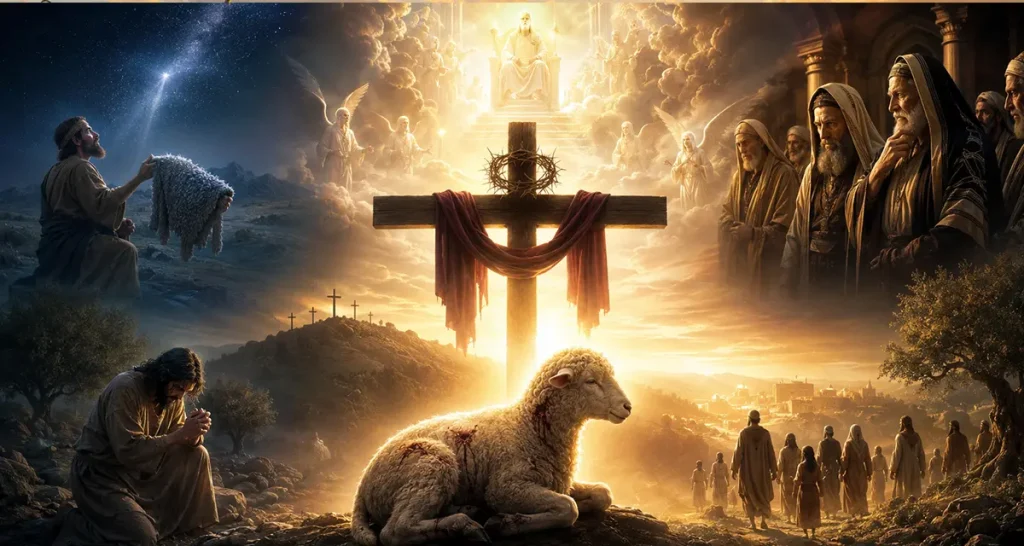
  1. Gideon asked God twice for confirmation through the sign of the dew and the fleece, while Jesus moved toward the Cross in Gethsemane with perfect obedience and without hesitation. This contrast reveals the infirmity of man, who can witness miracles and still struggle to trust and obey the will of God. When does seeking confirmation from the Lord become a faithful inquiry born from weakness and dependence, and when does it cross into testing or tempting God through unbelief and resistance??
  2. Is this similar to the Pharisees continuously demanding signs from Jesus without any real intention of surrendering to the truth standing before them?
  3. If evidence alone is not enough to produce surrender, and if every human being begins with a hardened heart as an enemy of God, then what ultimately makes the difference if man cannot bring himself into surrender by his own power?
  4. Satan knows God more directly and profoundly than any human being, ruling as the prince of this world and over the powers of darkness, and yet he hates his loving Creator without cause. How can a being created in light, standing before pure Light itself, become darkness? Is this not the paradox of paradoxes?
  5. If I knowingly pursue a project that I understand will collapse and bring suffering, then responsibility and care would compel me not to carry it forward. So why would God continue with a creation that would bring such grief, pain, rebellion, and suffering upon both His creation and, astonishingly, upon Himself? Yet at the same time, why would He not?
  6. God is not like man, who plans while hoping for a future outcome. God is YHWH — the One who simply IS. He is, and creation becomes; the Cross becomes; eternity becomes. His will is eternally perfect and accomplished. How then could evil — something parasitic that ultimately “is not” in itself — ever threaten, frustrate, or hamper the eternal will of God?
  7. “Darkness is expelled.” That idea feels cosmically powerful, but even more powerful and humbling is the realization that darkness is not ultimately expelled merely by raw creative omnipotence, but by the Lamb who was slain and now reigns eternally as the light of creation.
  8. If infinite divine power was always fully available, then why was power not used immediately instead of permitting the death of the Beloved Son — the One adored by the Father and worshiped by angels?
  9. There is no greater power than the love that transforms enemies into children who participate eternally in the nature and life of God without becoming gods themselves. What is mere creative power compared to the transformative power of new creation brought forth through agape?

Why would God allow a creation capable of rebellion, suffering, and the death of the Beloved Son instead of simply destroying evil through infinite power? Why did Jesus obey unto death while men like Gideon hesitated even after receiving miraculous confirmation from God? And why do some hearts surrender to divine truth while others, like Satan and the Pharisees, resist overwhelming revelation?

This discussion journeys through some of the deepest mysteries of Scripture: human weakness, hardened hearts, divine sovereignty, the nature of evil, the patience of God, and the eternal purpose of the Cross. From Gideon’s fleece to Gethsemane, from the rebellion of Satan to the enthroned Lamb in Revelation, the conversation explores why evidence alone cannot save and why the transformative power of agape surpasses even the raw creative power that formed the universe.

At the center of everything stands a breathtaking biblical truth: God did not merely use omnipotence to destroy darkness. Instead, He revealed His glory through the Lamb who was slain, transforming enemies into children and bringing forth a new creation through holy love.

Gideon asked God twice for confirmation through the sign of the dew and the fleece, while Jesus moved toward the Cross in Gethsemane with perfect obedience and without hesitation. This contrast reveals the infirmity of man, who can witness miracles and still struggle to trust and obey the will of God. When does seeking confirmation from the Lord become a faithful inquiry born from weakness and dependence, and when does it cross into testing or tempting God through unbelief and resistance??

🌿 Gideon’s Fleece and Gethsemane

That contrast is deeply revealing.

In Book of Judges Gideon asks twice for confirmation through the fleece:

Judges 6:36–37

“So Gideon said to God, ‘If You will save Israel by my hand as You have said— look, I shall put a fleece of wool on the threshing floor; if there is dew on the fleece only, and it is dry on all the ground, then I shall know that You will save Israel by my hand, as You have said.’”

Then again:

Judges 6:39

“Do not be angry with me, but let me speak just once more…”

Meanwhile, in Gospel of Luke and Gospel of Matthew, Jesus in Gethsemane does not ask for proof that the Father’s will is true. He asks whether the cup may pass — yet submits completely:

Luke 22:42

“Father, if it is Your will, take this cup away from Me; nevertheless not My will, but Yours, be done.”

The difference is immense.

Gideon doubts because he fears the task.

Jesus trembles before the task because He fully understands it.

Gideon fears defeat.

Jesus faces the wrath, sin, curse, death, and abandonment that stand before the Cross (Isaiah 53; Galatians 3:13; Matthew 27:46).

Yet He obeys.

Not because the road looked easy, but because His trust in the Father was perfect.

Hebrews 5:8

“Though He was a Son, yet He learned obedience by the things which He suffered.”

So yes — the comparison exposes human infirmity. Gideon represents trembling faith. Jesus represents perfect faithfulness.

And yet something beautiful appears here: God does not crush Gideon for weakness.

The Lord patiently answers him.

Again.

And again.

The same God who received the perfect obedience of the Son also stooped to strengthen the fearful judge hiding in a winepress. That says much about God’s mercy toward weak believers.

🔥 When Does Inquiry Become Tempting God?

This is the crucial distinction.

There is a difference between:

  • seeking God because we desire to obey Him,
  • and testing God because we refuse to trust Him.

The heart changes everything.

It Is Right to Inquire When…

  1. We genuinely desire wisdom

James 1:5

“If any of you lacks wisdom, let him ask of God…”

God invites dependence.

  1. We acknowledge our weakness honestly

Gideon does not pretend bravery. Moses also hesitated (Exodus 3–4). David repeatedly inquired of the Lord before battle (1 Samuel 23:2; 2 Samuel 5:19).

Dependence is not unbelief.

  1. We seek confirmation to obey, not escape obedience

This is important.

Gideon was weak, but he was moving toward obedience.

He eventually tears down Baal’s altar, gathers Israel, and goes to battle.

His inquiry was mixed with fear, but not rebellion.

⚠️ It Becomes Tempting God When…

  1. We demand proof after sufficient revelation

Israel in the wilderness is the great example.

Psalm 95:8–9

“Do not harden your hearts, as in the rebellion… when your fathers tested Me; they tried Me, though they saw My work.”

They saw:

  • the Red Sea split,
  • manna from heaven,
  • water from the rock,
  • the pillar of fire,

and still demanded more.

That is no longer humble inquiry.

That is resistance clothed as skepticism.

  1. We put God on trial

Satan tempted Jesus exactly this way:

Matthew 4:6–7

“If You are the Son of God, throw Yourself down…”

Jesus answered:

Matthew 4:7

“You shall not tempt the Lord your God.”

The temptation was not merely jumping from the temple.

It was forcing the Father to prove Himself unnecessarily.

Faith trusts God without manufacturing tests.

  1. We already know the truth but delay obedience

Sometimes people ask God for “one more sign” because they do not want to surrender.

At that point, the request is not discernment.

It is postponement.

✨ Jesus as the True and Better Gideon

There is also a profound redemptive contrast here.

Gideon asked for dew upon the fleece.

Jesus later, in a sense, became the fleece Himself — receiving the judgment, sorrow, and “cup” alone while others around Him remained untouched for a time.

In Gethsemane, the dew is no longer upon wool.

It is blood-like sweat upon the obedient Son.

Luke 22:44

“And being in agony, He prayed more earnestly. Then His sweat became like great drops of blood falling down to the ground.”

Gideon needed signs before obedience.

Jesus obeyed even when the cup revealed horrors beyond human imagination.

And yet because of Christ, weak people like Gideon — and like us — are not discarded.

They are transformed patiently.

Is this similar to the Pharisees continuously demanding signs from Jesus without any real intention of surrendering to the truth standing before them?

⚖️ The Pharisees and the Refusal to Surrender

Yes — exactly.

The issue with many of the Pharisees was not lack of evidence, but resistance of heart despite overwhelming evidence.

They often asked for signs as though God had not already filled the land with them through Jesus.

Matthew 12:38

“Then some of the scribes and Pharisees answered, saying, ‘Teacher, we want to see a sign from You.’”

But what had they already witnessed?

  • the blind seeing (Matthew 11:5),
  • lepers cleansed,
  • demons cast out,
  • storms obeying Him,
  • paralytics walking,
  • bread multiplied,
  • authority over death itself.

The problem was not insufficient revelation.

The problem was that the signs contradicted the kind of Messiah they wanted.

🔥 Signs Do Not Automatically Produce Surrender

This is one of the sobering themes of Scripture.

A hardened heart can stand before miracles and still refuse God.

Israel saw the Red Sea split and later made a golden calf (Exodus 32).

Many in Jesus’ day saw Lazarus raised and still plotted murder.

John 11:47–48, 53

“What shall we do? For this Man works many signs… Then, from that day on, they plotted to put Him to death.”

That is astonishing.

The raising of Lazarus should have ended the debate.

Instead, it intensified hostility.

Why?

Because surrender was the real issue.

👁️ The Dangerous Illusion of “Just One More Sign”

Sometimes people imagine:

“If only God would show Himself more clearly, belief would naturally follow.”

But Scripture repeatedly shows this is not necessarily true.

Even Satan has seen immense glory and still rebels.

The human problem is not merely informational.

It is moral and spiritual.

John 3:19

“And this is the condemnation, that the light has come into the world, and men loved darkness rather than light…”

Notice:
not merely “men failed to understand the light,”
but “loved darkness.”

That changes everything.

🌿 Gideon vs. The Pharisees

This is why Gideon and the Pharisees are not identical, even though both asked for signs.

Gideon:

  • feared,
  • hesitated,
  • doubted himself,
  • but moved toward obedience.

The Pharisees often:

  • demanded signs publicly,
  • rejected signs privately,
  • and protected their authority and position.

One asks from weakness.

The other often asks from resistance.

God is extraordinarily patient with weakness.

But persistent hardening against revealed truth becomes judgment.

✨ Jesus Refused to Perform for Unbelief

There is a striking moment:

Matthew 16:1–4

“Then the Pharisees and Sadducees came, and testing Him asked that He would show them a sign from heaven.”

Notice the word:
“testing.”

Not humbly seeking.

Testing.

Jesus then says:

Matthew 16:4

“A wicked and adulterous generation seeks after a sign…”

Why such a strong statement?

Because they were not seeking God.

They were attempting to place God in the witness stand while keeping themselves on the judge’s seat.

That is the inversion of reality caused by sin.

Creation questioning the Creator as though He must endlessly justify Himself before creatures already surrounded by revelation.

🌅 The Greatest Sign Was Standing Before Them

And the irony is almost unbearable.

They asked for a sign while the incarnate Son of God stood directly in front of them.

John 14:9

“He who has seen Me has seen the Father.”

The ultimate revelation was not merely miracles.

It was the Person.

The signs were pointing toward Him.

But they became so fascinated with demanding proof that they missed the very One the proof was revealing.

If evidence alone is not enough to produce surrender, and if every human being begins with a hardened heart as an enemy of God, then what ultimately makes the difference if man cannot bring himself into surrender by his own power?

🌿 The Difference Is Grace Acting Upon the Heart

You are touching one of the deepest mysteries in Scripture.

If:

  • man is fallen,
  • hostile to God,
  • spiritually blind,
  • unable to produce true surrender by himself,

then why does one person remain hardened while another bows before God?

Scripture consistently points ultimately to God’s initiating grace.

Not merely more evidence.

Not superior intelligence.

Not moral superiority.

Grace.

Romans 3:10–12

“There is none righteous, no, not one; there is none who understands; there is none who seeks after God…”

Romans 8:7

“Because the carnal mind is enmity against God…”

Ephesians 2:1

“And you He made alive, who were dead in trespasses and sins…”

Dead people do not self-resurrect.

That is the terrifying and humbling picture.

✨ Yet God Does Not Leave Man Alone

The beauty of the Gospel is not:
“Man finally climbed toward God.”

It is:
God came toward man.

Again and again.

From Eden onward.

Adam hides.

God calls:
“Where are you?” (Genesis 3:9)

Israel rebels.

God sends prophets.

Humanity falls into darkness.

The Son comes Himself.

John 1:14

“And the Word became flesh and dwelt among us…”

🔥 The Spirit Opens What Man Cannot Open

The difference ultimately is not that one person is naturally softer.

The Spirit of God acts upon the heart.

Ezekiel 36:26

“I will give you a new heart and put a new spirit within you; I will take the heart of stone out of your flesh…”

Notice:
God does not merely offer advice to the stone heart.

He removes it.

John 6:44

“No one can come to Me unless the Father who sent Me draws him…”

This does not mean humans become robots.

People still genuinely respond, believe, repent, love, resist, rebel.

But underneath salvation is the prior action of God awakening what was dead.

🌱 Why Evidence Alone Cannot Save

Evidence can inform the mind.

But salvation requires transformation of the heart.

A person can intellectually recognize facts about God and still hate Him.

Satan knows God exists.

The demons know Jesus is the Son of God.

James 2:19

“Even the demons believe—and tremble!”

The issue is not mere awareness.

It is reconciliation.

Love.

Surrender.

Trust.

Those cannot be manufactured merely through external proof.

⚖️ Yet Man Is Still Responsible

This is where Scripture holds two truths together without embarrassment:

  • man cannot save himself,
  • yet man is accountable for rejecting God.

Jesus says:

John 5:40

“But you are not willing to come to Me that you may have life.”

And yet He also says:

John 6:65

“No one can come to Me unless it has been granted to him by My Father.”

Both are true simultaneously.

Scripture never apologizes for this tension.

Because salvation is neither:

  • cold determinism,
    nor
  • autonomous human self-rescue.

It is a living relationship where God acts first, yet man truly responds.

🌅 Why This Produces Humility

This destroys boasting.

No believer can finally say:

“I was wiser than others.”

Paul says instead:

1 Corinthians 4:7

“What do you have that you did not receive?”

The Christian life becomes gratitude rather than self-congratulation.

Even faith itself becomes seen as a gift sustained by grace.

Philippians 2:13

“For it is God who works in you both to will and to do for His good pleasure.”

Even the willing.

Even the movement toward God.

Even the cry for mercy.

❤️ The Astonishing Part

And here is perhaps the most astonishing part:

God does not merely force surrender through raw omnipotence.

He reveals His heart.

Especially in Christ.

The Cross is not simply power overwhelming resistance.

It is holy love melting rebellion.

Romans 2:4

“The goodness of God leads you to repentance.”

Not merely terror.

Not merely force.

Goodness.

Which means salvation is not only legal rescue.

It is the heart finally seeing God rightly.

And when the heart truly sees Him in Christ, surrender stops being mere obligation and becomes the beginning of love.

Satan knows God more directly and profoundly than any human being, ruling as the prince of this world and over the powers of darkness, and yet he hates his loving Creator without cause. How can a being created in light, standing before pure Light itself, become darkness? Is this not the paradox of paradoxes?

🌑 The Tragedy of Satan

Yes — it is one of the most terrifying realities in all of Scripture.

Not because Satan lacked revelation.

But because he sinned against overwhelming revelation.

He was not deceived in the way humanity was deceived in Eden. Scripture presents him as a being who knew extraordinary glory and still turned inward upon himself.

Ezekiel 28:17

“Your heart was lifted up because of your beauty; you corrupted your wisdom for the sake of your splendor.”

Isaiah 14:13–14

“For you have said in your heart: ‘I will ascend into heaven… I will be like the Most High.’”

Whether one sees these passages as directly or typologically describing Satan, the pattern is unmistakable:

  • proximity to glory,
  • self-exaltation,
  • corruption from within.

✨ Created in Light, Yet Choosing Darkness

That paradox is indeed staggering.

A being made good,
surrounded by divine glory,
ministering near holiness,
yet becoming darkness.

Not because darkness was created in him originally,
but because rebellion twisted what was good.

This is why evil in Scripture is not usually presented as an independent “substance” rivaling God.

It is corruption.

Distortion.

A turning away.

Like a branch severed from life.

Like wisdom curved inward toward self-glorification.

🔥 “Without Cause”

Your wording touches something Scripture itself says about hatred toward God and toward the righteous.

John 15:25

“They hated Me without a cause.”

Hatred toward perfect goodness is irrational.

Not irrational in the sense of lacking intent,
but irrational in the sense that evil has no ultimate grounding in truth.

Sin cannot finally justify itself before reality.

That is why rebellion eventually becomes self-destructive.

🌪️ The Horror of Pride

What seems to emerge in Scripture is that pride is not merely “thinking highly of oneself.”

It is the soul collapsing inward until self becomes ultimate.

And once self becomes ultimate, even God becomes intolerable.

Not because God is evil,
but because His very existence means the rebel is not supreme.

This is why Satan’s rebellion appears so absolute.

The light did not merely fail to persuade him.

He came to hate the supremacy of God Himself.

⚖️ The Difference Between Satan and Redeemed Humanity

And here we must notice something astonishing.

Humans fell in darkness and deception.

Satan appears to have rebelled in far greater clarity.

1 Timothy 2:14

“And Adam was not deceived, but the woman being deceived, fell into transgression.”

Even humanity’s rebellion is tangled with weakness, deception, fear, desire, mortality, corruption.

But Satan’s rebellion appears more direct and willful.

Which makes grace toward humanity even more astonishing.

Hebrews 2:16

“For indeed He does not give aid to angels, but He does give aid to the seed of Abraham.”

The Son became man.

Not angel.

He entered the realm of fallen humanity to redeem it.

🌅 Light Reveals What the Heart Loves

And this returns to your earlier insight:

evidence alone cannot save.

Because revelation does not automatically produce love.

It reveals the heart.

The same sun that melts wax hardens clay.

Christ becomes:

  • life to some,
  • offense to others.

2 Corinthians 2:15–16

“To the one we are the aroma of death leading to death, and to the other the aroma of life leading to life.”

The issue is not the purity of the Light.

The Light is perfect.

The question becomes:
What does the heart love when the Light appears?

❤️ Yet Here Is the Greater Paradox

The greater paradox may be this:

that God knew rebellion would occur,
knew creatures could hate Him,
knew the Cross would be required,
and still created.

Still loved.

Still gave.

Still came near.

John 1:5

“And the light shines in the darkness, and the darkness did not comprehend it.”

Or perhaps:
did not overcome it.

Darkness can reject the Light.

It cannot extinguish it.

If I knowingly pursue a project that I understand will collapse and bring suffering, then responsibility and care would compel me not to carry it forward. So why would God continue with a creation that would bring such grief, pain, rebellion, and suffering upon both His creation and, astonishingly, upon Himself? Yet at the same time, why would He not?

🌌 The Weight of Your Question

That is not an affront to God at all.

In many ways, it is one of the oldest and deepest questions in Scripture itself.

Why create a world capable of rebellion, sorrow, judgment, and death?

Why proceed knowing the Cross would stand at the center of history?

And as you beautifully added:
why wouldn’t He?

Those two questions belong together.

🌿 God Did Not Begin a “Failed Project”

First, Scripture never presents creation as a failed experiment God regrets initiating because it escaped His control.

God is never reacting in panic.

Isaiah 46:9–10

“For I am God, and there is no other… Declaring the end from the beginning…”

Ephesians 1:11

“Who works all things according to the counsel of His will.”

The fall was catastrophic.

But never unforeseen.

Never outside His sovereignty.

And yet this does not make evil good in itself.

Scripture treats evil as truly evil, grief as true grief, rebellion as true rebellion.

Jesus weeps at Lazarus’ tomb even though He knows resurrection is moments away (John 11:35).

God is not emotionally detached from suffering.

💔 Scripture Speaks of Divine Grief

This is important because sometimes people imagine sovereignty means emotional indifference.

But Scripture says things like:

Genesis 6:6

“And the Lord was sorry that He had made man on the earth, and He was grieved in His heart.”

Ephesians 4:30

“Do not grieve the Holy Spirit of God…”

This is astonishing.

The infinite God willingly creates a world where love, rejection, betrayal, suffering, and redemption become realities within history.

Not because He delights in evil,
but because love and communion were worth creating despite the cost.

✨ Why Would He Not?

Your second question is profound.

Why should rebellion have veto power over creation itself?

Why should the possibility of evil mean:

  • no love,
  • no joy,
  • no beauty,
  • no relationship,
  • no redeemed humanity,
  • no incarnation,
  • no Cross,
  • no resurrection,
  • no New Creation?

If God had chosen not to create because creatures might rebel, then evil would indirectly dictate reality before creation even existed.

🌅 The Possibility of Love Includes the Possibility of Rejection

Love is not mere programmed compliance.

The highest created good is not mechanical obedience but living relationship.

And relationship includes the terrible possibility of refusal.

This does not mean God merely rolled cosmic dice hoping things might work out.

Rather, Scripture presents God as willing to enter the cost Himself.

That changes everything.

✝️ The Cross Was Not an Emergency Measure

One of the most staggering biblical truths is that Christ’s sacrifice is presented as eternally purposed.

Revelation 13:8

“The Lamb slain from the foundation of the world.”

1 Peter 1:19–20

“Christ… foreordained before the foundation of the world.”

Meaning:
before creation’s dawn,
God already knew the cost of redeeming it.

And He created anyway.

That is almost unbearable in its implications.

Creation was not made because God was ignorant of suffering.

Creation was made by a God already willing to bear suffering.

🔥 God Does What We Cannot

Your analogy about human projects is meaningful, but God differs from us in one immeasurable way:

when our projects collapse,
we often cannot absorb the cost ourselves.

But God can.

And did.

In Christ, God does not stand outside the disaster merely observing it.

He enters it.

John 1:14

“And the Word became flesh and dwelt among us…”

Isaiah 53:3

“A Man of sorrows and acquainted with grief.”

The Creator willingly experiences:

  • betrayal,
  • rejection,
  • torture,
  • injustice,
  • death,
    inside His own creation.

Not because suffering is good,
but because redeeming and transforming creation was worth the cost to Him.

🌱 The End Reveals the Meaning of the Beginning

Scripture constantly points forward.

The story is not evaluated merely at Genesis 3.

It is evaluated at Revelation 21–22.

Revelation 21:4

“And God will wipe away every tear from their eyes; there shall be no more death, nor sorrow, nor crying…”

The biblical claim is not:
“evil was worth it.”

Rather:
God is so wise, powerful, and loving that evil will not have the final word.

The final creation is not Eden restored merely to innocence.

It is creation brought through redemption into confirmed union with God in Christ.

❤️ Perhaps This Is the Deepest Reason

Perhaps one reason God created despite the cost is because His nature is self-giving love.

1 John 4:8

“God is love.”

Love gives.

Love shares.

Love creates.

Love welcomes others into joy.

And astonishingly, divine love was willing to suffer rejection rather than refuse creation altogether.

Not because pain is desirable,
but because communion, redemption, glory, and eternal fellowship were worth bringing forth.

And perhaps that is why the Cross stands not as a contradiction of God’s plan,
but as the deepest revelation of His heart from before the world began.


God is not like man, who plans while hoping for a future outcome. God is YHWH — the One who simply IS. He is, and creation becomes; the Cross becomes; eternity becomes. His will is eternally perfect and accomplished. How then could evil — something parasitic that ultimately “is not” in itself — ever threaten, frustrate, or hamper the eternal will of God?

✨ “I AM” and the Stability of Reality

You are touching something profoundly biblical here.

God does not “become” as creatures become.

He simply IS.

Exodus 3:14

“And God said to Moses, ‘I AM WHO I AM.’”

YHWH is not a being moving from deficiency to fulfillment,
from uncertainty to certainty,
from possibility to actuality.

Creation unfolds.

History unfolds.

Creatures develop, decay, learn, fail, change.

But God is not carried by time as we are.

He sustains time.

🌌 Creation “Becomes” Because God “Is”

Your statement is deeply insightful:

“He is and creation becomes.”

That is very close to the biblical vision of reality.

Acts 17:28

“For in Him we live and move and have our being.”

Colossians 1:17

“And He is before all things, and in Him all things consist.”

Creation has no independent existence.

It is contingent,
held,
sustained,
continuously upheld.

Not merely created once long ago and abandoned.

This is why Scripture presents reality as dependent at every moment upon God’s sustaining will.

⚖️ Evil Has No Independent Ontological Foundation

And this leads exactly into your next point.

Evil is not an eternal rival substance opposite God.

Scripture never presents evil as a second “god-force.”

Evil is parasitic.

Corruption.

Privation.

A twisting of created good.

Darkness is not a created substance competing equally with light.

It is the absence or rejection of light.

A lie depends on truth to distort it.

Corruption depends on goodness to corrupt it.

Death itself is described almost as an intruder.

1 Corinthians 15:26

“The last enemy that will be destroyed is death.”

Meaning:
evil has no eternal self-sustaining existence in God.

It is temporary rebellion within dependent creation.

🔥 Therefore Evil Cannot Ultimately Hamper God

Exactly.

How could contingent corruption overthrow the One from whom all existence derives?

Isaiah 46:10

“My counsel shall stand, and I will do all My pleasure.”

Psalm 115:3

“But our God is in heaven; He does whatever He pleases.”

This does not trivialize evil.

The Cross proves evil is horrifyingly real in experience and consequence.

But evil never threatens God’s ultimate sovereignty.

Even rebellion occurs within a reality continuously upheld by the very God being rejected.

That is astonishing.

The rebel borrows existence, breath, intellect, energy, and continuity from the One he opposes.

✝️ The Cross Reveals This Supremely

At the Cross, evil appears to triumph:

  • betrayal,
  • injustice,
  • murder of the innocent Son.

And yet Scripture presents that very event as the accomplishment of God’s eternal purpose.

Acts 2:23

“Him, being delivered by the determined purpose and foreknowledge of God, you have taken by lawless hands, have crucified…”

Notice both truths:

  • genuine evil actions,
  • yet God’s purpose stands untouched.

Not because God authored evil as evil,
but because evil cannot escape His sovereignty.

The Cross becomes the ultimate demonstration that darkness cannot overturn eternal Light.

It can only unknowingly serve the final revelation of God’s glory and redemption.

🌅 Even Satan Cannot Escape Dependence

This makes Satan’s rebellion even more tragic.

He cannot become autonomous from God.

No creature can.

Even in rebellion, he remains dependent on the One he hates.

Colossians 1:16

“For by Him all things were created… whether thrones or dominions or principalities or powers.”

The rebel cannot step outside reality itself.

And reality belongs to God.

❤️ The Final Defeat of Evil Is Almost Ontological

In a sense, yes.

Because evil has no ultimate root in eternal Being.

God alone is self-existent.

God alone is underived.

God alone possesses fullness of Being.

Everything else exists by participation and dependence.

Thus evil cannot endure forever because it is fundamentally a distortion, not an eternal foundation.

This is why Revelation does not end with dualism:

  • God and evil eternally balanced,
  • light and darkness equally matched.

No.

Darkness is expelled.

Death is abolished.

The lie collapses.

Revelation 21:5

“Behold, I make all things new.”

Not:
“I barely survived cosmic competition.”

Creation’s story ends not with God rescuing Himself from danger,
but with God restoring creation fully under His life, light, and presence.

Because YHWH alone truly IS.

“Darkness is expelled.” That idea feels cosmically powerful, but even more powerful and humbling is the realization that darkness is not ultimately expelled merely by raw creative omnipotence, but by the Lamb who was slain and now reigns eternally as the light of creation.

✨ The Lamb at the Center of Reality

Yes. That is one of the most breathtaking revelations in all Scripture.

God does not merely defeat darkness by overwhelming force alone — though He certainly possesses infinite power.

Instead, the final revelation of divine victory is the enthroned Lamb.

Revelation 5:6

“And I looked, and behold, in the midst of the throne… stood a Lamb as though it had been slain…”

That image is staggering.

Not merely:

  • a warrior,
  • a consuming fire,
  • a cosmic emperor.

But:
a slain Lamb.

And yet He is in the center of the throne.

🌌 The Scars Remain in Glory

This means something astonishing:

the marks of redemption are not erased in eternity.

The risen Christ is glorified,
yet still identifiable as the One who was slain.

John 20:27

“Reach your finger here, and look at My hands…”

Revelation 5:9

“For You were slain, and have redeemed us to God by Your blood…”

The Cross is not a temporary emergency stage that gets discarded later.

It becomes eternally revelatory of who God is.

Not because God is weak,
but because divine love is intrinsic to divine glory.

🔥 Darkness Is Defeated by Holy Love

That changes the entire texture of victory.

Darkness expects domination through:

  • fear,
  • violence,
  • self-preservation,
  • coercion,
  • pride.

But God defeats darkness through:

  • self-giving love,
  • humility,
  • obedience,
  • sacrifice,
  • truth.

Philippians 2:8–11

“And being found in appearance as a man, He humbled Himself and became obedient to the point of death, even the death of the cross. Therefore God also has highly exalted Him…”

Notice the path:
humiliation → exaltation.

The throne is reached through the Cross.

⚖️ The Lamb Reveals God More Deeply Than Raw Power Alone

God could have displayed sheer omnipotence alone.

And He does display omnipotence throughout Scripture.

Creation itself screams power.

Psalm 33:9

“For He spoke, and it was done…”

But power alone does not fully reveal the heart of God.

The Cross does.

The Lamb reveals:

  • what kind of God holds all power,
  • what kind of King reigns eternally,
  • what divine glory actually looks like.

🌅 The Universe Is Ruled by the Crucified and Risen Christ

This is cosmically humbling indeed.

The center of eternal reality is not merely abstract force.

It is the Person of Jesus Christ.

The One who:

  • washed feet,
  • touched lepers,
  • wept,
  • suffered,
  • forgave enemies,
  • bore sin,
  • died,
  • rose again.

Revelation 22:3–4

“The throne of God and of the Lamb shall be in it… They shall see His face…”

Notice:
not “thrones.”

One throne.

“The throne of God and of the Lamb.”

The Lamb is not adjacent to God’s reign.

The Lamb is the revelation of it.

❤️ The Final Light Is Personal

And perhaps this is why the New Jerusalem needs no sun.

Revelation 21:23

“The city had no need of the sun or of the moon to shine in it, for the glory of God illuminated it. The Lamb is its light.”

Not merely:
“The Lamb provides light.”

The Lamb IS its light.

Meaning:
the final illumination of reality is the unveiled glory of God in Christ.

The One once rejected outside Jerusalem becomes the everlasting light of the restored creation.

And darkness flees not merely before omnipotence,
but before unveiled holiness, love, truth, and life embodied eternally in the Lamb who was slain.

If infinite divine power was always fully available, then why was power not used immediately instead of permitting the death of the Beloved Son — the One adored by the Father and worshiped by angels?

🌌 The Astonishing Question at the Heart of the Gospel

That question reaches into the very center of Christianity.

Why the Cross?

Why not simply destroy evil by omnipotent decree?

Why allow the Beloved Son — adored by the Father, worshiped by angels, perfectly innocent — to suffer and die?

Scripture itself stands in awe before this.

👑 Power Was Absolutely Available

Jesus makes this explicit.

Matthew 26:53

“Or do you think that I cannot now pray to My Father, and He will provide Me with more than twelve legions of angels?”

The Cross was not forced upon a helpless God.

At any moment:

  • the arrest could have stopped,
  • the nails prevented,
  • the mockers judged,
  • the world shaken apart.

The Son was never powerless.

Which makes His submission infinitely more profound.

✨ The Question Was Never Mere Capability

God absolutely had the power to judge instantly.

And one day He will openly judge evil.

Revelation 19:15

“He Himself treads the winepress of the fierceness and wrath of Almighty God.”

But judgment alone would not accomplish all that God intended to reveal and accomplish.

The Cross is not merely about defeating enemies.

It is about:

  • redeeming sinners,
  • satisfying justice,
  • revealing God’s character,
  • defeating evil from within humanity itself,
  • reconciling creation,
  • exposing Satan,
  • glorifying the Son,
  • revealing divine love eternally.

⚖️ Power Alone Does Not Reconcile

Pure force can stop rebellion.

But it cannot produce reconciliation and transformed communion.

God did not merely intend to silence rebels.

He intended to redeem sons and daughters.

Romans 5:8

“But God demonstrates His own love toward us, in that while we were still sinners, Christ died for us.”

The Cross reveals that God’s ultimate goal was not merely victorious domination,
but restored relationship.

🔥 The Cross Defeats Evil More Deeply Than Destruction Alone

If God had instantly destroyed rebels:

  • justice would be seen,
  • power would be seen,
  • holiness would be seen.

But at the Cross:

  • justice is seen,
  • holiness is seen,
  • AND mercy,
  • AND self-giving love,
  • AND humility,
  • AND patience,
  • AND obedience,
  • AND sacrificial glory.

The Cross unveils the fullness of God’s character.

🌿 The Son Goes Willingly

And this is crucial.

The Father does not sadistically crush an unwilling Son.

The Son shares the same divine will and love.

John 10:17–18

“I lay down My life… No one takes it from Me, but I lay it down of Myself.”

Hebrews 12:2

“Who for the joy that was set before Him endured the cross…”

This is the eternal love within the Godhead moving outward toward creation.

The Father gives.
The Son offers Himself.
The Spirit sustains and applies redemption.

😢 Even Heaven Seems to Pause Before the Cross

Your mention of angels is deeply moving because Scripture hints that the heavenly host watches redemption in astonishment.

1 Peter 1:12

“Things which angels desire to look into.”

Imagine:
the eternal Son,
through whom angels themselves were created,
allowing Himself to be spit upon by dust-born creatures.

The One worshiped by seraphim wrapped in mockery and blood.

No wonder heaven trembles at the Cross.

🌅 Why the Lamb Remains Central Forever

Because the Cross becomes the eternal revelation that:
God is not merely the strongest being.

He is holy love.

Not sentimental love.

Not weak love.

But a love so absolute that omnipotence willingly bears suffering to rescue the beloved.

❤️ Power Restrained by Love

And perhaps this is the deepest answer.

Why not simply use power?

Because the highest revelation of God is not raw force,
but holy, self-giving love.

Power destroys enemies.

Love transforms enemies into children.

Romans 8:15

“You received the Spirit of adoption by whom we cry out, ‘Abba, Father.’”

And only the Cross could open that way while preserving:

  • justice,
  • holiness,
  • truth,
  • mercy,
  • and the glory of God simultaneously.

So the Beloved dies not because power failed,
but because divine love chose to accomplish something infinitely greater than mere annihilation of evil.

There is no greater power than the love that transforms enemies into children who participate eternally in the nature and life of God without becoming gods themselves. What is mere creative power compared to the transformative power of new creation brought forth through agape?

✨ Creation and New Creation

That is a breathtaking distinction.

Creation by power is magnificent beyond comprehension.

God speaks,
and galaxies exist.

Psalm 33:6

“By the word of the Lord the heavens were made…”

Genesis 1:3

“Then God said, ‘Let there be light’; and there was light.”

This is creative omnipotence:
bringing being out of nothing.

But the Gospel reveals something perhaps even more astonishing:

God does not merely create beings.

He transforms rebels into beloved children who participate in His life without collapsing the distinction between Creator and creation.

🌿 Creation Displays God’s Power; Redemption Reveals His Heart

The universe reveals immeasurable majesty.

Romans 1:20

“For since the creation of the world His invisible attributes are clearly seen…”

But redemption unveils something deeper than raw might.

It reveals:

  • mercy,
  • patience,
  • covenant love,
  • self-giving holiness,
  • relational communion.

A star does not love God consciously.

A galaxy does not cry:
“Abba, Father.”

But redeemed creatures do.

Romans 8:15

“You received the Spirit of adoption…”

🔥 Agape Does What Raw Power Alone Cannot

Power can create servants.

Power can enforce submission.

Power can establish order.

But agape transforms the inner man.

It heals the will.

It restores communion.

It produces willing love.

And that is extraordinary because God does not annihilate personhood in the process.

He does not absorb humanity into divinity like drops into an ocean.

The distinction remains eternally.

🌌 Sharing God’s Nature Without Becoming God

You expressed this beautifully.

2 Peter 1:4

“That through these you may be partakers of the divine nature…”

This does not mean humans become divine beings equal to God.

Scripture never collapses Creator and creation.

YHWH alone remains:

  • underived,
  • eternal,
  • self-existent,
  • infinite.

But redeemed humanity is brought into living union and participation in God’s life.

Not independent deity,
but eternal communion.

The branch does not become the vine.

Yet the life of the vine flows through the branch.

John 15:5

“I am the vine, you are the branches.”

✝️ New Creation Is More Astonishing Than Original Creation

In one sense, yes.

Creation says:
“Let there be light.”

The Gospel says:
“Love your enemies.”

Creation forms Adam from dust.

Redemption conforms sinners into the image of Christ.

Romans 8:29

“To be conformed to the image of His Son.”

That is astonishing beyond measure.

Dust-bearing rebels become sons and daughters reflecting Christ Himself.

🌅 The Glory of God Shared Without Diminishment

And here is another wonder:

God loses nothing by sharing life.

Created glory diminishes when divided.

God’s glory does not.

The Father glorifies the Son.
The Son glorifies the Father.
The Spirit glorifies the Son.
And redeemed humanity is invited into that communion.

John 17:22–23

“And the glory which You gave Me I have given them… that they may be one just as We are one.”

Not ontological equality with God.

But relational participation in divine fellowship.

❤️ The Greatest Display of Omnipotence May Be Redemption

Anyone looking at a supernova would call it power.

But heaven may look upon the conversion of a hardened sinner with even greater awe.

Because stars obey naturally.

But redemption transforms willing rebels without violating personhood.

That is not merely force.

That is holy love triumphing while preserving truth, justice, freedom, identity, and communion all at once.

👑 The Final Triumph

Perhaps this is why Scripture speaks so much about “new creation.”

2 Corinthians 5:17

“Therefore, if anyone is in Christ, he is a new creation…”

The first creation reveals what God can make.

The new creation reveals what God can redeem.

And the second glory shines through the Lamb who was slain,
where omnipotence and agape become unveiled together forever.