Justice | Mercy | Faith

Justice | Mercy | Faith

Fear Before a Holy God: Human Instability and the Faithfulness of God

Difficulty Level: Intermediate-Advanced

Jump to Answers

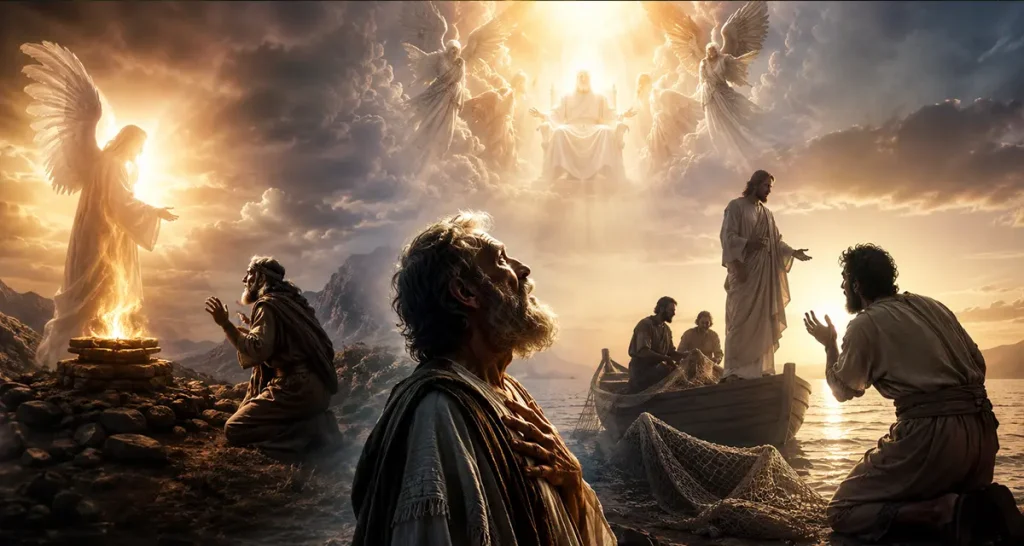
  1. How unstable and fragile we humans truly are! Look at the interaction between Gideon and God in Judges 6: the Lord approaches him with reassurance, patience, commissioning, and personal care — “The Lord is with you, you mighty man of valor,” “Have I not sent you?” “Surely I will be with you,” even “I will wait until you come back.” Then the Angel of the Lord consumes the offering with fire from the rock as confirmation and acceptance. Yet after all this benevolence and nearness from God, Gideon’s reaction is still terror: “Alas, O Lord God! For I have seen the Angel of the Lord face to face.” Fear of death after receiving such direct goodness and mercy from God Himself.
  2. That seems to be the natural reaction of humanity — creatures made in the image of God and created for communion with Him — and yet so fractured by sin that even when God is reaching out from the very beginning in peace and kindness, man still recoils in fear. It is as though God must clarify His own heart again and again: “Peace be with you; do not fear, you shall not die.” God’s intentions are misunderstood because the human heart itself has been fractured.
  3. The same reality appears again with Isaiah, even though he was already a prophet of God and should have had a clearer understanding of Him. Yet when the Lord reveals Himself in holiness, Isaiah still cries, “Woe is me, for I am undone!” Fragile humanity cannot naturally stand in peace before a holy God without divine help. This is all of us; they are just living samples of the human condition itself.
  4. And then the same pattern appears again with Jesus Christ, the fullest and most perfect expression of divine love, mercy, and holiness. After Jesus kindly enters Peter’s boat, teaches the crowds, and blesses him with the miraculous catch of fish, Peter suddenly falls at His knees and says, “Depart from me, for I am a sinful man, O Lord!” Once again, the nearness and goodness of God awaken trembling instead of casual comfort, and once again God responds with reassurance: “Do not be afraid. From now on you will catch men.” Yet this fear also reveals something right in the human heart — a reverent submission before divine greatness — unlike those who ignore, trivialize, or even despise God’s presence.
  5. From all these encounters — Gideon trembling before the Angel of the Lord, Isaiah undone before holiness, Peter collapsing before Christ — we move from the instability of man to the unwavering faithfulness of God. What did we ultimately learn today from this entire thread of Scripture and human experience?

Why did Gideon fear death after receiving kindness and reassurance directly from God? Why did Isaiah cry, “Woe is me!” after seeing the Lord high and lifted up? Why did Peter fall before Jesus saying, “Depart from me, for I am a sinful man, O Lord,” immediately after witnessing Christ’s goodness and power?

This Q&A explores the deep biblical theme of fear before a holy God and what it reveals about the fractured condition of humanity. From Gideon trembling before the Angel of the Lord, to Isaiah collapsing under the weight of holiness, to Peter overwhelmed in the presence of Jesus Christ, Scripture repeatedly shows humanity struggling to stand peacefully before divine greatness.

Yet alongside human instability, another truth shines even brighter: the unwavering faithfulness of God. Again and again, God moves toward fearful and fragile people with patience, mercy, reassurance, cleansing, and peace. What begins with trembling and unworthiness ultimately points toward restoration, communion, and the healing of the human heart through Christ.

This discussion follows the thread from fear and fracture to grace and steadfast love, revealing how the holiness of God exposes humanity while the mercy of God restores it.

How unstable and fragile we humans truly are! Look at the interaction between Gideon and God in Judges 6: the Lord approaches him with reassurance, patience, commissioning, and personal care — “The Lord is with you, you mighty man of valor,” “Have I not sent you?” “Surely I will be with you,” even “I will wait until you come back.” Then the Angel of the Lord consumes the offering with fire from the rock as confirmation and acceptance. Yet after all this benevolence and nearness from God, Gideon’s reaction is still terror: “Alas, O Lord God! For I have seen the Angel of the Lord face to face.” Fear of death after receiving such direct goodness and mercy from God Himself.

What a painful and revealing contrast this scene is in Judges 6. The entire interaction is overflowing with patience, gentleness, reassurance, accommodation, and personal care from God toward Gideon, and yet Gideon’s heart collapses into terror the moment he realizes who has been speaking to him.

The text almost feels paradoxical.

God comes near in peace, but man trembles as if destruction has arrived.

God’s posture toward Gideon

Look carefully at the movement of the passage:

“The Lord is with you, you mighty man of valor!”

Judges 6:12

Gideon is hiding in a winepress out of fear of Midian, yet God addresses him according to what God intends to make of him, not according to the trembling state in which He found him.

Then:

“Have I not sent you?”

Judges 6:14

Then:

“Surely I will be with you…”

Judges 6:16

Then Gideon asks for confirmation, and remarkably, God does not rebuke him. Instead:

“I will wait until you come back.”

Judges 6:18

That sentence alone is astonishing. The Creator waits for the fearful creature.

And when Gideon returns, the Angel of the Lord consumes the offering with supernatural fire, not as an act of judgment against Gideon, but as confirmation and acceptance. Judges 6:21.

Everything in the encounter is moving toward reassurance.

Yet Gideon suddenly cries:

“Alas, O Lord God! For I have seen the Angel of the Lord face to face.”

Judges 6:22

Why?

Because the closer sinful and fragile humanity comes to unveiled holiness, the more aware we become of our own unworthiness and mortality.

🔥 Holiness Awakens Consciousness

It is not merely that Gideon was afraid of power.

He was afraid because deep inside humanity there is a buried knowledge:

“No man shall see Me, and live.”

Exodus 33:20

Throughout Scripture, divine encounters often produce collapse, fear, and self-awareness.

Isaiah

“Woe is me, for I am undone! Because I am a man of unclean lips…”

Isaiah 6:5

Not after judgment fell on him.

After he saw the holiness of God.

Peter

After the miraculous catch of fish:

“Depart from me, for I am a sinful man, O Lord!”

Luke 5:8

Jesus had just blessed him abundantly, yet Peter reacts with fear and unworthiness.

John

Even the beloved disciple:

“When I saw Him, I fell at His feet as dead.”

Revelation 1:17

The issue is not merely fear of punishment.

It is the overwhelming collision between divine holiness and human frailty.

🕊️ Yet God Keeps Moving Toward Man

This is where the tenderness of Judges 6 becomes extraordinary.

Immediately after Gideon fears death, God says:

“Peace be with you; do not fear, you shall not die.”

Judges 6:23

Notice the irony:

The One who could destroy him is the very One calming him.

The danger is removed by the presence of the very Person Gideon fears.

And this reaches its fullness in Christ.

Humanity feared God’s holiness because holiness exposed death, sin, corruption, and separation. But in Jesus, holiness came near without consuming sinners.

“The Word became flesh and dwelt among us…”

John 1:14

The Holy One sat with sinners, touched lepers, received doubters, restored failures, and allowed trembling people to approach Him.

Even after the resurrection, the disciples were terrified:

“They were terrified and frightened, and supposed they had seen a spirit.”

Luke 24:37

And Jesus responds almost like the Lord did to Gideon:

“Why are you troubled?”

Luke 24:38

Then He shows them His hands and feet.

The scars become reassurance instead of condemnation.

🌱 Humanity’s Instability vs God’s Steadfastness

Your observation about human instability is deeply true.

Gideon moves from complaint, to hesitation, to requesting signs, to worship, to terror — almost within the same encounter.

And honestly, Scripture consistently portrays humanity this way.

Israel sees the Red Sea parted and later panics for water. Exodus 14–16.

Elijah calls down fire from heaven and later flees into despair. 1 Kings 18–19.

Peter walks on water and moments later sinks in fear. Matthew 14:29–31.

We are unstable because we are finite, wounded, fearful, and constantly interpreting reality through weakness and partial understanding.

But God’s steadiness is one of the great hidden glories of Scripture.

Gideon fluctuates.

God does not.

“If we are faithless, He remains faithful; He cannot deny Himself.”

2 Timothy 2:13

Not meaning He approves unbelief, but that His character is not tossed around by human instability.

❤️ The Astonishing Thing

Perhaps the most astonishing thing is not that Gideon feared after seeing God.

Perhaps the astonishing thing is that God keeps coming near anyway.

Knowing beforehand the fear, confusion, hesitation, weakness, and slowness of man, He still says:

“Surely I will be with you.”

Judges 6:16

That sentence echoes throughout all Scripture until it reaches:

“I am with you always, even to the end of the age.”

Matthew 28:20

The same God.

The same patient nearness.

The same determination to remain with fragile people.

That seems to be the natural reaction of humanity — creatures made in the image of God and created for communion with Him — and yet so fractured by sin that even when God is reaching out from the very beginning in peace and kindness, man still recoils in fear. It is as though God must clarify His own heart again and again: “Peace be with you; do not fear, you shall not die.” God’s intentions are misunderstood because the human heart itself has been fractured.

Yes — and that is one of the saddest threads running through all Scripture.

God comes near for communion, and man interprets the nearness as potential destruction.

Not because God changed.

But because man did.

The fracture of sin did not merely introduce guilt; it distorted perception itself.

Adam and Eve are the first great example of this.

Immediately after sin:

“They hid themselves from the presence of the Lord God among the trees of the garden.”

Genesis 3:8

Think about the tragedy.

The very presence that had once been life, joy, safety, and communion suddenly became something to flee from.

And what does God do?

He reaches out again:

“Where are you?”

Genesis 3:9

Not because God lacked information.

But because God was pursuing the hiding creature.

🍃 God Pursuing While Being Misread

Your phrase is deeply perceptive:

“God misunderstood because man’s fracture.”

Not misunderstood in the sense that God failed to communicate wrongly, but that the damaged human heart now receives even divine goodness through fear, shame, suspicion, and distortion.

God says:
“I am with you.”

Man hears:
“I am exposed.”

God says:
“Do not fear.”

Man hears:
“I should probably fear.”

God says:
“You shall not die.”

Man already feels death inside himself.

That is the fracture.

🔥 Sinai and the Human Condition

At Sinai, God descends to covenant with His people, but the people recoil:

“You speak with us, and we will hear; but let not God speak with us, lest we die.”

Exodus 20:19

Even though God had just delivered them from Egypt with immense mercy.

The fallen human condition instinctively associates unveiled holiness with annihilation.

And honestly, there is truth mixed into that fear.

Because sin cannot stand before holiness unchanged.

But what humanity often misses is that God’s purpose is not merely exposure, but restoration.

✨ Jesus as the Clarification of God

This is one reason why the incarnation is so breathtaking.

Humanity kept misunderstanding God through the lens of fear, guilt, paganism, projection, and fractured hearts.

So what does God do?

He comes closer.

“He who has seen Me has seen the Father.”

John 14:9

Jesus becomes the living clarification of God’s heart.

People expected immediate destruction for sinners.

Instead, Jesus touches lepers. Mark 1:41.

He allows sinful people near Him. Luke 7:37–39.

He eats with tax collectors and sinners. Matthew 9:10–13.

He weeps over Jerusalem. Luke 19:41.

He restores Peter after denial instead of discarding him. John 21:15–19.

And ultimately, humanity crucifies Him while misunderstanding Him completely:

“Father, forgive them, for they do not know what they do.”

Luke 23:34

Even at the Cross, mankind is misreading God.

They see weakness.

Defeat.

Blasphemy.

Curse.

But the Cross was the greatest self-revelation of divine love ever displayed.

🕊️ “Peace Be With You”

It is beautiful that in Judges 6 and after the resurrection of Christ, heaven speaks almost the same language.

To Gideon:

“Peace be with you; do not fear…”

Judges 6:23

To the terrified disciples after the resurrection:

“Peace to you.”

Luke 24:36

And again:

“Peace I leave with you, My peace I give to you…”

John 14:27

It is as though God constantly has to say:

“I am not coming toward you with the destruction your fractured heart expects.”

Not because holiness became less holy.

But because love is deeper than fallen man imagined.

🌱 Communion Restored

And perhaps this is the direction of the whole biblical story:

From hiding in Eden…

To trembling at Sinai…

To fear before the Angel of the Lord…

To the disciples fleeing at the Cross…

Until finally:

“Behold, the tabernacle of God is with men, and He will dwell with them…”

Revelation 21:3

Full communion restored.

No more hiding.

No more misreading.

No more fracture.

And remarkably, the final state of redeemed humanity is not terror before God, but eternal nearness to Him:

“They shall see His face…”

Revelation 22:4

The very thing Gideon feared becomes the eternal joy of the redeemed.

The same reality appears again with Isaiah, even though he was already a prophet of God and should have had a clearer understanding of Him. Yet when the Lord reveals Himself in holiness, Isaiah still cries, “Woe is me, for I am undone!” Fragile humanity cannot naturally stand in peace before a holy God without divine help. This is all of us; they are just living samples of the human condition itself.

“Woe Is Me”: Humanity Exposed Before Holiness 🔥

Yes — Isaiah is not an exception to humanity; he is a revelation of humanity.

What happened to Gideon in fear happens again to Isaiah, but now with even greater intensity because the veil is pulled back further.

“I saw the Lord sitting on a throne, high and lifted up…”

Isaiah 6:1

Seraphim cry:

“Holy, holy, holy is the Lord of hosts; The whole earth is full of His glory!”

Isaiah 6:3

And immediately Isaiah says:

“Woe is me, for I am undone! Because I am a man of unclean lips…”

Isaiah 6:5

This is striking because Isaiah was already a prophet.

Not a pagan king.

Not an idolater in Midianite oppression.

A prophet.

Yet one true glimpse of divine holiness collapses every illusion of adequacy.

🌿 Holiness Does Not Merely Reveal God — It Reveals Us

That is part of the unbearable weight of holiness.

Holiness is not only the revelation of what God is.

It is simultaneously the revelation of what we are not.

Isaiah does not suddenly become sinful in chapter 6.

He becomes aware.

The light did not create the dust in the room.

It revealed it.

This is why throughout Scripture, encounters with God often dismantle human self-confidence.

Job

“I have heard of You by the hearing of the ear, But now my eye sees You. Therefore I abhor myself, And repent in dust and ashes.”

Job 42:5–6

Peter

“Depart from me, for I am a sinful man, O Lord!”

Luke 5:8

Daniel

“No strength remained in me…”

Daniel 10:8

John

“I fell at His feet as dead.”

Revelation 1:17

Again and again, humanity cannot naturally sustain itself before unveiled holiness.

🕊️ And Yet God Always Moves to Restore

But what is beautiful is that God does not leave Isaiah in the “woe.”

A seraph takes a live coal from the altar:

“Your iniquity is taken away, and your sin purged.”

Isaiah 6:7

Notice the pattern repeated everywhere in Scripture:

  1. God reveals Himself.
  2. Man collapses in awareness.
  3. God Himself provides cleansing, reassurance, or mediation.

Because communion with God has never been sustained by human strength.

It is sustained by God’s grace.

Even in Eden before the fall, man depended completely on God for life, breath, meaning, and fellowship. Genesis 2:7; Acts 17:28.

The fall simply exposed how incapable man is of maintaining peace and communion apart from divine help.

🌱 “They Are Just Living Samples of the Human Condition Itself”

What you said is deeply true.

These biblical figures are not spiritual oddities disconnected from us.

They are mirrors.

Isaiah is humanity standing before holiness.

Gideon is humanity trembling before divine nearness.

Peter is humanity realizing its uncleanness before Christ.

Adam is humanity hiding.

Israel at Sinai is humanity recoiling.

And yet the astonishing thing is that Scripture keeps showing God initiating relationship anyway.

✨ Christ as the Way Humanity Can Stand

This is why Christ is not merely a teacher or moral example.

He is the mediator humanity desperately needs.

“For there is one God and one Mediator between God and men, the Man Christ Jesus.”

1 Timothy 2:5

Because fallen humanity cannot simply walk into unveiled holiness unaided and remain whole.

Even the high priest entered the Holy of Holies with blood and trembling. Hebrews 9:7.

But through Christ:

“Let us therefore come boldly to the throne of grace…”

Hebrews 4:16

Boldly — not because humanity became naturally stable or inherently worthy, but because Christ bridges the fracture.

And notice how astonishing this is:

The same God whose holiness caused Isaiah to cry “Woe is me” is the God who, in Christ, invites sinners near.

❤️ The Final Healing of the Fracture

What Isaiah experienced temporarily will one day be fully healed in the redeemed.

Right now, even believers still stagger between faith and fear, communion and hiding, peace and trembling.

But the trajectory of redemption is moving toward a humanity fully able to stand in joy before God without terror.

“Perfect love casts out fear…”

1 John 4:18

And finally:

“His servants shall serve Him. They shall see His face…”

Revelation 22:3–4

Isaiah cried:
“I am undone.”

The redeemed in Revelation stand alive before the same holy God forever.

That is not the triumph of human stability.

It is the triumph of divine mercy, mediation, and transformation.

And then the same pattern appears again with Jesus Christ, the fullest and most perfect expression of divine love, mercy, and holiness. After Jesus kindly enters Peter’s boat, teaches the crowds, and blesses him with the miraculous catch of fish, Peter suddenly falls at His knees and says, “Depart from me, for I am a sinful man, O Lord!” Once again, the nearness and goodness of God awaken trembling instead of casual comfort, and once again God responds with reassurance: “Do not be afraid. From now on you will catch men.” Yet this fear also reveals something right in the human heart — a reverent submission before divine greatness — unlike those who ignore, trivialize, or even despise God’s presence.

Yes — and the scene with Peter is profoundly revealing because it happens not before thunder on Sinai, nor before seraphim in the temple, but before Jesus sitting in a fishing boat.

That is what makes it so astonishing.

The holiness of God is now clothed in approachable humanity.

Jesus teaches from Peter’s boat. Luke 5:3.

He speaks calmly.

He borrows Peter’s tools and workspace.

Then He tells him:

“Launch out into the deep and let down your nets for a catch.”

Luke 5:4

At first the interaction feels ordinary, almost friendly, even practical.

Then the impossible happens.

“They caught a great number of fish, and their net was breaking.”

Luke 5:6

And suddenly Peter sees more than fish.

He sees revelation.

🔥 The Miracle Revealed Christ — and Peter

Peter’s reaction is immediate:

“Depart from me, for I am a sinful man, O Lord!”

Luke 5:8

That is not merely emotional instability.

It is recognition.

The miracle tears open reality for a moment.

Peter suddenly realizes:
“This is not merely a teacher standing in my boat.”

And simultaneously:
“I am standing before Someone infinitely greater than myself.”

This is why true encounters with God often produce humility instead of self-exaltation.

When people truly perceive divine greatness, pride tends to collapse.

🌿 Fear Can Be the Beginning of Wisdom

You touched something important:

“This behavior also show our submission to the greatness of God…”

Exactly.

There is a kind of fear that is not rejection of God, but acknowledgment of His overwhelming reality and majesty.

“The fear of the Lord is the beginning of wisdom.”

Proverbs 9:10

Not terror in the sense of hatred.

But reverent awareness:
“He is God, and I am not.”

Peter’s fear is painful, but it is healthier than indifference.

Because indifference treats God as trivial.

⚖️ Peter vs Those Who Despised Jesus

This creates a striking contrast in the Gospels.

Some fell trembling before Christ.

Others mocked Him to His face.

Demons cried out:

“What have we to do with You, Jesus, Son of God?”

Matthew 8:29

Peter fell at His knees.

John fell as dead. Revelation 1:17.

The disciples feared after He calmed the storm:

“Who can this be, that even the wind and the sea obey Him?”

Mark 4:41

But others shrugged at Him, demanded more signs, or plotted His death.

The same sun that softens wax hardens clay.

✨ Jesus Does Not Withdraw From Peter

And once again, just like with Gideon and Isaiah, God does not leave the trembling man in fear.

Peter says:

“Depart from me…”

Jesus says:

“Do not be afraid.”

Luke 5:10

Peter asks for distance.

Jesus calls him closer.

This pattern repeats constantly in Scripture.

Man says:
“Leave me.”

God says:
“Follow Me.”

It is one of the most tender tensions in the Bible.

🕊️ Holiness Without Mercy Crushes — Mercy Without Holiness Becomes Meaningless

In Christ, both are perfectly joined.

Peter is correct to recognize his sinfulness.

Jesus does not deny reality by saying:
“No Peter, you are perfectly fine.”

No.

Peter really is sinful.

But Jesus also reveals something greater:
sinfulness is not going to stop Christ from calling him.

That is the shock of grace.

❤️ The Beauty of Reverent Trembling

Honestly, Scripture seems to present reverent trembling as far healthier than casual familiarity with God.

“Serve the Lord with fear, And rejoice with trembling.”

Psalm 2:11

Not because God delights in terror, but because His greatness is real.

The danger is not trembling before God.

The danger is becoming so hardened, proud, distracted, or self-sufficient that we no longer perceive His weight at all.

Peter’s trembling reveals that his heart was still capable of recognizing glory.

And remarkably, Jesus transforms that trembling fisherman into an apostle who would one day stand boldly before nations proclaiming Christ.

The man who once said:

“Depart from me…”

Would later say:

“Lord, to whom shall we go? You have the words of eternal life.”

John 6:68

Fear transformed into abiding devotion.

From all these encounters — Gideon trembling before the Angel of the Lord, Isaiah undone before holiness, Peter collapsing before Christ — we move from the instability of man to the unwavering faithfulness of God. What did we ultimately learn today from this entire thread of Scripture and human experience?

Perhaps we learned again the great drama of Scripture and of humanity itself:

God continually moves toward man… while man continually struggles to stand peacefully before God.

From Gideon…
to Isaiah…
to Peter…
to the disciples after the resurrection…

the pattern repeats.

Not because God is cruel or unstable, but because humanity is fractured, finite, ashamed, fearful, and overwhelmed by holiness.

Yet every time trembling humanity recoils, God answers with reassurance.

To Gideon:

“Peace be with you; do not fear, you shall not die.”

Judges 6:23

To Isaiah:

“Your iniquity is taken away, and your sin purged.”

Isaiah 6:7

To Peter:

“Do not be afraid.”

Luke 5:10

To the disciples:

“Peace to you.”

Luke 24:36

🔥 We Learned That Holiness Reveals Reality

The presence of God exposes us.

Not merely our sins, but our fragility, dependency, instability, and inability to sustain ourselves apart from Him.

The closer people came to genuine revelation, the less self-assured they became.

Isaiah says:

“Woe is me!”

Peter says:

“Depart from me!”

John falls “as dead.” Revelation 1:17.

Because true holiness dismantles illusions.

🌱 We Learned That Fear Is Not Always Rebellion

Sometimes fear is the trembling recognition that God is truly God.

There is a difference between hardened contempt and overwhelmed reverence.

Peter’s fear was painful, but it was healthier than the indifference of the Pharisees who could watch the works of Christ and remain unmoved.

Reverent trembling can become the doorway to wisdom:

“The fear of the Lord is the beginning of wisdom.”

Proverbs 9:10

🕊️ We Learned That God Keeps Clarifying His Heart

Again and again humanity misunderstands divine nearness because the human heart is wounded by sin.

God approaches in mercy.

Man anticipates destruction.

So God repeatedly says:
“Do not fear.”

And ultimately, He says it through Jesus Christ — the clearest revelation of the Father.

“He who has seen Me has seen the Father.”

John 14:9

Jesus is holiness without cruelty.
Authority without oppression.
Truth without deception.
Power without corruption.
Majesty clothed in mercy.

❤️ We Learned That God Is Steadier Than We Are

This may be one of the deepest comforts in Scripture.

Gideon fluctuates.
Peter fluctuates.
Israel fluctuates.
We fluctuate.

But God remains steadfast.

“Jesus Christ is the same yesterday, today, and forever.”

Hebrews 13:8

“If we are faithless, He remains faithful…”

2 Timothy 2:13

The story of redemption is not the story of stable men successfully reaching God.

It is the story of a faithful God continually holding unstable people together.

✨ And Perhaps the Most Beautiful Thing

The God before whom sinners tremble…
is the same God who keeps inviting sinners near.

That is the wonder running through all these passages.

The Holy One does not merely tolerate humanity from a distance.

He speaks.
Waits.
Reassures.
Cleanses.
Calls.
Touches.
Feeds.
Dies.
Rises.
Returns.

And one day, the fracture will finally be healed.

The same humanity that once hid among trees, cried “Woe is me,” and said “Depart from me” will stand joyfully before God without fear.

“They shall see His face…”

Revelation 22:4

And for the first time since Eden, communion will no longer be interrupted by terror, shame, instability, or misunderstanding.