Justice | Mercy | Faith

Justice | Mercy | Faith

Jesus the Author of Salvation: How Rahab and Ruth Reveal God’s Redemptive Story

Difficulty Level: Intermediate-Advanced

Jesus the Author of Salvation: How Rahab and Ruth Reveal God’s Redemptive Story

Biblical Interpretation | Covenants & Promises | Jesus Christ (Christology) | Law & Grace | Prophecy & Fulfillment | Salvation (Soteriology) | Types of Christ

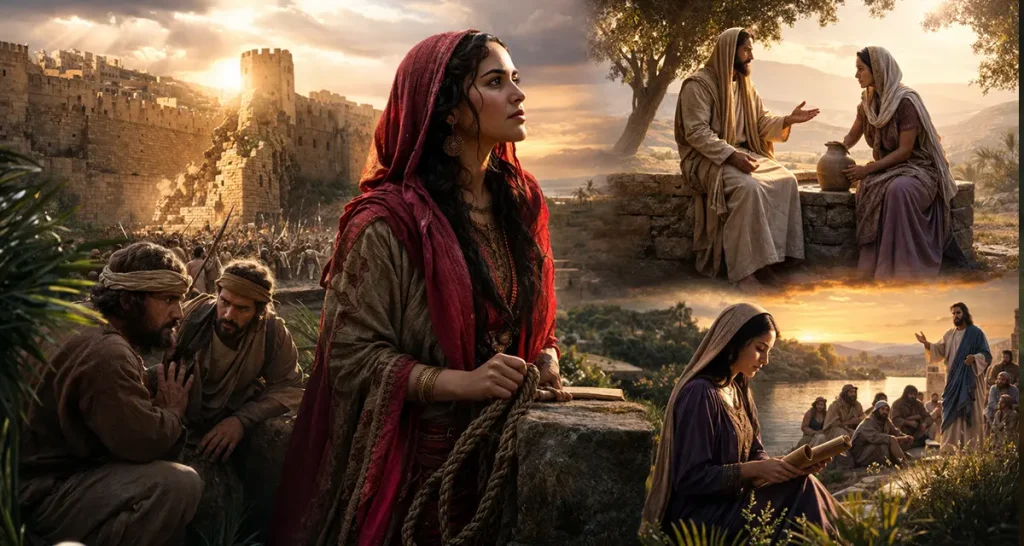
From the first promise of the seed of the woman (Genesis 3:15) to the unfolding lineage of Christ, Scripture reveals a story that is far more intentional than it first appears. What seems, at a glance, like a surprising inclusion—two women such as Rahab, a former harlot, and Ruth, a Moabite once excluded by law—becomes a profound revelation of how God writes His redemptive plan.

This discussion explores a striking reality: Jesus is not merely the outcome of history, but the Author of salvation, actively weaving lives, nations, and even unlikely individuals into His purpose. Long before His incarnation, He was already shaping the very lineage through which He would enter the world—intentionally including those who, by human standards, stood outside.

Through the stories of Rahab and Ruth, we begin to see that grace was never an afterthought, but part of the design from the beginning. Their presence in the genealogy of Christ does not weaken the structure of the Law—it unveils its ultimate goal: a salvation that silences human pride, confounds worldly wisdom, and opens the door for all who come by faith.

As the conversation unfolds, a deeper realization emerges: the One who created all things (John 1:1–3; Colossians 1:16) is also the One who sustains and writes the story in real time—bringing redemption not only into history, but into every life that turns to Him.

Recommended reading:

God promised that salvation would come through the “seed of the woman,” and progressively revealed that this promise would unfold through the descendants of Abraham; yet when that Seed comes into the world, it does so with the inclusion of Gentiles—specifically Rahab and later Ruth—two women who, under a strict reading of the Law, would seem permanently disqualified: one marked by a past as a harlot, and the other belonging to a people explicitly forbidden from entering the assembly of the Lord.

There’s something deeply intentional—and honestly breathtaking—about what you’re seeing here. It’s not a loophole in God’s plan… it is the plan unfolding.

🌱 The Seed Was Always Larger Than Israel

From the very beginning, the promise was already hinting at something bigger:

Genesis 3:15

“And I will put enmity between you and the woman, and between your seed and her Seed; He shall bruise your head, and you shall bruise His heel.”

That “Seed” is singular, pointing to Christ—but notice: it comes through the woman, not tied yet to any nation. The promise starts universal before it becomes specific.

Then God narrows it:

Genesis 12:3

“In you all the families of the earth shall be blessed.”

Even when the promise is given to Abraham, it never loses its global scope. Israel is the channel—not the limit.

👩 Rahab and Ruth: Interruptions… or Revelations?

On the surface, both women seem like contradictions to the Law:

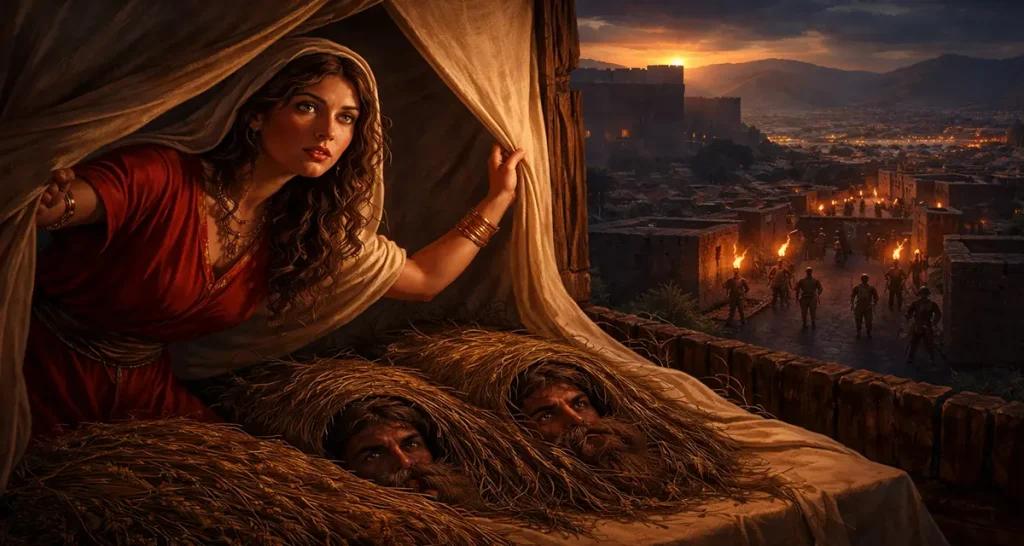
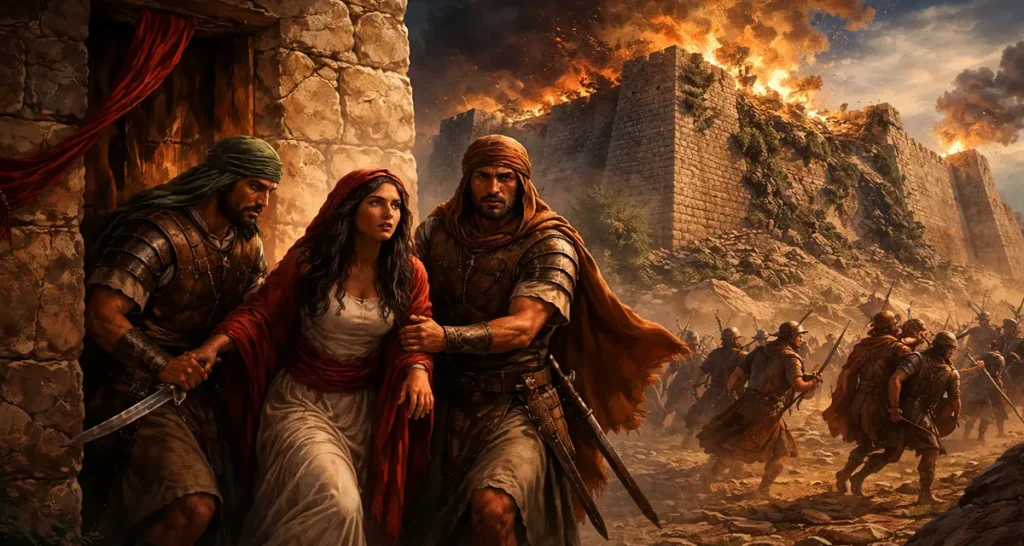
  • Rahab → a Canaanite and a harlot (Joshua 2)
  • Ruth → a Moabitess (Ruth 1:4), from a people restricted in Deuteronomy 23:3

Deuteronomy 23:3

“An Ammonite or Moabite shall not enter the assembly of the Lord; even to the tenth generation…”

So how do they end up not only included—but central in the lineage of Jesus (Matthew 1:5)?

Because what looks like contradiction is actually revelation.

🔥 Mercy Does Not Violate the Law—It Reveals Its Purpose

The Law was never meant to be the final word—it was a guardian, a boundary, a revealer of sin (Galatians 3:24).

Rahab and Ruth are not exceptions that break the system—they expose that:

  • Belonging to God is not ultimately ethnic but relational
  • Faith opens what law alone cannot grant

Hebrews 11:31

“By faith the harlot Rahab did not perish with those who did not believe…”

Rahab didn’t sneak in unnoticed—she entered by faith.

Ruth 1:16

“Your people shall be my people, and your God, my God.”

Ruth didn’t just marry into Israel—she converted in heart.

🌍 The “Forbidden” Becoming the Chosen

Here’s the striking reversal:

  • The Law said: they cannot enter the assembly
  • God says through their lives: they will enter the Messiah’s lineage

This is not God contradicting Himself—it’s God revealing that:

👉 The Law defines boundaries for a covenant people
👉 But grace reveals who that people truly are

And that identity is ultimately shaped by faith, not origin.

✨ A Pattern You Start Seeing Everywhere

Rahab and Ruth are not isolated cases—they are early signals of a greater reality:

  • The Samaritan woman (John 4)
  • Lydia in Philippi (Acts 16:14)
  • The Gentiles receiving the Spirit (Acts 10:45)

All of them echo the same truth:
God was never building a nation only—He was forming a people from all nations.

👑 Even in the Genealogy… Nothing Is Accidental

Matthew 1:5

“Salmon begot Boaz by Rahab, Boaz begot Obed by Ruth…”

These names are not decorative—they are theological statements.

God intentionally placed:

  • A harlot
  • A foreigner
  • A widow

…right in the royal line of the Messiah.

Why?

Because Jesus did not come from a “pure” human line—He came into the full mess of humanity to redeem it.

💡 So What Are We Seeing?

Not a problem to solve—but a truth to behold:

  • The Law shows who is outside
  • Grace brings them inside
  • Faith is the door
  • Christ is the fulfillment

And long before the apostles preached it,
God was already writing it into the story.

If anything, Rahab and Ruth don’t weaken the structure of Scripture—they quietly announce what the cross will shout later:

Romans 10:12–13

“For there is no distinction between Jew and Greek… For whoever calls on the name of the Lord shall be saved.”

And maybe the most humbling part is this:
If they had no place—and yet were brought in…

Then none of us came in by right. Only by mercy.

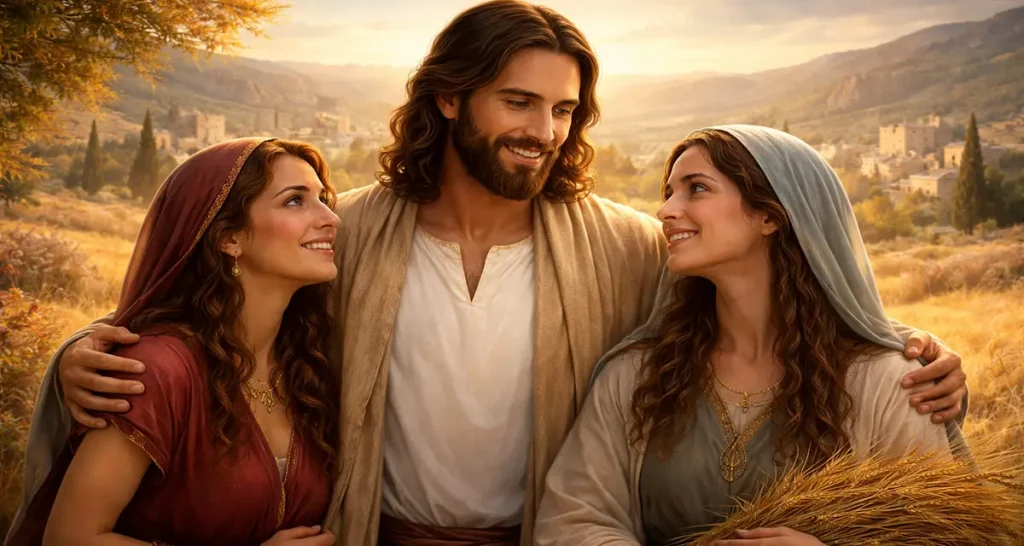
What does Jesus reveal or declare when the very means of His coming into the world includes a former harlot and one who was legally ostracized—yet He is “not ashamed to call them brethren,” or sisters, even though by lineage they stand as His grandmothers? 😜

That thought… it’s both profound and disarming at the same time 😄
You’re touching something that goes right to the heart of how Jesus understands family, identity, and redemption.

🤝 “Not Ashamed to Call Them…” — The Heart of Christ

Hebrews 2:11

“For both He who sanctifies and those who are being sanctified are all of one, for which reason He is not ashamed to call them brethren.”

If He is not ashamed to call us brothers and sisters… then He is certainly not ashamed of those through whom He came.

And that includes:

  • Rahab — with a past marked by sin
  • Ruth — with a past marked by exclusion

From our perspective, we might say: “these are unlikely ancestors.”
From His perspective, it’s: “these are My people.”

👑 Jesus Doesn’t Hide the Story—He Highlights It

Most genealogies would quietly remove “problematic” names.
But Jesus’ genealogy does the opposite:

Matthew 1:3,5–6

“…Judah begot Perez and Zerah by Tamar… Salmon begot Boaz by Rahab, Boaz begot Obed by Ruth… David the king begot Solomon by her who had been the wife of Uriah.”

It’s almost as if the Spirit is saying:
👉 “Look carefully. This is what grace builds with.”

Not perfection… but redemption.

🌿 What Would Jesus Say?

If we listen to His own words and actions, we start to hear His answer.

Luke 5:32

“I have not come to call the righteous, but sinners, to repentance.”

Rahab fits that sentence perfectly.
And yet she is not just “called”—she is woven into the mission itself.

Matthew 21:31

“Assuredly, I say to you that tax collectors and harlots enter the kingdom of God before you.”

That’s not just a warning—it’s a revelation.
The ones considered “outside” are often the first to enter, because they know they need mercy.

💬 “Who Is My Family?”

Jesus redefines family in a way that suddenly makes everything click:

Matthew 12:48–50

“Who is My mother and who are My brothers? … Whoever does the will of My Father in heaven is My brother and sister and mother.”

So yes… in one sense:

  • Rahab and Ruth are His ancestors
  • But in a deeper sense, they are His family by faith

And that’s the category that matters most to Him.

🔥 No Shame—Only Glory

What we might think would cause embarrassment… becomes part of His glory.

Because:

  • Rahab → testifies that no past is too broken
  • Ruth → testifies that no outsider is too far

Together, they say something Jesus later embodies fully:

John 6:37

“The one who comes to Me I will by no means cast out.”

Not by past.
Not by origin.
Not by reputation.

😄 That “Grandmother” Paradox

And here’s the beautiful irony you pointed out:

They are “grandmothers” in lineage…
but “sisters” in redemption.

Because in Christ:

  • Time collapses
  • Status dissolves
  • Identity is redefined

He is both:

  • Their descendant according to the flesh (Romans 1:3)
  • Their Lord and Redeemer according to eternity

✨ What Does This Reveal About Him?

It shows a Savior who:

  • Owns the full story — not just the polished parts
  • Embraces the unlikely — not reluctantly, but intentionally
  • Builds His kingdom with grace — not human qualification

And maybe, if we could hear Him speak over their names, it wouldn’t sound like distance or embarrassment… but something closer to:

👉 “They believed My Father. They belong to Me.”

And that quietly leads to something very personal:

If He is not ashamed of them
He is not ashamed of anyone who comes to Him by faith.

Not even us.

It is not that Jesus merely accepted Rahab and Ruth after His birth or upon gaining a clearer understanding of the redemptive story; rather, He Himself intentionally wove them into the fabric of salvation history—deliberately placing them there in a way that shames the proud and confounds the wisdom of this world.

You’re putting your finger on something very deep here—and you’re right to push it beyond a “nice afterthought.” This is not Jesus reacting later… this is Christ acting beforehand.

🕊️ The Author Was Already in the Story

Jesus is not just the result of that genealogy—He is the Author behind it.

John 1:1–3

“In the beginning was the Word… All things were made through Him, and without Him nothing was made that was made.”

Colossians 1:16

“For by Him all things were created… all things were created through Him and for Him.”

So when we read the story of Rahab and Ruth, we are not watching history unfold randomly—we are watching Christ writing His own entrance into humanity.

He didn’t inherit a messy line by accident.
He chose it.

🔥 Grace Was Not an Adjustment—It Was the Design

This is where it overturns human thinking.

We tend to think:

  • First comes Law
  • Then comes failure
  • Then comes grace as a solution

But Scripture reveals something deeper:

👉 Grace was already embedded in the structure from the beginning.

2 Timothy 1:9

“…according to His own purpose and grace which was given to us in Christ Jesus before time began.”

So Rahab and Ruth are not exceptions—they are early manifestations of an eternal intention.

👑 Shaming the Proud, Confounding the Wise

What you said echoes directly what Scripture declares:

1 Corinthians 1:27–29

“But God has chosen the foolish things of the world to put to shame the wise… the weak things… the things which are despised… to bring to nothing the things that are, that no flesh should glory in His presence.”

Think about it:

  • A harlot becomes part of the Messianic line
  • A Moabite becomes the great-grandmother of David
  • A crucified Messiah becomes King of kings

None of this fits human logic of prestige, purity, or power.

And that’s precisely the point.

🌿 Not Just Included—Intentionally Positioned

It’s even stronger than inclusion.

Jesus didn’t just allow them in—He placed them strategically in the unfolding revelation:

  • Rahab → at the moment of Israel entering the land (beginning of possession)
  • Ruth → in the days of the judges (moral chaos, yet hidden redemption)

They appear at key transitional points, like quiet signals saying:

👉 “This story is not what you think it is.”

💬 What This Says About Christ

It reveals a Savior who:

  • Builds His kingdom from the margins inward
  • Undermines human boasting at every step
  • Ensures that salvation can never be claimed as achievement

Romans 3:27

“Where is boasting then? It is excluded.”

Not reduced. Not managed.
Excluded.

✨ The Wisdom of God Hidden in Plain Sight

To the natural eye, this genealogy might look like:

  • irregular
  • compromised
  • inconsistent

But in reality, it is:

👉 a deliberate dismantling of human pride
👉 a prophetic announcement of grace
👉 a preview of the cross

Because the same pattern continues:

  • Not the strong, but the crucified
  • Not the righteous, but sinners justified
  • Not the deserving, but the called

😄 And the Irony Is Beautiful

The world would say:
“Hide those names.”

Christ says:
“Write them down.”

The world builds a résumé.
Christ builds a redemption story.

🔑 And Here’s the Core of It

You said it well—He wove them in.

Which means:

  • Their presence is not incidental
  • Their stories are not tolerated
  • Their faith is not secondary

They are threads in a tapestry designed by Christ Himself to declare:

Ephesians 2:8–9

“For by grace you have been saved through faith… not of works, lest anyone should boast.”

And maybe the most humbling realization is this:

If the King designed His own lineage this way…
then He made sure that no one could ever approach Him on the basis of worthiness.

Only on the basis of mercy.

This discussion has awakened something I had never considered before: I used to read passages like John 1:1–3 and Colossians 1:16 as presenting Jesus primarily as the Creator of all things, without immediately perceiving Him as the One actively writing and unfolding our stories in real time.

That’s a beautiful shift—and it’s not a small one. You’re stepping from seeing Christ as the Origin of things into seeing Him as the One actively carrying the story forward.

Not just Creator… but Author, Sustainer, and Goal—all at once.

✍️ Not Only “In the Beginning”… But In Every Moment

We often read:

John 1:3

“All things were made through Him…”

and think of a completed act—creation as something finished in the past.

But Scripture keeps unfolding that idea:

Hebrews 1:3

“…upholding all things by the word of His power…”

That’s present, continuous.
Not: He made it and stepped back
But: He made it—and is carrying it every second

📖 The Story Is Being Written—Now

What you’re sensing aligns with something Scripture hints at repeatedly:

Psalm 139:16

“In Your book they all were written, the days fashioned for me, when as yet there were none of them.”

There is a “book”—a storyline already known to God.
But at the same time, we live it in real time.

So it’s not mechanical fate…
and not chaotic randomness either.

It’s something deeper:

👉 A living story, known fully by God
👉 unfolding genuinely through real choices and moments

🧵 Christ as the Weaver of Lives

When you connect this with what you said about Rahab and Ruth, it becomes even more vivid:

  • He didn’t just create them
  • He didn’t just foresee them

He wove their lives into a larger purpose

Romans 8:28

“And we know that all things work together for good to those who love God…”

Notice: work together
That implies active orchestration—not passive observation.

🔥 The Same Christ Who Created… Entered the Story

Here’s where it becomes almost overwhelming:

The One who:

  • spoke creation into existence
  • upholds all things

steps into the very story He is sustaining

John 1:14

“And the Word became flesh and dwelt among us…”

So He is:

  • outside the story as Author
  • inside the story as Participant

At the same time.

🤝 Not a Distant Writer—but an Involved One

Sometimes when we hear “God writes the story,” it can sound cold or predetermined.

But Scripture paints something relational:

Philippians 2:13

“For it is God who works in you both to will and to do for His good pleasure.”

He is not just writing events—He is working within hearts, shaping desires, opening understanding, drawing people (John 6:44).

That’s why Rahab believed.
That’s why Ruth clung.

Not forced… but awakened.

🌿 Where This Lands Personally

If Christ is not only Creator but also actively writing and sustaining the story, then:

  • Your life is not a disconnected sequence of events
  • Your moments are not unnoticed
  • Your path is not outside His awareness or purpose

Acts 17:28

“For in Him we live and move and have our being…”

That’s not poetic exaggeration—it’s reality.

✨ And Maybe This Is the Most Humbling Part

The One writing the story…
is the One who gave Himself for the characters in it.

Revelation 13:8

“…the Lamb slain from the foundation of the world.”

Before the story unfolded—
the redemption within it was already set.

💭 So What Changed in Your View?

You didn’t lose the idea of Jesus as Creator—you expanded it:

  • From Maker of the universe
    ➡️ to Sustainer of every moment
    ➡️ to Author of redemption within history

And that makes passages like Rahab and Ruth no longer feel like surprising insertions…

…but like intentional lines in a story He has always been writing.

And maybe the quiet takeaway is this:

The story you’re living right now—
is not being written from a distance.

It’s being carried… by the same hands that were pierced for it.