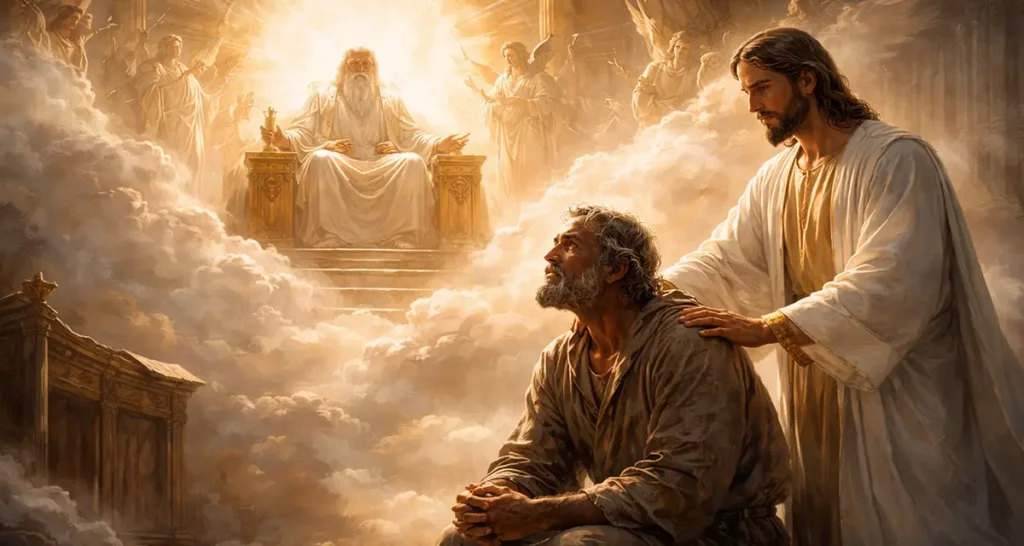
That is a beautiful tension you are touching.
We are clearly made with curiosity. We explore, we question, we search. Scripture never presents that as a flaw. In fact, it often celebrates it.
So how do we reconcile that with Moses saying:
“The secret things belong to the Lord our God…” (Deut 29:29)
Does that feel restrictive? Almost like a divine “Do not enter” sign?
Let’s walk carefully through this.
🔍 1. Curiosity Is Not the Problem — Independence Is
God Himself invites searching.
“Call to Me, and I will answer you, and show you great and mighty things, which you do not know.” (Jer 33:3)
“It is the glory of God to conceal a matter, but the glory of kings is to search out a matter.” (Prov 25:2)
Notice that: search is glory.
So Moses is not condemning intellectual pursuit. He is drawing a boundary between:
- Searching what God has concealed for discovery
- Claiming authority over what God has reserved for Himself
The problem is not curiosity — it is autonomy.
In Genesis 3, the issue was not knowledge itself. It was seizing knowledge apart from trust:
“You will be like God…” (Gen 3:5)
That is the dangerous shift.
🌌 2. We Were Made to Explore — But Within Covenant
God placed Adam in a world that required exploration and naming (Gen 2:19–20).
He created a universe vast beyond comprehension (Ps 19:1).
We are made in His image (Gen 1:26–27). Of course we are drawn toward infinity — because we reflect the Infinite One.
But being creatures means our exploration is relational, not autonomous.
Psalm 131 captures the posture beautifully:
“Surely I have calmed and quieted my soul, like a weaned child with his mother…” (Ps 131:2)
David does not reject mystery.
He rejects prideful intrusion into things “too profound” for him (Ps 131:1).
The restriction is not oppressive. It is protective.
🧠 3. Revelation Is Invitation, Not Suppression
Deut 29:29 does not say, “Do not think.”
It says:
“Those things which are revealed belong to us and to our children forever…”
Belong to us.
That is astonishing.
God gives real knowledge. Real revelation. Real covenant clarity.
He does not starve the mind. He directs it.
Even in the New Testament, there is progressive unveiling:
“To you it has been given to know the mysteries of the kingdom of heaven…” (Matt 13:11)
“The mystery which has been hidden… but now has been revealed to His saints.” (Col 1:26)
God hides — but He also reveals.
And He reveals for relationship and obedience.
⚖️ 4. The Difference Between Exploration and Trespass
There is a subtle but important distinction:
Exploration says:
“Lord, teach me.”
Trespass says:
“I must penetrate what You have chosen not to reveal.”
Job is a powerful example.
After chapters of questioning, God answers him not with explanations, but with Himself:
“Where were you when I laid the foundations of the earth?” (Job 38:4)
Job does not lose curiosity — he gains perspective.
And he responds:
“I have uttered what I did not understand, things too wonderful for me…” (Job 42:3)
That is not intellectual defeat. It is reverent alignment.
🌿 5. The Restriction Is Actually Freedom
Here is something profound:
If everything were knowable, we would carry the unbearable weight of ultimate comprehension.
But we are finite.
Deut 29:29 frees us from trying to decode:
- God’s secret decrees
- The hidden mechanics of providence
- The “why” behind every tragedy
Instead, it anchors us in what is clear:
“The things which are revealed… that we may do all the words of this law.”
Clarity is given for action.
Mystery is preserved for trust.
And trust is not anti-intellectual — it is relational.
🔥 6. Christ Deepens the Pattern
In Christ, we see both fullness of revelation and preserved mystery.
“In Him are hidden all the treasures of wisdom and knowledge.” (Col 2:3)
Hidden — in Him.
Not inaccessible.
But accessed through relationship.
Even Paul, after soaring theological heights, concludes:
“Now we see in a mirror, dimly…” (1 Cor 13:12)
Not blindness. Dim reflection.
Our longing for infinity is not suppressed. It is redirected toward eternal communion.
🌊 7. So How Do We Deal With It?
Not by shutting down curiosity.
But by holding it with humility.
We search what He has revealed.
We explore creation.
We study Scripture deeply.
We pursue theology carefully.
But we stop short of demanding answers God has not given.
Curiosity becomes worship when it is tethered to trust.
The “restriction” of Deut 29:29 is not ominous.
It is covenantal wisdom saying:
You are invited into knowledge.
You are not invited into sovereignty.
And that difference is what keeps curiosity from turning into rebellion.
In the end, our hunger for infinity is not wrong.
It is a sign that we were made for eternal knowing:
“This is eternal life, that they may know You, the only true God, and Jesus Christ whom You have sent.” (John 17:3)
The search does not end.
It simply unfolds forever — in communion, not control.