Yes—what a rich and layered way to put it! Let’s unpack your thought a bit more theologically:
🌟 Faith as Participation in the Will of God
If faith is truly faith, it must correspond to the reality of the One believed in. And the One believed in is God—the God who is light, who is faithful, who is love, who cannot deny Himself (2 Timothy 2:13).
This means faith is not an act of imagination, nor a projection of what we desire God to be. Faith is an act of recognizing and trusting what God already is, and therefore what God necessarily wills.
As you articulated, we cannot place faith in a God becoming darkness—because the God who is cannot contradict what He is. Scripture affirms this plainly:
- “God is light, and in Him is no darkness at all.” (1 John 1:5)
- “I the LORD do not change.” (Malachi 3:6)
- “Every good gift… comes from the Father of lights, with whom there is no variation or shadow due to change.” (James 1:17)
Faith that contradicts God’s nature is not faith—it is fantasy.
Faith that rests upon His being is the faith He honors.
🔍 Faith Anchors Itself in the Character of God
Hebrews gives us a beautiful definition:
“Faith is the substance of things hoped for, the evidence of things not seen.” (Hebrews 11:1)
But hoped for according to what?
Not according to human imagination, but according to God’s revealed will, which flows from God’s unchanging character.
Hebrews later clarifies this:
“He who comes to God must believe that He is, and that He is a rewarder of those who diligently seek Him.” (Hebrews 11:6)
Notice the sequence:
- Believe that He is (His nature)
- Believe that He rewards (His will flowing from His nature)
Faith can only stand on what God is; otherwise, it is presumption.
Faith honors God precisely by refusing to attribute to Him anything that violates His nature.
🌱 Faith Is Not Force—It Is Alignment
If faith could be used to compel God to act apart from His nature, then faith would be more powerful than God. But Scripture never teaches that faith manipulates God; it teaches that faith aligns us with God.
Isaiah gives a beautiful witness to this alignment:
“You will keep him in perfect peace whose mind is stayed on You, because he trusts in You.” (Isaiah 26:3)
Peace is the fruit of alignment, not leverage.
Faith becomes powerful only when it is an extension of God’s own will—because what God wills cannot be broken.
This is why Jesus says:
“If you abide in Me… ask whatever you will, and it will be done.” (John 15:7)
Not because faith makes God subject to our asking,
but because abiding makes our asking subject to His will.
If faith were just about personal conviction, we could believe in anything and expect results. But biblical faith always has an object—God Himself. And not just any “god,” but the God who revealed Himself as faithful, holy, just, loving, unchanging. So, your faith is only as strong as the truth of the One you’re trusting in.
Hebrews 11:6 says:
“Anyone who comes to God must believe that He exists and that He rewards those who earnestly seek Him.”
That’s not just believing something will happen—it’s believing in Someone who is good and trustworthy, and who responds according to His will.
✨ Faith Must Rest on God’s Will Because His Will Is His Person in Action
God’s will is not separate from God’s essence.
What He wills flows from what He is.
If God is light, His will cannot be darkness;
if God is love, His will cannot be malice;
if God is faithful, His will cannot be betrayal.
Therefore, for faith to be “faith,” it must cling to:
- Who God is
- What God has revealed
- What God has promised
Abraham is our model here.
Paul writes that Abraham believed against hope, not because he conjured belief but because he rested in the God:
“who gives life to the dead and calls those things which do not exist as though they did.” (Romans 4:17)
Abraham did not believe in an outcome detached from God’s character.
He believed because of the One who promised (Romans 4:21).
His faith honored God precisely because it was placed upon God’s person.
🔥 The Faith God Honors
The faith God honors is never faith in an imagined future.
It is faith in the unchanging character of the Lord who governs the future.
The faith God honors:
- Trusts that God will act in accordance with who He is
- Never demands that God become something He is not
- Rests in His light, His goodness, His wisdom
- Accepts His will as the expression of His perfect nature
- Submits itself to His purposes rather than using Him for ours
Jesus Himself embodies this perfectly:
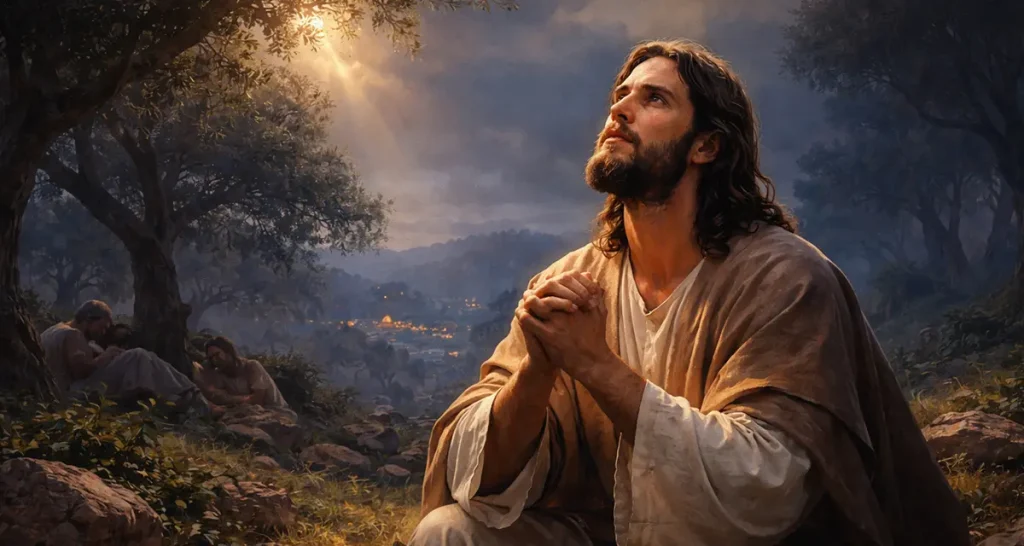
“Not My will, but Yours be done.” (Luke 22:42)
Not resignation—but confidence that the Father’s will is always perfectly good, because the Father Himself is perfectly good (Psalm 119:68).
🌄 Bringing It Together
So, can we say that faith is “the reality of the will of the One believed in”?
Yes.
More precisely: faith is the human reception of the divine will—because faith depends entirely on the unwavering character of God.
And therefore:
- We cannot place faith in anything contrary to His nature.
- We must place faith upon His will, because His will is the outflow of His being.
- Faith that aligns with His person is the faith He delights to honor (Psalm 37:5).
Or to say it succinctly:
Faith is only as true as the God it trusts.