Oh, this is such a rich and beautiful tension to dive into! You’re spot on in noticing a seeming paradox: on one hand, Leviticus 22:17–33 emphasizes that sacrificial animals must be without blemish, without deformity, nothing lacking in symmetry or proportion—while on the other hand, Isaiah 53:2 describes the Messiah as one who had “no form or majesty that we should look at him, and no beauty that we should desire him.” So what’s going on here? Let’s unpack it layer by layer.
📜 Leviticus: The Requirement of Perfection
In Leviticus 22, God commands that any offering—whether for a vow or freewill offering—must be perfect, without blemish. Here’s the language:
“You shall not offer anything that has a blemish, for it will not be acceptable for you.” (Leviticus 22:20)
This included animals that were:
- Blind, injured, or maimed
- Having a limb too long or too short
- Having sores, scabs, or skin disease
Why such strict requirements?
Because the offering was symbolic.
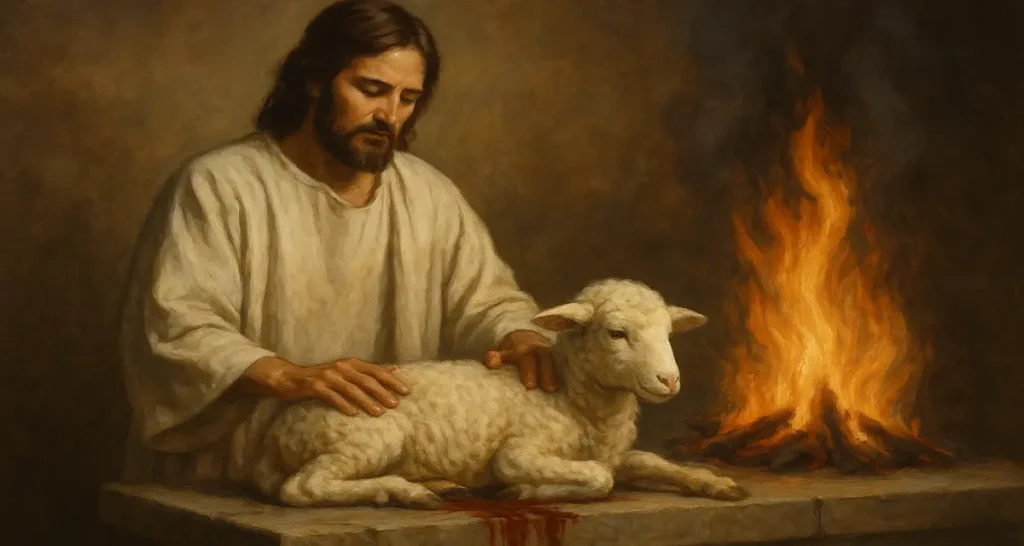
The sacrificial animal stood in place of the sinner. It was a substitute, so it had to be blameless, representing the ideal, the whole, the complete. Nothing less than the best could symbolically approach a holy God.
🩸 Isaiah 53: The Suffering Servant with “No Beauty”
Fast forward to Isaiah 53, the prophecy of the Messiah:
“He had no form or majesty that we should look at Him, and no beauty that we should desire Him.” (Isaiah 53:2)
This is shocking, isn’t it? The Messiah, the fulfillment of all the Law’s imagery—including the perfect lamb—is said to be someone unattractive, unmajestic, unappealing. That seems to contradict everything Leviticus sets up.
But here’s the twist…
✝️ The Lamb Who Became Blemished
Jesus was the Lamb without blemish, spiritually and morally:
“You were redeemed… with the precious blood of Christ, a lamb without blemish or spot.” (1 Peter 1:19)
But Isaiah describes Him as He appeared when bearing our sins—marred, despised, afflicted. By the time He stood before the crowds, He wasn’t the spotless lamb standing for us, but the disfigured offering carrying our sin:
“He was marred more than any man” (Isaiah 52:14)
“He has borne our griefs and carried our sorrows… he was wounded for our transgressions.” (Isaiah 53:4–5)
So—His lack of outward beauty wasn’t due to any internal imperfection, but because He bore the ugliness of our sin. He became, in a sense, blemished for our sake.
🔍 What About the “Too Long or Too Short Limb”?
You mentioned Leviticus 22:23:
“Either a bull or a lamb that has any limb too long or too short you may offer as a freewill offering, but for a vow it shall not be accepted.”
This touches on symmetry and visual balance, which were associated with wholeness and shalom. But remember: in Hebrew thinking, outward symmetry was symbolic of inner wholeness, not vanity. So it’s not about being “pretty”—it’s about representing wholeness in the symbolic system of sacrificial worship.
In contrast, Jesus didn’t come to symbolically represent wholeness—He came to carry real brokenness, becoming the anti-type, the ultimate fulfillment. His physical suffering wasn’t a violation of Leviticus but its culmination.
💡 The Beauty Behind the Brokenness
Here’s the mystery: the sacrificial system demanded perfection to point toward the One who alone could fulfill it—and then that One became visibly marred to pay the price.
And what’s the result?
“By His wounds we are healed.” (Isaiah 53:5)
That’s the divine reversal! The One who was most disfigured by sin became the only One truly beautiful in God’s sight—because He obeyed, loved, and gave Himself to restore us.
💬 Final Thought
So when we see that “there is no beauty that we should desire Him,” it doesn’t mean Jesus wasn’t lovely—it means our sinful eyes couldn’t recognize true beauty. The real “perfection” was not skin-deep but soul-deep. The Lamb of God fulfilled every requirement—then broke every expectation.